We get commissions for bookings made through this post. Booking links, and any accommodation options shown on the page, are handled by a partner that adds commission tracking automatically. It never costs you more, and it never affects what we recommend. Affiliate disclosure
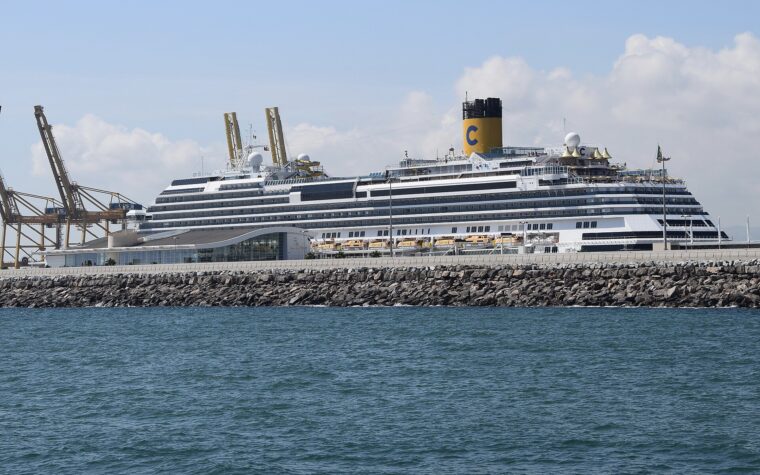
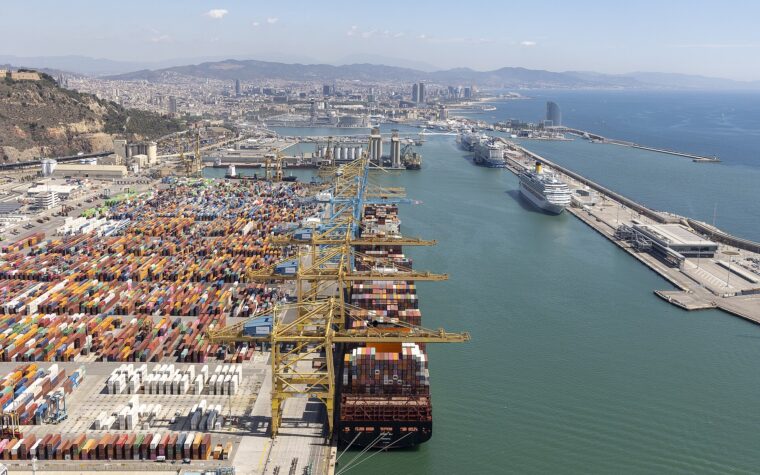
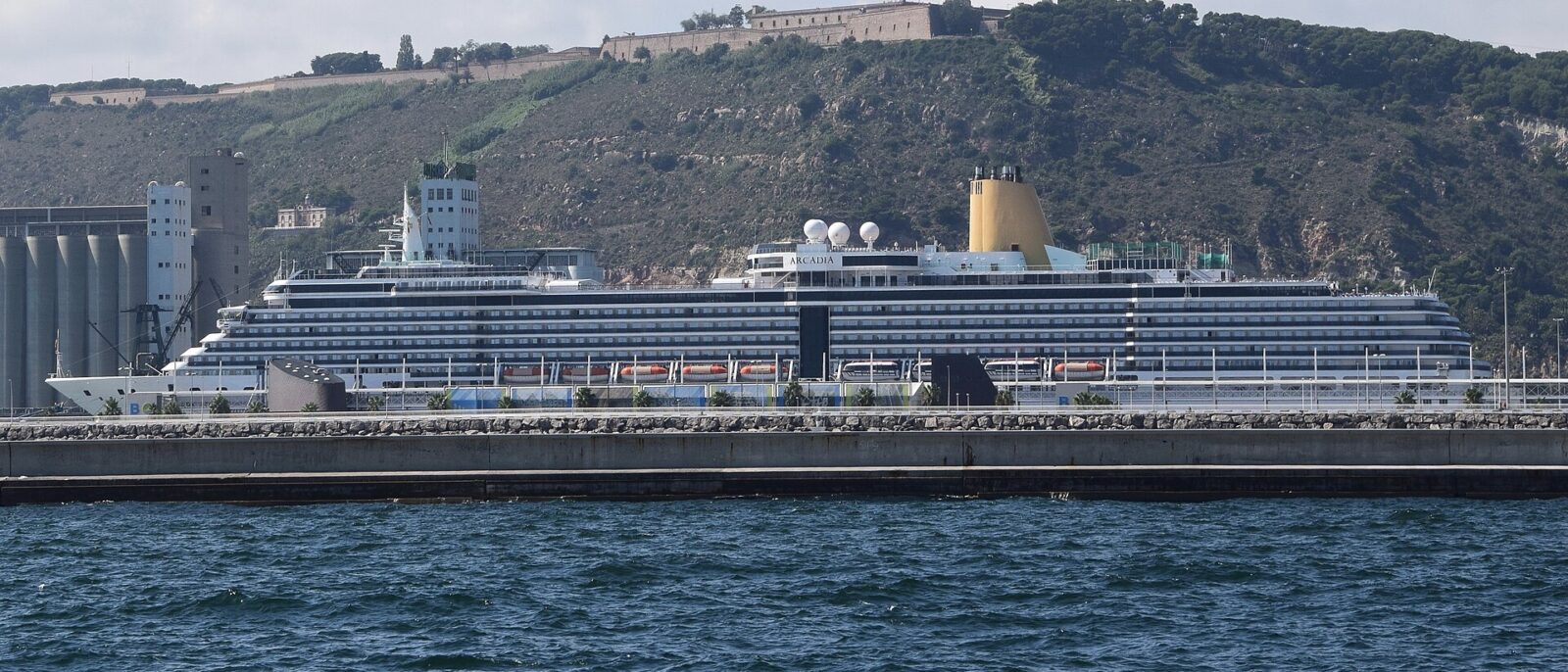
The first view most cruise passengers get of Barcelona is not the Sagrada Família. It is a long concrete quay, a terminal building, a line of grain silos and, if you look up, the old fortress on Montjuïc watching over the harbour. The city you came to see is a couple of kilometres away, and the clock is already running. That gap, between the ship and the sights and between the gangway and all-aboard, is what this guide is about. It is a realistic plan for a one day in Barcelona cruise call: how to get into town, how much you can genuinely fit in, which tickets to book before you sail, and how to be back on board with time to spare rather than sprinting up the gangway at 17:29.
For the port itself, the terminals, the shuttle bus, taxis and the cruise tax, see our Barcelona cruise port guide; this page is the day plan that goes with it. If you are not on a ship and simply have a single free day in the city, our one day in Barcelona itinerary is the better fit, because it does not have to work around a sailing time. Prices and hours were checked in October 2026; treat them as the right order of magnitude, and check anything time-critical before you travel.
Your port day at a glance
| What to expect | |
|---|---|
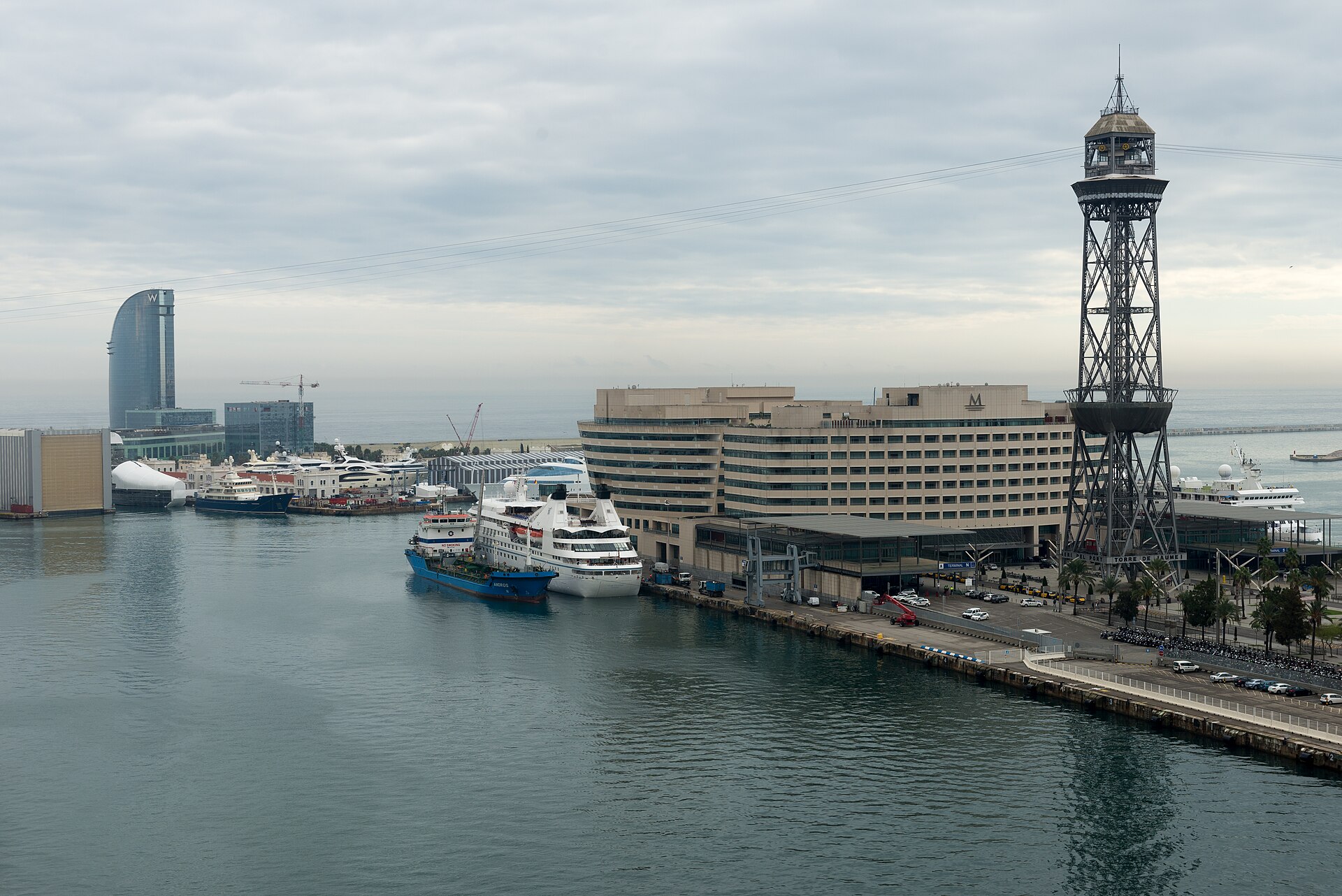
| Where you dock | Almost certainly the Moll Adossat, the long cruise quay at the south end of the port; the older World Trade Center terminals are closing |
| Ship to city | Cruise Bus to the Columbus Monument at the bottom of La Rambla, €3 one way or €4.50 return; or a taxi, €15–25 to the centre |
| Realistic usable time | About six to seven hours in the city on a typical 08:00–18:00 call, once transfers and a safety margin are counted |
| What fits | One big ticketed sight, one more sight or neighbourhood, and a proper lunch. Anything more is a sprint |
| Book before you sail | The Sagrada Família, and any Gaudí house or Park Güell you want to see inside |
| Be back at the terminal | At least an hour before all-aboard, and earlier on a busy cruise day |
| Cruise tax | €11 per passenger for a call of under 12 hours, €9 for 12 hours or more, usually collected through your fare |
What a port day costs
| Item | Price per person |
|---|---|
| Cruise Bus, port to Columbus Monument | €3 one way, €4.50 return |
| Taxi, Moll Adossat to the city centre | About €15–25 per cab, more to the Sagrada Família |
| Metro, single journey | €2.90 |
| Metro, T-casual (10 journeys, one person) | €13, plus €1 for the T-mobilitat card it lives on |
| Sagrada Família, basilica with audio guide | €26; €36 with a tower; a centenary surcharge of €2–5 applies through December 2026 |
| Casa Batlló | From €29 online |
| La Pedrera (Casa Milà) | From €29 for the standard daytime ticket |
| Park Güell, monumental zone | €18 |
| Picasso Museum | €14 online, €15 at the door; closed on Mondays |
Before you get off the ship
A good port day is mostly decided the night before. Run through this list with your cruise line’s port information in front of you:
- Check where you are docking. The terminal is on your cruise line’s port document. In practice, from 2027 almost every ship will use the Moll Adossat: the World Trade Center’s North terminal has already closed, and the South terminal is due to close at the end of 2026. The difference matters, because the WTC is a short walk from the city and the Moll Adossat is not.
- Check the all-aboard time, and whose clock it is on. Ships sometimes keep a different time from the port. Barcelona runs on Central European Time. Set your phone to local time and know what that means for the ship.
- Book timed tickets in advance. The Sagrada Família, Casa Batlló, La Pedrera and Park Güell all sell timed entries, and in the cruise season the good morning slots go days or weeks ahead. Book directly with each attraction rather than through a reseller.
- Check the day of the week. On Sundays the Sagrada Família does not open until 10:30, La Boqueria market is closed, and many shops are shut outside the summer. On Mondays the Picasso Museum and several other museums are closed, and most of the Boqueria’s fish stalls take the day off.
- Take what you need, and nothing else. Your cruise card, a photo ID, a bank card, a little cash, a phone with the ship’s port-agent number saved, water and sun cream. Leave the passport and valuables in the safe unless the line tells you otherwise.
- Dress for churches. The Sagrada Família and the cathedral ask for covered shoulders, and very short shorts are frowned on.
Getting from the ship to the city
The Moll Adossat is a working quay, not a city street. It is about two kilometres from the Columbus Monument at the foot of La Rambla, along a busy road with no reason to walk it, so do not try. You have three sensible options.
The Cruise Bus
The shuttle bus runs between the cruise terminals and the Columbus Monument, where La Rambla meets the old port, and it is the cheapest and simplest way into town: €3 one way or €4.50 return. Buses run frequently while ships are in port, but on a busy day, with several ships alongside, the queues at both ends can be long, especially in the mid-afternoon rush back to the ships. From the Columbus Monument, Drassanes metro station (L3) is a couple of minutes’ walk away, and the Gothic Quarter is right in front of you.
A taxi
Taxis wait at the terminals. Expect about €15–25 to the centre of town, more to the Sagrada Família or Park Güell, and 15 to 30 minutes depending on traffic. For two or more people heading straight to the Sagrada Família for an early slot, a taxi is often the best use of the first hour of the day. Barcelona’s black-and-yellow taxis are metered; our taxi guide explains the fares and supplements.
The ship’s shuttle or a tour
Some cruise lines run their own shuttle into town, usually to a drop-off near the Columbus Monument or Plaça de Catalunya, and usually for a fee. It is worth knowing where it drops you and when the last bus back leaves.
How much can you really see?
Here is the honest arithmetic for a typical call, with the ship alongside from 08:00 and all-aboard at 17:30:
| Time | What it goes on |
|---|---|
| 08:00–08:45 | Getting off the ship, through the terminal and into town |
| 08:45–15:45 | Seven hours in the city, including lunch and getting between sights |
| 15:45–16:30 | Getting back to the port, allowing for queues and traffic |
| 16:30–17:30 | Your safety margin. Do not spend it |
Seven hours sounds like a lot, until you subtract an hour and a half for lunch, half an hour between each pair of sights, and the time it takes to find your way out of a crowded basilica. In practice that leaves room for one major ticketed sight, a second sight or a neighbourhood on foot, and a good lunch. People who try to do the Sagrada Família, Park Güell, Casa Batlló and the Picasso Museum in one port day spend most of it in taxis and queues, and see each of them badly.
The plans below are built around that reality. Each assumes the 08:00 to 17:30 call above; shift the times to fit your own ship.
Plan A: Gaudí and the old city (the classic first visit)
If you have never been to Barcelona, this is the day to do. It covers the city’s single unmissable building, a stretch of Gaudí’s work on Passeig de Gràcia and the medieval heart of the old town.
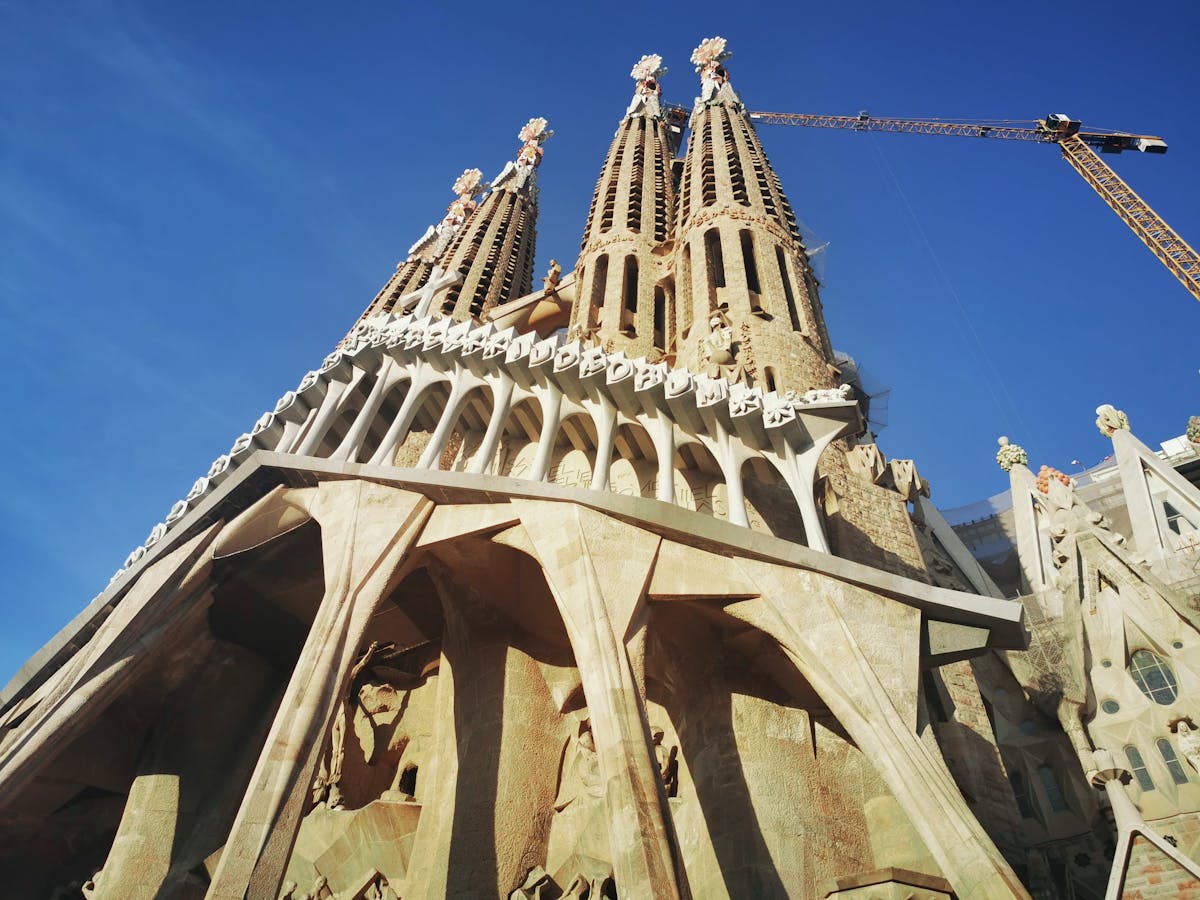
- 08:00 Off the ship. Taxi straight to the Sagrada Família, or the Cruise Bus to the Columbus Monument and the metro from Drassanes (L3 to Diagonal, then L5 two stops to Sagrada Família, about 25 minutes).
- 09:00 The Sagrada Família. Book the first slot of the day, when the light through the eastern windows is beautiful and the nave is at its calmest. Allow about an hour and a half with the audio guide, longer with a tower. On a Sunday the basilica opens at 10:30, so swap the morning around. Our Sagrada Família guide explains the tickets.
- 10:45 To Passeig de Gràcia. Metro L5 from Sagrada Família to Diagonal, two stops, or a 25-minute walk down through the Eixample.
- 11:15 One Gaudí house. Casa Batlló or La Pedrera, booked for about 11:15. Do not try to do both: pick one inside and admire the other from the street. Our Casa Batlló vs Casa Milà comparison helps you choose.
- 12:45 Walk down Passeig de Gràcia to the Plaça de Catalunya, past the Block of Discord, where three of the great modernista architects built side by side.
- 13:15 Lunch in the Gothic Quarter or El Born; see the lunch section below.
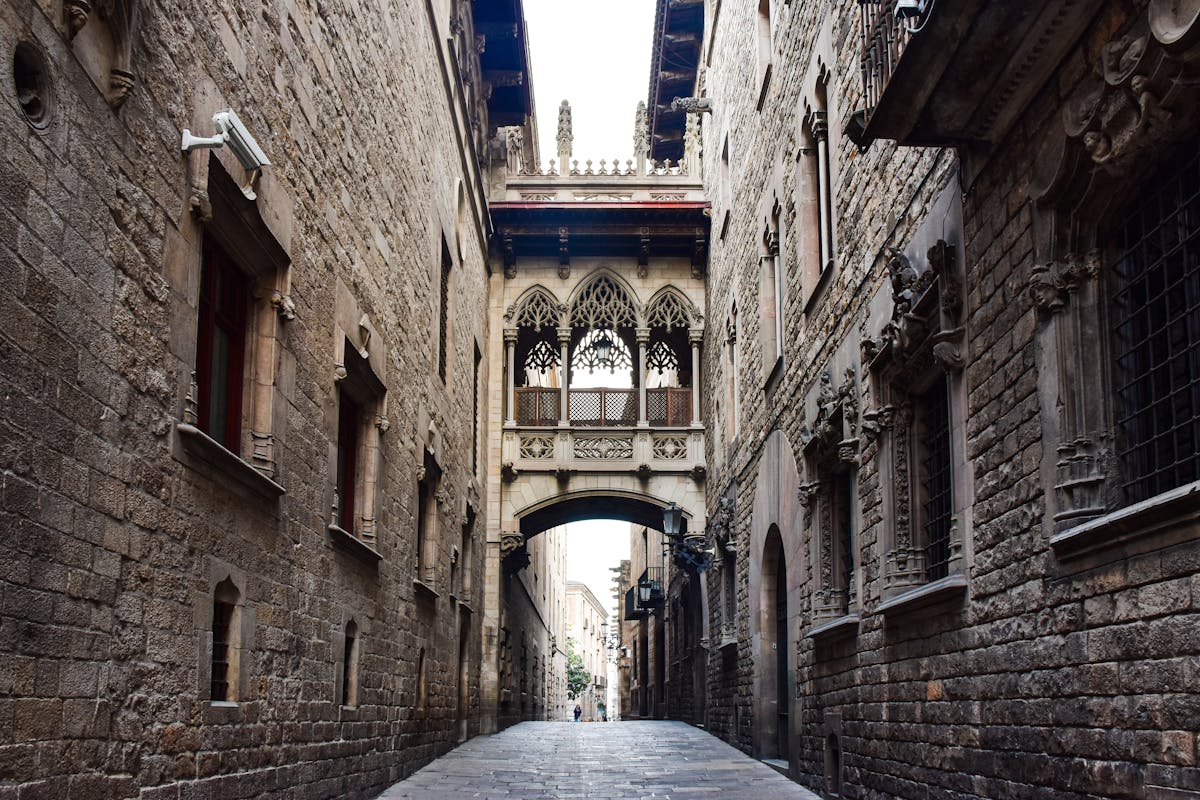
- 14:45 The Gothic Quarter on foot. The cathedral, the Plaça de Sant Jaume, the Plaça del Rei and the lanes around them, ending at Santa Maria del Mar in El Born. Our Gothic Quarter guide has a route.
- 15:45 Back to the Columbus Monument along La Rambla or the waterfront, and the Cruise Bus to the ship.
Plan B: The old city on foot (no bookings needed)
If you would rather not plan around timed tickets, or you have been inside the Sagrada Família before, the old city rewards a day on foot, and everything in this plan is within walking distance of the Cruise Bus stop.
- 08:45 From the Columbus Monument, walk up La Rambla. The street is in the middle of a long rebuild that is due to finish in early 2027, so expect hoardings and a narrower promenade; our Las Ramblas guide explains what has changed.
- 09:15 La Boqueria (Monday to Saturday), the city’s great food market, before the crowds. Our La Boqueria guide explains how to get the best of it.
- 10:00 The Gothic Quarter: the Plaça Reial, the cathedral and its cloister, the Plaça de Sant Jaume and the old Jewish quarter.
- 11:30 El Born. Santa Maria del Mar, the finest Gothic church in the city, and the Picasso Museum on Carrer de Montcada (Tuesday to Sunday; book a time). Our Picasso Museum guide has the details.
- 13:30 Lunch in Barceloneta, the old fishermen’s quarter, ideally a seafood rice, followed by a walk along the beach.
- 15:30 Back along the waterfront of the Port Vell to the Columbus Monument and the Cruise Bus.
Plan C: Montjuïc and the harbour (for a second visit)
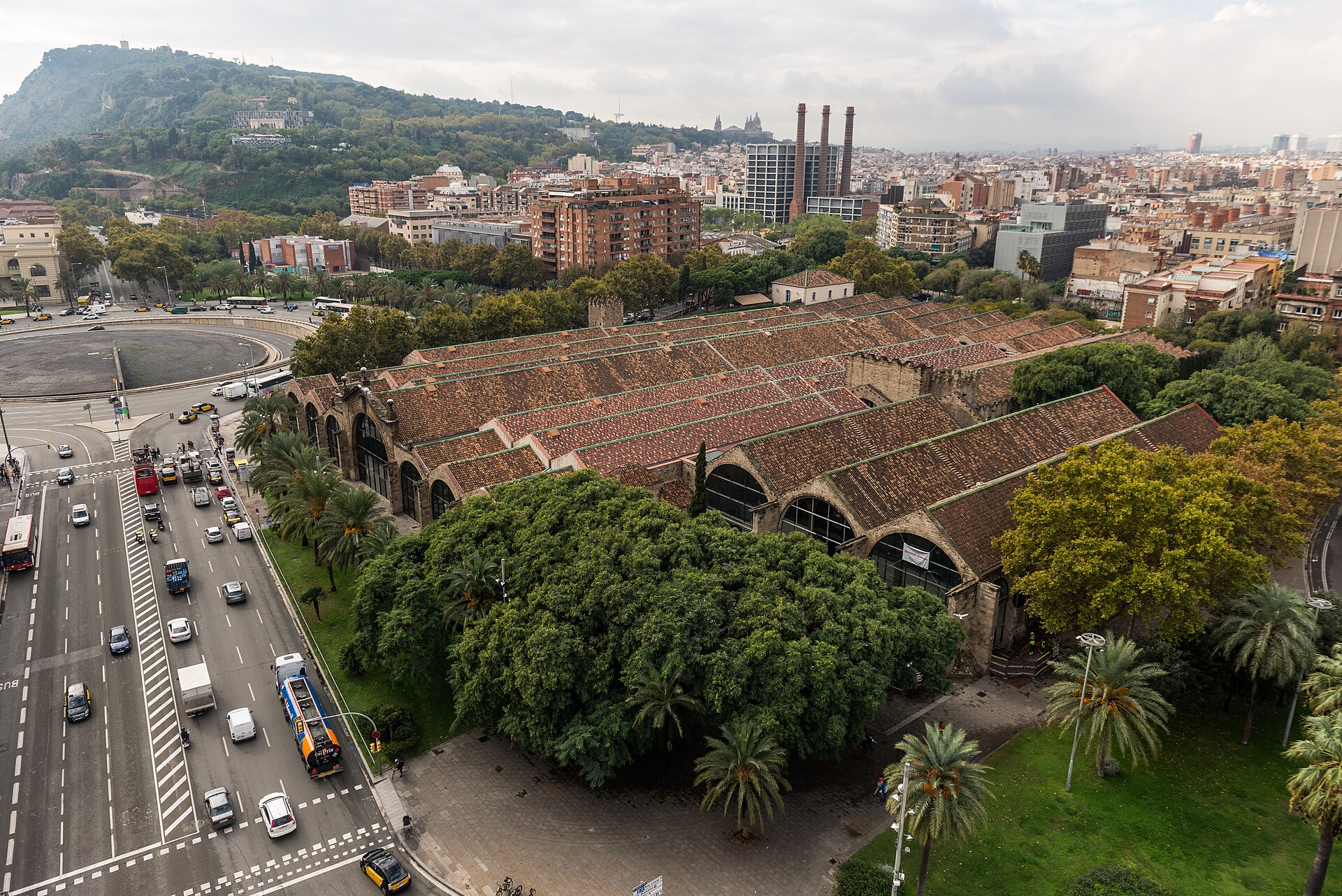
If you have done the classic sights on a previous call, spend the day on Montjuïc, the hill you have been looking at from the ship. It is green, quiet, full of good museums and has the best views of the port.
- 08:45 From the Columbus Monument, take a slow walk through the old port, or ride the small lift to the top of the monument itself for the view.
- 11:00 The port cable car from the Torre de Jaume I, beside the World Trade Center, across the harbour to Miramar on Montjuïc. It dates from 1929, opens at 11:00 and is spectacular, if not cheap; check the current fare.
- 11:30 The Fundació Joan Miró (€18), in Josep Lluís Sert’s white building among the trees, or the castle and its views if you prefer the outdoors.
- 13:30 Lunch in Poble-sec, at the foot of the hill, where Carrer de Blai is lined with bars serving pintxos.
- 14:45 The MNAC (€14), the national art museum in the Palau Nacional, for its Romanesque murals and the view from its terrace, or a walk in the gardens.
- 15:45 Down to Plaça d’Espanya and the metro, or a taxi back to the port.
Our Montjuïc guide covers everything on the hill.
Plan D: Barça and the Eixample (for football fans)
The stadium is in Les Corts, on the western side of the city, a long way from the port, so make it the main event. Take a taxi or the metro (L3 from Drassanes to Les Corts or Palau Reial, then a 10 to 15 minute walk) for the Barça Immersive Tour, which runs from about €28. While the stadium is being rebuilt there is no pitch-side access and no dressing-room visit, and on match days only the museum is open, so check before you book. Our Camp Nou tour guide explains what you will see. Spend the afternoon on Passeig de Gràcia, looking at Casa Batlló and La Pedrera from the street, and head back to the ship from Plaça de Catalunya.
A late sailing or an overnight call
If your ship stays into the evening, or overnight, you get the best of Barcelona, because the city comes alive after dark.
- The Magic Fountain on Montjuïc runs free evening shows on certain nights of the week, depending on the season. Our Magic Fountain guide has the current timetable.
- Dinner at a civilised hour, which in Barcelona means 21:00 at the earliest, in El Born, Gràcia or Poble-sec.
- A drink with a view from one of the city’s rooftop terraces; our rooftop bars guide has the best.
- A late Gaudí visit. La Pedrera runs evening visits, which free up the day for something else.
What not to do on a port day
Some popular ideas look good on paper and go badly in practice. Our honest advice:
- Do not try Montserrat on your own. It is about an hour each way by train from Plaça d’Espanya, plus the rack railway or cable car, plus the queues. On a long call it can be done, but it leaves no margin at all. If you are set on it, book the ship’s excursion, which is guaranteed to get you back. Our Montserrat guide explains the journey.
- Do not try to see everything. Three ticketed sights plus a neighbourhood is a day of queues and taxis.
- Do not walk from the Moll Adossat. It is a long, unpleasant walk beside a main road.
- Do not eat on La Rambla. The restaurants with picture menus and people outside waving you in are the worst value in the city. Walk two minutes into the side streets.
- Do not leave the return to the last Cruise Bus. The mid-afternoon queue at the Columbus Monument, when every passenger in port has the same idea, can be long. Aim to be on a bus by about 16:00.
- Do not rely on the hop-on hop-off bus as your whole plan. It is a fine way to see the city if walking is hard for you, but in traffic it is slow, and a port day is short.
- Do not book the Sagrada Família for the afternoon on a tight call. A delay anywhere earlier in the day becomes a missed slot.
Ship excursion or do it yourself?
| Ship’s excursion | On your own | |
|---|---|---|
| Cost | High; you pay for the guarantee and the coach | Much lower: transport plus whatever tickets you choose |
| If you are late | The ship waits for its own tours | The ship does not wait for you |
| Pace | Group pace, with time lost at every stop | Your pace |
| Tickets | Included and pre-booked | You must book timed entries yourself |
| Best for | Montserrat, limited mobility, anxious first-timers | The city itself, which is easy to do independently |
Our view: for Barcelona itself, doing it yourself is easy and far better value, as long as you book your timed tickets before you sail and keep the safety margin. The city is compact, the metro is simple, and most of the old town is walkable from the Cruise Bus stop. Save the ship’s excursion for something genuinely outside the city, like Montserrat, or for a guide-led visit if that is what you enjoy. Our walking tours guide covers independent guided options in the city.
Lunch on a port day
Lunch is where port days often go wrong: a tired family sits down at the first place with an English menu on La Rambla and pays a lot for frozen paella. A few minutes’ walk changes everything.
- The menú del dia. On weekdays, most local restaurants offer a fixed-price lunch of two courses, dessert and a drink. It is still one of the best-value meals in Europe, and it is quick.
- Tapas in El Born or the Gothic Quarter. Ideal if you want to eat in an hour and keep moving; our best tapas guide has the places.
- Seafood rice in Barceloneta. The classic port-day lunch, if you choose well; our paella guide explains how to spot the real thing.
- A counter at La Boqueria, for something fast and fresh, from Monday to Saturday.
Our cheap eats guide has more ideas.
Port days by day of the week
| Day | What to know |
|---|---|
| Monday | The Picasso Museum and several other museums are closed; most fish stalls at La Boqueria are shut |
| Tuesday to Friday | Everything open; the menú del dia at lunch |
| Saturday | The busiest day in the old town; book everything |
| Sunday | The Sagrada Família opens at 10:30; La Boqueria is closed; many shops shut outside mid-May to mid-September; first Sundays bring free museum entry, by reservation where required |
Port days through the year
The same plan feels very different in January and in August. Barcelona’s cruise season runs from spring to late autumn, with ships calling all year, and the season changes what is sensible.
- Spring (April to June). The best conditions for a port day: warm, bright and comfortable on foot, though the old town is already busy. Our April, May and June guides cover the weather and the events.
- High summer (July and August). Hot, humid and crowded, with several ships in port at once on many days. Do the outdoor sights first thing, spend the hottest hours indoors or in the shade of the Gothic Quarter, carry water, and expect longer queues for the Cruise Bus back. See our July and August guides.
- Autumn (September and October). Still warm, often beautiful, and October is the wettest month, so pack a light rain jacket and keep an indoor plan. Our September and October guides have the details, including La Mercè in late September.
- Winter (November to March). Mild, quiet and good value, with short queues at the big sights, but short days: the sun sets at around half past five in December, and the Sagrada Família closes earlier in winter. Our December and January guides explain what to expect.
Whatever the month, the fixed points do not change: book the timed sights before you sail, keep an hour in hand, and check what is closed on the day of the week you are in port. Our month-by-month guide sets the whole year side by side.
Safety and money
Barcelona is a safe city for visitors, but it has a well-earned reputation for pickpockets, and cruise passengers, with a camera, a day bag and a fixed timetable, are an easy mark. The worst spots are La Rambla, the metro (especially line L3, which runs from the port end of La Rambla up through the centre), the area around the Sagrada Família and any crowded viewpoint. Keep your phone in a front pocket, carry your bag in front of you, and be wary of anyone who distracts you. Our safety guide covers the common tricks.
Cards, including contactless, are accepted almost everywhere, though a few euros in coins is useful for small purchases. Tipping is modest in Spain; rounding up or leaving a few euros for good service is plenty. Our money tips guide has the details.
Starting or ending your cruise in Barcelona
If Barcelona is where your cruise begins or ends, you are dealing with luggage, flights and hotel check-outs as well as sightseeing, and the plans above need adapting. Our cruise port guide covers embarkation and disembarkation, and our airport transfer guide covers getting between the airport and the city. If you can, add a night or two in the city before or after the cruise: a port day is a taste, not a visit. Our hotels guide helps you find somewhere to stay.
Frequently asked questions
Can you see Barcelona in one day from a cruise ship?
You can see a good part of it. On a typical call, with about seven usable hours in the city, you can visit the Sagrada Família, one Gaudí house and the Gothic Quarter, with time for lunch. You cannot see everything, and it is better not to try.
How do I get from the cruise port to the city centre?
Take the Cruise Bus to the Columbus Monument at the foot of La Rambla (€3 one way, €4.50 return), or a taxi (about €15–25 to the centre). Do not walk from the Moll Adossat terminals; it is a long way along a main road.
Is the Sagrada Família worth it on a port day?
Yes. It is the one sight we would book above all others. Take the first slot of the day if you can, and book well before you sail. On Sundays it opens at 10:30.
Do I need to book tickets in advance?
For the Sagrada Família, Casa Batlló, La Pedrera and Park Güell, yes. In the cruise season the morning slots sell out days or weeks ahead, and turning up without a ticket wastes time you do not have.
Can I visit Montserrat on a cruise stop?
Only with a long call and a lot of discipline, or on the ship’s own excursion. It is about an hour each way by train, plus the mountain railway, and on your own the margin for error is very small.
How early should I get back to the ship?
Aim to be back at the terminal at least an hour before all-aboard, and to be on a Cruise Bus by about 16:00 on a typical 17:30 all-aboard. The afternoon queues and traffic are the most common cause of near-misses.
Is the hop-on hop-off bus worth it on a port day?
It is useful if walking is difficult for you, but it is slow in traffic, and for most passengers the metro and your own feet are quicker. It is not a substitute for booking the sights you care about.
Is Barcelona safe for cruise passengers?
Yes, but pickpocketing is common on La Rambla, on the metro and around the Sagrada Família. Keep valuables out of back pockets and bags in front of you.
What is the cruise tax in Barcelona?
Since April 2026 cruise passengers pay a tourist tax of €11 for a call of under 12 hours and €9 for 12 hours or more, normally collected by the cruise line. Our tourist tax guide explains the details.
Not sure which terminal your ship will use, or how far it is from the shuttle stop? Our Barcelona cruise terminals guide explains every terminal on the Moll Adossat, which cruise lines usually berth at each one, and why the World Trade Center terminals by the city centre are closing.
Related Barcelona Guides
- Barcelona cruise port guide — terminals, transport and the cruise tax.
- One day in Barcelona — the itinerary for land-based visitors.
- Barcelona’s attractions — tickets and prices for the big sights.
- The Sagrada Família — how to book and what to see.
- The Gothic Quarter — the old town on foot.
- The waterfront and port — the harbour, the marina and the beaches.
- Barcelona metro guide — lines, tickets and tips.
Photo Credits
A cruise ship at the Moll Adossat below Montjuïc Castle: 2014- MV Arcadia Cruise Ship, Port of Barcelona, Spain ( Ank Kumar ) 01 by Ank Kumar, CC BY-SA 4.0, via Wikimedia Commons.
The World Trade Center quay and the Torre de Jaume I, from the Columbus Monument: 15-10-27-Vista des de l’estàtua de Colom a Barcelona-WMA 2788 by Ralf Roletschek, GFDL 1.2, via Wikimedia Commons.
The Drassanes and Montjuïc, from the Columbus Monument: 15-10-27-Vista des de l’estàtua de Colom a Barcelona-WMA 2798 by Ralf Roletschek, GFDL 1.2, via Wikimedia Commons.