We get commissions for bookings made through this post. Booking links, and any accommodation options shown on the page, are handled by a partner that adds commission tracking automatically. It never costs you more, and it never affects what we recommend. Affiliate disclosure
Barcelona Airport to City Center: How to Choose the Right Transfer
The first decision of every Barcelona trip is also one of the easiest to get wrong: how to get from the airport to your hotel. Barcelona-El Prat (BCN) is about 15 kilometres southwest of the city centre, and there are six legitimate ways to bridge that gap, with prices ranging from 2.90 EUR to over 70 EUR. The cheapest is not always the best, and the most expensive is rarely necessary. This barcelona airport to city guide compares every barcelona airport transfer option, so by the end of the article you know exactly which one fits your group, your luggage, and your hotel location.
We cover the metro, the aerobus barcelona, the barcelona airport train, the public city bus, the airport taxi, ride-shares, and private transfers, with current 2026 prices, journey times, accessibility notes, and the small tricks that locals use to save time and money. Pick your preferred option, bookmark this page, and arrive in Barcelona ready.
Barcelona-El Prat Airport: A Quick Orientation
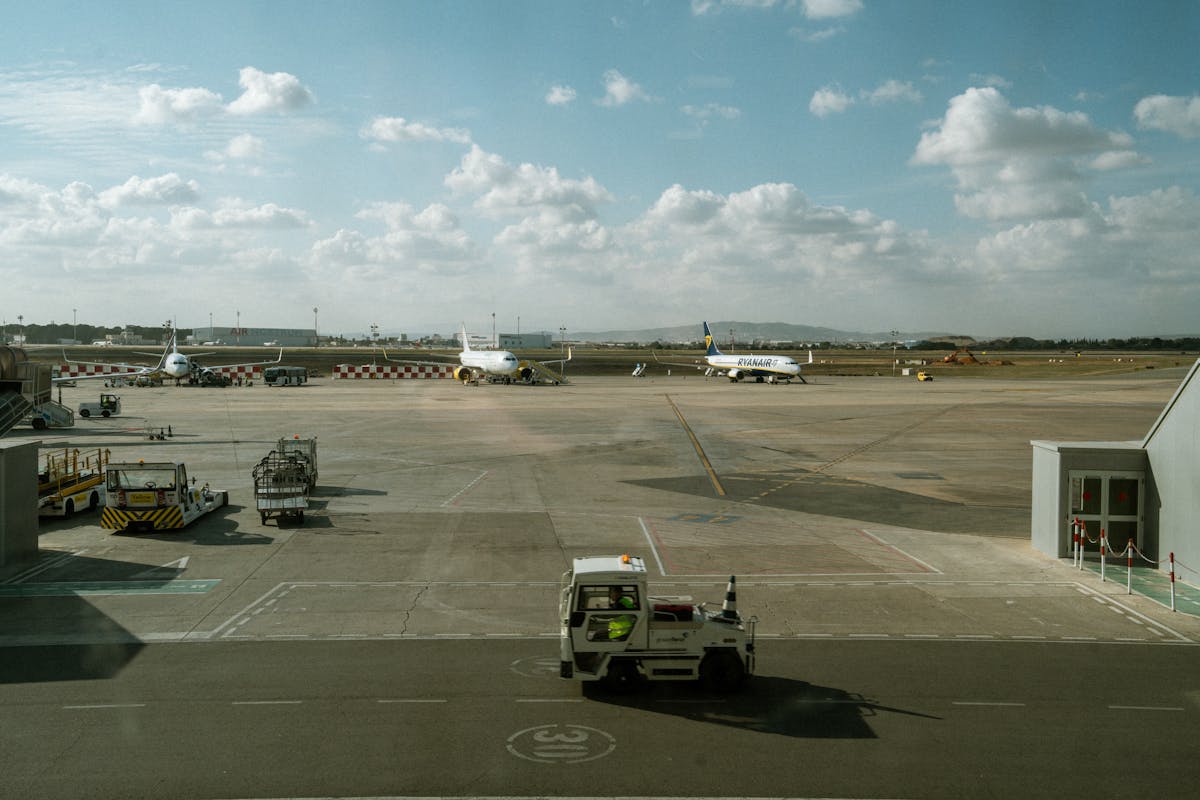
BCN is the second-busiest airport in Spain after Madrid-Barajas. It has two terminals connected by a free shuttle bus that runs 24 hours a day, every 5 to 10 minutes depending on the time of day.
- Terminal 1 (T1): The newer terminal, opened in 2009. Most international flights, all major Spanish carriers (Iberia, Vueling, Air Europa).
- Terminal 2 (T2): The older terminal. Some low-cost carriers (Ryanair previously used T2, though it now operates from T1 too). Some private aviation.
Always confirm your terminal before arriving. The T1-T2 shuttle is free, but the wait and the ride still add time to your transfer, so build in a margin.
The Quick Comparison: All Six Transfer Options
| Option | Cost (one way) | Time | Pros | Cons |
|---|---|---|---|---|
| Metro L9 Sud | 5.90 EUR | 32 to 45 min | Direct from both terminals; included in Hola card | One transfer needed; not great with luggage |
| Aerobus | 7.75 EUR | 30 to 35 min | Comfortable, runs 24 hours, drops at Plaza Catalunya | Fixed route: A1 from T1, A2 from T2 |
| Train (R2 Nord) | 4.90 EUR (or T-Casual) | 20 to 25 min to Sants | Fastest public transport | Only T2; train station is 5 min walk |
| Bus L46 (urban) | 2.90 EUR (or T-Casual) | Varies with traffic | Cheapest option; uses the regular fare | Slow, traffic-bound |
| Taxi | 33 to 45 EUR | Varies with traffic | Direct to your door | Higher T-2 tariff at night, on Saturdays and holidays |
| Private Transfer / Ride-share | 30 to 70+ EUR | Varies with traffic | Pre-booked, fixed price, hotel pickup | More expensive than taxi for solos |
Option 1: Metro L9 Sud — The Newest Option
In 2016, Barcelona’s metro L9 Sud line was extended to both T1 and T2. The orange line connects the airport to a transfer hub at Torrassa or Zona Universitaria, where you can change to L1, L3, or L5 for the city centre.
How It Works
- Aeroport T1 station: Located on the lower level of T1, follow the metro signs from the arrivals concourse.
- Aeroport T2 station: A short walk from the T2 terminal entrance.
- Frequency: Every 7 minutes most of the day.
- Hours: 5:00 AM to midnight Sunday-Thursday, until 2:00 AM Friday, and 24-hour service Saturday.
- Time to centre: L9 Sud doesn’t reach the centre itself, so plan on changing lines; TMB’s journey planner gives the time to your stop.
Cost
The airport metro fare is a flat 5.90 EUR each way for 2026. Important: a standard T-Casual card does NOT cover the airport fare. The Hola Barcelona Travel Card (48h, 72h, 96h, or 120h) DOES cover it.
Pros and Cons
- Pros: Direct from both terminals, runs frequently, comfortable air-conditioned trains, great if you have a Hola card already.
- Cons: One transfer needed at Torrassa or Zona Universitaria; tight aisles for large luggage; longer total time than the train.
Who Should Use the Metro?
Solo travellers and couples with hand luggage; anyone with a Hola card; anyone whose hotel is close to L1, L3, or L5; budget-conscious travellers who do not need door-to-door service.
Option 2: Aerobus — The Tourist Favourite
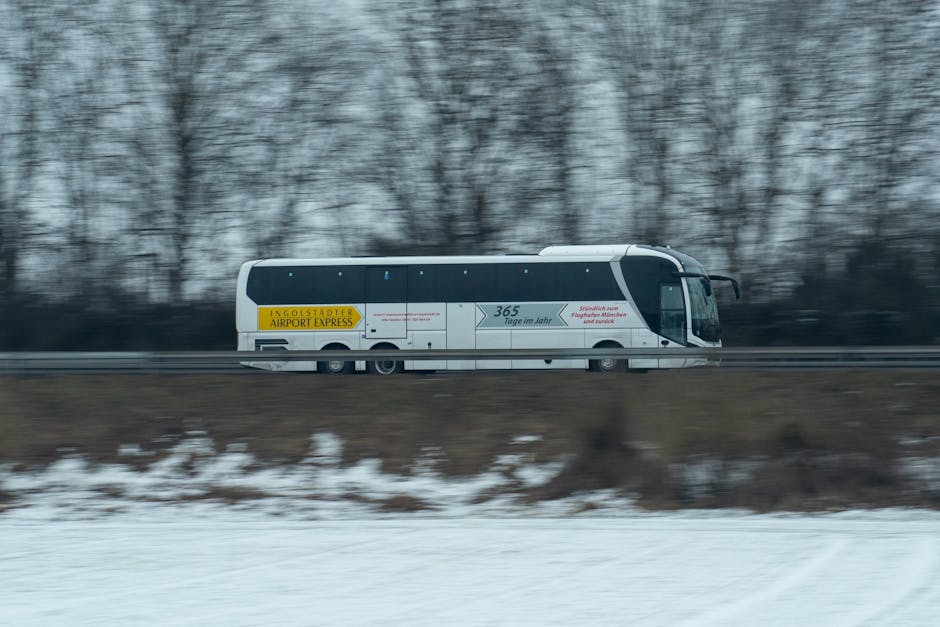
The Aerobus is a dedicated airport shuttle that runs between the airport and Plaza Catalunya in central Barcelona. Two lines operate:
- A1: Connects T1 with the city centre.
- A2: Connects T2 with the city centre.
How It Works
- Frequency: The A1 (T1) runs every 5 minutes through the main part of the day and every 10 to 20 minutes at other times; the A2 (T2) runs every 10 minutes by day and every 20 minutes overnight.
- Hours: 24 hours a day, 365 days a year, on both lines.
- Stops in the city: Plaza d’Espanya, Gran Via-Urgell, Plaza Universitat, Plaza Catalunya. The reverse route picks up only from Plaza Catalunya, Sepulveda-Urgell, and Plaza Espanya.
- Time: About 35 minutes to Plaza Catalunya.
Cost
7.75 EUR one way, 13.30 EUR round trip (valid 90 days from purchase, with a further 90 days for the return once you have made the outbound trip). Children under 4 free. Tickets purchasable at the bus stop, on the bus, or online in advance.
Pros and Cons
- Pros: Frequent, comfortable, plenty of luggage racks, drops at Plaza Catalunya for easy onward connections, Wi-Fi on board.
- Cons: Only four city stops; if your hotel is far from these stops, you still need a metro or taxi.
Who Should Use the Aerobus?
First-time visitors, anyone staying in central Barcelona (Eixample, Old City), travellers who prefer a comfortable single-vehicle ride.
Option 3: Train (R2 Nord / Renfe Rodalies)
The Renfe Rodalies R2 Nord commuter train runs from the airport station serving Terminal 2 into central Barcelona.
How It Works
- Frequency and hours: Check the day’s timetable on the Rodalies de Catalunya site before you fly.
- Time: Depends on your stop; the same timetable lists it.
- Train station: The airport’s station serves T2. T1 passengers must take the free shuttle to T2.
Cost
Single tickets are sold at the airport ticket machine. Important note: a standard T-Casual card DOES cover this train fare for travel within zone 1.
Pros and Cons
- Pros: Fastest public transport option; drops you at central rail hubs; covered by T-Casual.
- Cons: Only T2; T1 passengers need the shuttle; less frequent than the Aerobus or metro; older trains with mixed Wi-Fi.
Who Should Use the Train?
T2 arrivals; travellers staying near Sants or Passeig de Gracia; anyone who already has a T-Casual card.
Option 4: Bus L46 (Urban Bus to Plaza Espanya)
L46 is a regular city bus connecting the airport to Plaza Espanya. It is the cheapest legitimate option.
How It Works
- Frequency and hours: Check the line 46 timetable on TMB’s site.
- Stops: T1, T2, Mercabarna, Hostafrancs, Plaza Espanya.
- Time: Depends heavily on traffic.
Cost
2.90 EUR with a single ticket, or use a T-Casual card (the L46 fare is included in zone 1). Considerably cheaper than the airport metro or Aerobus.
Pros and Cons
- Pros: Cheapest option; covered by T-Casual; useful for backpackers.
- Cons: Slowest of all motorised options; subject to traffic; less luggage space.
Who Should Use the Bus?
Backpackers and budget travellers; T-Casual holders; anyone with light luggage.
Option 5: Taxi
Barcelona’s official black-and-yellow taxis form the most widespread transfer option. They are metered, regulated, and reliable.
How It Works
- Where to find: Taxi ranks outside both terminal exits, follow the signs.
- Time: Depends on traffic and where your hotel is.
Cost
The metered fare plus an airport supplement of 4.60 EUR (2026). Total typically 33 to 45 EUR to central Barcelona, more during nights, weekends, and holidays. There is no surge pricing: the meter runs on regulated tariffs, and time spent waiting in traffic adds to the fare.
Pros and Cons
- Pros: Door-to-door, comfortable, good with luggage, fast in light traffic.
- Cons: Most expensive of the regular options; subject to traffic during rush hour.
Who Should Use a Taxi?
Couples and groups of 3 to 4 (cost per person becomes competitive); travellers with heavy luggage; anyone arriving late at night when public transport is sparse; travellers staying in hotels not near major metro lines.
Tips for Taxi Use
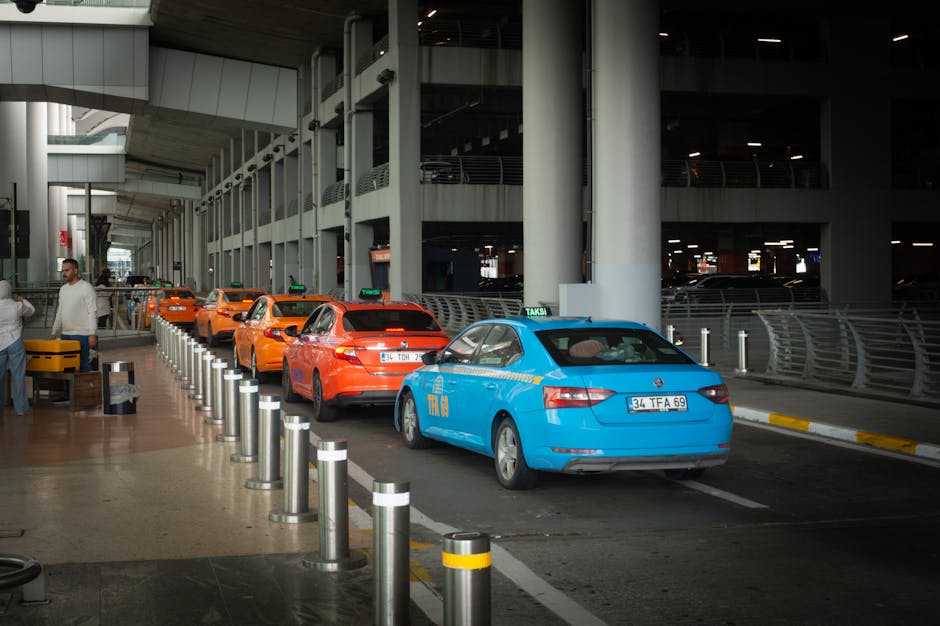
- Use only the official ranks. Never accept a ride from someone offering you a cab inside the terminal.
- Confirm the meter is on at the start of the ride.
- Taxis from the rank run on the meter plus the airport supplement. A fixed price (the T-3 tariff) is available when you book through a validated taxi app, and trips between the airport and the Moll Adossat cruise terminals have a fixed fare of 46 EUR including supplements.
- Card payments are accepted in nearly all taxis. Mention “tarjeta” if you want to pay by card.
- Tipping is small (5 to 10 percent) and not required.
Option 6: Private Transfers and Ride-Shares
Private Transfers
Pre-booked private transfer companies offer vehicles ranging from sedans to vans. You receive a meet-and-greet at arrivals with a sign showing your name. Useful for groups, families, or VIP arrivals.
- Cost: 35 to 80 EUR for a sedan to central hotels; 75 to 150 EUR for vans up to 8 passengers.
- Operators: Welcome Pickups, Suntransfers, GetTransfer, and many local agencies.
Cabify, Uber, and Free Now
Ride-share apps are legal in Barcelona but operate with restrictions. Uber picks up from dedicated parking areas at each terminal; with Cabify, follow the pickup instructions in your booking.
- Cost: Comparable to taxis (30 to 50 EUR to central hotels), with surge pricing during peak times.
- Free Now: An app that connects you with regular taxis (cheaper than ride-shares but uses the regulated taxi fleet).
Pros and Cons of Private Transfers
- Pros: Fixed price, no language barrier, hotel meet-and-greet, ideal for groups and large luggage.
- Cons: Often more expensive than taxis for solo travellers and couples.
Choosing Your Transfer: A Decision Guide
By Group Size
- Solo: Aerobus or metro. Train if your hotel is near Sants or Passeig de Gracia.
- Couple: Aerobus, metro, or taxi (taxi if you have heavy bags).
- Group of 3: Taxi (cost per person is competitive).
- Group of 4+: Private transfer or two taxis.
- Family with young children: Taxi or private transfer (door-to-door wins).
By Hotel Location
- Plaza Catalunya / Eixample: Aerobus is ideal.
- Sants / Passeig de Gracia: Train R2 is ideal.
- Old City / Gothic Quarter: Aerobus to Plaza Catalunya, then walk or hop on the metro, depending on your street; or taxi.
- Barceloneta / Olympic Marina: Metro L9 Sud, then a connecting line to reach L4 (the two don’t meet), or taxi.
- Gracia / Park Guell area: Taxi or metro L9 + L3.
- Outside the central districts: Taxi.
By Time of Arrival
- 5:00 AM to midnight: The metro runs from 5:00 AM; check the timetable of the train or bus you plan to take.
- Midnight to 5:00 AM: The Aerobus runs all night, every night. The metro runs right through Saturday night and until 2:00 AM on Fridays and the night before a public holiday; other nights, there is the night bus N17 (covered by T-Casual) and taxis.
By Luggage
- Carry-on only: Any option works.
- Standard checked bag plus carry-on: Aerobus or train work well.
- Multiple large bags: Taxi or private transfer.
By Budget
- Lowest cost: Bus L46 (2.90 EUR single, less per trip on a T-Casual).
- Best mid-range value: Aerobus (7.75 EUR).
- Best fixed-price taxi alternative: Free Now app or Welcome Pickups.
- Premium: Private transfer.
Common Mistakes to Avoid
- Buying a T-Casual thinking it covers the airport metro. It does not. Use the dedicated airport ticket or a Hola card.
- Accepting rides from touts in the terminal. Always use the official taxi rank.
- Showing up at the wrong terminal. Confirm T1 vs T2 with your airline; switching terminals by shuttle eats into your time.
- Underestimating Aerobus luggage. The buses fill quickly during peak times; arrive at the stop a few minutes early.
- Booking a taxi via a third-party reseller. Use Free Now or just the rank.
- Forgetting that the train only stops at T2. Plan accordingly.
- Using the L46 bus with heavy luggage. Limited space; consider another option.
- Paying for a 72h Hola card when a T-Casual would suffice. Run the maths first.
Returning to the Airport
The same options work in reverse. Practical tips for departure:
- Allow 2 hours buffer. If you are taking the train, look up the R2 Nord departures from your station the day before.
- Aerobus from Plaza Catalunya: Stops are clearly signed; allow 30 to 35 minutes to the airport, depending on the time of day.
- Taxi during rush hour: Leave earlier; time stuck in traffic slows the trip and runs up the meter.
- Late-night flights: Use a taxi, a pre-booked transfer or the 24-hour Aerobus; the metro stops at midnight Monday to Thursday, runs until 2:00 AM on Fridays and the night before public holidays, and keeps going all Saturday night.
Accessibility
- Metro L9 Sud: Fully accessible, with elevators and step-free boarding.
- Aerobus: Wheelchair accessible with ramps on every bus.
- Renfe Rodalies trains: Mostly accessible; check the specific train at the station information desk.
- Bus L46: TMB’s buses have access ramps and low floors.
- Taxis: Wheelchair-accessible taxis can be requested in advance via Radio Taxi or Free Now app.
- Private transfers: Most operators offer accessible vehicles on request; book ahead.
Travellers needing assistance can request airport assistance through their airline at booking; staff will meet you at the gate and help with luggage and transfer.
Practical Tips for a Smooth Arrival
- Download the TMB app and Free Now app before arriving. Real-time arrivals, ticket purchases, taxi requests.
- Carry small euros in cash. Aerobus drivers, the metro vending machines, and small kiosks all accept cash; cards are also widely accepted.
- Buy your ticket on the right side of the bus stop. Aerobus has a separate vending machine.
- Confirm your hotel address before getting in a taxi. Have it on your phone in Catalan or Spanish.
- Set expectations for traffic. Friday afternoons and Monday mornings are slow.
- Pickpockets work the public transport. Keep wallets and phones in zipped pockets.
- The L9 metro stops at Sants Estacio (with one transfer). Useful if you have an onward train or bus.
- Free luggage carts at the airport. Available in arrivals; check the airport’s information desk.
Special Situations
If Your Flight Is Delayed Past Midnight
The metro closes at midnight Monday-Thursday, but the Aerobus runs through the night, every night of the year. The night bus N17 also connects the airport to Plaza Catalunya every 30 minutes (covered by T-Casual), and taxis wait at the ranks outside both terminals.
If You Have a Long Layover
If you have 4 to 8 hours, take the L9 metro into the city, see one neighbourhood, eat, and return. See our Barcelona in 1 day itinerary for a layover-friendly plan.
If You Are Travelling with a Pet
Small pets in carriers travel free on the metro and Aerobus. Larger dogs require a muzzle and leash; check current rules at the operator’s website.
If You Are Connecting to an Onward Train
Sants Estacio is the main rail hub with AVE high-speed trains to Madrid, Tarragona, Valencia, Seville, and France (TGV). The R2 Nord train and L9 metro both connect to Sants. Allow 1 hour buffer between airport arrival and onward train departure.
Frequently Asked Questions
What is the cheapest way from Barcelona airport to the city?
The L46 city bus is the cheapest, at 2.90 EUR for a single ticket or less on a T-Casual, but slow. The Aerobus at 7.75 EUR is the best value for most visitors.
What is the fastest way from Barcelona airport to the city?
From T2, the R2 Nord train avoids road traffic altogether; from T1, a taxi takes you door to door, though rush hour slows it.
How long does it take from Barcelona airport to the city centre?
It depends on the option and where you are going. The Aerobus takes about 30 to 35 minutes to Plaza Catalunya; with the metro, train, bus or taxi, connections and traffic decide the time.
Does the T-Casual cover the airport metro?
No. The airport metro is a separate fare (5.90 EUR). The T-Casual covers the L46 bus and the R2 train.
Is the Aerobus or the metro better?
Aerobus if you are staying near Plaza Catalunya. Metro if your hotel is on L1, L3, or L5 outside the centre, or if you have a Hola card.
How do I get from Terminal 1 to Terminal 2?
A free shuttle bus runs 24 hours a day: every 5 minutes from 8:00 AM to 8:00 PM, every 7 minutes from 5:00 to 8:00 AM and from 8:00 PM to midnight, and every 10 minutes overnight. Allow extra time for the wait and the ride.
Can I take the Aerobus with luggage?
Yes. The buses have luggage racks at the front and rear. Large suitcases fit easily.
How much does a taxi from Barcelona airport cost?
33 to 45 EUR including the 4.60 EUR airport supplement; more during nights, weekends, and rush hour.
Do Uber and Cabify operate at Barcelona airport?
Yes, both have designated pickup zones. Free Now (which uses regulated taxis) is often a cheaper option.
Is the L46 bus too slow for a 4 PM arrival?
The L46 shares the road with all other traffic, so its journey time varies and is hard to plan around. The Aerobus is more predictable.
Are there any 24-hour transfer options?
Yes: the Aerobus runs 24 hours a day on both lines. The metro runs 24 hours from Saturday morning through Sunday close. The night bus N17 runs after midnight on weekdays.
Can I use the Hola Barcelona Travel Card for the airport?
Yes. The Hola card includes the airport metro fare. Buy in advance from the official site or vending machines.
Final Thoughts: Plan Once, Travel Smoothly
The right choice for barcelona airport to city transfer depends on your party, your luggage, and your hotel. For most first-time visitors with one or two checked bags staying in central Barcelona, the Aerobus is the best balance of price, comfort, and speed. For Hola card holders, the metro is integrated into the rest of the trip. For groups of 3+, taxis are the smarter choice. For arrivals with very heavy luggage or VIP requirements, private transfers are worth the premium.
Pick the option, save the directions on your phone, and you arrive in Barcelona ready to explore. For more on getting around, see our getting around Barcelona pillar, the Barcelona metro guide, and the main Barcelona travel guide for the practical logistics of your full trip.
The one transfer this page does not cover is the airport to the cruise quay, which catches out a surprising number of people because there is no direct public transport link at all — the Aerobús goes to Plaça de Catalunya and the metro does not go near Moll Adossat. If you are joining a ship, a taxi is the easy option, at the fixed airport–port fare of €46 per cab including supplements (2026); the alternative is public transport into the centre, then the Cruise Bus shuttle out to the terminals. Our Barcelona cruise port guide sets out the embarkation-day logistics, including why flying in the same morning is the one gamble not worth taking.
This page is about the journey between the airport and the city. If your question is about the airport itself — which terminal you need, how long the free T1–T2 shuttle takes, where the four Priority Pass lounges are, whether an eight-hour layover is enough to get into town, or whether you can sleep there before an early flight — our Barcelona airport guide covers all of it, including the walking times inside Terminal 1 that catch out a surprising number of connecting passengers.
All of the above assumes you are landing at El Prat. A good many budget flights sold as “Barcelona” land at Girona or Reus instead, both roughly a hundred kilometres away on opposite sides of Catalonia. Our guide to getting from Girona and Reus airports to Barcelona covers the direct coaches, the fares and the timings — and the case for not coming into the city at all.
Heading straight from the airport to a cruise ship rather than into the city? Our Barcelona airport to cruise port guide covers that journey in detail, from the fixed taxi fare to the cruise lines’ own transfers and the budget routes by train and shuttle bus.