We get commissions for bookings made through this post. Booking links, and any accommodation options shown on the page, are handled by a partner that adds commission tracking automatically. It never costs you more, and it never affects what we recommend. Affiliate disclosure
There is one taxi ride in Barcelona where the meter does not matter. Between El Prat airport and the cruise terminals, the city’s regulated taxis charge a flat fare, €46 in 2026, whatever the traffic on the Ronda Litoral and however long the queue at the port gate. For most people with suitcases, that fixed price is the whole answer to getting from Barcelona airport to cruise port, and the rest of this guide explains why, what the cheaper alternatives involve, and when they are actually worth the extra effort.
We cover the taxi, cruise-line and private transfers, the public transport routes (there is no direct one), how much time to allow on embarkation day, and the same journey in reverse when your cruise ends. For the airport itself, its two terminals and the free shuttle between them, see our Barcelona airport guide; for every route from the airport into the city, see our airport transfer guide; and for the port, our Barcelona cruise port guide. Fares were checked in October 2026.
Airport to cruise port at a glance
| Option | Cost | Time | Best for |
|---|---|---|---|
| Taxi | €46 fixed fare per cab (2026) | About 25–40 minutes | Almost everyone with luggage, and any group of two or more |
| Cruise line transfer | Set by the line, per person | Coach time plus waiting for other passengers | People who want the line to handle everything |
| Private transfer | Quoted per vehicle | Similar to a taxi | Larger groups, meet-and-greet, accessible vehicles |
| Train + metro + Cruise Bus | About €11 per person | About 75–90 minutes | Solo travellers with light bags and time to spare |
| Aerobús + taxi | €7.45 per person plus about €15–20 per cab | About an hour | Solo travellers who would rather not use the metro |
| Metro L9 Sud + Cruise Bus | €5.90 plus €3 per person | About 90 minutes | Almost nobody with suitcases |
The quick answer
If you have suitcases, take a taxi. At €46 for the cab, it costs €23 each for a couple and less than €12 each for four people, it takes you from the arrivals hall to the door of your terminal, and nobody has to carry a case up a metro staircase. The public transport alternatives save a little money for a solo traveller and a few euros each for a couple, at the cost of an extra hour, two or three changes and a shuttle bus that is not designed for luggage.
The only time we would seriously consider anything else is if you are travelling alone with a small bag, have hours to spare before your check-in window, or are spending a night or two in the city before the cruise anyway.
By taxi: the fixed fare
Barcelona’s taxis are regulated by the metropolitan authority, the AMB, and the journey between the airport and the port has its own flat-rate tariff, known as tariff 4. In 2026 it is €46 for the cab; older guides still quote €39 or €45. It applies in both directions, so the same fare covers the trip from the cruise terminal back to the airport at the end of your holiday.
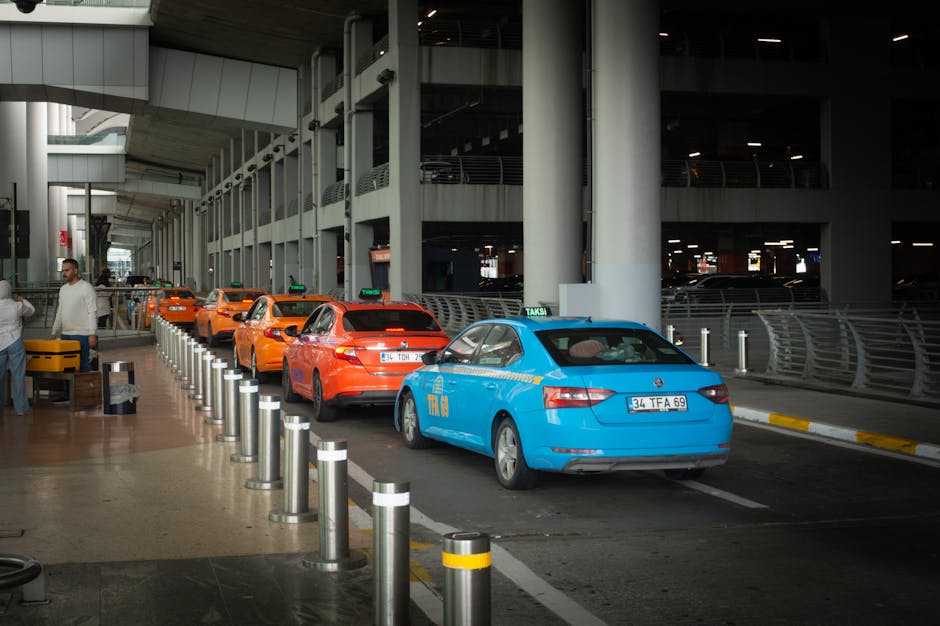
- Take an official taxi from the rank. Follow the signs outside arrivals at either terminal to the official queue of black-and-yellow cabs, and ignore anyone who approaches you inside the building offering a ride.
- Tell the driver your ship and your terminal. “Moll Adossat” plus the terminal letter on your documents, and the ship’s name, is everything the driver needs. Our cruise terminals guide explains the letters.
- Check the tariff. The fixed fare is set on the meter; if the driver runs a normal meter instead, ask politely about the airport–port tariff.
- Know the capacity. A standard taxi takes four passengers and their luggage. Groups of five or more need two cabs or a larger vehicle, which is where a private transfer can make sense.
- Pay by card or cash. Most taxis take cards; tipping is not expected, though rounding up is appreciated.
Without traffic, the drive along the Ronda Litoral and across the port takes around 25 minutes. On a summer weekend morning, when several ships are turning around at once and the port road is busy, allow 40 minutes or more. Our Barcelona taxi guide covers the city’s taxis in more detail, including the apps.
Step by step: from the arrivals hall to the gangway
- Before you fly, note your terminal letter and your check-in time from your cruise documents, and save them somewhere you can show a driver without searching through emails.
- After landing, collect your bags, clear passport control if you are arriving from outside the Schengen area, and walk out through the arrivals hall without stopping for anyone offering a ride.
- Follow the taxi signs to the official rank outside the terminal and join the queue. Marshals at the busiest times direct passengers to the next cab.
- Tell the driver “Moll Adossat”, the terminal letter and the name of your ship, and confirm the fixed airport–port fare.
- At the terminal, the driver drops you at the door. Porters take checked luggage, tagged with the labels your cruise line sent you, and you keep your hand luggage, documents and anything valuable.
- Inside, check-in, security and the walk to the gangway usually take between half an hour and an hour, depending on your slot and how many people arrive at once.
Cruise line and private transfers
Most cruise lines sell their own transfers from the airport to the ship. You are met in the arrivals hall, your luggage is taken care of and a coach takes you to the terminal. The convenience is real, and so is the reassurance if your flight is delayed, since the line knows you are coming. The catch is price: transfers are sold per person, so for a couple, and certainly for a family, they usually cost more than a taxi, and you may wait for other passengers on later flights before the coach leaves.
Private transfer companies quote per vehicle, which makes them good value for larger groups who would otherwise need two taxis, and the best of them will track your flight and wait in arrivals with a sign. If anyone in your party uses a wheelchair, a pre-booked adapted vehicle is the most reliable option; our accessible Barcelona guide has more on this.
By public transport: the budget routes
No public transport goes directly from the airport to the cruise quay. The only public service that reaches the terminals is the Cruise Bus, which runs from the Columbus Monument at the foot of La Rambla, so every public route is a two- or three-stage journey into the city and back out to the port. With a suitcase, each stage is harder than it sounds.
Train, metro and Cruise Bus (about €11)
- Rodalies R2 Nord train from the airport station, which is beside Terminal 2B, to Barcelona Sants: about 20 minutes, every 30 minutes from around 05:40 to 23:30, and about €5. If you land at Terminal 1, take the free shuttle bus to T2 first, which adds 15 to 20 minutes.
- Metro L3 from Sants Estació to Drassanes, five stops and about ten minutes, for €2.90. There are stairs and long corridors at Sants.
- Walk to the Columbus Monument, a few minutes from Drassanes, and take the Cruise Bus to your terminal for €3.
Total: about €11 per person and 75 to 90 minutes, including the waits. It works for a solo traveller with a backpack. With two large suitcases, it is miserable.
Aerobús and a taxi (about €7.45 plus €15–20)
The Aerobús, line A1 from Terminal 1 and A2 from Terminal 2, runs frequently to Plaça d’Espanya and Plaça de Catalunya for €7.45 single or €12.85 return. From Plaça de Catalunya, a metered taxi to the cruise terminals costs roughly €15–20, including the port supplement. For a solo traveller that is cheaper than the fixed fare, and the Aerobús has luggage racks; for two people, the saving over a direct taxi is small and you lose half an hour. Our airport transfer guide covers the Aerobús in detail.
Metro L9 Sud (€5.90 plus €3)
Metro line L9 Sud serves both airport terminals. The special airport ticket costs €5.90, and the ordinary T-casual card does not cover it. Getting to the port means riding L9 Sud to its far end and changing to L3 for Drassanes, then walking to the Cruise Bus: about an hour and a half in all, with long escalators and transfers. We would not do it with luggage.
If you are staying in the city first
If you are spending two or more days in Barcelona before the cruise, the Hola Barcelona travel card is worth a look: the 48-hour card costs €18.70 and covers the L9 Sud metro and the R2 Nord train to and from the airport as well as unlimited city transport. Then, on embarkation day, take a taxi from your hotel to the port; from the centre, expect around €15–25. Our city passes guide compares the travel cards.
What each option really costs your group
Per-person prices hide the most important fact about the taxi: it is one fare for the whole cab. Here is what the main options cost in total for one to four travellers, using 2026 fares and a typical €17.50 metered taxi from Plaça de Catalunya for the Aerobús route:
| Travellers | Taxi (fixed fare) | Train + metro + Cruise Bus | Aerobús + taxi |
|---|---|---|---|
| 1 | €46 | About €11 | About €25 |
| 2 | €46 | About €22 | About €32 |
| 3 | €46 | About €33 | About €40 |
| 4 | €46 | About €44 | About €47 |
For a solo traveller, the train route saves about €35 and costs about an hour. For a couple, it saves about €24, or €12 each, for the same hour and a great deal more effort with luggage. From three people upwards the saving all but disappears, and at four the taxi is cheaper than every alternative. That is why we recommend the taxi so firmly.
Arriving late at night or very early
Flights land at El Prat around the clock, but the public transport does not run all night: the R2 Nord train runs from roughly 05:40 to 23:30, and the metro and buses have their own hours. Taxis, on the other hand, wait at both terminals at any hour, and the fixed fare to the port is the same at three in the morning as at three in the afternoon.
The real problem with a night arrival is not transport but timing. The cruise terminals do not open for check-in in the middle of the night, so if you land late on the evening before your cruise, go to a hotel, not to the port. A night in the city, or at one of the hotels near the airport, is far more comfortable than a night on a bench, and it turns embarkation day into an easy morning taxi ride. Our hotels guide and where to stay guide can help you choose.
Arriving by train instead
If you are reaching Barcelona by high-speed train, from Madrid, Paris, Lyon or elsewhere in Spain, you will almost certainly arrive at Barcelona Sants. From there the simplest option is a taxi from the rank outside the station, on the meter, with a small supplement for journeys that start at Sants; expect a fare broadly similar to the trip from the city centre. The budget alternative is the same as the second half of the airport train route: L3 from Sants Estació to Drassanes and the Cruise Bus from the Columbus Monument. Our train stations guide explains Sants and Barcelona’s other stations, and our Barcelona to Madrid guide covers the high-speed trains on that route.
Flying into Girona or Reus
Some low-cost flights sold as “Barcelona” actually land at Girona or Reus, each about 100 kilometres from the city, and that makes an embarkation-day arrival much riskier. From Girona, the Sagalés airport bus runs to Barcelona’s Estació del Nord in about 75 minutes for €22; from Reus, the Monbus shuttle takes about an hour and a half, more in traffic, for €17.60. Either way you then need a taxi across the city to the port. Our advice: if your flight lands at Girona or Reus, arrive the day before without exception. Our Girona and Reus airports guide has the details.
Travelling with children, or with a lot of luggage
- Child seats. If you need a child seat, book a private transfer that provides one rather than relying on whichever taxi is at the front of the queue.
- Lots of luggage. A standard taxi takes four passengers with a normal amount of luggage. If you are travelling with large cases, golf bags or a pushchair as well, book a larger vehicle in advance, or take two cabs.
- Prams and wheelchairs. Barcelona has adapted taxis that can be booked in advance, and the cruise terminals themselves are step-free.
Which airport terminal will you arrive at?
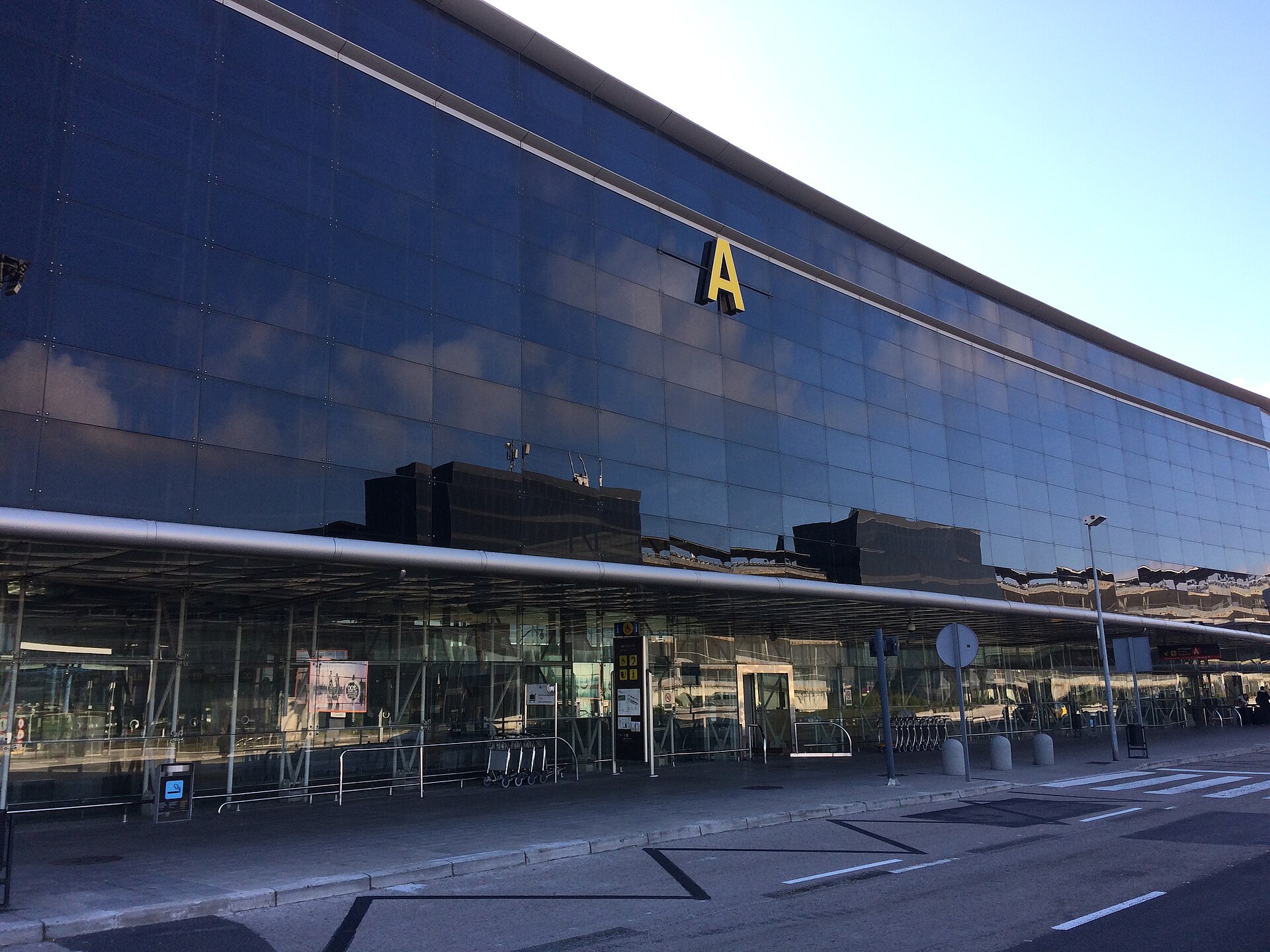
Barcelona-El Prat has two terminals, about four kilometres apart, linked by a free shuttle bus that runs around the clock. Terminal 1 handles most full-service and long-haul flights; Terminal 2, divided into T2A, T2B and T2C, handles many low-cost airlines. Both have taxi ranks and Aerobús stops, so for the taxi it makes no difference. For the train, it matters, because the station is at T2.
If you are flying in from outside the Schengen area, allow extra time at passport control. Since the EU’s Entry/Exit System began in October 2025, non-EU travellers have their fingerprints and photograph recorded on their first entry, and the queues at the busiest times can be long. Our Barcelona airport guide covers the terminals in detail.
How much time to allow on embarkation day
This is where cruise holidays go wrong. A missed ship is the most expensive mistake a cruise passenger can make, and the airport-to-port journey is only one part of the chain: the flight has to be on time, the bags have to come off the belt, passport control has to move, and the road to the port has to be clear.
| Step | Allow |
|---|---|
| Landing to leaving the terminal, with checked bags (Schengen flight) | About 30–45 minutes |
| Landing to leaving the terminal, with checked bags (non-Schengen flight) | About an hour, sometimes more |
| Taxi queue and drive to the port | About 30–60 minutes |
| Check-in and security at the terminal | About 30–60 minutes, depending on your slot |
Add it up and a smooth arrival takes two to three hours from touchdown to the ship, before you allow anything for a delayed flight. That is why the best advice is the simplest: fly in the day before if you possibly can. You arrive relaxed, you get an evening in Barcelona, and a delayed or cancelled flight becomes an inconvenience rather than a catastrophe. If you must fly in on the day, choose a morning flight, check your line’s latest recommended arrival time, and book the cruise line’s own transfer if you want the line to know you are on your way.
Check-in at the terminal works in time slots. If you arrive well before yours, you may have to wait, and there is little to do at the terminals; a morning in the city with your luggage in storage is usually a better use of the time. Our cruise port guide explains the options.
From the cruise port to the airport
The journey back is the same in reverse, with one difference: on disembarkation morning, thousands of passengers leave the same ships at the same time.
- The taxi fare is the same €46 fixed fare, from the terminal rank to either airport terminal.
- Taxi queues can be long at the busiest times, especially when several ships turn around on the same morning. A pre-booked transfer avoids them.
- Allow plenty of time at the airport. Security queues at El Prat can be slow in summer. Do not book a flight that leaves you less than about two and a half to three hours at the airport after you expect to reach it.
- If your flight is late in the day, spend the morning in the city instead of the departure lounge. Our port-day plan has ideas for a few hours in town.
- The Aerobús back to the airport leaves from Plaça de Catalunya, if you are travelling light and want to save money.
Common mistakes
- Taking the Cruise Bus with big suitcases. It is a short shuttle, fine with a daypack and awkward with luggage.
- Accepting a ride from a tout in the arrivals hall. Use the official rank or a company you have booked.
- Trying to walk from the Columbus Monument to the terminals. It is about two kilometres along port roads, with no proper pedestrian route.
- Telling the driver “the cruise port” and nothing else. Give the terminal letter and the ship’s name.
- Booking a tight same-day connection. Fly in the day before if you can.
- Confusing Barcelona with Girona or Reus. Some low-cost flights marketed as “Barcelona” land at Girona or Reus, each about 100 kilometres away. Our Girona and Reus airports guide explains the long way in.
Frequently asked questions
How much is a taxi from Barcelona airport to the cruise port?
There is a fixed fare between the airport and the port, €46 per cab in 2026, for up to four passengers with luggage. The same fare applies in the other direction.
How long does it take to get from Barcelona airport to the cruise port?
About 25 minutes by taxi without traffic, and 40 minutes or more on busy summer weekend mornings. By public transport, allow 75 to 90 minutes.
Is there a bus from Barcelona airport to the cruise terminal?
Not directly. The Aerobús goes to the city centre, and the Cruise Bus runs from the Columbus Monument to the terminals, so by bus you need at least one change, and usually a taxi or metro ride in between.
What is the cheapest way from Barcelona airport to the cruise port?
The R2 Nord train to Sants, the L3 metro to Drassanes and the Cruise Bus, at about €11 per person. It takes up to an hour and a half and is hard work with luggage. For two or more people, the €46 taxi is better value for the time.
Should I book the cruise line’s transfer?
It is the easiest option and the line knows you are coming if your flight is late, but it is priced per person and usually costs more than a taxi for couples and families. It makes most sense if you are flying in on the day of departure.
Can I fly in on the day my cruise leaves?
You can, but it is risky. A smooth arrival takes two to three hours from landing to the ship, and a delayed flight can make you miss it. Flying in the day before is much safer.
Which terminal does my ship leave from?
Your cruise line’s documents give the terminal. MSC uses its own Terminal H, Carnival Corporation brands usually use D or E, and most other lines use A, B or C. Our cruise terminals guide explains each one.
How much is a taxi from the cruise port to the city centre?
The meter runs for trips into the city, and with the port supplement most fares to the centre come to about €15–25, depending on the destination and traffic.
Related Barcelona Guides
- Barcelona cruise port guide — the port, the shuttle and the cruise tax.
- Barcelona cruise terminals — every terminal and who uses it.
- Barcelona airport — terminals, lounges and getting around El Prat.
- Airport transfers — every way between El Prat and the city.
- Barcelona taxis — fares, supplements and apps.
- One day in Barcelona from a cruise ship — for a few hours in the city.
Photo Credits
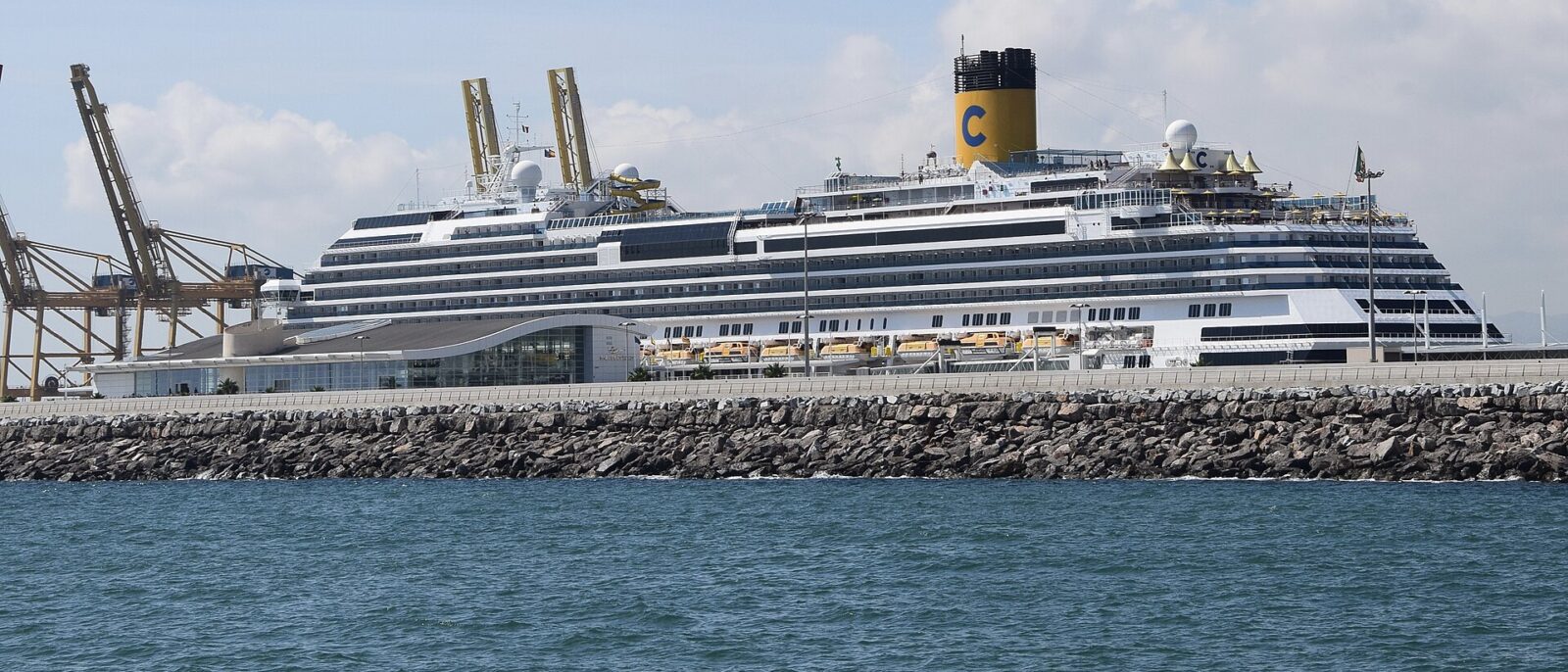
A Costa cruise ship at a terminal on the Moll Adossat: 2014- MV Arcadia Cruise Ship, Port of Barcelona, Spain ( Ank Kumar ) 03 by Ank Kumar, CC BY-SA 4.0, via Wikimedia Commons.
Terminal 2A at Barcelona-El Prat airport: Terminal 2A Aeropuerto Barcelona-El Prat by Azulino, CC BY-SA 4.0, via Wikimedia Commons.