We get commissions for bookings made through this post. Booking links, and any accommodation options shown on the page, are handled by a partner that adds commission tracking automatically. It never costs you more, and it never affects what we recommend. Affiliate disclosure
Why Every Visitor Should Master the Barcelona Metro
If you only learn one practical skill before your trip, make it the Barcelona Metro. The system is fast, clean, dependable, and absurdly well integrated with the rest of the city’s transport. Once you understand how the lines fit together, the metro puts most of the city’s neighbourhoods and its big Gaudi monuments within reach, with journey times that depend on your route and connections. This barcelona metro guide walks you through the barcelona metro map, the metro lines barcelona uses, current ticket prices for 2026, barcelona metro hours, accessibility, safety, and the small tricks that separate confident travellers from the lost ones standing in front of vending machines.
By the end of this article you will know exactly which line runs to the airport, which station drops you at the front door of the Sagrada Familia, and how to combine a single ticket with buses and trams without paying twice. We have written this so you can read it once before the trip and bookmark it as a reference while you are here.
The Barcelona Metro Network at a Glance
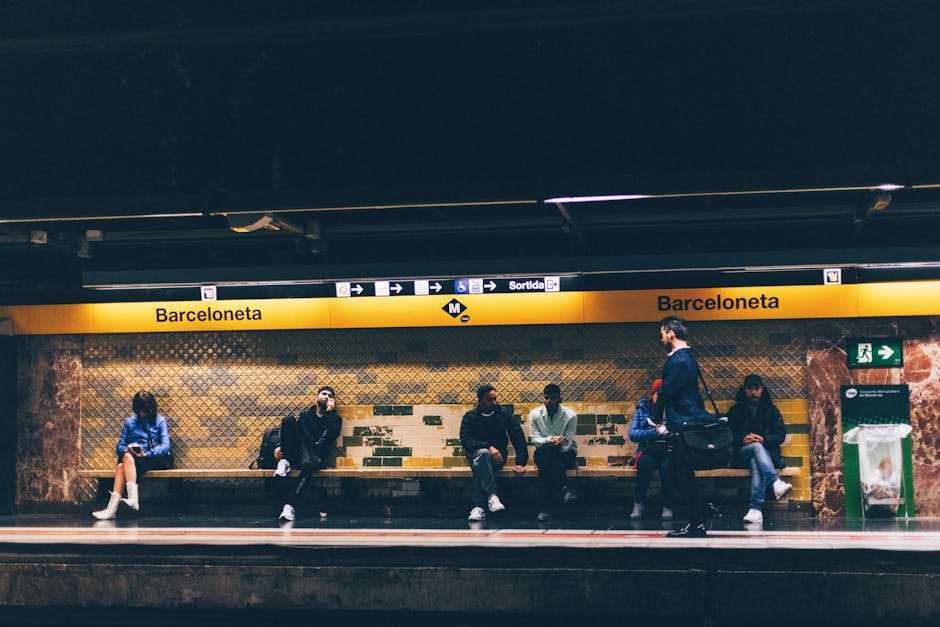
Barcelona’s metro is operated by two organisations under one combined fare system. Transports Metropolitans de Barcelona (TMB) runs the eight numbered lines that cover most of the city: L1, L2, L3, L4, L5, L9 Sud, L10 Sud, and L11. The smaller Ferrocarrils de la Generalitat de Catalunya (FGC) operates lines L6, L7, L8, S1, and S2, which serve the upper neighbourhoods and connect to suburbs in the wider region.
For a tourist, the practical takeaway is simple: any train inside the city runs on the same single ticket, regardless of operator. You only need to think about TMB versus FGC if you are heading out of town, for example to Montserrat or to Tibidabo via the funicular.
In total there are more than 180 stations across the TMB and FGC metro lines, and the central districts are well covered, though the walk to the nearest stop varies, so check it from your accommodation before you book. In 2024 the metro carried 468.67 million journeys, about 1.28 million a day.
Barcelona Metro Map: How the Lines Fit Together
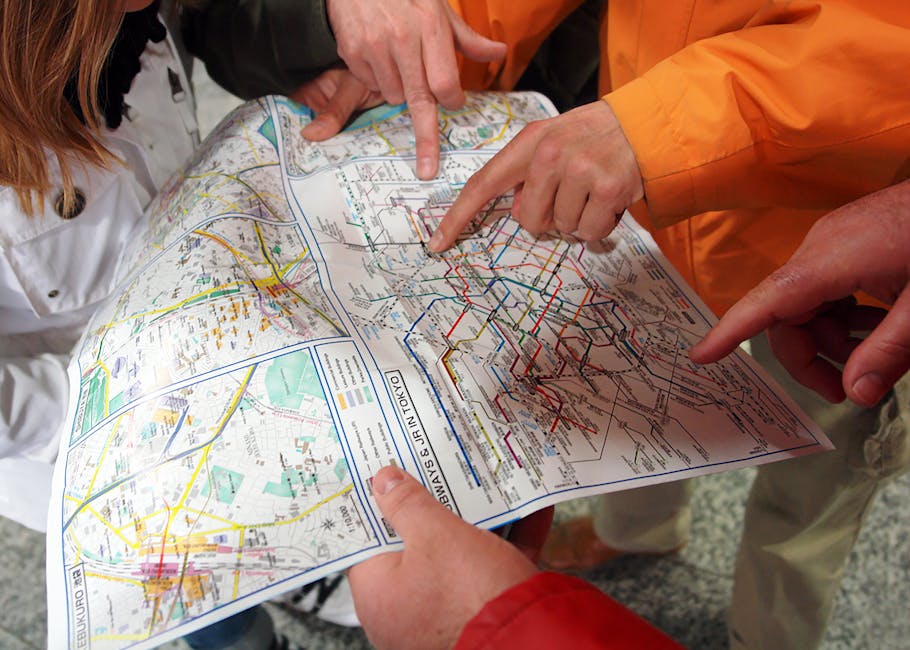
The official barcelona metro map uses one colour per line, and once you spend ten minutes with it you will see the shape of the city in your head. A few pairings of lines do most of the heavy lifting for tourists:
- L1 (red) and L3 (green) form the spine of the network. L3 cuts diagonally through the historic core, passing Passeig de Gracia, Liceu (Las Ramblas), and Drassanes (Old Port). L1 runs east to west and is your friend for getting between Plaza Catalunya and the central station, Sants Estacio.
- L2 (purple) and L5 (blue) serve the inner suburbs, the Sagrada Familia neighbourhood, and stations such as Hospital Clinic, Diagonal, and Sants Estacio.
- L4 (yellow) follows the coastline. Use it for the beaches at Barceloneta and Ciutadella Vila Olimpica, and to reach the Gothic Quarter via Jaume I.
- L9 Sud (orange) is the airport line. It connects T1 and T2 to Zona Universitaria, and from there you transfer to L3 for the city centre.
You will find printed copies of the map at every station, usually near the ticket machines, and pocket versions are stocked at the tourist information offices. The free TMB App includes the map, real-time arrivals, and route planning, and we strongly recommend downloading it before you arrive.
The Most Useful Stations for Tourists
Most visitors spend the bulk of their time at fewer than 20 stations. The ones below put you within walking distance of Barcelona’s headline attractions.
Catalunya (L1, L3, FGC)
The single most important interchange in the city. Plaza Catalunya is where the Old City meets the Eixample, and the station connects underground to the airport-bound Aerobus, the Renfe rail station, and FGC commuter trains. Almost every itinerary starts here.
Sagrada Familia (L2, L5)
The exit puts you directly opposite the basilica’s Nativity Facade. If you are visiting with timed-entry tickets, give yourself five minutes from station gate to entrance.
Drassanes (L3)
The bottom of Las Ramblas at the Old Port. Drassanes is the gateway to the Maritime Museum, the Columbus Monument, and the boardwalk to Barceloneta beach.
Liceu (L3)
Drops you at the heart of Las Ramblas and the Gran Teatre del Liceu opera house. Walk five minutes east into the Gothic Quarter to reach the Cathedral and Placa Sant Jaume.
Jaume I (L4)
The locals’ choice for the Gothic Quarter and El Born. Jaume I leaves you between the Picasso Museum and Placa Sant Jaume.
Passeig de Gracia (L2, L3, L4)
The Modernista belle of the Eixample. Step out and you are between Casa Batllo and Casa Mila (La Pedrera), with shopping along Passeig de Gracia in either direction.
Diagonal (L3, L5)
A useful interchange and a five-minute walk from Casa Mila and the chic shops of Avinguda Diagonal.
Espanya (L1, L3, L8, FGC)
Your gateway to Montjuic, the Magic Fountain, the National Art Museum (MNAC), and trains for day trips to Montserrat. The station is also the bus hub for Camp Nou matchdays.
Barceloneta (L4)
One stop from Jaume I, this is the closest metro to the marina and Barceloneta beach. Walk straight out and follow the masts.
Ciutadella Vila Olimpica (L4)
Drops you between Parc de la Ciutadella and the Olympic Port for Nova Icaria, Bogatell, and Mar Bella beaches.
Barcelona Metro Tickets and Fares for 2026
The metro shares a single fare system with buses, trams, FGC commuter trains within the city, and the funiculars on Montjuic and Tibidabo. That means the ticket you buy underground is also valid on the bus that takes you up the hill, provided you stay within the time limit. Here are the headline options.
Single Ticket (Bitllet Senzill)
One trip on the metro only. As of 2026, the price is 2.90 EUR. Once validated, the ticket is valid until you leave the metro, so you may change between metro lines as many times as you like on that one journey. You cannot use a single ticket to transfer to a bus or tram. For a single, isolated journey the single is fine, but for almost every other use case the T-Casual below is better value.
T-Casual
The classic choice for visitors. The T-Casual is a single-passenger card good for 10 journeys, valid until the next fare change, and priced at 13 EUR for 2026 in zone 1. It works across metro, buses, trams, FGC, and Renfe Rodalies within the city. Each tap counts as one journey, and within 75 minutes you can transfer between modes (for example metro to bus) without using a second journey, with two exceptions: a metro-to-metro change at the same station counts as a single trip, and any move counts as a separate trip if it has been more than 75 minutes since you first tapped in.
Hola Barcelona Travel Card
An unlimited-use card aimed squarely at tourists. You can buy a 1-day (24-hour), 48, 72, 96, or 120-hour version, and a single ticket value covers any number of trips on metro, bus, tram, FGC inside zone 1, the airport metro, and the regional rail to El Prat from inside Barcelona. The regular prices are 18.70 EUR (48h), 27.30 EUR (72h), 35.60 EUR (96h), and 43.60 EUR (120h). It is hands-down the best deal if you plan more than three transfers a day, especially on a trip that includes airport transfers on both ends.
T-Familiar
A multi-passenger card with eight journeys, valid for 30 consecutive days from the first validation and shared between travellers, each of whom uses one journey per ride. It costs 11.50 EUR for 2026 in zone 1. Useful for a family of four making short hops together.
T-Dia
Unlimited rides for one person for 24 hours from the first validation, priced at 12 EUR in zone 1. Worth it if your day involves five or more journeys, and it includes one journey to and one from the airport metro stations. Usually the Hola card is better value for visitors.
T-Jove
An unlimited 90-day card for travellers under 30, priced at 45.50 EUR. Excellent value for students or interns staying a season.
Children under four travel free. Always validate every ticket on every trip and keep it on you until you exit; inspectors do appear, and fare evasion carries a minimum penalty of 100 EUR, cut to 50 EUR for adults who pay at the inspection or within two working days.
The Airport Metro: Line 9 Sud
One of the best upgrades to the network in recent years was the extension of L9 Sud into Barcelona-El Prat Airport. The metro now serves both Terminal 1 and Terminal 2, with stations branded “Aeroport T1” and “Aeroport T2”.
The metro trip from Terminal 1 to the city centre takes around 32 minutes, with one transfer to L1, L3, or L5 depending on your hotel; the walk to your door comes on top. Trains run every 7 minutes most of the day. The flat airport fare for 2026 is 5.90 EUR each way, and importantly, the airport stations are not covered by a standard T-Casual. A T-Dia includes one journey to and one from Aeroport T1 and T2, and the Hola Barcelona Travel Card also covers the airport metro.
If you want a cheaper alternative and you are willing to use the bus, the urban L46 bus to Plaza Espanya is included in the regular zone 1 fare, so a T-Casual or Hola card covers it.
Aerobus vs Metro vs Taxi
For a quick comparison, the dedicated Aerobus is a comfortable shuttle between the airport and Plaza Catalunya, costing 7.75 EUR one way and taking about 30 to 35 minutes. It runs 24 hours a day: the A1 every 5 minutes through the main part of the day, the A2 every 10 minutes by day. A taxi from the airport is metered with a flat supplement and typically costs 35 to 45 EUR depending on traffic and destination. For a couple with luggage going to a central hotel, a taxi can be the right call. For solo travellers and pairs travelling light, the metro is the best value option in Barcelona.
Barcelona Metro Hours: When the System Runs
The headline schedule that catches every visitor by surprise is that the Barcelona metro stays open until 2:00 AM on Friday nights and runs continuously on Saturday nights. On a Saturday night you can stumble out of a club at 5:00 AM and still catch a train home.
The full barcelona metro hours for 2026 are:
- Monday to Thursday: 5:00 AM to 12:00 midnight.
- Friday: 5:00 AM to 2:00 AM Saturday.
- Saturday: 5:00 AM continuously through to Sunday close, that is, 24-hour service.
- Sunday: service runs until midnight (continuous from Saturday morning).
- Public holidays: 5:00 AM to 12:00 midnight, with all-night service on Sant Joan’s eve (23 June), La Mercè eve (23 September) and New Year’s Eve; check TMB for any other changes around events.
How often trains come depends on the line, the day and the hour; the TMB app shows the next arrivals at your station.
If you are out past closing on a weekday, the night bus network (Nitbus) takes over with routes that radiate out from Plaza Catalunya. Each Nitbus trip is also covered by the regular T-Casual and Hola card.
How to Buy and Use Your Ticket
Every station has a row of ticket vending machines with English, French, German, Catalan, and Spanish menus. The interface is touchscreen and accepts contactless cards, chip-and-PIN cards, Apple Pay, Google Pay, and cash. Prepare for the machines closest to the gate to be the busiest at peak hours; walk further into the station and you will usually find an empty one.
The flow is the same every time. Choose your language, choose your ticket type (single, T-Casual, Hola Barcelona, etc.), tap your card or insert cash, and a paper ticket pops out from the slot. Place it on top of the gate’s reader (the orange circle), wait for the chime, and walk through. Keep it for the journey because you may need it again on a transfer or to exit.
Contactless and Mobile Tickets
TMB’s contactless option is called T-Mobilitat. You can load a single ticket onto a T-mobilitat card or a compatible mobile phone. The phone needs NFC, and you validate by holding it against the reader at the gate.
What to Do if the Gate Beeps Red
If the gate flashes red and the ticket pops back, do not panic. The ticket may be used up or the stripe may not have read, and on a one-zone integrated ticket the 75-minute limit for transfers runs from your first validation. Step to a customer-service desk, present the ticket, and the staff will either reset it or sell you a replacement.
Tips for Smooth Riding
The Barcelona metro is well behaved by big-city standards, but a handful of habits will make every journey easier.
- Stand on the right of the escalator. The left side is for people walking up. Block it and you will hear about it.
- Let passengers off first. The doors are narrow and the wave of arrivals comes hard. Wait by the side, then board.
- Watch your bag in central stations. Pickpocketing on Las Ramblas, Catalunya, Sagrada Familia, and Liceu is the main petty-crime risk in Barcelona. Front-facing daypacks, zipped pockets, and a hand on your phone in your pocket are all the precaution most visitors need.
- Avoid travel during peak hours when carrying luggage. Trains can be packed at the weekday commuter peaks, so allow extra time or travel outside them.
- Use the front of the train at busy hours. The cars closest to the front of the platform are usually a little less full.
- Keep your validated ticket until you exit. Ticket inspectors check on board and at exits.
- Bookmark the live status page. The TMB website has a real-time service page in English; check it before late-night journeys when occasional engineering closures kick in.
Accessibility on the Barcelona Metro
TMB has lifts at 156 of its 165 metro stations, about 95 percent, and trains have designated doors for wheelchair users; check lift status before you set off. Platform staff can be called via the help points if assistance is needed. Notable exceptions still under retrofit are some older stations on L4 and L5; the TMB accessibility map shows the current step-free status of every stop.
Visually impaired travellers benefit from tactile paving, audible announcements in Catalan, Spanish, and English, and braille station numbers in the lifts. Service dogs travel free and are welcome.
FGC stations on L6, L7, and L8 are nearly all accessible. The funicular trains to Montjuic and Tibidabo are also wheelchair-accessible.
Safety on the Barcelona Metro
Barcelona’s metro is statistically one of the safest in Europe in terms of violent crime, but pickpocketing is a problem. Thieves work in teams and often target the moment of boarding, when the doors are about to close and your attention is on the gap. The classic ploys include a “bumped” stranger, a fake fight to draw your eye, or someone “helping” you with the ticket machine. None of these need to ruin a trip if you take a few precautions.
- Wear backpacks on the front in crowded carriages, especially on L3 between Catalunya and Drassanes.
- Keep wallets and phones in zipped, internal pockets.
- Decline help from strangers at vending machines. The official staff have lanyards and TMB uniforms.
- If something does go missing, report it at the next station’s customer service desk and at the local police station; you will need a written report (denuncia) for travel insurance claims.
Stations are well lit, monitored by CCTV, and patrolled by the Mossos d’Esquadra (Catalan police) and TMB security staff. Late-night riding is generally safe, though many locals shift to taxis after 1:00 AM in quieter outer districts.
Connecting the Metro to Other Transport
The metro is one piece of a fully integrated network. Your T-Casual or Hola Barcelona Travel Card is also valid on:
- TMB buses: the daytime bus network, including the L46 to the airport and the H, V, and D lines that grid the city horizontally and vertically.
- Trams: Trambaix and Trambesos, which serve the western suburbs and the Forum area beyond Diagonal Mar.
- FGC commuter trains within zone 1: useful for reaching the upper neighbourhoods; for Park Guell, take the L3 metro to Lesseps or Vallcarca instead.
- Renfe Rodalies suburban trains within zone 1: useful for trips along the coast to Castelldefels and El Prat town.
- Funiculars: Montjuic Funicular (from Paral.lel station) and Tibidabo Funicular (from Avinguda Tibidabo).
- Nitbus night buses: the 24 routes of the night network, each running to its own overnight timetable.
The 75-minute transfer window is what makes this so practical. On a one-zone T-Casual you can make up to three transfers between integrated services in that time: tap into the metro at Catalunya, ride to Drassanes and board a bus to your hotel, all on a single journey count. Cable cars are not part of the integrated network and need their own tickets.
Special Tickets and Discounts
A few additional cards can save money in specific cases.
- Barcelona Card: A multi-day card that bundles unlimited transport (metro, bus, tram, Rodalies in zone 1, airport metro) with free entry or discounts at museums and attractions. Worth it if you plan to visit three or more paid museums per day. Prices for 2026 start around 55 EUR for a 3-day adult card.
- Barcelona Card Express: A shorter version focused on transport plus entry discounts; check the Barcelona Card site for what it currently includes.
- Group T-10 (T-Familiar): Already covered above. Great for families.
- Senior, disability, and family-numerous discount cards: Available to residents and EU/Spanish identification holders only.
If you are travelling on a budget and plan three to four days in town with two airport transfers, the maths usually favours the Hola Barcelona Travel Card. If your priority is museum-hopping, the Barcelona Card pays for itself in two or three free entries.
Common Tourist Mistakes to Avoid
- Buying single tickets every time. A T-Casual is dramatically cheaper if you ride more than three times.
- Forgetting that the airport fare is separate. Standard T-Casual does not cover the L9 Sud airport fare; the Hola card does.
- Validating in the wrong direction at FGC stations. Some FGC stations have separate gates for inbound and outbound; read the signage and the station name on the platform display.
- Trying to share one ticket through the gate. Each rider needs their own validation; use a T-Familiar to share rides legally.
- Throwing away the ticket after entry. Keep it for transfers and to exit.
- Riding L3 with luggage at peak hour. The cars fill up with commuters at rush hour. Travel earlier, later, or take a taxi to the airport.
- Assuming Google Maps is always right. Google’s transit data for Barcelona is excellent but lags during occasional service changes; cross-check with the TMB app for late-night and weekend journeys.
Sample Tourist Routes Using the Metro
Airport to Hotel in the Gothic Quarter
From T1, take L9 Sud to Torrassa, transfer to L1 to Universitat or Catalunya, walk five minutes south into the Gothic Quarter. For the total time to your hotel, put its address into the TMB app’s route planner. Cost on Hola Barcelona: included.
Sagrada Familia to Park Guell
Take L5 from Sagrada Familia to Vall d’Hebron, transfer to L3 toward Zona Universitària, and exit at Vallcarca or Lesseps. From either station, allow about 20 minutes on foot to reach Park Guell.
Old Port to Camp Nou
From Drassanes (L3) take a direct ride to Palau Reial and walk from there to the stadium. For matchdays, the metro adds extra service before and after kick-off.
Hotel to Magic Fountain of Montjuic
From most central locations, ride to Espanya (L1, L3, L8) and walk up the wide ceremonial steps to the fountain. Performance times vary by season; check the schedule before going.
Frequently Asked Questions
How much is a single metro ticket in Barcelona in 2026?
A single ride is 2.90 EUR. A 10-trip T-Casual at 13 EUR is much better value if you ride more than four times.
Does the Hola Barcelona Travel Card cover the airport metro?
Yes. The airport metro fare is included in the Hola Barcelona Travel Card. A standard T-Casual does not cover it.
What time does the Barcelona metro close?
Midnight Sunday through Thursday, 2:00 AM on Friday, and 24-hour service from Saturday morning through Sunday close.
Is the Barcelona metro safe at night?
Yes, the metro is well-lit, well-staffed, and patrolled. Pickpocketing is the main concern. Use zipped pockets, keep your phone secure, and stay alert in crowded carriages.
Can I use the metro to get to Montserrat?
Indirectly. Ride the metro to Espanya, then board the FGC R5 line to Montserrat. The FGC trains share the same building. Our Montserrat day trip guide walks through the connection step by step.
Can children ride free?
Children under four travel free. Older children pay full adult fare unless covered by a family resident card.
Can I pay with my contactless bank card?
At the vending machines, yes. Some metro entrances also have a special validator where you tap a contactless bank card to buy and validate a single ticket; elsewhere, buy your ticket from the machine first.
Does the metro run on holidays?
Yes, on a Sunday-equivalent schedule. Trains run through the night on the eves of Sant Joan (23 June) and La Mercè (23 September), and on New Year’s Eve; before any other big event, check TMB for changes.
Final Thoughts: A System Built for Visitors
You can do almost everything in Barcelona without ever stepping into a taxi. The metro is the cheapest, fastest, most reliable way to move between neighbourhoods, beaches, and Gaudi landmarks. Spend ten minutes with the barcelona metro map on your first morning, pick up a Hola Barcelona Travel Card or a T-Casual, and the city becomes yours. For the next pieces of your transport plan, see our guides to getting around Barcelona, the airport transfer options, and the city bus and tram network.
Whatever you do, do not let a fear of public transport keep you from exploring this city’s full sprawl. The metro is friendly, fast, and one of the great quiet pleasures of a Barcelona trip.