We get commissions for bookings made through this post. Booking links, and any accommodation options shown on the page, are handled by a partner that adds commission tracking automatically. It never costs you more, and it never affects what we recommend. Affiliate disclosure
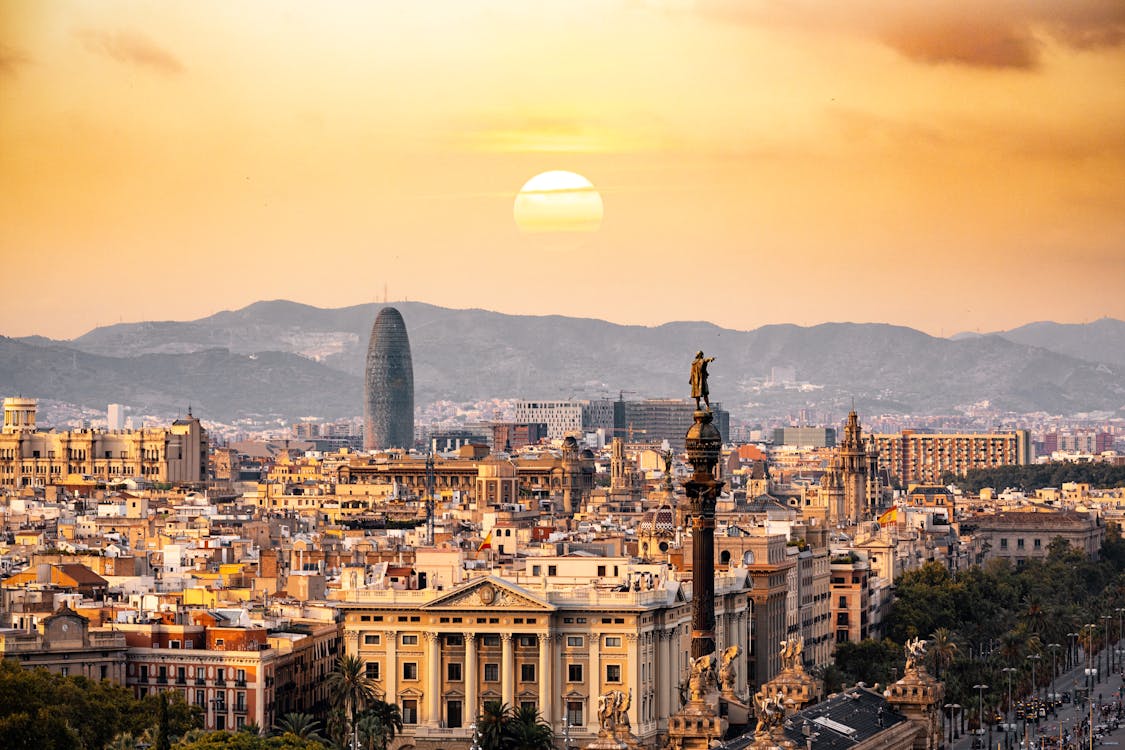
The first thing that surprises people stepping off a ship here is the distance. You can see the Columbus Monument from the top deck, the Gothic Quarter looks like a twenty-minute stroll, and then you get to the bottom of the gangway and discover you are on a working industrial quay two kilometres long with no pedestrian exit. The barcelona cruise port is Europe’s busiest, handling well over three million passengers a year, and the single most useful thing to understand before you arrive is that almost nobody walks out of it.
This guide covers the whole thing: which terminal you will actually dock at now that the port is being restructured, how to get into the city and what each option costs, how much you can realistically see in a seven-hour call, what to do if Barcelona is your embarkation or disembarkation port, and the specific mistakes that leave people sprinting back down Moll Adossat. Prices were checked in September 2026 and are in euros; treat them as the right order of magnitude, and check the current fare before you travel.

The port at a glance
| What | Detail |
|---|---|
| Main cruise quay | Moll Adossat — Terminals A, B, C, D, plus E-Helix and H-MSC |
| Old city-centre quay | WTC North (closed), WTC South (closing end of 2026) |
| Distance to Las Ramblas | ~2–3 km from Adossat, no safe walking route |
| Cruise Bus (Portbus) | €3 one way, €4.50 return, terminals to the Columbus Monument |
| Taxi to central Barcelona | €15–25, 15–30 minutes |
| Airport (BCN) to port by taxi | ~€35–45, 20–30 minutes |
| Cruise passenger tourist tax | ~€6 per call |
| Typical time in port | 07:00–17:00 or 08:00–18:00 |
| Realistic sightseeing window | 6–7 hours ashore |
Which terminal will you dock at?
This has changed, it is changing further, and a lot of what is written online is now wrong. Here is the current position.
Moll Adossat — where almost everyone berths now
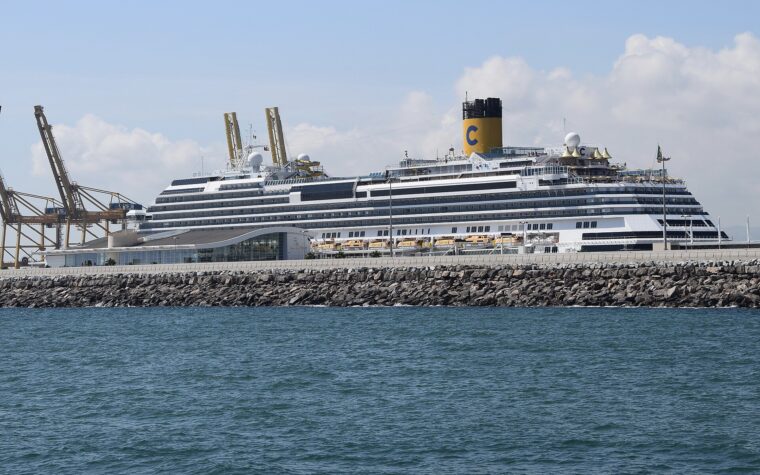
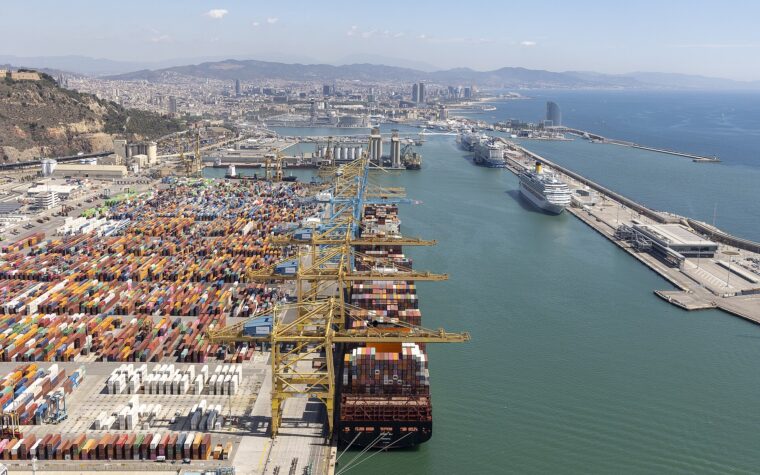
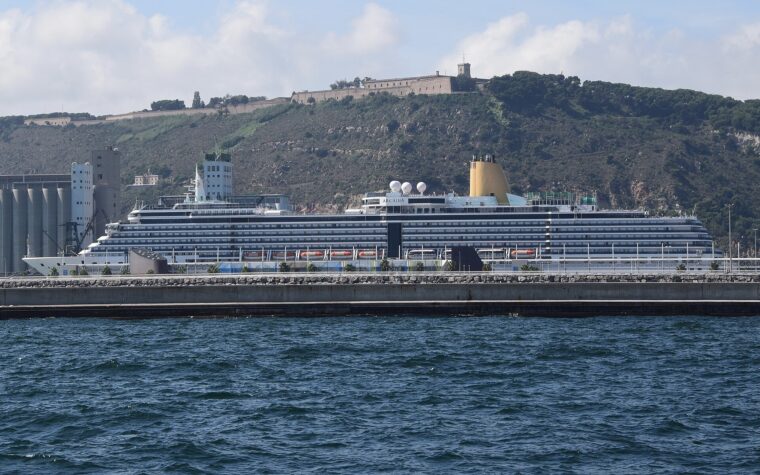
Moll Adossat is the long breakwater quay that runs out from the base of Montjuïc. It carries Terminals A, B, C and D plus the two purpose-built terminals E-Helix and H-MSC, which take the largest ships. If you are on a mainstream line — Royal Caribbean, MSC, Costa, Norwegian, Celebrity, P&O, Princess — this is where you are going.
The quay is roughly two kilometres long, it is an operational port zone with lorries and cranes, and pedestrians are not permitted to walk its length. Every terminal has its own building with security, a taxi rank and a shuttle stop. Which terminal you get depends on your line’s berth allocation, and that is printed on the port document your cruise line issues shortly before departure — not on any website, because it can move.
The World Trade Center terminals are closing
For decades the smaller ships berthed at the WTC on Moll de Barcelona, right at the foot of Las Ramblas, and every older guide tells you that if you are lucky you can simply walk to Drassanes in ten minutes. That is no longer reliable advice. Port de Barcelona has already closed the WTC North terminal, moving around 340 cruise and ferry calls a year out to Adossat, and WTC South is scheduled to close at the end of 2026, taking roughly seventy more calls with it. The 630 metres of quay it frees up becomes public space.
Plan for Adossat. If you happen to get a WTC berth in the meantime, treat the ten-minute walk to Drassanes and the L3 metro as a bonus rather than an expectation.

What the restructuring means for future cruises
In July 2025 the city council and the port signed a protocol that, for the first time, caps cruise growth in Barcelona. Moll Adossat drops from seven terminals to five, backed by €185 million of public and private investment. Terminal C is due to be demolished at the end of 2026; a new publicly owned terminal is to be built on the site through 2027, with capacity for 7,000 passengers at a time; Terminals A and B come down in 2028, when shore power is installed so ships can switch off their engines in port; the new arrangement is meant to be at full capacity by 2030.
Practically, that means construction work on the quay for the next several years, terminal assignments that shift more often than they used to, and — eventually — a cleaner, quieter port with fewer, better berths. If you are booking a Barcelona call for 2027 or 2028, check the terminal on your final documents rather than assuming it matches what you had last time.
Terminal by terminal
All the Adossat terminals do the same job, and none of them is a reason to celebrate or complain, but the differences are worth knowing when you are working out how long the walk to the shuttle stop will be.
- Terminals A and B — the oldest buildings on the quay, small, functional, and scheduled for demolition in 2028. Furthest out along the breakwater, so the shuttle ride into town is at the longer end.
- Terminal C — due to come down at the end of 2026 and be replaced by a new publicly owned terminal capable of processing 7,000 passengers at a time. Expect construction hoardings in the meantime.
- Terminal D — larger and newer, used by several of the big mainstream lines, with a proper arrivals hall and a decent taxi rank.
- Terminal E (Helix) — the purpose-built Carnival-group terminal, distinctive spiral ramp, handles the very large ships and handles them well. Boarding here is usually the smoothest experience on the quay.
- Terminal H (MSC) — MSC’s own terminal, modern, with a big open concourse and reliable WiFi.
- WTC North and South — the city-centre pair, now closing. If you get one, you are lucky: Drassanes metro is ten minutes on foot and the Gothic Quarter starts across the road.
Getting from the ship into the city
Five options, and the right one depends almost entirely on how many of you there are and how much time you have.
The Cruise Bus (Portbus)
The blue Cruise Bus is the workhorse. It shuttles between the Adossat terminals and the Columbus Monument at the bottom of Las Ramblas, costs €3 one way or €4.50 return, and runs frequently while ships are in. Buy from the kiosk at the terminal or from the driver, and hold on to the return half — it is the cheapest way to do the journey and the return is barely more than a single.
The journey takes ten to fifteen minutes depending on traffic and where on the quay you started. At peak disembarkation, when three big ships have emptied at once, expect a queue; the buses cycle quickly but there can be a twenty-minute wait around 09:00. If you are heading back for an all-aboard time, allow for the same queue in reverse.
Taxis
Every terminal has a rank and Barcelona’s taxis are metered, regulated and generally honest. Expect €15–25 into the centre — the Gothic Quarter, Eixample, Passeig de Gràcia — and 15 to 30 minutes depending on traffic. There is a port supplement and a luggage charge, both legitimate and both small.
For a family of four, a taxi beats the Cruise Bus on both cost and time: four Cruise Bus returns come to €18 and still leave you at the Columbus Monument rather than where you actually want to be. Our Barcelona taxi guide covers the fare structure and the supplements.
The ship’s own shuttle
Some lines run their own coach into the city, typically at €12–20 per person return. It drops in roughly the same place as the Cruise Bus. It is worth paying for only if it is included in your fare or if you have mobility needs that make the public shuttle awkward — otherwise you are paying four to six times the Portbus price for the same journey.
Walking
Do not. This is the single most common mistake at this port. Moll Adossat is around two kilometres of working quay with no footpath, no shade and heavy vehicle traffic, and the walk only starts properly once you reach the Columbus Monument. People do attempt it, and in July they regret it inside ten minutes. If you dock at the WTC, walking is fine and quick; from Adossat it is not a realistic option.
Hop-on hop-off and organised excursions
The tour buses pick up near the terminals and are more defensible here than they are for a normal city break, because they solve the transfer and the sightseeing in one purchase. That said, they are slow in traffic, and Barcelona’s metro is fast and cheap once you are in town. If you want to move under your own steam, a T-casual multi-journey ticket is the sensible buy — see the metro guide and the T-mobilitat explainer.
We compare all of these in detail, with timings from each terminal, in the dedicated Barcelona waterfront and port guide.
What you can actually see in one day ashore
Be realistic. A ship in at 07:00 and away at 17:00 gives you an all-aboard time around 16:30, and once you have queued for the shuttle at both ends you have six to seven usable hours. That is two significant sights, or one sight and a proper lunch, and not much more. Trying to fit the Sagrada Família, Park Güell, Las Ramblas and a tapas crawl into a single call is how people end up seeing all four badly.
The one-sight-plus-wander plan
Book the Sagrada Família for around 10:00, spend an hour and a half there, then take the L2 or L5 back down and eat in El Born or the Gothic Quarter, walking off the afternoon. This is the single best use of a call for a first-time visitor, and it is unhurried. Book that ticket weeks in advance: the basilica is €26, sells timed thirty-minute entry windows, and does not care that your ship is leaving. Our attractions and tickets guide has current prices and lead times for everything.
The Gaudí-lite plan
If you cannot get a Sagrada Família slot, walk Passeig de Gràcia instead: Casa Batlló and La Pedrera are eight minutes apart, both visible from the street for nothing, and one interior visit fits comfortably into a call. Add the Illa de la Discòrdia and you have a good architectural morning. The Gaudí guide maps the whole trail.
The stay-near-the-port plan
Underrated. From the Columbus Monument you can be in the Gothic Quarter in five minutes, at Santa Maria del Mar in fifteen, at the Picasso Museum in twenty, and at the Barceloneta beach in the same. No metro, no transfer risk, and you are never more than half an hour from the shuttle stop. If your call is short, or the weather is bad, or you have been to Barcelona before, this is the low-stress option — the Gothic Quarter guide and the Barceloneta guide cover the ground.
The Montjuïc plan
Montjuïc rises directly above the cruise quay, which makes it the closest major sight to the ship. The cable car from Barceloneta, the castle at the top, the MNAC terrace and the Miró foundation make an easy half-day with a genuinely spectacular view down onto your own ship. See the Montjuïc guide.
What not to attempt on a call
- Montserrat. Beautiful, and a four-hour round trip minimum before you have looked at anything. Only on a very long call, and only with an organised excursion that guarantees to get you back.
- Girona or Figueres. Both are wonderful and both are too far. See the day trips guide for what they actually involve.
- Camp Nou plus anything else. The stadium is out at Les Corts and the tour runs 90 minutes to three and a half hours. It eats a call on its own.
- Park Güell in the afternoon. Slots sell out, the hill is a twenty-minute climb from the metro, and the return journey is longer than people expect.
If Barcelona is your embarkation port
Barcelona is the start of a huge number of western Mediterranean itineraries, which means a lot of people fly in the same morning and hope for the best. Do not do that.
Arrive the day before
Every experienced cruiser says it and it remains the single best piece of advice: fly in at least one night early. Barcelona is a genuinely great city to spend a day and a night in, flight delays are not the port’s problem, and the peace of mind is worth the hotel. If you only have one night, the Gothic Quarter and El Born put you within a short taxi of the terminals and within walking distance of dinner. See our where to stay guide for the areas, and note that Barcelona’s tourist tax now runs to roughly €10–15 a night in hotels after the April 2026 increase — budget for it, because it is charged separately at check-out.
Getting from the airport to the ship
El Prat (BCN) is about 15 km from the cruise quay. A taxi is the sensible choice with luggage: the airport–port run has its own fixed fare, €46 per cab in 2026, and takes 20 to 30 minutes without traffic. The Aerobús runs to Plaça de Catalunya from both terminals, from where you would still need a taxi or the Cruise Bus, so it only makes sense if you are stopping in the city first. There is no direct public transport from the airport to Moll Adossat. Our airport transfer guide compares every route.
Luggage and timing
Most lines open check-in around midday and want you aboard by mid-afternoon. If you arrive early you can usually drop bags at the terminal and go for a couple of hours, though this varies by line and by terminal, so ask rather than assume. Left-luggage offices exist at Barcelona Sants and near Plaça de Catalunya if you want the whole day in the city before boarding — see the train stations guide for the Sants facilities.
If Barcelona is your disembarkation port
The reverse problem, and the more common source of stress. Ships typically clear passengers between 07:00 and 09:30, which leaves you standing on a quay at eight in the morning with suitcases and a flight that is not until the evening.
- Take the taxi, not the shuttle. The Cruise Bus is fine with a daypack and awkward with two large cases. At 08:00 with luggage, €20 into town is money well spent.
- Use left luggage. Barcelona Sants has a proper facility, as do several private operators around the centre. Drop the bags, get a full day in the city, collect on the way to the airport.
- Do not cut the flight fine. Allow at least four hours between leaving the ship and your check-in closing, more in August. Disembarkation runs late more often than it runs early.
- Consider one more night. Barcelona rewards a proper day far more than an airport lounge does. Our one-day itinerary is built for exactly this situation.
What changes with the season
Barcelona’s cruise season now runs effectively year-round, but a call in February is a completely different day out from a call in August, and the difference is worth planning around.
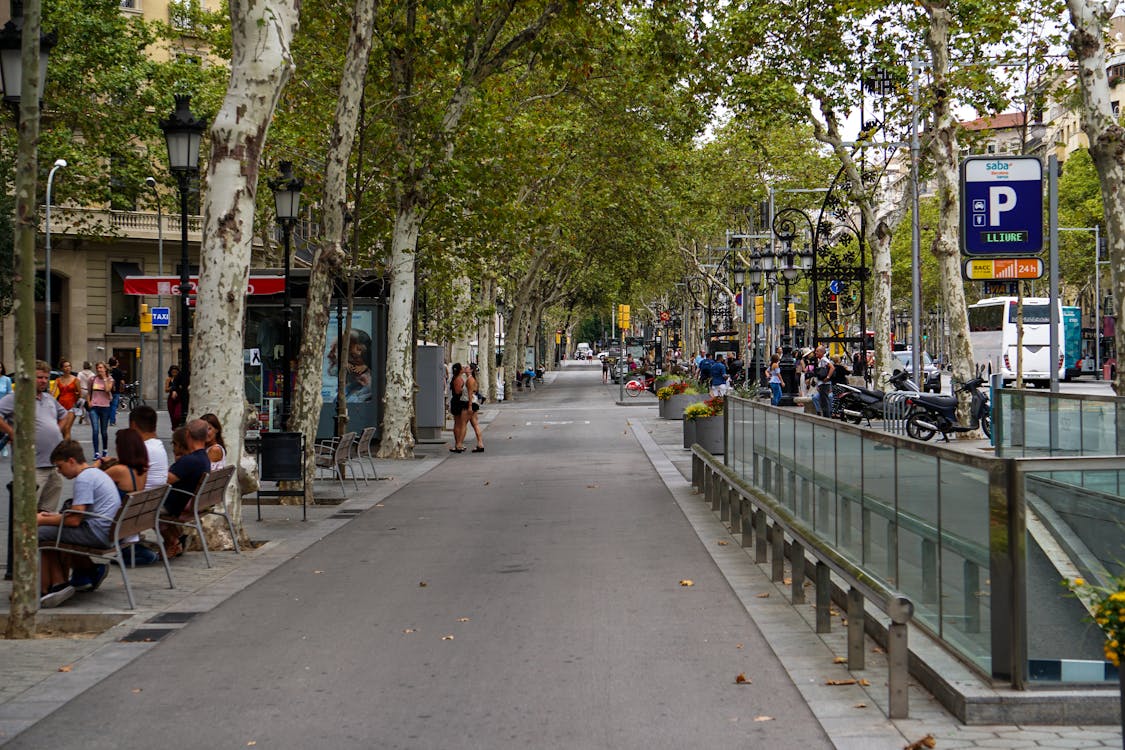
- May to September — peak. Three or four ships a day at Adossat, long shuttle queues at 09:00, headline attractions sold out weeks ahead, and heat that makes a midday walk up to Park Güell a genuinely bad idea. Book everything in advance and start early.
- October — the wettest month, around 98 mm across roughly eleven days, but still warm at about 22 °C with six hours of sun. Indoor sights are unaffected and the crowds have thinned. A good month to be here.
- November to March — fewer ships, shorter queues, and attractions you can book days rather than weeks ahead. Cold by Mediterranean standards, mild by northern European ones. The city is at its most liveable and the Gothic Quarter is at its best.
- April — Sant Jordi on the 23rd fills the streets with book and rose stalls and is one of the loveliest days of the year to be ashore. See the Sant Jordi guide.
If your itinerary is flexible, the best time to visit guide goes month by month, and the festivals calendar flags the dates when the city itself is the attraction.
Overnight calls: what to do with the evening
A growing number of itineraries now stay overnight in Barcelona, and it transforms the visit — because this is a city that does not really start until about nine in the evening. If you have an overnight, the day plan should change: do the ticketed sight in the afternoon rather than the morning, go back to the ship for a shower, and come out again at eight.
Dinner at nine or half past is normal rather than late. The vermut hour before it, roughly seven to eight, is one of the genuinely great Barcelona rituals and costs almost nothing. After dinner, El Born and the Gothic Quarter are full of small bars, the Poble Sec pintxo strip runs late, and Barceloneta’s beachfront is at its best when the day-trippers have gone. Our nightlife guide covers the whole spectrum and the best bars page is the shortcut.
Two practical notes. Taxis back to the quay are easy to find until around one in the morning and harder after that, so use an app rather than hoping. And the Cruise Bus does not run all night — check the last departure before you leave the terminal, because from the Columbus Monument you are still two kilometres and one closed gate from your cabin.
If you have been to Barcelona before
Plenty of Mediterranean itineraries call here repeatedly, and by the third visit the Sagrada Família queue has lost its charm. The good news is that the city has considerably more depth than its greatest hits suggest.

- Recinte Modernista de Sant Pau — €18 for an entire restored modernista hospital campus, ten minutes from the Sagrada Família and about a hundredth as crowded.
- Poble Sec and Montjuïc’s back slope — the Miró foundation, the castle, the Olympic ring, and pintxo bars on Carrer de Blai afterwards. Barely twenty minutes from the terminal.
- Sitges — thirty-five minutes on the R2 from Passeig de Gràcia or Sants, a proper seaside town with a beach and a cathedral on a rock. Comfortably doable on a long call. See the Sitges guide.
- Gràcia — the old village that Barcelona grew around, all small squares and independent shops, and a completely different city from the one the shuttle drops you in. Our Gràcia guide has the route.
- The Bunkers del Carmel — free, and the best view in Barcelona, though note the new curfew closing the site at 19:30 in summer and 17:30 in winter. Fine for a daytime call, no use for an overnight one.
For more of this, the hidden gems page and the neighbourhoods guide are where the second and third visits live.
Money, tax and the practical details
The cruise tourist tax
Catalonia charges cruise passengers a tourist tax that rose sharply in April 2026: €11 per passenger for a call of under 12 hours and €9 for 12 hours or more, the short call taxed more heavily to discourage brief visits. It is normally collected by the cruise line rather than at the quay, so it appears on your onboard account rather than as something you queue to pay. Hotels charge separately and considerably more.
Cash, cards and tipping
Barcelona is close to cashless. Cards work everywhere including the Cruise Bus kiosks, taxis and most market stalls. Carry €20–30 in small notes for the odd bar that has a minimum, and ignore the currency-exchange booths near the port entirely — the rates are poor. Tipping is modest here: rounding up, or five per cent for good service in a restaurant. The money guide has the detail.
Pickpockets
Barcelona’s reputation is deserved and cruise passengers are a specific target, because a disembarking crowd is visibly out-of-town, distracted and carrying valuables. The metro line from Drassanes, the bottom of Las Ramblas and the Sagrada Família approach are the three hotspots. Front pockets, zipped bags, nothing on the back of a chair. Violent crime is genuinely rare; opportunist theft genuinely is not. See the Barcelona safety guide.
Facilities at the terminals
Each Adossat terminal has toilets, seating, a small café or vending, free WiFi of varying quality and a taxi rank. What they do not reliably have is a supermarket, a pharmacy or anything you would want to shop in. If you need something specific, buy it in the city — the terminals are transit buildings, not destinations. There is no left-luggage facility at the terminals for people in transit.
Accessibility
The terminals themselves are step-free and modern. The Cruise Bus takes wheelchairs but can be crowded at peak; taxis are the more reliable option, and Barcelona’s adapted taxi fleet can be booked in advance. Once in the city, the metro is largely but not entirely lift-equipped, and the Gothic Quarter’s medieval paving is hard going. Our accessible Barcelona guide covers what works and what does not.
Eating near the port without wasting your day
The strip of restaurants immediately behind the Columbus Monument and along the lower part of Las Ramblas exists to serve people with three hours and no information. Photographic menus, paella that arrived frozen, €7 for a beer. Walk five minutes further and everything improves dramatically.
- El Born — fifteen minutes on foot from the shuttle drop, and full of proper places. Start with our El Born guide.
- Barceloneta — the old fishermen’s quarter, best for seafood and vermut, and the closest good eating to the port. See the seafood guide.
- Poble Sec — Carrer de Blai’s pintxo bars, cheap and excellent, and a short hop from the port side of Montjuïc.
- La Boqueria — go for the stalls at the back, not the fruit-cup wall at the front. The markets guide explains which counters are worth queueing at.
If you want a single reference for what to eat, our Barcelona food guide and the tapas guide are the places to start. And if someone offers you a set-price “authentic paella” on Las Ramblas, keep walking — the paella guide explains why.
Nine mistakes cruise passengers make in Barcelona
- Assuming you can walk out of the port. From Adossat you cannot, and finding that out at the bottom of the gangway costs you twenty minutes and a lot of goodwill.
- Not booking the Sagrada Família in advance. There is no walk-up. The slot you want is gone weeks ahead in season.
- Buying the ship’s shuttle without checking the Cruise Bus price. €3 against €15 for the same journey.
- Planning four sights. Six usable hours is two sights. Everything else is a slideshow.
- Eating at the bottom of Las Ramblas. The worst food in a city with some of Europe’s best.
- Flying in on embarkation morning. One delayed flight and the ship sails without you.
- Ignoring the all-aboard time. It is typically thirty to sixty minutes before departure, and Barcelona traffic at 16:00 is not sympathetic.
- Carrying a bag on your back on the metro. See the pickpocket section, and then move it to the front.
- Relying on a 2019 port guide. The WTC terminals are closing and Adossat is being rebuilt. Check your line’s own port document.
Frequently asked questions
Can you walk from the Barcelona cruise port to the city centre?
Not from Moll Adossat, where almost all ships now dock. It is roughly two kilometres of working quay with no pedestrian route, and the city proper only begins after that. From the WTC terminals it is a ten-minute walk to Drassanes metro, but those terminals are being closed.
How much is the Cruise Bus in Barcelona?
€3 one way and €4.50 return, between the Adossat terminals and the Columbus Monument at the foot of Las Ramblas. Buy at the terminal kiosk or from the driver, and always take the return.
How long does it take to get from the port to Las Ramblas?
Ten to fifteen minutes on the Cruise Bus once you are moving, or fifteen to thirty minutes by taxi to a central address. Add up to twenty minutes of queueing at peak disembarkation.
Is one day enough to see Barcelona from a cruise?
It is enough for one major sight and a proper wander, which done well is a good day. It is not enough for the classic four-sight tour, and trying to force it is the most common way to have a bad time here.
Should I book a ship excursion or do it myself?
Do it yourself unless you are going to Montserrat or somewhere else that carries a real risk of missing the ship. Barcelona is easy, cheap and well signposted, and independent travel costs a fraction of an excursion. The one thing a ship excursion buys you is a guarantee that the ship waits.
Which terminal will my ship use?
It is printed on the port document your cruise line issues before departure, and it can change. All you need to know in advance is that it will almost certainly be on Moll Adossat, and that every terminal there has a Cruise Bus stop and a taxi rank.
How early should I get back to the ship?
Be at the terminal thirty minutes before all-aboard, which is itself usually thirty to sixty minutes before departure. That means leaving the city about ninety minutes before the ship sails. In practice: start heading back after lunch is finished, not when the clock says you should.
Is there luggage storage at the cruise terminals?
Not for passengers in transit. Barcelona Sants station has a full left-luggage facility and there are private operators around Plaça de Catalunya and the Gothic Quarter, all of which are more useful on a disembarkation day.
Do cruise passengers pay the Barcelona tourist tax?
Yes. Since April 2026 it is €11 per passenger for a call of under 12 hours and €9 for 12 hours or more, usually billed through your cruise line rather than collected at the quay.
The transfer is the part of a Barcelona call that most often goes wrong, and it deserves a page of its own. We have costed every option side by side — the €3 Cruise Bus and its morning queue, the €15–25 metered taxi and the point at which a group of three tips the sums in its favour, the ship’s coach at four times the Portbus price, and the hop-on hop-off buses — along with walking times from the Columbus Monument to everywhere worth going. Our Barcelona cruise port to city centre guide has the fares, the timings and the ninety-minute rule for getting back.
The port is not only a cruise terminal. Baleària, Trasmed and GNV sail from here to Palma in as little as three and a half hours, and Grimaldi Lines runs the long crossings to Italy — both of which beat flying once you count the airport transfers. Our onward travel guide compares the ferries against the trains and flights on every route out of the city.
Once you know which terminal you are at and how you are getting into town, the next question is what to do with the hours in between. Our one day in Barcelona from a cruise ship plan sets out four hour-by-hour routes for a typical call, from a first visit built around the Sagrada Família to a quieter day on Montjuïc, with the tickets to book before you sail and the safety margin to keep.
For the detail on each building, our Barcelona cruise terminals guide goes terminal by terminal: who runs A, B and C, which cruise lines usually berth at Carnival’s Terminal D and the Helix, MSC’s own Terminal H, the new Terminal G, the closure of the World Trade Center terminals and what the 2026 to 2030 rebuild changes for passengers.
If you are flying in to join your ship, our Barcelona airport to cruise port guide compares every way from El Prat to the terminals: the fixed taxi fare, cruise-line and private transfers, the budget train, metro and Cruise Bus route, what each costs for one to four people, and how much time to allow on embarkation day.
Related Barcelona Guides
- Barcelona Attractions and Tickets — prices and booking lead times for every major sight.
- One Day in Barcelona — the itinerary that fits a port call.
- Barcelona Waterfront and Port — what to see without leaving the sea.
- Barcelona Airport Transfers — every route from BCN.
- Barcelona Metro Guide — how to move once you are in town.
- Barcelona Safety Guide — pickpockets, and how not to be one of the statistics.
- Barcelona Food Guide — where to eat that is not on Las Ramblas.
- Barcelona Travel Guide — the whole city, from the top.
Photo Credits
Cruise ship at the Moll Adossat quay: 2014- MV Arcadia Cruise Ship, Port of Barcelona, Spain ( Ank Kumar ) 01 by Ank Kumar, CC BY-SA 4.0, via Wikimedia Commons.
World Trade Center and Port Vell: Barcelona 166 by Georges Jansoone (JoJan), CC BY 3.0, via Wikimedia Commons.
Remaining photographs from the barcelonatourism.org library.