Why the Costa Brava Is Catalonia’s Most Beloved Coastline
An hour and a half north of Barcelona, the Costa Brava (the “Wild Coast”) begins. The 200-kilometre stretch of cliffs, hidden coves, medieval villages, and pine-fringed beaches is the seaside escape Catalans guard most carefully. Salvador Dali grew up here. Marc Chagall painted here. Generations of Spanish, French, and Catalan families have spent August here. For Barcelona visitors with a free day or two, a costa brava from barcelona trip is a chance to see Catalonia’s coastline at its most dramatic, eat extraordinary seafood, and experience the towns and beaches that locals choose over the city’s own coast.
This guide covers everything you need: the best costa brava beaches, the most charming costa brava towns, the headline destination of tossa de mar, and a complete costa brava day trip plan with logistics, transport options, and timing. Whether you have one day, two, or a long weekend, the Costa Brava rewards every level of commitment.
What Makes the Costa Brava Different
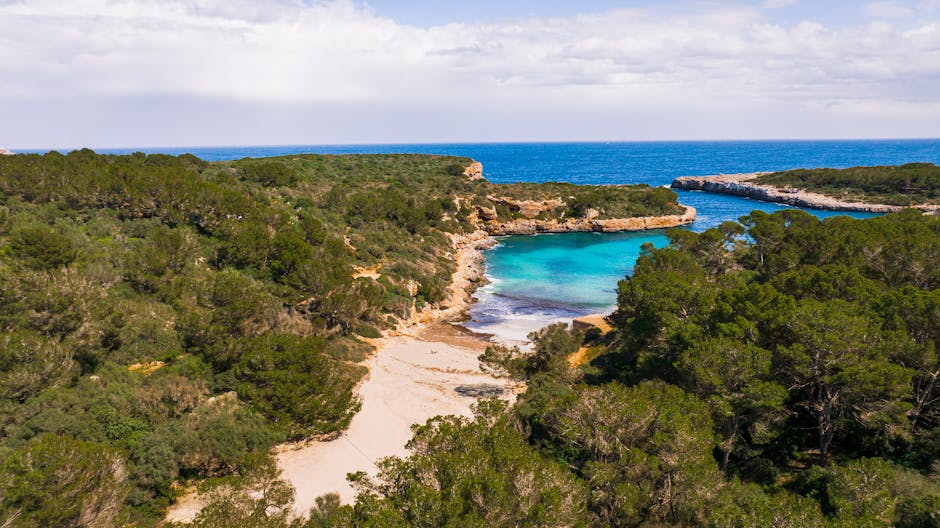
The Costa Brava begins at Blanes, about 70 km north of Barcelona, and ends at the French border at Portbou. The defining feature is the geography: pine-clad cliffs of red rock falling sharply into clear turquoise water, with hundreds of small coves (calas) carved by millennia of erosion. Some coves are accessible only on foot; many are reached by a network of walking paths called the Cami de Ronda that runs along most of the coast.
Three things separate the Costa Brava from Barcelona’s beaches:
- Cliffs and coves vs. flat city sand. The Costa Brava’s terrain is dramatic and varied; the Barcelona city beaches are sand strips.
- Clear water. Mediterranean water at the Costa Brava is famously clear; Barcelona’s city beach water is moderate.
- Local atmosphere. Small Catalan-speaking villages, family-run restaurants, fishermen pulling in catches, and a slower pace.
The trade-off: getting there takes effort. The Costa Brava has no direct metro or AVE connection from Barcelona; you need a regional train, a bus, or a rental car.
How to Get to the Costa Brava from Barcelona
Option 1: Rental Car (Recommended)
The Costa Brava is built for road travel. With a car you can hop between coves, towns, and cliff-top viewpoints freely. Allow 75 to 90 minutes for the drive from Barcelona to Tossa de Mar (the southern Costa Brava), and 2 hours to Cadaques (the northern end).
- Cost: Daily car rental from 30 to 60 EUR plus tolls (about 12 to 18 EUR per day) and fuel.
- Routes: AP-7 motorway is fastest; the coastal road (GI-682) is slower but spectacular.
- Parking: Free or paid in most towns; book a hotel with parking if overnighting.
Option 2: Train + Bus
The Renfe Rodalies R1 line runs from Barcelona Sants to Blanes (90 minutes), where you can transfer to a Sarfa bus to reach the Costa Brava towns. From Tossa de Mar onwards, the bus is the main option.
- Train: R1 to Blanes, every 30 minutes, about 6 EUR.
- Bus: Sarfa from Blanes to Tossa de Mar, Lloret, Calella, Palafrugell. About 5 to 12 EUR.
- Total time to Tossa de Mar: 2 hours 15 minutes.
Option 3: Direct Coach from Barcelona
Several Sarfa and Mon-Bus services run direct from Barcelona’s Estacio Nord to Tossa de Mar, Lloret de Mar, and other Costa Brava towns. About 2 hours each way; 12 to 22 EUR round trip.
Option 4: Organised Day Tours
Group bus tours from Barcelona to the Costa Brava typically cost 70 to 110 EUR per person and combine 2 to 3 towns in one day. Convenient but less flexible than independent travel.
Option 5: Boat Tours
Several Barcelona-based catamaran day tours run to the Costa Brava in summer. Spectacular for seeing the coastline from the water. From 90 EUR per person.
The Best Costa Brava Towns
Tossa de Mar
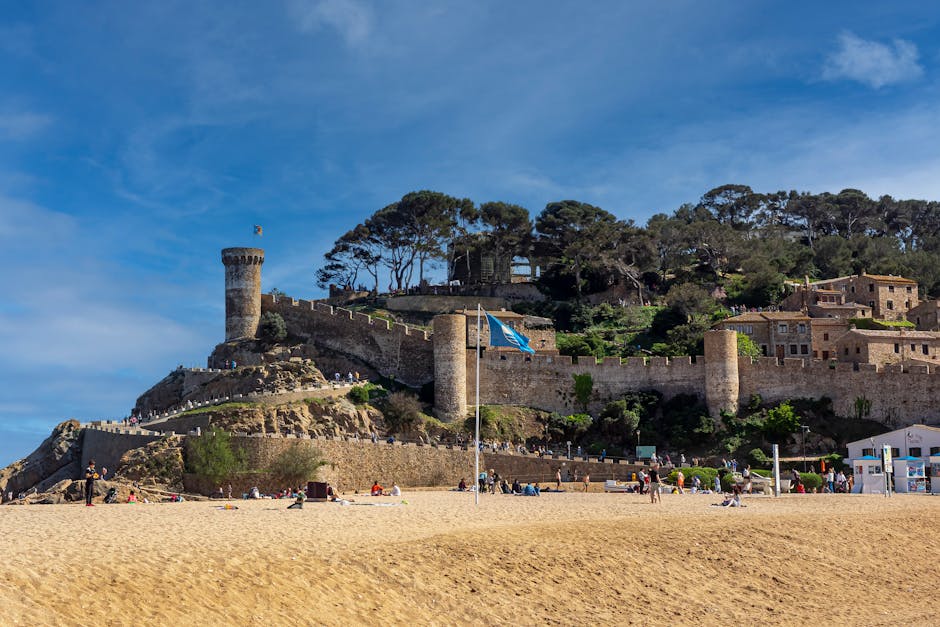
The most famous Costa Brava town and a natural first-time choice. Tossa is dominated by its 12th-century walled fortress (Vila Vella), the only fortified medieval town remaining on the entire Catalan coast. The main beach (Platja Gran) curves below the fortress walls; the smaller Platja Mar Menuda is more peaceful. Restaurants line the harbour with fresh seafood. Marc Chagall called it “blue paradise” when he painted here in 1933.
- Distance from Barcelona: 90 km, 90 minutes by car.
- Best for: First-time visitors, families, romantic walks.
- Don’t miss: Walking the fortress walls at sunset.
Calella de Palafrugell
One of the most picturesque towns on the entire Catalan coast. Whitewashed fishermen’s houses, narrow lanes, and a series of small beaches connected by the Cami de Ronda. Calella has retained its village character despite being a popular destination. Excellent seafood restaurants on the beachfront.
- Distance from Barcelona: 130 km, about 1 hour 45 minutes.
- Best for: Photographers, foodies, slow travel.
- Don’t miss: The walk from Calella to Llafranc along the Cami de Ronda (about 25 minutes).
Llafranc
A smaller, more elegant version of Calella next door. The crescent-shaped beach is one of the most photographed on the Costa Brava, with a beautiful harbour and several stylish hotels.
Cadaques
Salvador Dali’s hometown and one of the most beautiful villages in Spain. Whitewashed houses cling to a small bay, with a long narrow main street and excellent restaurants. The Salvador Dali House Museum at Portlligat (just outside the village) is a must-visit for art lovers; book ahead.
- Distance from Barcelona: 175 km, about 2 hours 15 minutes by car.
- Best for: Art lovers, romantic getaways.
- Don’t miss: Salvador Dali House Museum (book online weeks ahead).
Begur
A medieval hilltop village with a 16th-century castle and several beautiful coves below (Sa Tuna, Aiguablava, Sa Riera). Begur is more upscale than Tossa or Lloret, with stylish boutique hotels and a more international vibe.
Pals
A small medieval inland village with golden stone walls and cobbled streets. Combine with Begur and the surrounding Empordà countryside for a beautiful inland half-day.
Lloret de Mar
The party-tourist destination of the Costa Brava. Lloret is well-served with hotels and bars, but it caters heavily to package tourists and lacks the charm of smaller towns. Skip unless you specifically want a beach-resort atmosphere.
Roses
A working fishing port at the northern end of the Costa Brava with a long crescent beach, an excellent natural park (Cap de Creus), and a famous restaurant (El Bulli, now closed but the legacy continues). Local market on Wednesdays and Saturdays.
Aiguablava
One of the most beautiful coves on the entire coast. The Parador hotel sits above the bay; even non-guests can visit the terrace for a drink with a million-dollar view.
Empuriabrava and Roses Bay
Empuriabrava is a residential canal-network development; Roses Bay is the wider geographical bay. Worth a stop for the views.
The Best Costa Brava Beaches and Coves
Aiguablava (near Begur)
Crystal turquoise water, white sand, surrounded by pine-clad cliffs. Often considered the most beautiful cove on the coast. Limited parking; arrive early in summer.
Cala Sa Tuna (near Begur)
A tiny crescent of pebbles backed by white fishermen’s houses. Perfect for a quiet swim; the small beach restaurant serves fresh fish.
Platja Gran (Tossa de Mar)
The main Tossa beach below the fortress walls. Family-friendly, beachfront restaurants, lifeguards in season.
Platja del Castell (near Palamos)
One of the largest unspoiled beaches on the Costa Brava, with no buildings on the shore. Walking access only; 15-minute walk from the parking area.
Cala Pola (near Tossa)
A small pine-fringed cove between Tossa and Lloret, accessible only by walking the Cami de Ronda or a short drive on a back road.
Cala Estreta
A series of three small connected coves near Begur, accessible only by foot (15-minute walk) or by boat. Quiet, photogenic, and naturist-friendly.
Llafranc Beach
A perfect crescent of fine sand backed by elegant low-rise hotels and restaurants.
Platja de Cadaques
Cadaques’ main beach is small but the views toward the village are iconic. Skip swimming here for the rocky coves around the headland instead.
Cala Joncols (Cap de Creus)
A wild, dramatic cove inside Cap de Creus Natural Park, accessible only by a winding road or by hiking the GR-92 trail. The scenery is otherworldly.
Sant Pol (S’Agaro)
A larger family beach with the elegant resort area of S’Agaro behind it. Pristine sand, easy parking, family-friendly.
The Cami de Ronda: Walking the Coast
The Cami de Ronda is a network of walking paths that runs along most of the Costa Brava coastline. Originally used by smugglers and customs officers, the paths now connect hundreds of viewpoints, beaches, and small coves. The most popular sections:
- Tossa de Mar to Sant Feliu de Guixols: 23 km, full day, dramatic cliffs.
- Calella to Llafranc: 25 minutes, easy, beautiful.
- Aiguablava to Sa Tuna: 1 hour, moderate, postcard views.
- Cadaques to Cap de Creus: Several hours, more challenging, otherworldly.
Wear sturdy shoes, carry water, and watch for slippery sections after rain.
Salvador Dali Triangle
Three Dali sites form a triangle in the upper Costa Brava and inland:
- Dali Theatre-Museum (Figueres): The most-visited single museum in Spain. Dali designed it himself; he is buried under the central dome. About 18 EUR.
- Salvador Dali House (Portlligat, near Cadaques): Dali’s home for over 50 years, preserved exactly as he left it. Tours every 10 minutes; book weeks ahead. About 17 EUR.
- Pubol Castle (Pubol, inland): The castle Dali bought for Gala. About 9 EUR.
Combining all three takes a full long day or, more comfortably, a 2-day overnight trip.
Best Costa Brava Restaurants
Casual Seafood
- Bahia (Cadaques): Iconic harbourside restaurant.
- Sa Punta (Pals): Excellent Catalan fine dining with sea views.
- Restaurante Tragamar (Calella de Palafrugell): Beachfront, fresh fish, family-friendly.
- La Lluerna (Tossa de Mar): Modern Catalan in the old town.
Fine Dining
- Mas de Torrent (Torrent): 1 Michelin star in a converted farmhouse.
- Restaurant Es Portal (Pals): Modern Catalan with garden seating.
- L’Aliança 1919 (Anglès): 1 Michelin star, just inland.
Catalan Coastal Specialties
- Suquet de peix: Catalan fisherman’s stew.
- Arros negre: Black squid-ink rice.
- Anchovies of L’Escala: The town of L’Escala produces Spain’s best anchovies.
- Garoinada: Sea urchin festival in February (Palamos).
- Cremat: The flame-lit rum coffee.
A Suggested 1-Day Itinerary
- 8:30 AM: Leave Barcelona by car or coach.
- 10:00 AM: Arrive in Tossa de Mar. Coffee in the harbour.
- 10:30 AM: Walk the medieval fortress walls.
- 12:00 noon: Beach time at Platja Gran.
- 1:30 PM: Lunch at La Lluerna or a beachside restaurant.
- 3:30 PM: Drive 35 minutes north to Calella de Palafrugell.
- 4:30 PM: Walk the Cami de Ronda to Llafranc.
- 5:30 PM: Coffee in Llafranc.
- 6:30 PM: Drive back to Barcelona.
- 8:30 PM: Back in the city for dinner.
A Suggested 2-Day Itinerary
Day 1: South Costa Brava
- Morning: Tossa de Mar fortress and beach.
- Lunch: Beachfront in Tossa.
- Afternoon: Drive to Calella de Palafrugell. Walk Cami de Ronda to Llafranc.
- Evening: Dinner in Calella; overnight in Begur or nearby.
Day 2: Central and North Costa Brava
- Morning: Aiguablava cove and Cala Sa Tuna.
- Lunch: Sa Punta or Mas de Torrent.
- Afternoon: Cadaques and Salvador Dali House (book ahead).
- Evening: Drive back to Barcelona via the inland AP-7 (faster than the coastal road).
When to Visit the Costa Brava
- April-May: Mild weather, wildflowers, very few tourists. Sea is too cold to swim.
- June: Sea warming, beaches still quiet, ideal weather.
- July-August: Peak season. Beaches and coves are crowded; book accommodations 2 to 3 months ahead.
- September: Often the best month. Sea still warm, crowds thinning.
- October: Beautiful late-summer weather, restaurants reducing hours toward the end.
- November-March: Many restaurants and hotels close. The dramatic coastline is at its most peaceful.
Where to Stay (If Overnighting)
- Hotel Cap Sa Sal (Begur): 5-star with panoramic views.
- Parador d’Aiguablava (Begur): Government-run hotel above the iconic cove.
- Hostal La Fonda (Cadaques): Charming small hotel.
- Mas de Torrent (Torrent): Boutique 5-star.
- Hostal Empuries (Empuries): Beachfront historic hotel.
Practical Tips
- Rent a car if you can. Public transport works but is slow and limits which towns and coves you can visit.
- Book Salvador Dali House weeks ahead. Slots are tight and timed.
- Pack swimwear and sturdy shoes. Coves often require short walks on rocky paths.
- Hydrate. Coastal walks have limited shade.
- Carry cash. Smaller restaurants and beach kiosks may be cash-only.
- Sun protection. The Mediterranean sun is strong from May to September.
- Avoid August weekends if possible. Beaches and parking fill up by 10:00 AM.
- Watch tide and wind. Calm Aiguablava can become choppy in afternoon thermals.
- Be respectful in small villages. Cadaques and Calella have working communities; keep voices down at night.
- Restaurants serve late. Dinner from 8:30 PM; lunch from 1:30 PM.
- Reservations recommended. Top restaurants book up days ahead in summer.
- The Costa Brava is well-signed. Use Google Maps or Waze; both work well.
Combining the Costa Brava with Other Day Trips
- Costa Brava + Girona: Drive to Girona in the morning, then continue to Begur or Calella for the afternoon and overnight. See our Girona day trip guide.
- Costa Brava + Salvador Dali Triangle: A 2-day trip combining Cadaques, Figueres Dali Museum, and Pubol Castle.
- Costa Brava + Empordà Wine Country: Add a winery visit at Castello d’Empuries or Peralada.
Sustainability and Local Culture
The Costa Brava is fragile. Some practices help preserve it:
- Carry rubbish away with you.
- Don’t break off plants or shells.
- Stay on marked paths to protect cliff vegetation.
- Use local restaurants over international chains.
- Tip Catalan staff appreciatively (5 to 10 percent).
- Try a few Catalan phrases (“Bon dia”, “Mercis”, “Adeu”).
- Park in designated areas; avoid blocking village access.
Frequently Asked Questions
Is the Costa Brava worth visiting from Barcelona?
Yes, especially if you have 2 days or more. The coastline is spectacular and the towns are charming.
Can I visit the Costa Brava in 1 day?
Yes for Tossa de Mar or one of the closer towns (Lloret, Calella). For Cadaques and the northern coast, plan 2 days.
Do I need a car?
Not strictly, but it makes a huge difference. Without a car, focus on Tossa de Mar (direct coach from Barcelona).
What is the best Costa Brava beach?
Aiguablava (near Begur) for the iconic cove; Calella de Palafrugell for the village charm.
Is Tossa de Mar touristy?
Yes, especially in summer, but the medieval fortress is unique and the town remains charming.
Can I see Salvador Dali sites in one day?
Tightly. The Figueres Dali Museum and Cadaques (with the Salvador Dali House) take a full day each. The triangle is best as 2 days.
How much should I budget?
For a day trip with car rental, lunch, and entrance fees: 100 to 150 EUR per person. For 2 days with overnight, 250 to 400 EUR per person.
What about Lloret de Mar?
Skip unless you want a party-tourist destination. The smaller towns are more rewarding.
Is the Costa Brava family-friendly?
Very. The shallow coves, calm water, and family-friendly restaurants suit kids well. Aiguablava and Calella in particular.
Can I stay overnight if I do a day trip?
Yes. Many travellers extend a day trip into a 2-night stay. Begur, Cadaques, and Calella all have wonderful hotels.
What’s the difference between Costa Brava and Costa Daurada?
Costa Brava is north of Barcelona (rocky cliffs, coves). Costa Daurada is south (sandy beaches, Tarragona, Sitges direction).
Final Thoughts: One of Europe’s Great Coastlines
The costa brava from barcelona is one of those experiences that elevates a Catalan trip. The geography is dramatic, the towns are alive with local culture, and the food is exceptional. Pick one or two towns, find a cove, walk a section of the Cami de Ronda, eat a long lunch, and you will leave with a different sense of what makes this part of Spain unforgettable.
For more, see our day trips from Barcelona pillar, the Girona day trip guide, the Montserrat day trip, and the Sitges guide for the alternate southern coast.