We get commissions for bookings made through this post. Booking links, and any accommodation options shown on the page, are handled by a partner that adds commission tracking automatically. It never costs you more, and it never affects what we recommend. Affiliate disclosure
Somewhere around the second Monday of September, Barcelona comes home. The shutters that went down in August roll back up, the corner bar reopens with a new menu chalked on the board, the school run jams the side streets again, and the city that spent the summer at the coast picks up its life where it left it. The sea, which takes far longer to cool than the air, has not noticed that summer is over: it is still warmer than it was in June. Barcelona in September gets the best of both seasons, a city fully open and working, a beach still made for swimming, and La Mercè, the city’s own festival, to finish the month. If you can only come once and you can choose when, this is the month we would pick.
This guide covers September’s weather, including the autumn storms that arrive towards the end of the month, the dates to expect in September 2027, La Mercè and the Diada, the swimming, the crowds and the prices, and when September is not the right choice after all. For all twelve months side by side, see our Barcelona month-by-month guide; to weigh the seasons against each other first, our best time to visit guide is the place to start. Facts and prices were checked in October 2026; treat them as the right order of magnitude.
September at a glance
| September in Barcelona | |
|---|---|
| Average high / low | 26 °C / 18 °C, warmer in the first half of the month |
| Rain | About 85 mm on around five days, often in heavy bursts late in the month |
| Sunshine | About seven and a half hours a day |
| Daylight | Sunset from about 20:25 at the start of the month to about 19:40 at the end |
| Sea temperature | About 23 °C: warmer than in June |
| Crowds | High at the start, easing as the month goes on, then a surge for La Mercè |
| Prices | High: one of the most expensive months for hotels |
| Big events | The Diada on 11 September, the Festa Major del Poblenou, La Mercè around 24 September |
| Verdict | The best all-round month of the year, if you book early and accept the prices |
The weather: two Septembers in one
September in Barcelona behaves like two different months stuck together. The first fortnight is late summer in all but name: highs of 27 or 28 °C, warm, sticky nights, and afternoons that still send sensible people indoors. The second half softens. The average high slides towards 24 °C, the nights cool enough to sleep with the window open, and the light takes on the low, golden slant that makes the Eixample’s façades glow at six in the evening. Across the month the average is about 26 °C by day and 18 °C at night, with seven and a half hours of sun.
The catch is the rain. September is the second-wettest month of the year after October, with around 85 mm, but that figure does not mean grey days. It means a handful of downpours, some of them spectacular. At the end of summer the sea is at its warmest while the air above it starts to cool, and that contrast feeds the most violent rain of the Mediterranean year: the autumn storms that Catalans have always called gota freda and forecasters now call a DANA. One of them can drop several weeks’ worth of rain in a couple of hours, flood the underpasses and send water pouring down the Carrer de Balmes. Most September days are dry and bright, and a storm is rarely more than an afternoon’s inconvenience, but it is worth glancing at the forecast each morning and keeping an indoor plan in reserve.
The sea is the month’s great asset. At about 23 °C it is a couple of degrees cooler than in August and noticeably warmer than in June, warm enough for long, unhurried swims right through the month. With the Spanish summer holidays over, the beaches empty out on weekdays, and a swim at seven in the evening, with the sun dropping behind Montjuïc, is about as good as Barcelona gets.
What to pack for September
- Summer clothes for the days, and one light layer for the evenings in the second half of the month.
- Something that covers shoulders and knees for churches, including the Sagrada Família.
- A compact umbrella or a light rain jacket. You may not need it, but if a storm comes in, you will need it badly.
- Swimming things. Leaving them at home in September would be a mistake.
- Sun cream and sunglasses. The sun is still strong, especially on the beach and on Montjuïc.
- Closed shoes, long sleeves and a hat if you plan to stand anywhere near the La Mercè correfoc. More on that below.
Our Barcelona packing list has the rest.
Why September is the best all-round month
Every month in Barcelona has its case, but September is the one that asks you to give up least. Consider what you get:
- A sea you can swim in without the crowds of July and August.
- Sightseeing weather, especially after the first week: warm enough to sit outside at midnight, cool enough to walk the Gothic Quarter at two in the afternoon without wilting.
- A city that is open. The neighbourhood restaurants, bakeries and independent shops that closed in August are back, often with new menus and a post-holiday energy that is lovely to be around.
- A festival calendar with real local character. The Diada is Catalonia’s national day, and La Mercè is the city’s own festa major, with human towers, giants and fire-runs that are not put on for visitors.
- Long evenings. Sunset is still after 20:00 for most of the month.
The trade-offs are real, though, and we would rather you knew them before you book. September is one of the most expensive months of the year for hotels, because the leisure crowd has not quite gone and the conference season has started. The big sights still sell out. And the risk of a storm rises as the month goes on. None of that changes our view, but it does mean booking early.
September 2027: the dates that matter
| Date | What happens | What it means for you |
|---|---|---|
| Sunday 5 September | First Sunday of the month | Free entry at several museums, including the MNAC and the Picasso Museum (Picasso slots must be reserved online) |
| Wednesdays to Sundays, all month | The Magic Fountain’s summer shows | 21:30–22:30, free; the shorter autumn timetable starts in October |
| Saturday 11 September | The Diada, Catalonia’s National Day | A public holiday: flags, flowers, a political march and many shops shut |
| Until Wednesday 15 September | Sunday shopping in the central tourist zone | Shops in Ciutat Vella and much of the Eixample may open on Sundays, 12:00–20:00, until the 15th; 12 September is the last Sunday |
| Mid-September | The Festa Major del Poblenou | Giants, a fire-breathing dragon, concerts on the Rambla del Poblenou; in 2026 it ran from 10 to 20 September |
| Around Friday 24 September | La Mercè, Barcelona’s festa major | Some 500 free events over about five days; 24 September is a local holiday, a Friday in 2027 |
| Friday 24 September | Picasso Museum open day | Free entry, by online reservation |
| Late September | The Picasso Museum switches to its winter timetable | The long Thursday-to-Saturday summer evenings end; in 2026 the change came on 29 September |
| Around 29 September | The Festa Major de la Barceloneta | The seafront neighbourhood’s own festival, around the feast of Sant Miquel |
| All month | The grape harvest in the Penedès | The best time of year to visit a cava house |
The 2027 dates follow the established pattern of each event and the 2026 editions. La Mercè’s exact days and programme are announced in the summer, so check them before you book a trip around a particular night.
La Mercè
La Mercè is the city’s festa major, held in honour of the Mare de Déu de la Mercè, Our Lady of Mercy, one of Barcelona’s patron saints, and it is the one week of the year when the whole of Barcelona, not just one neighbourhood, takes to the streets. It is enormous, it is almost entirely free, and much of it is gloriously, specifically Catalan.
The 2026 edition ran from Wednesday 23 to Sunday 27 September, with Thursday the 24th as the main day and a city holiday, and packed about 500 activities into five days, with Shanghai as guest city. In 2027 the 24th falls on a Friday, which should make for a long festival weekend; expect the programme in late summer.
The human towers
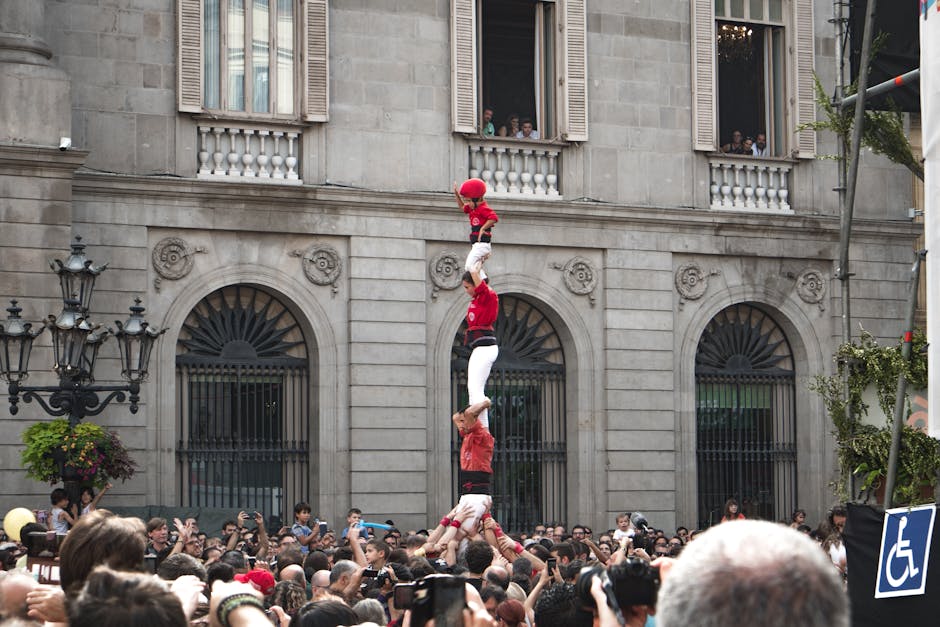
On the morning of the 24th, the best colles castelleres in Catalonia build human towers in the Plaça de Sant Jaume, between the City Hall and the Palau de la Generalitat. In 2026 the Castellers de Barcelona shared the square with the Minyons de Terrassa and the Colla Joves Xiquets de Valls, two of the strongest teams in the country. Watching a tower of eight or nine storeys rise, a child in a helmet scramble to the top and raise one hand, and the whole structure unwind again without collapsing is one of the most extraordinary things you can see in Barcelona. The square is full well before the first tower goes up, so arrive early, and expect to watch over a lot of heads.
The correfoc
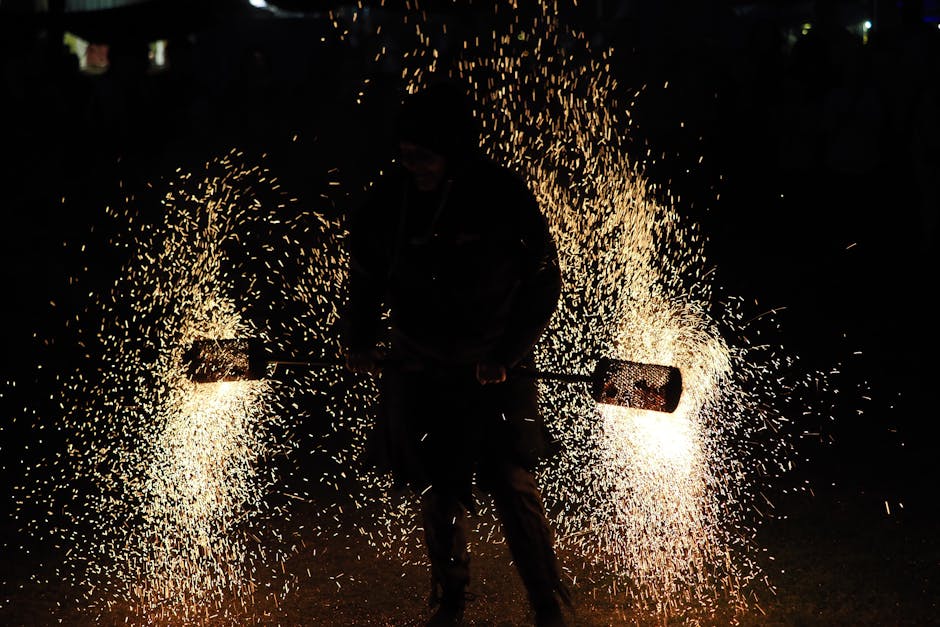
The correfoc, or fire-run, is La Mercè at its wildest: groups of devils, dragons and fire-beasts charge through the streets spraying sparks from pitchforks and spinning fireworks, and the crowd runs with them, under them and away from them. In 2026 it was on the Saturday night, with a gentler children’s version earlier in the evening. It is thrilling and genuinely dangerous if you are careless, and the dress code is not a suggestion:
- Cover up in cotton: long sleeves, long trousers and a hat or hood. Synthetic fabrics melt.
- Wear closed shoes, and protect your eyes and ears; glasses and earplugs help.
- Stand back from the route if you only want to watch, and do not grab a devil or block the drummers.
- Bring children to the children’s correfoc, not the main one.
The Piromusical, and the rest
La Mercè traditionally closes with the Piromusical, fireworks set to music. For years it was staged on Montjuïc, at the Magic Fountain, but in 2026 it moved to the seafront: works at the Fira de Barcelona’s Montjuïc site ruled out a crowd of that size, so on Sunday 27 September at 22:00 the fireworks went up from the Bogatell breakwater, watched from the beaches of Bogatell and Nova Icària, to a soundtrack chosen by Josep Montero of Oques Grasses. Whether it returns to Montjuïc in 2027 depends on the progress of those works, so check the programme. If it stays on the beach, go early, stake out some sand, and take the metro rather than a taxi home.
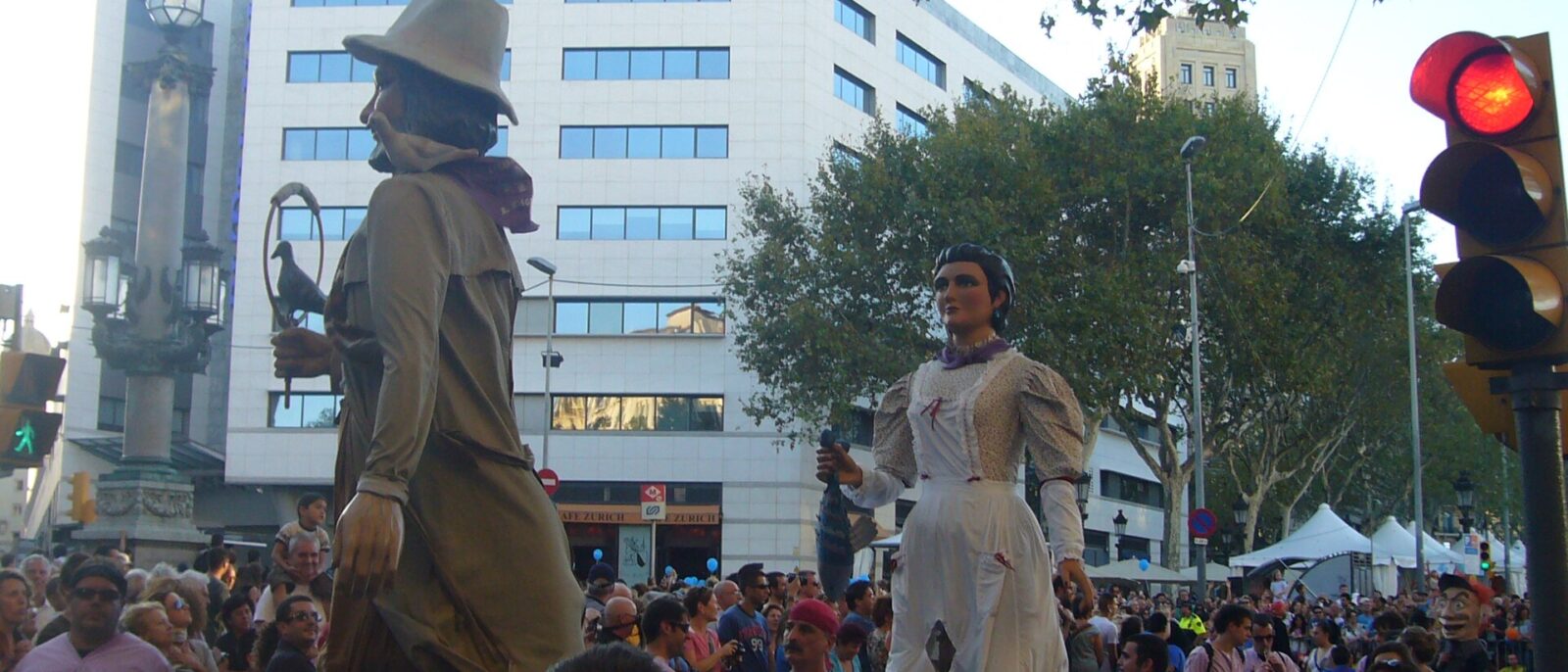
Beyond the big set pieces there is a parade of giants and fire-beasts, free concerts in squares and parks across the city, street theatre and circus, and open doors at public buildings and museums. The festival is busy everywhere, and the usual pickpocket warnings apply double; our safety guide covers the hotspots. Our La Mercè guide goes into the festival in more depth.
The Diada: 11 September
The Diada Nacional de Catalunya, Catalonia’s National Day, marks the fall of Barcelona on 11 September 1714, at the end of a long siege in the War of the Spanish Succession. It is a public holiday, and it is unlike any other holiday in the calendar: part commemoration, part political statement, part family day out.
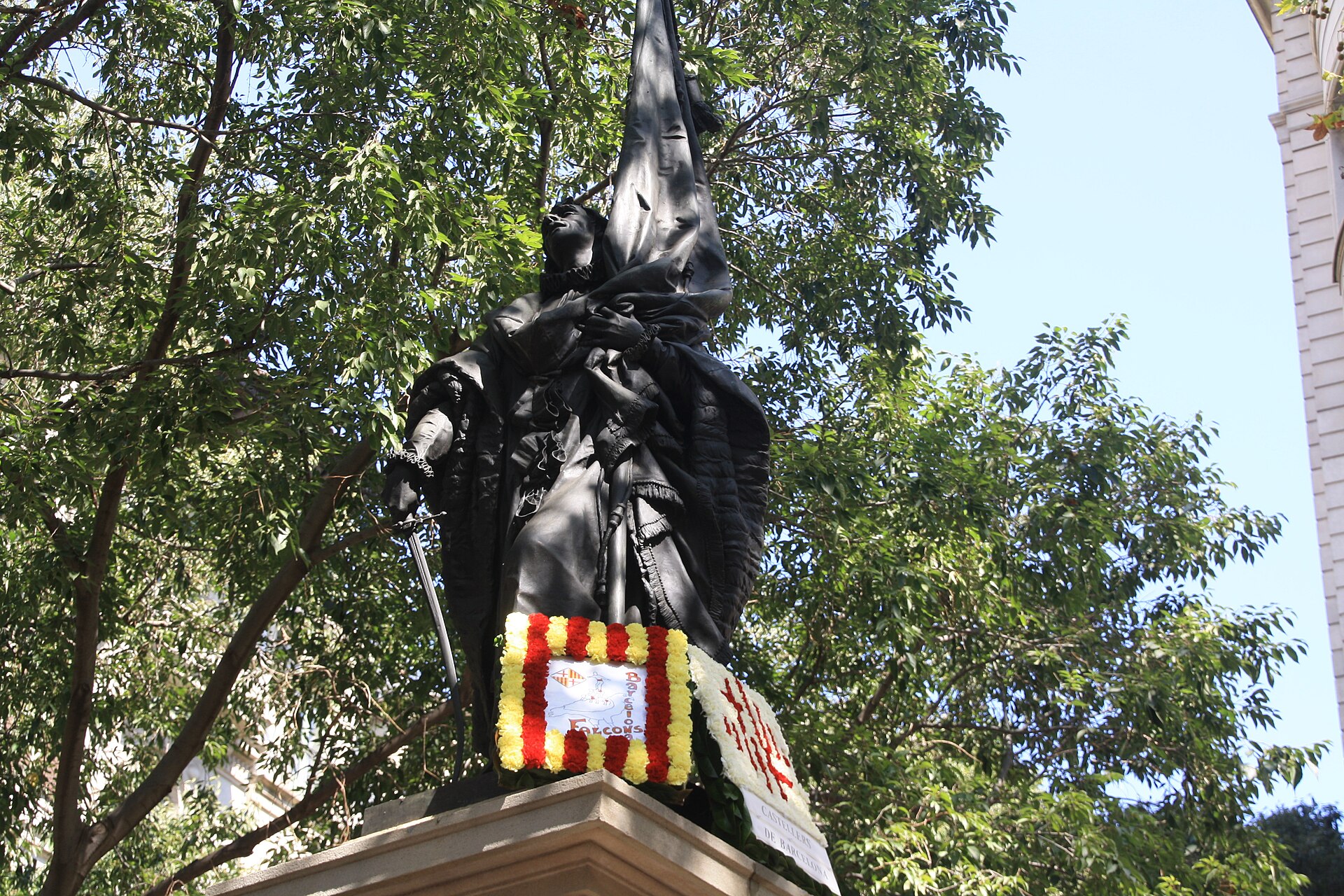
In the morning, institutions, political parties, unions and clubs lay wreaths at the monument to Rafael Casanova, the city’s chief councillor during the siege, on the Ronda de Sant Pere. Balconies fill with the striped senyera, and many with the starred estelada of the independence movement. In the afternoon there is usually a large march or rally, whose size and tone vary from year to year with the political mood. For a visitor, it is a chance to see how deeply the city feels its Catalan identity; just expect road closures, crowded metro trains near the route, and many shops closed. In 2027 the Diada falls on a Saturday.
If you want to understand what the day is about, spend an hour at the El Born Centre de Cultura i Memòria, the old market hall that now shelters the excavated streets of the neighbourhood demolished after 1714 to make way for the Ciutadella fortress. Our El Born guide covers it.
The neighbourhood festivals
Barcelona’s festival season does not end with Gràcia and Sants in August. In September two seafront neighbourhoods take their turn.
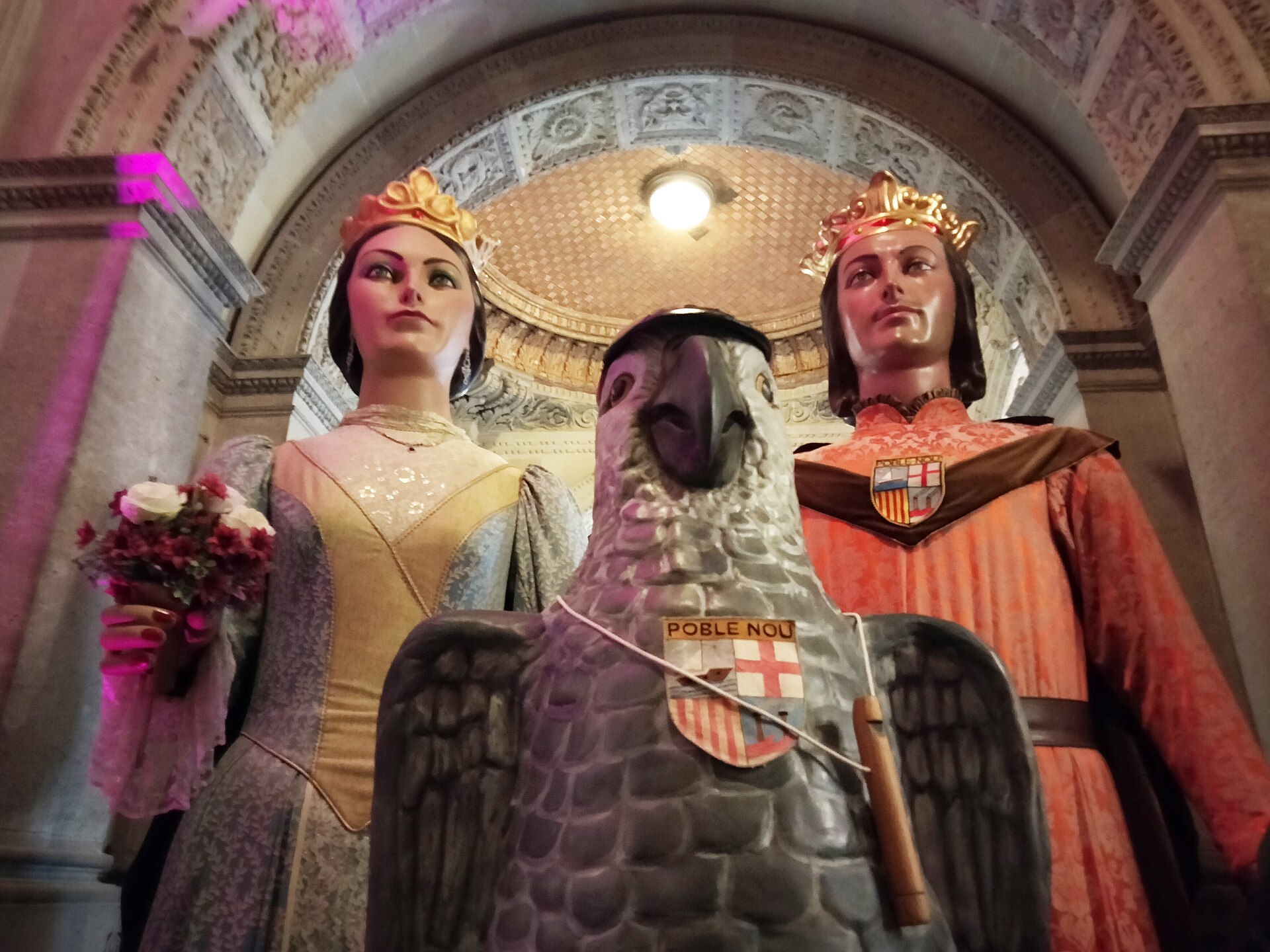
The Festa Major del Poblenou fills the old industrial district with giants, a fire-breathing dragon, concerts on the Rambla del Poblenou, long communal dinners in the street, cart races and a correfoc of its own. In 2026 it ran from 10 to 20 September. It is relaxed, local and very easy to enjoy, and it pairs well with an afternoon on the nearby beaches of Bogatell and Mar Bella.
The Festa Major de la Barceloneta usually runs around the feast of Sant Miquel, the neighbourhood’s patron, on 29 September, spilling into the first days of October. It is the old fishermen’s quarter at its most neighbourly; our Barceloneta guide covers the area.
Sightseeing in September
With the worst of the heat gone, September is the month when sightseeing becomes a pleasure again rather than a test of endurance. A few things are worth knowing:
- The big sights still sell out. Book the Sagrada Família at least two to three weeks ahead for a choice of times, and longer for a tower; our Sagrada Família guide explains the tickets. Book Park Güell, Casa Batlló and La Pedrera ahead too.
- The afternoon is usable again, especially after the first week. Park Güell’s terrace at four in the afternoon is pleasant in late September in a way it is not in August.
- Make the most of the Picasso Museum’s summer evenings while they last. Until late September it opens until 21:00 from Thursday to Saturday, with free entry from 19:00 for anyone who books; on 24 September the whole day is free. Our Picasso Museum guide explains how to get a slot.
- Do not plan a sunset at the Bunkers. The Bunkers del Carmel close at 19:30 in summer, and even at the end of September the sun sets after that. Our Bunkers del Carmel guide has the alternatives.
- End the day at the Magic Fountain, which plays Wednesday to Sunday through September. Our Magic Fountain guide explains where to stand.
- Catch a match. The football season is in full swing, with league games and the first European nights; our FC Barcelona match guide explains tickets.
The beach in September
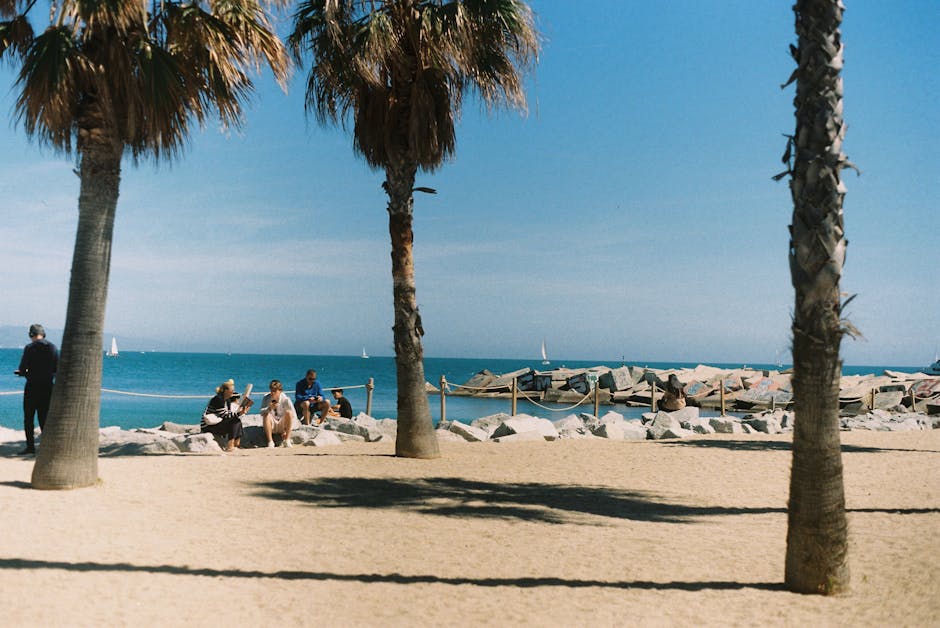
September may be the best beach month of all, not for the warmth of the water, which peaks in August, but for the space around it. Once the Spanish holidays end, the central beaches are calmer on weekdays, the sand is no longer too hot to walk on at noon, and the sea is still about 23 °C.
- Swim in the late afternoon. The water holds its warmth into the evening, and the light at that hour is wonderful.
- Go north-east for space. Bogatell, Mar Bella and Nova Mar Bella stay quieter than Barceloneta; our best beaches guide compares them all.
- Watch the flags and the weather. After a storm the sea can be rough and murky for a day or two, and lifeguard cover is reduced once the main summer season ends. Swim where the posts are staffed.
- Enjoy the beach bars while you can. The seasonal chiringuitos carry on through September, and our beach clubs guide has the best of them.
- Try something on the water. Calm September seas are ideal for paddleboarding, kayaking and sailing; our water sports guide has the details.
Day trips in September
September is the best month of the year for getting out of the city, because the coast is still warm and the inland heat has broken.
- The Costa Brava is at its finest. The sea is warm, the coves are no longer rammed, and the towns are still fully open. If you have ever wanted to swim at Calella de Palafrugell or walk the coastal path from Tamariu, this is the month. Our Costa Brava guide covers the trip.
- The Penedès is in the middle of its grape harvest, and the cava houses south-west of the city are at their busiest and most beautiful. Our Penedès wine guide explains how to visit.
- Montserrat is comfortable for walking again, and the trails above the monastery are a real pleasure; see our Montserrat guide.
- Girona, which roasts in August, is pleasant for a long day on foot in September; our Girona guide covers the old town.
- Sitges, 40 minutes south by train, combines a beach with a pretty old town, and is calmer than in high summer; see our Sitges guide.
Eating and drinking in September
September is when Barcelona’s food scene comes back from holiday, and it shows. The neighbourhood restaurants reopen, often with new menus, the markets are piled with the last of the summer fruit, figs and early grapes, and the city’s appetite seems to return with the cooler evenings.
- Go back to the neighbourhood places that were closed in August. Gràcia, Sant Antoni and Poble-sec are at their best for an evening of wandering from bar to bar.
- Drink the harvest. With the grapes coming in, it is a good month to explore Catalan wine and cava; our wine guide is a good place to start.
- Keep an eye out for the first wild mushrooms. If the autumn rains come early, the first bolets appear in the markets at the end of the month, the start of one of the great Catalan food seasons.
- Eat outside while you still can. The terraces are full late into the night, and September evenings are perfect for them.
Our Catalan cuisine guide explains what to order, and our best restaurants guide has the places worth booking.
What September is good for
- Doing everything in one trip. Swimming, sightseeing, eating and festivals, without one ruling out another.
- Festivals with real local character, above all La Mercè and the Diada.
- The coast. The Costa Brava and Sitges at their best, with warm water and fewer people.
- Food. The neighbourhood restaurants are back, and the harvest is under way.
- Walking. From the second half of the month, the temperature is right for long days on foot.
What September is bad for
- Budgets. Hotel rates are among the highest of the year, and La Mercè weekend is pricier still.
- Last-minute planning. The big sights, the good restaurants and the best-located hotels book up.
- Guaranteed weather. A late-September storm can wipe out an afternoon, and occasionally a day.
- Peace and quiet during La Mercè. If you are in town for the festival, the old town is noisy and crowded for days. If you are not interested in it, consider avoiding that week.
- Sunset at the Bunkers. The site still closes before the sun goes down.
Crowds and prices
The first week of September still feels like summer, with family holidays tailing off and the cruise season in full swing. As the month goes on the families go home, couples and older travellers take their place, and the crowds at the big sights ease a little, though never by much. Then La Mercè brings a surge of Catalan and Spanish visitors for its final weekend.
Hotel prices do not ease at all. Barcelona’s hotels averaged about €195 a night across the first half of 2026, the highest of any Spanish city, and September, with its mix of late-summer holidaymakers and the start of the conference season, sits at the expensive end of the year. Book as early as you can, compare areas, and check whether any big trade fair coincides with your dates. On top of the room comes the tourist tax, from €6 to €12 per person per night depending on the accommodation, plus VAT, for the first seven nights; under-16s are exempt. Our tourist tax guide has the bands, our hotels guide has the properties, and our where to stay guide helps you pick the area. Our city passes guide covers whether a pass helps.
September or October?
| September | October | |
|---|---|---|
| Average high / low | 26 °C / 18 °C | 22 °C / 14 °C |
| Rain | About 85 mm, in heavy bursts | About 100 mm, the wettest month |
| Sea | About 23 °C, excellent for swimming | About 20 °C, fine for the determined |
| Daylight | Sunset after 20:00 for most of the month | Sunset from about 19:40 down to about 18:50, then an hour earlier once the clocks go back on the last Sunday |
| Big events | The Diada and La Mercè | A quieter month: the start of the autumn cultural season |
| Crowds and prices | High | High at first, easing towards the end of the month |
Our view: September if swimming matters to you, October if it does not and you would rather have the cooler weather and slightly thinner crowds. Both are excellent months for a city break.
Four days in September: a sample plan
- Day one: the old city. The Gothic Quarter and the cathedral in the morning, El Born and its market hall after lunch, and, on a Thursday, Friday or Saturday, the Picasso Museum in the evening. Dinner in El Born.
- Day two: Gaudí. The Sagrada Família in the morning, Casa Batlló or La Pedrera after lunch, Park Güell in the late afternoon light, and dinner in Gràcia, whose restaurants are back from holiday.
- Day three: the sea. A morning walk along the waterfront from Barceloneta to Bogatell, a long rice lunch by the beach, an afternoon swim, and sunset with a drink on a terrace. During the Festa Major del Poblenou, stay on for the evening in the Rambla del Poblenou.
- Day four: a day out. The Costa Brava for a swim in a cove, the Penedès for the harvest, or Montserrat for the walking, back in the city for the Magic Fountain if it is Wednesday to Sunday. If you are here for La Mercè, swap this for the human towers in the Plaça de Sant Jaume and the correfoc at night.
Is September a good time to visit Barcelona?
Yes: for most visitors it is the best month of the year. It is the only month that gives you a properly warm sea, comfortable sightseeing weather, a fully open city and a great festival, all at once. The neighbourhood restaurants that shut in August are back, the light is beautiful, and the evenings are still long.
What it does not give you is a bargain. Prices are high, the sights are busy and the late-month storms are a real, if usually brief, risk. If cost is your main concern, look at late October or early November instead, or at the quieter months of the winter. If it is not, book early, pack your swimming things and an umbrella, and come in September.
For the month before, see Barcelona in August, and for the whole year, the month-by-month guide.
Frequently asked questions
What is the weather like in Barcelona in September?
Warm and mostly sunny. The average high is about 26 °C and the low about 18 °C, with the first half of the month warmer than the second. It rains on about five days, sometimes very heavily, more often towards the end of the month.
Is the sea warm enough to swim in September?
Yes. At about 23 °C it is warmer than in June and comfortable for long swims throughout the month.
Does it rain a lot in Barcelona in September?
Not often, but heavily. September is the second-wettest month after October, with about 85 mm of rain falling on around five days, usually in short, intense storms. Most days are dry.
When is La Mercè in 2027?
La Mercè is built around 24 September, Barcelona’s local holiday, which falls on a Friday in 2027. The 2026 festival ran from Wednesday 23 to Sunday 27 September; expect a similar span around the 24th in 2027, with the programme published in late summer.
Is 11 September a holiday in Barcelona?
Yes. The Diada, Catalonia’s National Day, is a public holiday. Expect flags, a floral tribute at the Rafael Casanova monument, a political march in the afternoon and many shops closed. In 2027 it falls on a Saturday.
Is Barcelona crowded in September?
Yes, though less than in July and August. The first week still feels like summer, the middle of the month is a little calmer, and La Mercè brings a final surge. Book the major sights and your hotel well ahead.
Is September expensive in Barcelona?
Yes. It is one of the most expensive months for hotels, as late-summer holidaymakers overlap with the start of the conference season. Book early for the best choice.
What should I wear in Barcelona in September?
Summer clothes, a light layer for the evenings later in the month, swimming things, comfortable shoes and a compact umbrella. Cover shoulders and knees for churches, and wear cotton with long sleeves if you go near the correfoc.
Is September or October better for Barcelona?
September if you want to swim, October if you prefer cooler sightseeing weather and slightly thinner crowds. Both are among the best months of the year to visit.
For the month after, see Barcelona in October: the wettest month of the year, but also one of the most rewarding, with comfortable sightseeing weather, the first wild mushrooms in the markets, the 48h Open House architecture weekend and the Sitges Film Festival down the coast.
Related Barcelona Guides
- Barcelona month by month — the whole year at a glance.
- Barcelona in August — the month before, and the Festa Major de Gràcia.
- La Mercè — the city’s own festival in detail.
- Barcelona’s festivals — the year’s celebrations, month by month.
- The Costa Brava — at its best in September.
- Barcelona’s best beaches — where to swim, beach by beach.
- The best time to visit Barcelona — choosing between the seasons.
Photo Credits
The giants of the Sagrada Família district in the Plaça de Catalunya during La Mercè: La Mercè 2012 – Gegants de la Sagrada Familia de Barcelona by Jordiferrer, CC BY-SA 3.0, via Wikimedia Commons.
The Rafael Casanova monument with Diada wreaths: Rafel Casanova by Núria, CC BY-SA 2.0, via Wikimedia Commons.
The giants of Poblenou and the parrot: 105 La Maria i en Bernat, els gegants del Poblenou, i el Lloro del 36 (Barcelona) by Enric, CC BY-SA 4.0, via Wikimedia Commons.