We get commissions for bookings made through this post. Booking links, and any accommodation options shown on the page, are handled by a partner that adds commission tracking automatically. It never costs you more, and it never affects what we recommend. Affiliate disclosure
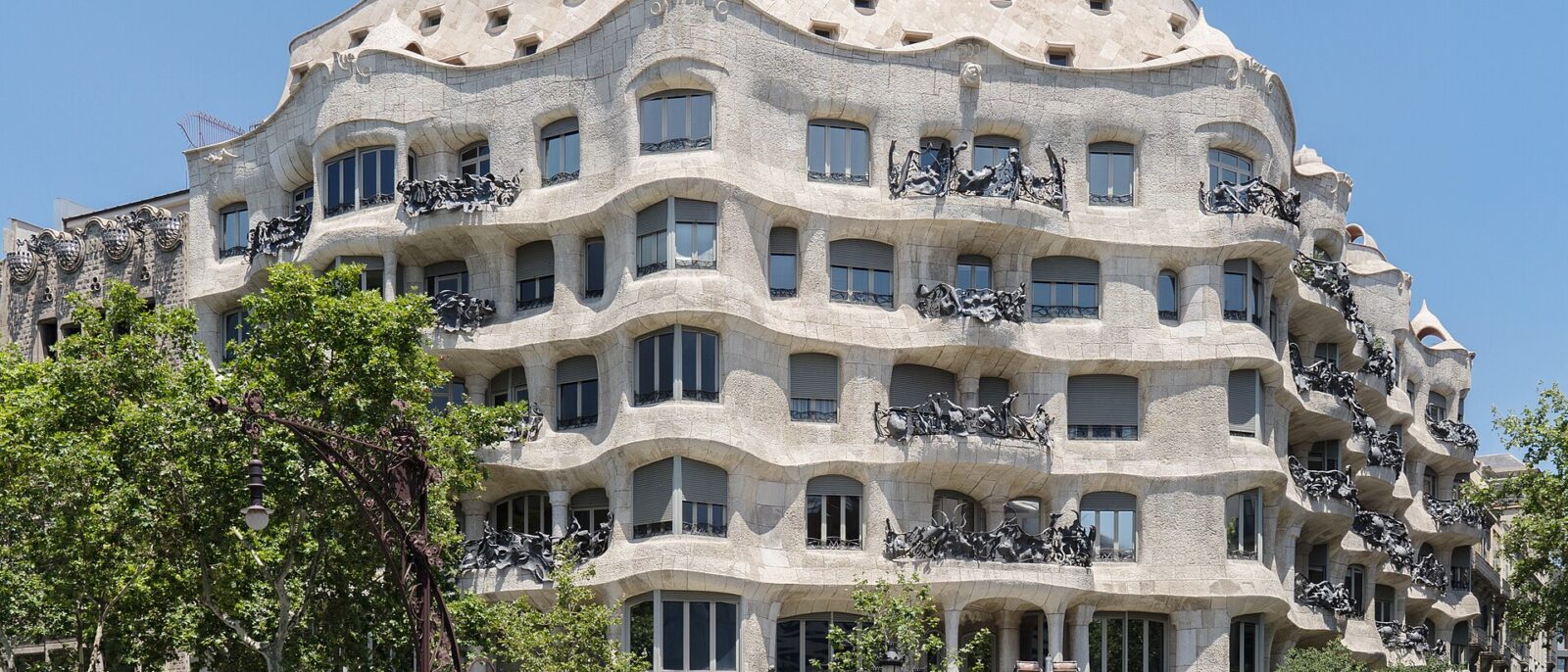
Barcelona’s own newspapers called it a quarry when it went up, and the nickname stuck: la pedrera, the stone quarry. More than a century later the joke has curdled into affection, and the undulating limestone façade on the corner of Passeig de Gràcia and Carrer de Provença is one of the most photographed buildings in Europe. If you are trying to work out which ticket to buy for la pedrera barcelona — and there are eight of them, ranging from €25 to €120 — this page sorts them out, explains which parts of the building each one opens, and says plainly which are worth the money.
It also covers the Night Experience, the sunrise slot, how Casa Milà compares with Casa Batlló four blocks down, and the practical business of getting in without queueing. Prices came from the operator’s own site in September 2026 and are dynamic — booking early is consistently cheaper — so treat them as the floor rather than the fixed rate.
Tickets at a glance
| Ticket | From | Hours | What you get | Verdict |
|---|---|---|---|---|
| Essential | €29 | 09:00–17:30 | Courtyards, the Pedrera apartment, the attic, the roof, videoguide in 11 languages | The default, and the right choice for most people |
| Sunset | €25 | 17:30–20:30 | The same spaces, in evening light | The best value on the list |
| Night Experience | €39.50 | 20:40–22:20 | Guided tour, a rooftop projection show, a glass of cava | Genuinely special; worth the premium once |
| Sunrise | €39.50 | 08:00–09:00 | Guided tour before the building opens to everyone else | For photographers and early risers |
| Art Season | €35 | day hours | Essential plus the temporary exhibition | Only if the exhibition interests you |
| Open Date | €45 | flexible | An undated ticket you use when you like | Expensive insurance; skip unless plans are genuinely uncertain |
| Premium | €120 | — | Maximum six people, reserved areas, a private tasting | A luxury, not an upgrade |
| Combined tickets | €42–44.50 | — | Bundled with Sant Pau, Palau de la Música or the Dalí Theatre-Museum | Good value if you were going to both anyway |
Children aged 0–11 go free on every ticket type, which is unusually generous by Barcelona standards and makes this one of the better-value family visits in the city.
What you are actually looking at
Casa Milà was built between 1906 and 1912 for Pere Milà and his wife Roser Segimon, as an apartment block with the family’s own residence on the first floor. It was Gaudí’s last civil commission before he devoted himself entirely to the Sagrada Família, and it is the most structurally radical thing he ever built.
The key fact, and the one that makes the building make sense: there are no load-bearing walls. The whole structure rests on an internal frame of stone and steel columns, which means every interior wall can be moved and the façade is essentially a curtain hung off the frame. In 1906 this was extraordinary. It is why the windows are different sizes, why the balconies wander, and why the floor plans of the apartments are all different.
It was not popular. The council fined the Milàs over building-code violations, the press mocked the exterior relentlessly, and Roser Segimon reportedly disliked Gaudí’s interiors so much that she had a good deal of the family apartment redecorated in Louis XVI style after his death. The building was declared a UNESCO World Heritage Site in 1984 and has been open to the public, under the Fundació Catalunya La Pedrera, since the 1990s.
The four spaces you visit
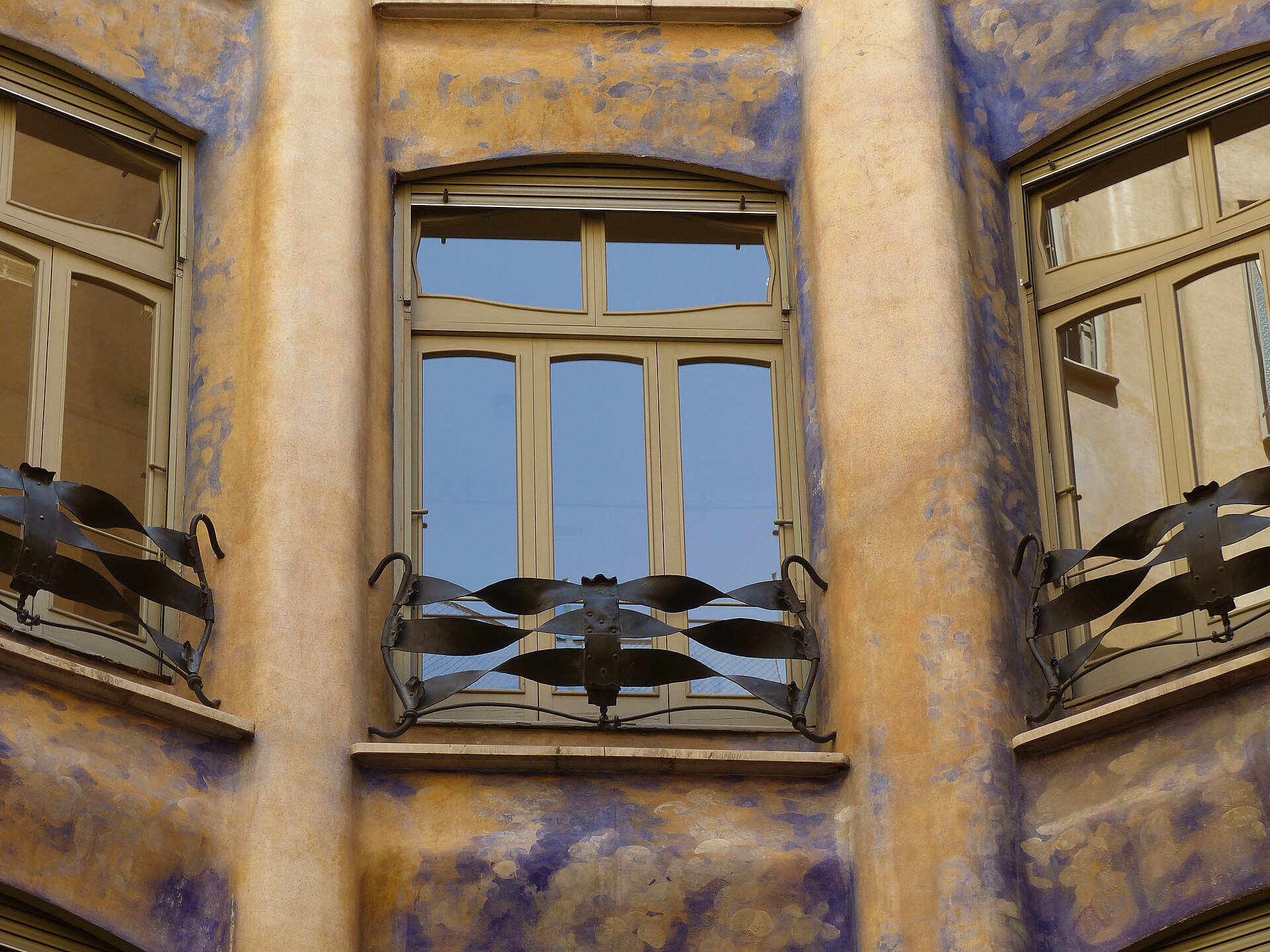
- The two courtyards. You enter through one of them, and they are the first surprise: painted from floor to sky in ochres, blues and greens, with wrought-iron gates and a spiral ramp that was originally designed so that carriages — and later cars — could drive up. Look up from the bottom; the shape of the light well is the whole design argument of the building in one view.
- The Pedrera Apartment. A furnished flat on the fourth floor, decorated as an upper-middle-class Barcelona family would have had it around 1910. It is the part visitors skip and should not: it is the only place in the building where you see what living inside a Gaudí actually meant, and the domestic detail — the door handles, the light fittings, the fitted furniture — is where his obsessiveness shows.
- The attic — Espai Gaudí. A vaulted loft of 270 brick catenary arches, originally the laundry and insulation layer, now a museum of Gaudí’s working method with models, photographs and the hanging chain-and-weight structures he used to calculate his arches. Architecturally this is the best room in the building.
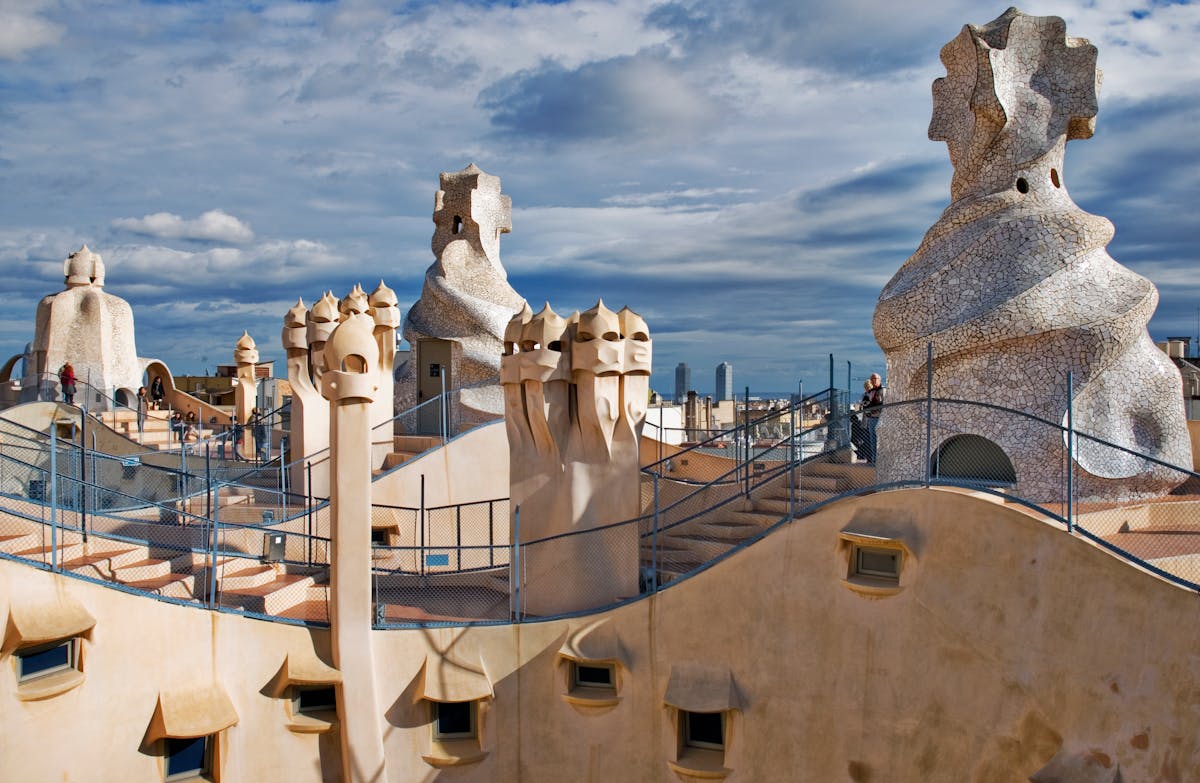
- The roof terrace. The famous one: an undulating landscape of chimneys and ventilation towers, several of them helmeted like sentries, arranged around the two light wells. George Lucas is often said to have drawn on them for the design of Star Wars imperial troopers, and standing among them it is easy to believe.

Which ticket to buy
Essential — the default
At €29 this opens everything: both courtyards, the apartment, the attic and the roof, with a videoguide in eleven languages. Allow an hour and a half, or two if you take the videoguide seriously. Slots run from 09:00 to 17:30.
Book the earliest slot available. The first hour is materially quieter than the rest of the day, and the roof — which is where everyone wants to be — is far more pleasant with thirty people on it than a hundred and fifty.
Sunset — the value pick
€25, from 17:30 to 20:30, and it covers exactly the same spaces as the Essential ticket. It is cheaper, it is quieter than the middle of the day, and the low light on the stone is considerably better than the flat overhead glare of a summer afternoon.
This is the ticket we would buy. The only reason not to is if your day is already built around an early start, or if you are visiting in December when 17:30 is already dark.
Night Experience — worth it once
€39.50, in sessions between 20:40 and 22:20. This is a genuinely different visit: a guided tour in Catalan, Spanish, English or Chinese rather than a videoguide, a projection show on the roof after dark, and a glass of cava included.
The roof at night, lit, with the chimneys throwing shadows and the Eixample glowing below, is one of the better hours available in Barcelona. It is a €10 premium over Essential and, unlike most attraction upsells in this city, it buys something the standard ticket cannot give you. If you are visiting Barcelona for the architecture and can only splurge on one thing, splurge here.
The caveats: it is a guided group rather than a self-paced wander, so you move at the group’s speed; the exhibition spaces are not part of it; and summer sessions sell out weeks ahead.
Sunrise — for photographers
€39.50 for an 08:00 to 09:00 guided tour before general opening, in English or Chinese. You get the building close to empty and the first light of the day on the roof, which for anyone carrying a camera is the whole point. For everyone else it is an early start and a premium for something the Sunset ticket delivers more comfortably.
Art Season, Open Date and Premium
- Art Season (€35) adds the temporary exhibition in the first-floor gallery. The programme is usually serious — La Pedrera’s exhibitions have covered major twentieth-century artists — so check what is on. If it interests you, the €6 supplement is fair. If it does not, skip it.
- Open Date (€45) is an undated ticket. That is a €16 premium over Essential for flexibility, which is a lot. Buy it only if your dates are genuinely uncertain; otherwise pick a slot.
- Premium (€120) caps the group at six, opens areas the standard tour does not reach, and includes a private tasting. It is a lovely thing and it is not four times better than the €29 ticket. This is a treat, not a recommendation.
Combined tickets
Bundles pairing La Pedrera with the Recinte Modernista de Sant Pau, the Palau de la Música Catalana or the Dalí Theatre-Museum at Figueres run €42–44.50. Given that Sant Pau alone is €18 and the Palau around €18–22, these are real savings — but only if you were going to visit both. Do the arithmetic against your actual plans rather than the headline discount, and see our city passes guide for how they compare with the Barcelona Card and Go City.
Casa Milà or Casa Batlló?
They are four blocks apart on the same avenue, both by Gaudí, both around €29 to enter, and most visitors with limited time have to choose. The short version:
| Casa Milà (La Pedrera) | Casa Batlló | |
|---|---|---|
| Built | 1906–1912, from scratch | 1904–1906, a remodelling |
| Character | Structural, monumental, stone | Decorative, colourful, glass and ceramic |
| Best space | The attic and the roof | The main floor and the light well |
| Presentation | Videoguide, restrained | Augmented-reality tablets, immersive |
| Time needed | 1h30 | 1h15 |
| Children | Free under 12; the roof is a hit | Very strong; the AR tablet does a lot of work |
| Best for | Anyone interested in how buildings work | Anyone who wants to be dazzled |
Our full Casa Batlló vs Casa Milà comparison goes into this properly, and the Casa Batlló ticket guide does for that building what this page does for this one.
If you can only do one: Casa Batlló for a first visit and for children, Casa Milà for anyone who cares about architecture rather than spectacle. If you can do both, do Batlló in the day and La Pedrera at night, which gives you two genuinely different experiences rather than the same one twice.
Getting there and getting in
- Address: Passeig de Gràcia 92, on the corner of Carrer de Provença.
- Metro: L3 (green) or L5 (blue) to Diagonal, which comes up almost at the door. Passeig de Gràcia station on L2, L3 and L4 is a five-minute walk south.
- Book online, always. Pricing is dynamic and the online rate is lower; the door price is higher and slots sell out in season.
- Arrive ten minutes before your slot, not on the hour. Entry is timed and there is a short security check.
- Bags: large rucksacks and suitcases are not allowed on the roof for space reasons. There is a cloakroom but it is small.
- The roof closes in bad weather. This is the one thing that genuinely spoils a visit — the terrace is not covered and it shuts in high wind or rain. If the forecast is poor, consider moving your slot rather than turning up hopefully.
- Accessibility: lifts reach the attic and there is step-free access to most of the building, but the roof terrace is uneven by design and has steps between levels. Staff are helpful about this if you ask in advance — our accessible Barcelona guide has more.
Seeing it for free
Two things are worth knowing if the ticket price is the obstacle.
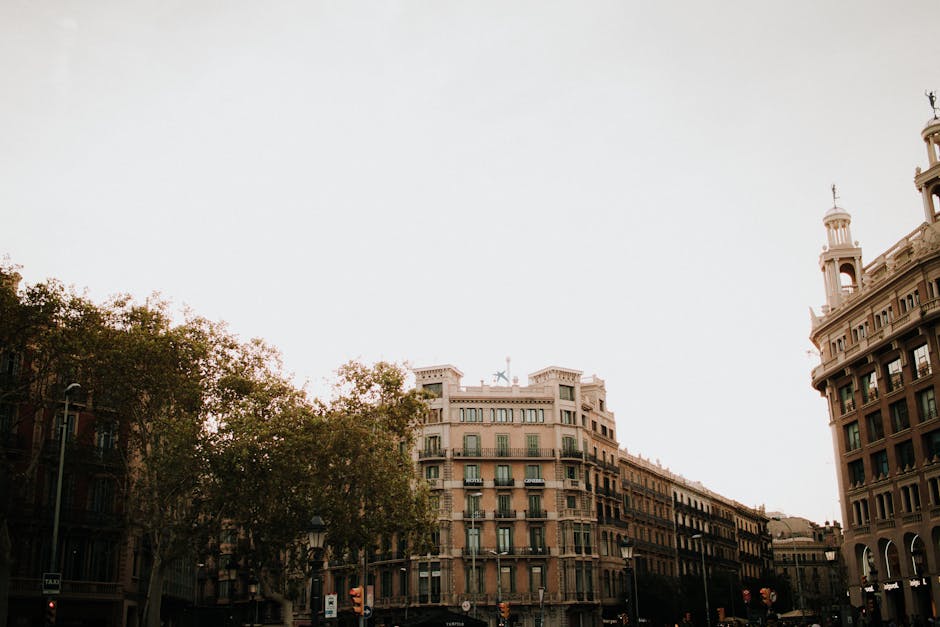
The exterior costs nothing, and the exterior is a large part of the point. Stand on the opposite pavement of Passeig de Gràcia, look at the way the stone bends around the corner, and then walk down Carrer de Provença to see how the same façade behaves on a narrower street. Ten minutes and it is free.
The ground-floor spaces are partly accessible without a ticket. There is a shop and a café at street level, and the entrance courtyard is visible from the doorway. It is not the same as going up, but it gives you the painted walls and the ironwork.
And a word on the roof from outside: you cannot see it from the street. The chimneys are set back behind the parapet and are visible only from the building itself or from a very high vantage point. If the roof is what you came for, you have to buy a ticket.
The honest verdict
Casa Milà is worth the money, and it is the Gaudí building that rewards curiosity most. Sagrada Família is overwhelming, Park Güell is a park with a famous terrace, Casa Batlló is a spectacle — La Pedrera is the one where you come out understanding something about how the man actually worked.
But the roof is not the best bit. The chimneys are what sells the tickets and they are genuinely strange and photogenic, but the attic underneath them is the more remarkable room, and most visitors give it four minutes on the way to the stairs. Slow down there.
And the apartment is the sleeper. Nobody books a ticket to see a furnished 1910 flat, and it is the part people talk about afterwards.
Buy the Sunset ticket unless you want the Night Experience, in which case buy that. The €29 daytime slot is the one to take only if the rest of your day demands it — see our Gaudí in Barcelona guide for how to string the buildings together sensibly.
Ten things to look for that most visitors walk past
The videoguide covers the headlines. These are the details that reward a slower visit.
- The ironwork on the balconies. No two are the same. They were forged by hand from scrap iron by Josep Maria Jujol, Gaudí’s collaborator, working with a freedom that was extraordinary for 1910 and looks like abstract sculpture decades before abstract sculpture.
- The corner. Walk to the junction and look at how the façade turns. The stone does not meet at an angle; it curves, continuously, which required every block to be cut individually on site.
- The window sizes. They get smaller as the building rises, because the upper floors were cheaper flats. The design is not decoration for its own sake — it is a plan of the building’s social hierarchy.
- The absence of a straight line. Genuinely: look for one anywhere in the structure and you will struggle. Gaudí’s dictum that the straight line belongs to man and the curve to God is doing real work here.
- The ramp in the courtyard. Originally for carriages, later intended for cars — one of the first residential buildings anywhere designed with vehicle access to the interior.
- The catenary arches in the attic. Look at the shape. Gaudí derived it by hanging chains upside down and photographing the curve, then inverting the photograph — a physical method of solving a structural problem that computers now do numerically.
- The chimneys’ surfaces. Some are smooth render, some are broken marble, some are glass fragments. A few are said to incorporate broken cava bottles, which is exactly the sort of detail that may be apocryphal and is repeated because it should be true.
- The doors of the Pedrera Apartment. Gaudí designed the handles to fit a closing hand. Grip one.
- The lack of a main staircase for residents. The grand stair leads only to the Milà family’s own floor. Everyone else used the lift, which in 1912 was a radical statement about who a building is for.
- The view of the Sagrada Família from the roof. On a clear day the towers are visible to the north-east. Gaudí was working on both at once.
The building’s second life
La Pedrera did not glide from completion to World Heritage status. For most of the twentieth century it was simply a slightly notorious block of flats in a city that had stopped caring much about modernisme.
The Milà family lost their money and the building passed through several hands. During the Spanish Civil War it was requisitioned. By the 1960s it was in poor repair, the stone was blackened, and there were serious proposals to demolish or radically alter it — the modernista style was at that point deeply unfashionable and associated with a bourgeoisie the era had little patience for. It was declared a historic monument in 1969, which stopped the worst of it.
The turning point came in the 1980s, when the savings bank Caixa Catalunya bought the building and undertook a full restoration. The façade was cleaned, the attic was recovered from decades of subdivision, and the roof was made safe for visitors. UNESCO listed it in 1984 as part of the Works of Antoni Gaudí inscription. It opened properly to the public in the 1990s and is now run by the Fundació Catalunya La Pedrera, which also programmes the exhibitions and the concert series.
A detail worth knowing: people still live here. Several of the apartments remain private residences with ordinary tenants, entered through a door that visitors walk past. It is one of very few UNESCO World Heritage buildings anywhere that is also somebody’s home, which is a good reason to keep the noise down in the courtyards.
Photographing La Pedrera
- The best exterior angle is from the opposite pavement of Passeig de Gràcia, slightly south of the building, in the late afternoon when the sun is low enough to rake across the stone and show its texture. At midday the façade flattens out completely.
- Carrer de Provença gives you the narrower, less-photographed side and a better sense of scale, because you can get closer to the wall.
- On the roof, the chimneys work best shot low, from close to the floor, against the sky. The classic frame — a helmeted chimney with the Sagrada Família’s towers behind — needs a clear day and the right corner of the terrace.
- Tripods are not permitted and the terrace is narrow. Bring a lens you can hand-hold.
- The Night Experience is the best photographic ticket, though the projection show means the lighting is constantly changing. The Sunrise slot gives you cleaner, steadier light and an almost empty roof.
- Inside the courtyards, shoot straight up. The colours in the render are the subject.
Building it into a Passeig de Gràcia day
Casa Milà sits at the top of the most concentrated stretch of modernista architecture anywhere, and it is worth treating as one stop on a walk rather than a standalone visit. A sequence that works:
- Start at Plaça de Catalunya and walk north up Passeig de Gràcia, on the right-hand pavement so you can see the buildings on the left.
- The Illa de la Discòrdia, between Consell de Cent and Aragó — Casa Batlló by Gaudí, Casa Amatller by Puig i Cadafalch and Casa Lleó Morera by Domènech i Montaner, three rival architects on the same block. Ten minutes of looking, free.
- Casa Batlló if you are visiting it, mid-morning.
- Lunch somewhere off the avenue rather than on it — the side streets of the Eixample are considerably better and cheaper.
- Casa Milà on a late-afternoon or Sunset slot.
- Walk on to Gràcia afterwards for dinner, ten minutes north, where the prices halve.
Our modernista architecture guide covers the wider movement, the Gaudí biography explains the man, and the architecture tours guide covers whether a guided walk is worth paying for. If you would rather cover the whole avenue with someone explaining it, it usually is.
Frequently asked questions
How much are tickets for La Pedrera?
From €29 for the Essential daytime ticket, €25 for the Sunset slot after 17:30, and €39.50 for either the Night Experience or the Sunrise tour. Art Season is €35, Open Date €45 and the six-person Premium tour €120. Children aged 0–11 are free on every ticket.
Is La Pedrera the same as Casa Milà?
Yes. Casa Milà is the building’s formal name, after Pere Milà who commissioned it. La Pedrera — “the stone quarry” — began as a mocking nickname from the Barcelona press and is now what almost everyone calls it, including the foundation that runs it.
How long do you need at Casa Milà?
An hour and a half for the Essential visit at a normal pace, or two hours if you use the videoguide fully and spend proper time in the attic. The Night Experience runs about an hour and forty minutes as a guided group.
Is the La Pedrera Night Experience worth it?
Yes, once. For a €10 premium over the daytime ticket you get a guided tour rather than a videoguide, the roof terrace lit and projected onto after dark, and a glass of cava. It delivers something the standard ticket cannot, which is unusual among Barcelona attraction upgrades. Book weeks ahead in summer.
Which is better, Casa Batlló or Casa Milà?
Casa Batlló is the more immediately dazzling and works better with children and on a first visit. Casa Milà is the more architecturally serious and rewards anyone interested in how the building actually stands up. Doing Batlló by day and La Pedrera at night gives you two distinct experiences rather than a repeat.
Can you see the La Pedrera roof for free?
No. The chimneys sit behind a parapet and are not visible from street level. The façade, the corner and the ironwork are free to look at from the pavement, and the ground-floor shop and café are open without a ticket, but the roof requires admission.
Do I need to book La Pedrera in advance?
Yes, and it saves money as well as time. Pricing is dynamic, so the online advance rate is lower than the door price, and slots — particularly the Night Experience and the first morning entries — sell out in season.
What is inside Casa Milà?
Two painted interior courtyards, a furnished period apartment on the fourth floor, the Espai Gaudí attic of 270 brick catenary arches with an exhibition on Gaudí’s working method, and the roof terrace of sculpted chimneys and ventilation towers.
Is Casa Milà suitable for children?
Very. Under-12s go free on every ticket, the roof looks like a film set, and the attic’s models and hanging chain structures are more engaging for children than most museum displays. Note that the roof terrace is uneven and has steps, so it is awkward with a pushchair.
What happens if it rains at La Pedrera?
The roof terrace closes in heavy rain or high wind, and it is not covered. The rest of the building stays open. If the forecast is bad, it is worth changing your slot rather than visiting and missing the roof.
How do I get to Casa Milà?
Passeig de Gràcia 92, on the corner of Carrer de Provença. Metro L3 or L5 to Diagonal comes up almost outside; Passeig de Gràcia station on L2, L3 and L4 is a five-minute walk. It is about fifteen minutes on foot from Plaça de Catalunya.
Is La Pedrera included in the Barcelona city passes?
It appears on some passes and not others, and the terms change. The Barcelona Card gives a discount rather than free entry on most Gaudí properties; Go City includes more but costs considerably more up front. Check the current inclusions against your actual itinerary before buying.
Related Barcelona Guides
- Casa Batlló vs Casa Milà — the full comparison if you can only visit one.
- Casa Batlló tickets — which tier is actually worth it four blocks down the avenue.
- Gaudí in Barcelona — all the buildings, and how to sequence them.
- The complete Gaudí buildings list — including the ones nobody visits.
- The Eixample — the district Casa Milà sits in, and the walk that connects the buildings.
- Barcelona city passes — whether any of them pay back on a Gaudí-heavy trip.
- Barcelona attractions and tickets — the hub for everything with a turnstile.
Photo Credits
Casa Milà façade: Casa Milà, general view by Thomas Ledl, CC BY-SA 4.0, via Wikimedia Commons.
Casa Milà interior courtyard: Interior of Casa Milà, 2016 10 by Benjamín Núñez González, CC BY-SA 4.0, via Wikimedia Commons.