Why Girona Is the Perfect Day Trip from Barcelona
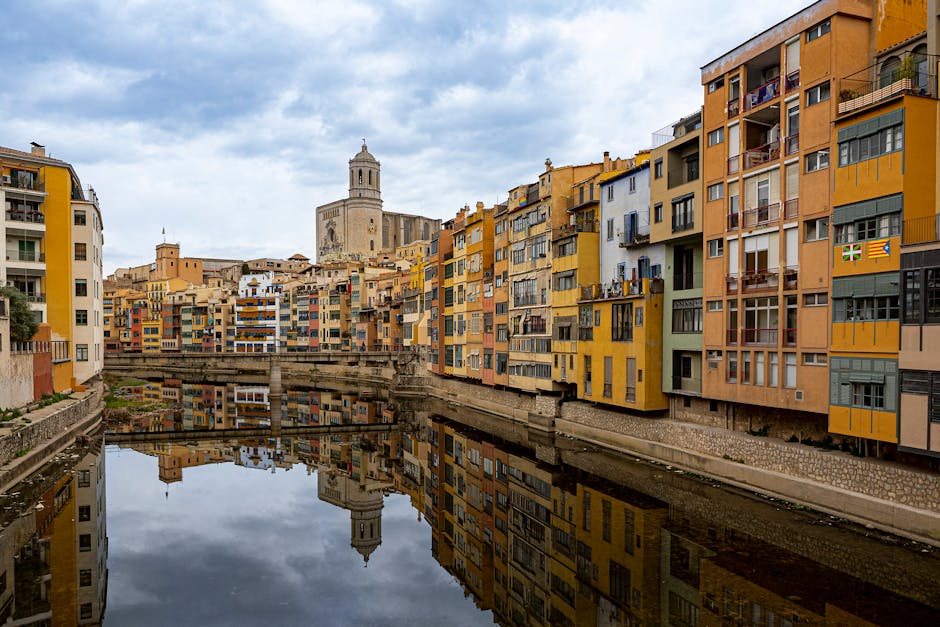
Forty minutes north of Barcelona on the high-speed train, Girona is everything Barcelona is not: medieval, compact, dignified, and astonishingly photogenic. The Onyar river flows under arched footbridges past pastel-coloured houses; a 12th-century cathedral rises from a hilltop above one of the best-preserved Jewish quarters in Europe; and the city’s Roman walls still ring its old town with a 2-kilometre walking path that gives you the entire city at a glance. If Barcelona is the headline of your trip, a girona day trip from barcelona is the elegant footnote that travellers consistently say was their favourite day. The city has also become a Game of Thrones pilgrimage site; you may recognise the cathedral steps, the synagogue, and the medieval baths from Season 6.
This guide covers everything you need to plan a great girona from barcelona visit: how to get there by train or car, the best girona things to do, where to walk in the girona old town, the headline restaurants, the cooking tradition, and a hour-by-hour itinerary that lets you do it all without rushing. Whether you are travelling with kids, on a romantic break, or as a solo culture lover, Girona rewards every kind of traveller.
A Brief History: 2,000 Years in a Walkable City
Girona was founded by the Romans in 75 BC as Gerunda, on the strategic crossing of the Onyar and Ter rivers. The Visigoths held it for 300 years, the Moors for 80, and from 785 onward it was Frankish and then Catalan. The city’s most distinctive era was the medieval period, when its Jewish community (the Call) became one of the most important centres of Jewish thought and Kabbalah in Europe. The Jewish community was expelled in 1492 along with the rest of Spain’s Jews, but the streets, walls, and ritual baths they left behind remain remarkably intact.
The 17th, 18th, and 19th centuries brought a series of sieges, including the famous 1809 siege by Napoleon’s army, when 6,000 defenders held off 30,000 French troops for seven months before falling. The city’s walls were strengthened and the medieval centre survived intact through every modern war.
Today Girona is the capital of its province, home to the University of Girona, and a culinary heavyweight punching well above its weight. The world-renowned restaurant El Celler de Can Roca (three Michelin stars, ranked World’s Best Restaurant in 2013 and 2015) is here, run by three brothers who grew up in the family’s neighbourhood bistro just outside the old town.
How to Get from Barcelona to Girona
Option 1: AVE High-Speed Train (Recommended)
The fastest and most comfortable option. Spain’s AVE high-speed rail connects Barcelona Sants to Girona in 38 to 45 minutes.
- Frequency: Approximately every 60 to 90 minutes.
- Cost: 18 to 35 EUR one way; tickets cheapest if booked 2 to 3 weeks in advance.
- Where: Barcelona Sants Estacio (main rail hub) to Girona AVE station (about 8 minutes’ walk to the old town).
- Hours: First train around 7:00 AM; last return around 9:30 PM.
The AVE is a beautiful ride: high-speed, smooth, with views of the Catalan countryside and the foothills of the Pyrenees on the right.
Option 2: Renfe Regional Train (Slower, Cheaper)
The R11 regional train runs to Girona in about 1 hour 25 minutes.
- Frequency: Every 30 to 60 minutes.
- Cost: 8 to 12 EUR one way.
- Where: Barcelona Sants or Passeig de Gracia.
The regional is cheaper but the high-speed AVE is so efficient that the price difference (10 to 20 EUR) is almost always worth it for a single day trip.
Option 3: Driving
Barcelona to Girona by car is about 100 km on the AP-7 motorway. Allow 75 to 90 minutes each way (with toll).
- Pros: Flexibility for visiting Costa Brava beach towns or the Dali Triangle on the same day.
- Cons: AP-7 traffic on Friday afternoons and Sunday evenings can be slow.
- Parking in Girona: Several public car parks just outside the old town. Avoid the narrow medieval lanes.
Option 4: Bus
Several bus operators (Sagales, Alsa) connect Barcelona to Girona, with buses leaving from Estacio Nord. Cost 10 to 15 EUR; time 90 to 120 minutes. Slower than the train; only useful if budget is the priority.
Option 5: Organised Day Tours
Many Barcelona-based tour operators run Girona day trips, often combining with the medieval town of Pals or with the Dali Museum in Figueres. Cost 75 to 130 EUR per person including transport, guide, and lunch. Best if you want logistics handled, but the train and a walking tour at Girona is more flexible.
The Top 10 Things to Do in Girona
1. Walk the Roman and Medieval Walls (Passeig de la Muralla)
The 2-kilometre wall walk is the city’s most distinctive experience. The path runs along the top of the medieval ramparts, with views over the cathedral, the river, and the surrounding countryside. Start at the Plaça dels Jurats near the Cathedral and walk south to Plaça de Catalunya. Allow 60 to 90 minutes including photo stops. Free.
2. The Cathedral (Catedral de Santa Maria)
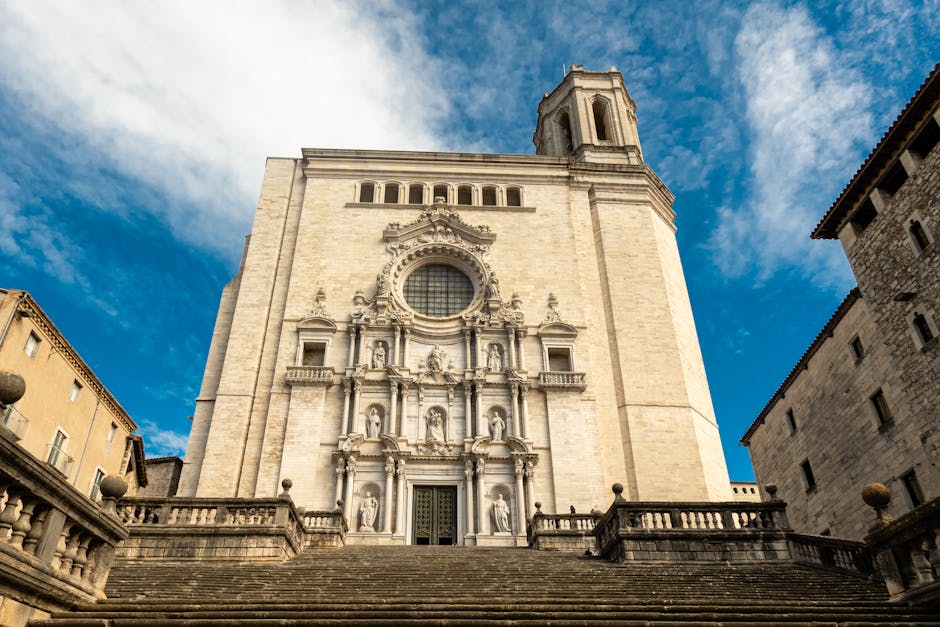
One of the most spectacular Gothic cathedrals in Spain, with the widest Gothic nave in the world (23 metres). The cathedral sits at the top of an iconic 86-step staircase that was used as a Game of Thrones location. The interior houses the famous Tapestry of Creation, an 11th-century embroidered masterpiece. Tickets 7 to 9 EUR including audio guide.
3. The Jewish Quarter (El Call)
One of the best-preserved medieval Jewish quarters in Europe. The narrow stone alleys, the Museum of Jewish History (in the former synagogue), and the medieval mikveh (ritual bath) tell the story of Girona’s Jewish community before the 1492 expulsion. Allow 90 minutes for a thorough visit. Museum entry around 4 EUR.
4. The Onyar Houses
The pastel-coloured houses lining the Onyar river are the postcard image of Girona. Photographers gather on the Pont de Pedra and the Pont de Sant Feliu for the iconic shots. Best at golden hour (about an hour before sunset).
5. The Eiffel Bridge (Pont de les Peixateries Velles)
A red iron pedestrian bridge designed by Gustave Eiffel’s company in 1877, spanning the Onyar in the heart of the old town. Walk across for a great view of the colourful houses.
6. Arab Baths (Banys Arabs)
A 12th-century bathing complex modelled on Roman thermae but built during the Christian Romanesque period. The central dome over the cold-water pool is the most photogenic feature. Used in Game of Thrones. Tickets 3 EUR.
7. Sant Pere de Galligants Monastery
An impressive 12th-century Romanesque monastery just below the Cathedral, now home to the Archaeological Museum of Catalonia (Girona). Worth a visit for the cloister and the Visigothic and Iberian artefacts. Tickets 6 EUR.
8. The Old Town (Barri Vell)
Wandering the narrow lanes of Girona’s old town is half the experience. Plaça de la Independencia, Carrer dels Ciutadans, Plaça de l’Oli, and the medieval streets around the cathedral all reward slow exploration. Most of the old town is car-free.
9. Plaça de la Independencia
The main square of the new town, lined with arcaded terraces and elegant 19th-century buildings. Lunch on a terrace here is a Girona institution. Restaurants Massana, Boira, and Cipresaia all sit on or just off the square.
10. Game of Thrones Walking Tour
Several Girona tour companies offer Game of Thrones walking tours, taking you through the Jewish Quarter (where Arya was a beggar), the Cathedral steps (where Cersei was confronted), the Arab Baths (where Sam was at the Citadel), and other Season 6 filming locations. About 90 minutes; 18 to 25 EUR. Even non-fans enjoy the historic context.
Where to Eat in Girona
El Celler de Can Roca (Three Michelin Stars)
The world-famous restaurant of the Roca brothers. Booking opens 11 months in advance and slots fill within hours. If you are passionate about food, this is one of the great pilgrimages in modern dining. Tasting menu 230 to 250 EUR per person plus wine pairings.
Mas Marroch (One Michelin Star)
The Roca brothers’ more accessible second restaurant in a 14th-century farmhouse 15 minutes from the city centre. Catalan cuisine with refined modern touches. Around 110 EUR for the tasting menu.
Massana (One Michelin Star)
Excellent modern Catalan cooking on Plaça de la Independencia. Around 80 to 110 EUR.
Casual Old-Town Standouts
- Boira (Plaça de la Independencia): Reliable Catalan home cooking with a beautiful terrace.
- Cipresaia (Plaça de la Independencia): Stylish modern Catalan with a lively atmosphere.
- Le Bistrot (Pujada de Sant Domenec): Cosy spot with charcoal-grilled coca pizzas and Catalan classics.
- Casa Marieta (Plaça de la Independencia): Old-school Catalan tavern with rustic dishes and famous chuletas (lamb chops).
Tapas and Snacks
- La Vienesa (Carrer de la Cort Reial): Wine bar with Catalan small plates and a warm atmosphere.
- Tapa Tu (Carrer de Bonaventura Carreras Peralta): Modern tapas concept; lively local crowd.
- Confiteria Mauri (Plaça del Vi): Beautiful old patisserie with the famous xuixos pastry.
Coffee and Quick Bites
- Espresso Mafia: Speciality coffee.
- Rocambolesc (multiple locations): Ice cream shop run by the Roca brothers’ sister; legendary.
Don’t Miss the Xuixo
The xuixo (or xuixu) is a Girona speciality: a flaky fried pastry filled with crema catalana and rolled in sugar. Like a Spanish version of a beignet but better. Try it at Confiteria Mauri or Forn d’En Cisco.
A Suggested One-Day Girona Itinerary
Morning
- 8:00 AM: Coffee at Sants Estacio in Barcelona.
- 8:30 AM: Board the AVE to Girona.
- 9:15 AM: Arrive at Girona station, walk 8 minutes to the old town.
- 9:30 AM: Coffee at Espresso Mafia and a xuixo at Confiteria Mauri.
- 10:00 AM: Walk the Onyar river. Pont de Pedra, Pont de les Peixateries Velles (Eiffel Bridge).
- 10:30 AM: Cathedral and the famous staircase.
- 12:00 noon: Jewish Quarter and Museum of Jewish History.
Lunch
- 1:30 PM: Lunch on Plaça de la Independencia at Boira or Cipresaia, or a more refined Massana experience.
Afternoon
- 3:00 PM: Walk the Roman and medieval walls (Passeig de la Muralla).
- 4:30 PM: Arab Baths and Sant Pere de Galligants Monastery.
- 5:30 PM: Free time to wander the old town’s small lanes.
- 6:30 PM: Vermouth or wine at La Vienesa. Buy souvenirs (chocolate, cava, ceramic) on Carrer dels Ciutadans.
Evening (Optional)
- 7:30 PM: Early dinner at Le Bistrot or one of the small terraces near Plaça del Vi, or simply head back to Barcelona.
- 8:30 PM: Last AVE back to Barcelona (typically 8:36 PM, 9:24 PM, or 10:14 PM).
- 9:15 PM: Back at Barcelona Sants for a late dinner.
Game of Thrones in Girona
Girona stood in for Braavos and the city of Oldtown in the Citadel scenes during Game of Thrones Season 6 and Season 7. Major filming locations include:
- Cathedral steps: The Great Sept of Baelor in King’s Landing where Cersei Lannister was forced to walk.
- The Jewish Quarter: The streets where Arya was a beggar in Braavos.
- The Arab Baths: The Citadel of Oldtown.
- Sant Pere de Galligants: Used in several scenes.
- Pujada del Rei Marti: The street where Arya was attacked by the Waif.
Self-guided tours work well; pick up a map at the Tourist Information Office or follow a free walking tour. Several specialised Game of Thrones tour operators offer themed walks.
Beyond the Old Town: Optional Add-Ons
Costa Brava Coast
If you have a car, the Costa Brava beach towns of Tossa de Mar (1 hour from Girona), Calella de Palafrugell, and Cadaques are easily combinable with a Girona morning. The whitewashed cobbled lanes of Cadaques (Salvador Dali’s hometown) are a famous Catalan beach experience.
Figueres and the Dali Theatre-Museum
The Salvador Dali Theatre-Museum in Figueres is 30 minutes north of Girona by train (or by car). The most-visited single museum in Spain. A combined Girona + Figueres day is doable but tight; consider an overnight in the region instead.
Pals
A medieval village 30 minutes east by car. Cobbled streets, golden stone walls, and beautiful views. A great late-afternoon detour.
Banyoles Lake
A 20-minute drive north of Girona, the lake hosted Olympic rowing in 1992. A peaceful walk-and-picnic afternoon.
Practical Tips for a Girona Day Trip
- Comfortable walking shoes are essential. The cobbled medieval streets are uneven.
- Buy AVE tickets 2 to 4 weeks in advance. Prices double or triple at the last minute.
- Validate your AVE ticket on the platform. Some platforms have ticket gates; have your ticket ready.
- Plan around lunch. The best Catalan restaurants serve from 1:30 PM. Earlier lunches are tourist-oriented.
- Carry water in summer. The hilltop walk has limited shade.
- Pickpockets are rare in Girona. The crime risk is much lower than in Barcelona, but stay alert at the train station.
- Cash and cards both accepted everywhere. Some small bars are cash-only.
- Tourist information at Rambla de la Llibertat 1. Free maps and Game of Thrones guides.
- Combine with Figueres for two days. If you have time for an overnight, the Girona-Figueres-Cadaques triangle is one of the great Catalan road trips.
- Don’t miss the xuixo. Worth the detour to Confiteria Mauri.
- Bring a light jacket. Temperatures inland are 5 to 8 degrees cooler than Barcelona.
- Buses connect to nearby Costa Brava towns. Check the Sarfa bus website.
Best Time to Visit Girona
- Spring (April-May): Wildflowers along the walls. Mild 16-20 degrees Celsius. Excellent.
- Late spring (May-June): The Temps de Flors flower festival fills the city with floral installations for one week in mid-May. Spectacular but crowded.
- Summer (July-August): Hot but pleasant in the early morning and evening.
- Autumn (September-October): Warm, golden-light, fewer tourists.
- Winter (November-March): Cool and quiet; very few crowds. The cathedral and old town are atmospheric.
Weekdays are dramatically less crowded than weekends.
Where to Stay if You Overnight
Some travellers turn the day trip into an overnight. Recommended hotels:
- Hotel Llegendes de Girona: Boutique 4-star in a 14th-century mansion in the old town.
- Casa Cundaro: Charming guesthouse near the Cathedral.
- Hotel Nord 1901: Stylish 4-star in the heart of the new town.
- Hotel Costabella: Modern hotel just outside the old town walls.
An overnight gives you the chance to dine at El Celler de Can Roca, see Girona at night, and travel onward to the Costa Brava the next morning.
Frequently Asked Questions
Is Girona worth a day trip from Barcelona?
Yes, absolutely. It is one of the most popular day trips for a reason: the medieval old town, Jewish quarter, cathedral, and Onyar river views are exceptional. Many travellers say it was the highlight of their Catalan trip.
How long is the train from Barcelona to Girona?
38 to 45 minutes on the AVE high-speed train. 1 hour 25 minutes on the regional R11.
How much does a day trip to Girona cost?
About 50 to 70 EUR for transport (round-trip AVE), entry tickets, and a light lunch. Add 20 to 50 EUR if you do a sit-down restaurant lunch.
Should I visit Girona or Sitges?
Girona for medieval atmosphere, food, and culture. Sitges for beach, LGBTQ+ scene, and seaside Catalan town life. Both make excellent day trips.
How long do I need in Girona?
5 to 8 hours covers the major sights. A full day with a leisurely lunch is ideal.
What is the best month to visit Girona?
May for the flower festival, October for autumn light and fewer crowds, or any spring or autumn weekday for the best balance.
Can I visit Girona without a guided tour?
Yes, easily. The old town is small and well-signed. A 2-hour walking tour from Tourist Information adds context but is optional.
Is Girona a Game of Thrones location?
Yes, Season 6 and 7 used many Girona locations including the Cathedral steps, Jewish Quarter, and Arab Baths. Self-guided GoT tours are popular.
Is Girona kid-friendly?
Yes. The wall walk, the Eiffel Bridge, and the colourful Onyar houses delight children. Lunch is family-friendly at most old-town restaurants.
Is the cathedral free?
No, entry is around 7 to 9 EUR. The audio guide is included. Sunday morning services are free for those attending mass.
Where can I eat the best xuixo?
Confiteria Mauri on Plaça del Vi is the most famous. Forn d’En Cisco is another locals’ favourite.
Final Thoughts: The Day Trip Locals Want You to Take
A girona day trip from barcelona is one of those experiences that transforms a city break into a real Catalan trip. The medieval old town, the food scene, the Jewish quarter, the cathedral steps, and the Onyar river houses each deserve their own afternoon, and together they fill a perfectly paced day. Take the AVE, walk the walls, eat well, and you will return to Barcelona with one of the best memories of your trip.
For more day trip ideas, see our day trips from Barcelona pillar, the Montserrat day trip guide, the Sitges day trip guide, and our 4-day Barcelona itinerary that includes Girona as one of its days.