Why Barcelona’s Hidden Gems Matter More Than the Famous Sights
Barcelona is one of the most-visited cities in Europe, and you can spend a perfectly good week ticking off only its famous attractions. But the city is far more rewarding when you balance the headline sights with the small, secret, half-known places that locals actually use. The 25 spots in this guide to hidden gems barcelona are the ones we recommend to friends visiting for a second or third time, and to first-timers who want a richer trip than the average. They are barcelona secret spots, off beaten path barcelona places, and quiet corners chosen by barcelona local tips: a bunker with a 360-degree view, a 1930s carousel still spinning every Saturday, a Roman ruin under a tapas bar, a tea garden behind a hospital wall, and 21 other surprises.
The list is built around districts so you can string two or three together in a single afternoon. None of them require special access, and most are free or cheap. You will not find Sagrada Familia substitutes here, but you will find experiences that make the city’s character click for you in a way the famous sights cannot.
Hidden Gems in the Old City and Gothic Quarter
1. Plaça Sant Felip Neri
One of the most evocative small squares in Europe. Tucked behind the Cathedral, this 18th-century plaza features a small fountain, a single tree, and the pockmarked walls of the church of Sant Felip Neri. The pockmarks are shrapnel scars from a 1938 Italian air raid that killed 42 people, mostly children sheltering in the square. There is no plaque you cannot miss; the silence does the work. Visit early in the morning before the tour groups arrive.
2. The Roman Walls and the Temple of Augustus
Most visitors walk past Carrer del Paradis without realising they are stepping over the foundations of Roman Barcino. Inside the building at number 10 (a private courtyard accessible during business hours), four 9-metre Corinthian columns from the 1st-century Temple of Augustus still stand. Free entry, off the radar even for guidebooks.
3. Carrer del Bisbe Bridge (Pont del Bisbe)
The neo-Gothic bridge connecting the Generalitat to the Casa dels Canonges is technically modern (1928), but it is one of the most photographed corners of the Gothic Quarter. The locals know to visit at sunrise when there are no other photographers; the empty stone street and the lacework arches feel medieval.
4. Antic Teatre Garden
One of the city’s best-kept bohemian secrets. Tucked off Carrer de Verdaguer i Callis (just behind the Palau de la Musica), this independent theatre runs a leafy cafe-garden where locals share cheap beers under olive trees. Live music, dance, and small experimental theatre nights happen most evenings. Cash only at the bar.
5. Ferran Soldevila Cloister at the Born Cultural Centre
The Born Cultural Centre is famous, but most visitors race to the archaeological pit and miss the small leafy cloister at the side. Mornings are best; sit on a bench, listen to the children at the school next door, and feel the city before it wakes up.
6. Plaça George Orwell
Locals call it Plaça del Tripi (the Tripi square) for the trippy public sculpture that once dominated the centre. Just south of Plaça Reial, it is a quintessential Old City evening spot, with several lively bars on its perimeter. The square is a known LGBTQ+ friendly hangout and a great pre-dinner stop.
Hidden Gems in El Born and La Ribera
7. The Picasso Backstreets
Behind the Picasso Museum, Carrer de Montcada and the parallel alleys are among the prettiest medieval streets in the city. The 13th to 16th-century palaces lining these blocks are now galleries, ateliers, and small museums (the Cosmo Museum of World Cultures is one). Even without going inside, the architecture is a free walking lesson in late-medieval Barcelona.
8. El Xampanyet’s Cava Bar
Down the same street as the Picasso Museum, this 1929 cava bar is a Barcelona institution. Tile walls, dangling cured hams, and Cava de la Casa served in small glasses. It is not a secret to locals, but most tourists walk by without recognising it. Cash, no reservations, queue forms at 7:00 PM.
9. Santa Caterina Market
The locals’ alternative to La Boqueria. The undulating, colourful roof above the market is by Enric Miralles (also the architect of the Scottish Parliament). Inside you will find cleaner aisles, fewer tourists, and a couple of excellent cafes (Cuines Santa Caterina is the most famous).
10. Pati de la Caritat
A hidden courtyard behind the Cathedral that hosts the wine fair (Vins de la Merce) during La Merce festival. Outside festival season it is a peaceful corner used mainly by locals as a shortcut. Worth a visit just to feel how easy it is to find an empty space steps from the busiest plaza in town.
Hidden Gems in the Eixample
11. Casa Vicens
Antoni Gaudi’s first major commission, completed in 1885. Most visitors hit the famous Casa Batllo or Casa Mila and do not realise that Casa Vicens, in the upper Gracia district, is an even earlier glimpse of his evolving genius. The Moorish-influenced facade is unlike anything else he built. Open to the public since 2017; tickets around 18 EUR.
12. Passatge de Permanyer
One of three remaining 19th-century private passages cutting through the Eixample blocks. This 100-metre lane is lined with single-family Modernista houses and feels like a cobblestone village. Walk slowly; the wrought-iron gates and tile facades are intricate.
13. Concert at Palau de la Musica Catalana (in Lesser-Known Smaller Halls)
The main hall of the Palau is famous, but small chamber concerts in the Lluis Millet Hall and the Foundation Hall are intimate, gorgeous, and often half-empty. Programmes range from solo piano to flamenco. Tickets from 20 EUR.
14. Hospital de Sant Pau Garden
The hospital’s interior pavilions are well-known, but the rear gardens (accessed with the same ticket) feature trickling fountains, mosaic benches, and shaded olive trees. Most visitors miss them entirely.
15. Caelum Coffeehouse
A cafe in the Old City run by Catalan monasteries, selling pastries baked by cloistered nuns. Tucked between Carrer de la Palla and Carrer del Pi, the cellar dining room is built into a 14th-century Jewish ritual bath. The tea, the silence, and the history are all unmatched in Barcelona.
Hidden Gems in Gracia
16. Plaça de la Virreina
The most beautiful small square in Gracia. Lined with terraces and centred on a single tree, this is the locals’ Sunday morning coffee spot. The Bar de la Virreina is famously local; come at 11:00 AM with a newspaper.
17. Vinilo Bar
A vinyl-only neighbourhood bar where the owner DJs rare records every Friday and Saturday night. No menu, just a chalkboard with five wines and three vermouths. Closes at 1:00 AM.
18. Bunkers del Carmel (Turo de la Rovira)
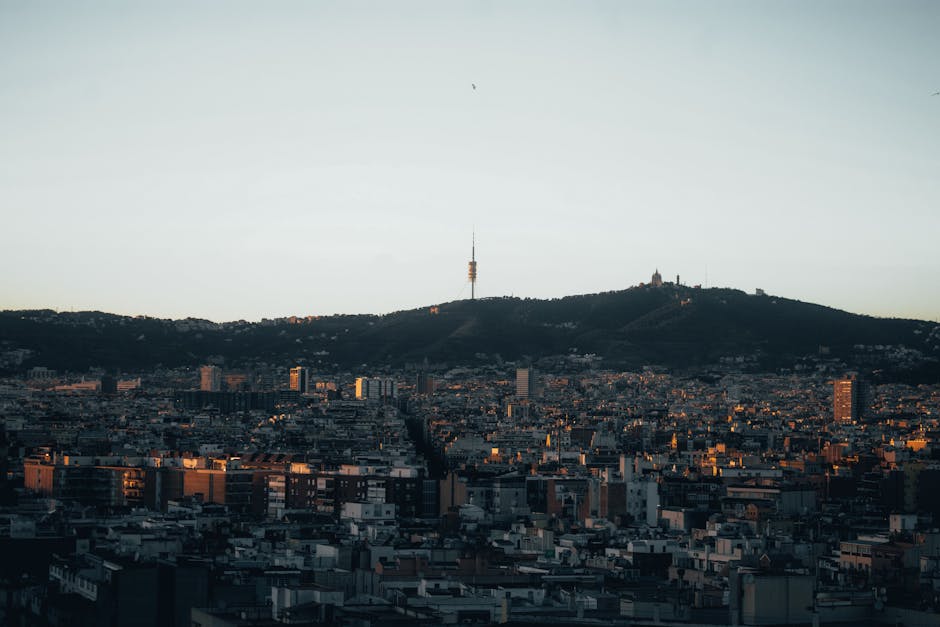
The single best free city view in Barcelona. The remains of a 1937 anti-aircraft battery sit on a hill above the Carmel neighbourhood, with a 360-degree panorama of the city, the sea, and on a clear day, Montserrat in the distance. The 15-minute climb up is part of the experience. Bring a small picnic. The spot is most magical 30 minutes before sunset.
19. Festa Major de Gracia (Mid-August)
For one week each August, the streets of Gracia are decorated like fairy tales by competing neighbourhood committees. The decorations are extraordinary: handmade trees from recycled plastic, undersea fantasies in cardboard, full Studio Ghibli scenes in textiles. Free, walkable, and one of the city’s most charming festivals.
Hidden Gems in Poblenou and Poble Sec
20. Rambla del Poblenou
Not the famous Las Ramblas. The Poblenou rambla is a tree-lined pedestrian boulevard in the city’s old industrial district, now lined with creative-class cafes, vintage shops, and family restaurants. A couple of hours here is the closest you can get to the working Barcelona of locals.
21. Cementiri de Poblenou
Many visitors are surprised, but the Poblenou Cemetery is one of Barcelona’s most peaceful and beautiful places. The funerary art ranges from neoclassical to Modernista, including the famous “Kiss of Death” sculpture. Free to enter, open daily.
22. Carrer Blai Tapas Crawl
A pedestrian street in Poble Sec packed with low-priced pintxo bars (similar to Basque pintxos) where each bite costs around 2 EUR. Less touristy than the Old City, equally delicious. Bar Blai (the namesake) and Pincho J are the standouts.
Hidden Gems on the Outskirts
23. Carretera de les Aigües
A 20-kilometre flat path along the side of the Collserola hills, with views of the entire metropolitan area. Locals walk and run here on weekends. Access from Vallvidrera (FGC) or Sarria (FGC). Bring water; there are no fountains.
24. Tibidabo Mountain Walk
The Tibidabo amusement park is the famous attraction, but the wider Collserola Natural Park around it is a 30-square-kilometre wilderness above the city. Several marked trails of 1 to 4 hours start from the upper funicular station; the loop to Vallvidrera and back is a beautiful afternoon for hikers.
25. Jardins del Laberint d’Horta
The oldest preserved garden in Barcelona, dating to 1791. The cypress maze at its centre has won puzzlers for two centuries. The garden also includes neoclassical pavilions and Romantic-era ruins. Tickets are 2 EUR (free on Wednesdays and Sundays). Closest metro is Mundet.
How to Build a Hidden Gems Itinerary
Barcelona’s hidden gems are densely clustered in three areas: the Old City, Gracia, and Poblenou. We recommend dedicating a half-day to each. Sample plans:
Half-Day 1: Old City Hidden Corners
- Plaça Sant Felip Neri (early morning).
- Temple of Augustus.
- Carrer del Bisbe Bridge.
- Caelum Coffeehouse for a long pause.
- Plaça George Orwell for evening drinks.
Half-Day 2: El Born and the Picasso Backstreets
- Santa Caterina Market.
- Walk Carrer de Montcada and the Picasso backstreets.
- Picasso Museum if you have time.
- Santa Maria del Mar.
- El Xampanyet for early-evening cava.
Half-Day 3: Gracia and Bunker Sunset
- Plaça de la Virreina at 11:00 AM for coffee.
- Walk through Gracia’s small plazas and shops.
- Casa Vicens (book a slot for early afternoon).
- Hike up to the Bunkers del Carmel for sunset.
Half-Day 4: Poblenou Local Day
- Coffee on Rambla del Poblenou.
- Cementiri de Poblenou.
- Lunch on Rambla del Poblenou.
- Late-afternoon swim at Bogatell.
- Carrer Blai pintxos in Poble Sec for dinner.
Etiquette and Practical Tips
- Quiet at sites of memory. Plaça Sant Felip Neri and the Cementiri de Poblenou are reflective places; keep your voice down.
- Cash for small bars. Antic Teatre, El Xampanyet, and several Carrer Blai pintxo bars are cash-only or have a card minimum.
- Stay polite at Bunkers del Carmel. Local residents have complained about late-night noise; be a good guest, leave by 10:30 PM.
- Carry water and a hat. Most outer-city walks have no shade.
- Respect private patios. Some courtyards (like the Temple of Augustus building) are technically private; enter quietly during business hours.
- Photograph respectfully. Locals at neighbourhood bars and cemeteries often appear in photos; ask before close-ups.
- Bring small change for entry fees. Small museums sometimes have card-machine outages.
Hidden Gems by Mood
For a Romantic Afternoon
Hospital de Sant Pau gardens, Bunkers del Carmel sunset, the Pati de la Caritat, and a slow dinner in the Picasso backstreets.
For Architecture Hunters
Casa Vicens, Passatge de Permanyer, the Temple of Augustus, and the Born Cultural Centre cloister.
For History Lovers
Plaça Sant Felip Neri, Temple of Augustus, Cementiri de Poblenou, and the Roman walls along the Old City.
For Foodies
Santa Caterina Market, Carrer Blai pintxo bars, El Xampanyet, and Vinilo Bar.
For Nature Lovers
Bunkers del Carmel, Carretera de les Aigues, Jardins del Laberint d’Horta, Tibidabo mountain trails, and the Hospital de Sant Pau gardens.
For Music Fans
Antic Teatre, Vinilo Bar, small concerts at the Palau de la Musica’s secondary halls, and the Festa Major de Gracia in August.
What Makes a “Hidden Gem” Hidden?
Three things separate a real hidden gem from a marketing-induced “secret” spot:
- Locals actually use it. Plaça de la Virreina is full of Catalans on Sunday morning; it is not a tourist set piece.
- It rewards quiet attention. Plaça Sant Felip Neri requires a moment of stillness to feel its weight.
- It is not on every guidebook’s top-20 list. Locals call El Xampanyet “their” cava bar even though some guidebooks mention it; that is real democracy at work.
A “hidden gem” that has 30,000 monthly visitors and merchandise stands at the entrance is a regular attraction with a marketing strategy. We have tried to keep this list to places where the secret remains, at least mostly, intact.
Frequently Asked Questions
What is the most underrated place in Barcelona?
The Bunkers del Carmel for the view, Plaça Sant Felip Neri for the emotion, and the Hospital de Sant Pau gardens for the architecture.
Are there any hidden gems near the Sagrada Familia?
Yes. The Hospital de Sant Pau is a 10-minute walk away. The Mercat de la Sagrada Familia (a small neighbourhood market two blocks east) is far less touristy than the central markets.
Where do locals actually go in Barcelona?
Gracia for evening drinks, Poblenou for slow weekend brunches, Bogatell beach for sun, and small neighbourhood markets and squares across all districts.
How do I find hidden gems in Barcelona safely?
Most are safe at any time of day. Bunkers del Carmel, the Cementiri de Poblenou, and remote parts of Tibidabo are best visited in daylight hours; otherwise, normal city common sense applies.
Can I do a hidden-gems tour with a guide?
Yes. Several Catalan-language tour companies and a few English-speaking guides specialise in hidden Barcelona walks. Search for “Barcelona alternative tours” or “off the beaten path Barcelona tours” for current operators.
What time should I visit the Bunkers del Carmel?
30 to 60 minutes before sunset gives you the best light and avoids the late-evening crowds. Bring water and snacks.
Are these places free?
Most are free. Casa Vicens, Hospital de Sant Pau, the Palau de la Musica concerts, and a few others have entry fees of 5 to 25 EUR.
Can I include hidden gems in a 3-day Barcelona trip?
Yes. We recommend setting aside one half-day specifically for hidden gems on Day 2 or 3. See our 3-day Barcelona itinerary.
Are there hidden gems for families with children?
Yes. Jardins del Laberint d’Horta is a family hit. The Cementiri de Poblenou is also surprisingly child-friendly. And the Festa Major de Gracia in August is a children’s wonderland.
What if a “hidden gem” is too crowded?
Visit at off-peak hours. Most are quiet at 9:00 AM and from 3:00 to 5:00 PM. Avoid Sundays for indoor venues; locals fill them.
Final Thoughts: The Barcelona Behind the Postcards
The famous Barcelona is amazing. The hidden Barcelona is unforgettable. Anchoring your trip in the icons (the Sagrada Familia, Park Guell, Casa Batllo) is wise; layering in three or four barcelona secret spots from this list gives the trip a depth that staying on Las Ramblas can never deliver. The city was built for slow, curious visitors, and the rewards belong to those who walk a block off the famous routes.
For more, see the full things to do in Barcelona pillar, our neighbourhoods guide, the Gothic Quarter article, and the El Born guide. To plan a relaxed long visit that lets you build in this kind of wandering, our itineraries pillar has 4-day, 5-day, and 7-day plans.