We get commissions for bookings made through this post. Booking links, and any accommodation options shown on the page, are handled by a partner that adds commission tracking automatically. It never costs you more, and it never affects what we recommend. Affiliate disclosure
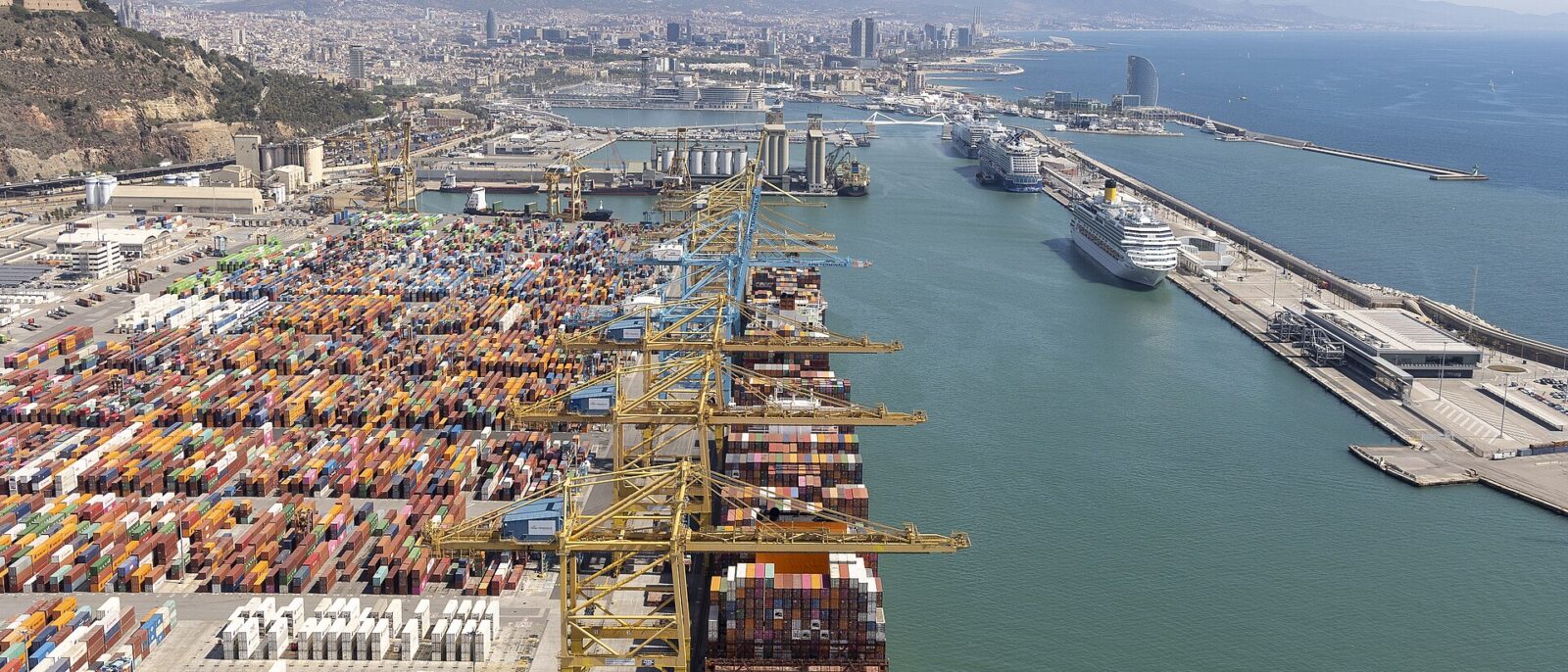
Barcelona’s cruise port is not one building but a row of them, strung out along a breakwater that runs south from the old port for well over a kilometre, with container cranes on one side and the open sea on the other. Your boarding documents give you a letter, A, B, C, D, E or H, and that letter decides how long you will queue for the shuttle, how far your taxi has to drive and, on embarkation day, where your suitcase goes. This guide explains every Barcelona cruise terminal: who runs it, which cruise lines usually use it, what is closing and what is being built, and how to work out where your own ship will be.
It is the reference companion to our Barcelona cruise port guide, which covers getting into town, taxis, the cruise tax and the port as a whole, and to our one day in Barcelona from a cruise ship plan, which covers what to do once you are ashore. Facts were checked in October 2026. Terminal allocations change from sailing to sailing, so treat the patterns here as a guide and your cruise line’s port document as the final word.
The terminals at a glance
| Terminal | Where | Run by | Usually used by | Status |
|---|---|---|---|---|
| A | Moll Adossat | Creuers del Port de Barcelona (Global Ports Holding) | Lines without their own terminal, by allocation | Open; due to be demolished in 2028 |
| B | Moll Adossat | Creuers (Global Ports Holding) | Lines without their own terminal, by allocation | Open; due to be demolished in 2028 |
| C | Moll Adossat | Creuers (Global Ports Holding) | Lines without their own terminal, by allocation | Due to be demolished at the end of 2026 and replaced by a new public terminal |
| D | Moll Adossat | Palacruceros (Carnival Corporation) | Carnival Corporation brands have preference | Open |
| E (Helix) | Moll Adossat | Palacruceros (Carnival Corporation) | Carnival Corporation brands have preference | Open since 2018 |
| H (MSC) | Moll Adossat | MSC Cruises | MSC Cruises | Open since February 2025 |
| G | Moll Adossat | A Royal Caribbean Group joint venture | Expected to serve Royal Caribbean Group brands | Awarded; opening date not announced |
| WTC North | Moll de Barcelona, by the city | Creuers (Global Ports Holding) | Smaller ships | Closed |
| WTC South | Moll de Barcelona, by the city | Creuers (Global Ports Holding) | Smaller ships | Due to close at the end of 2026 |
Moll Adossat: where almost every ship now docks
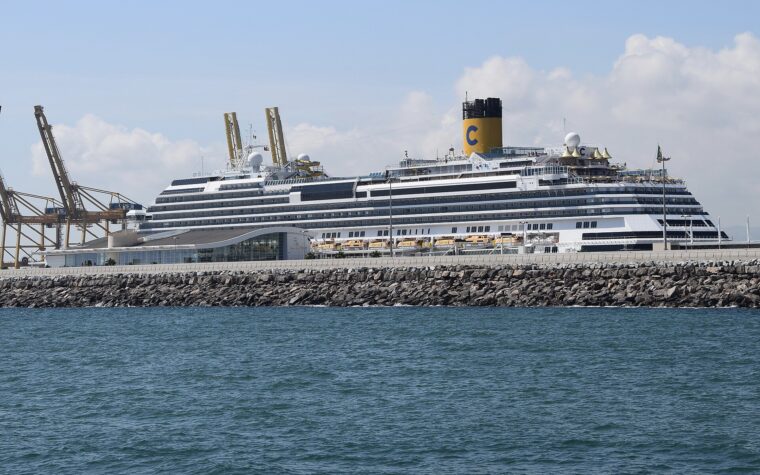
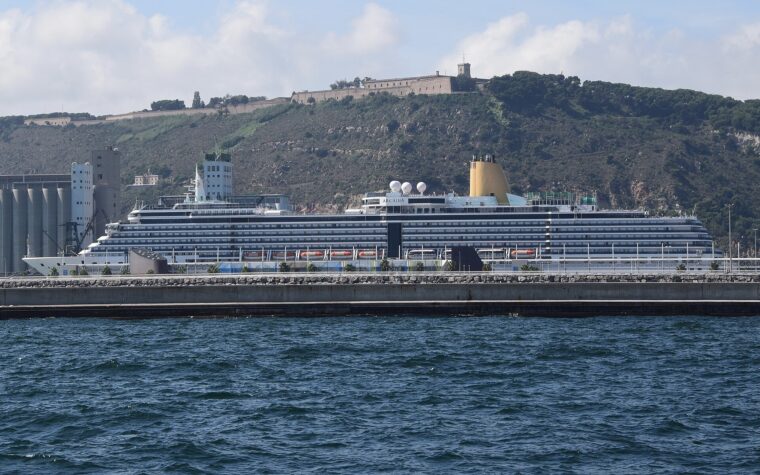
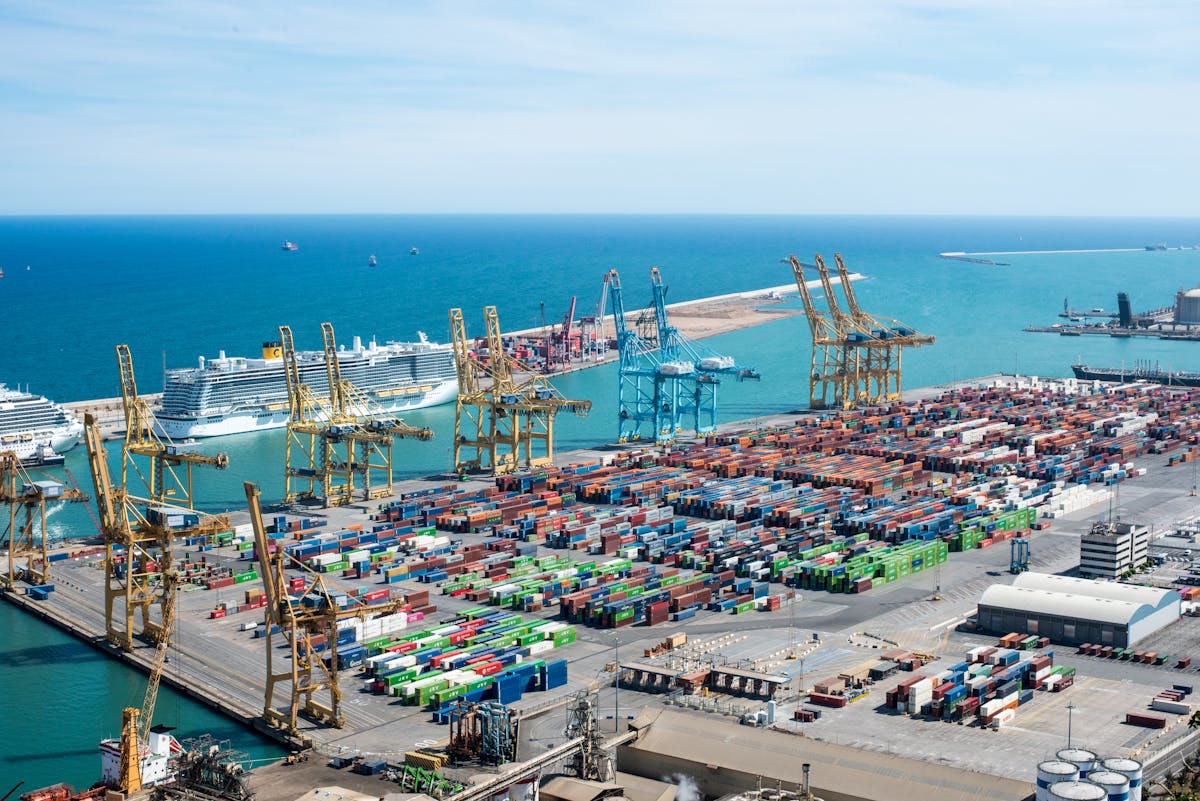
The Moll Adossat is the long cruise quay built against the outer breakwater on the southern side of the port, below Montjuïc. It is where the big ships berth, and since the city-centre terminals are closing, it is where almost every cruise ship calling at Barcelona will dock from 2027. Seen from the castle on Montjuïc, it is an extraordinary sight on a busy summer morning: four or five ships in a line, each the size of a city block, with a terminal building beside each one.
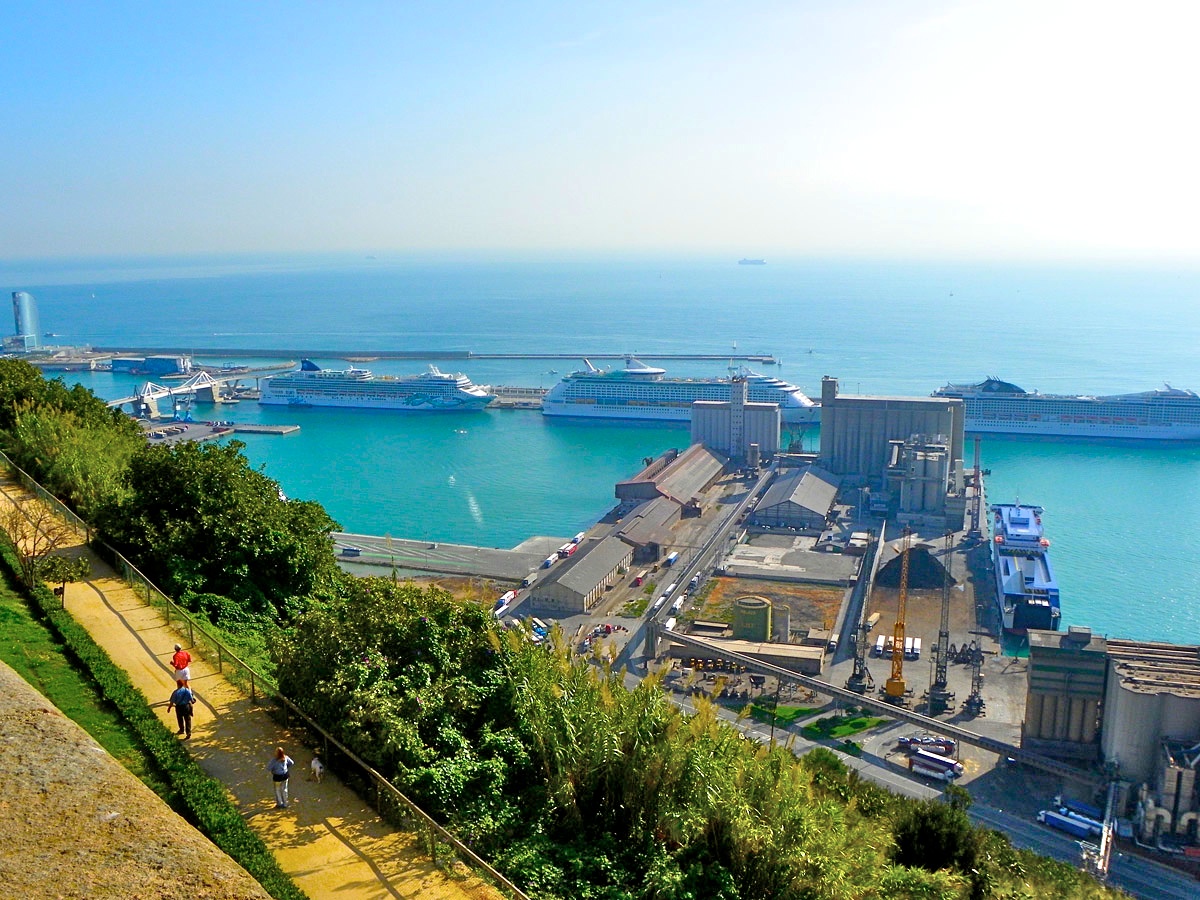
Three practical facts follow from where it is:
- You cannot sensibly walk to the city. The Columbus Monument at the foot of La Rambla is around two kilometres away along port roads and a busy junction, and pedestrians are not catered for. Every passenger needs the shuttle bus, a taxi or a coach.
- The quay is long. The terminals sit one after another along it, and the distance between the first and the last is considerable. The shuttle bus stops at each terminal, and taxis go to the door of whichever one you need.
- Each terminal is self-contained. Each has its own building with check-in and security, its own taxi rank and its own shuttle stop. You only ever use your own.
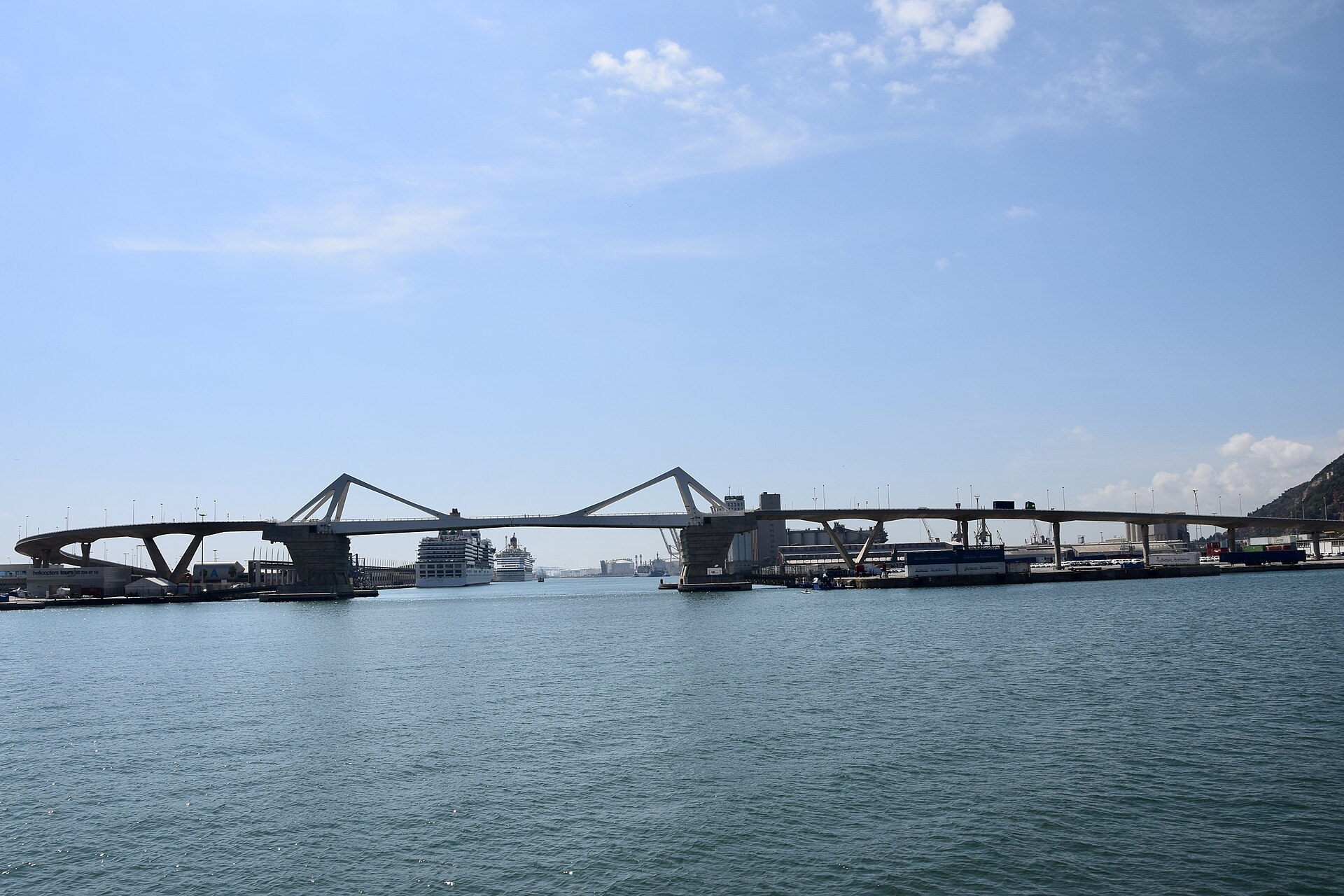
The road out to the quay crosses the Porta d’Europa, the big drawbridge over the port’s inner channel, which is due to be doubled as part of the port’s rebuilding plan.
Terminals A, B and C: the public terminals
Terminals A, B and C are the public terminals on the Moll Adossat, run by Creuers del Port de Barcelona, a company in which Global Ports Holding has held the majority since 2014; it bought out Royal Caribbean Group’s remaining minority stake in November 2023. “Public” here means that they are not tied to one cruise company: any line without its own terminal is allocated a berth at one of them, call by call.
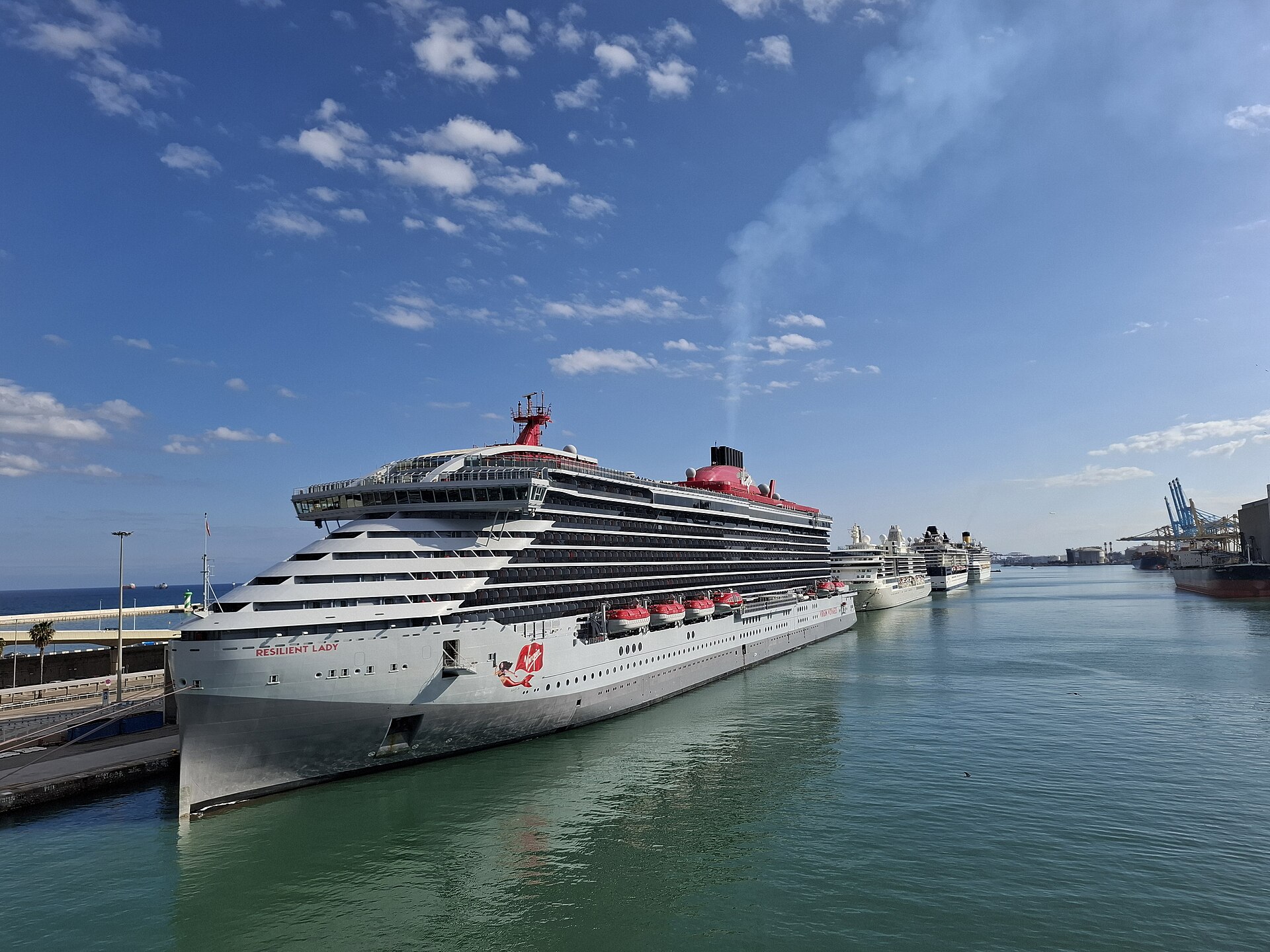
In practice that makes A, B and C the terminals for most of the lines that do not belong to Carnival Corporation or MSC: the Royal Caribbean Group brands, Norwegian Cruise Line Holdings’ brands, Virgin Voyages, Viking and many smaller lines. They are functional rather than glamorous, older than the private terminals further along the quay, and perfectly adequate for what they do.
All three are about to change. Under the plan agreed between the city and the port in July 2025, Terminal C is due to be demolished at the end of 2026, with a new public terminal built on its site in 2027 and opening in 2028, and Terminals A and B are due to be demolished in 2028. If your ship is allocated to the public terminals in 2027 or 2028, expect some building work and, possibly, berths in unfamiliar places.
Terminal D: Palacruceros
Terminal D is one of the two terminals run by Palacruceros, Carnival Corporation’s company at the port. It operates under a private concession that gives preference to Carnival Corporation’s ships, which means the group’s brands, including Costa, AIDA, P&O Cruises, Cunard, Princess, Holland America Line, Seabourn and Carnival Cruise Line, are the most likely to berth here or at the Helix next door. Preference is not exclusivity, though: when Carnival’s ships do not need it, other lines can be allocated a berth.
Terminal E: the Helix
The Helix, Terminal E, is Carnival Corporation’s second terminal at Barcelona, opened in 2018 and built for the largest ships in the group’s fleets. It is the most modern of the older generation of terminals, and on embarkation days it handles thousands of passengers at a time. Like Terminal D it is a private concession with preference for Carnival Corporation brands, and, like D, it can host other lines when there is space.
Terminal H: MSC’s own terminal
MSC Cruises opened its own terminal on the Moll Adossat in February 2025, with the first passengers passing through on 15 February. It is a building of around 12,500 square metres, an investment of roughly €50 million, and it is used by MSC’s own ships. You may see it called Terminal F in older port planning documents; cruise documents and signage use Terminal H, and that is the name to look for. If you are sailing with MSC from Barcelona, this is almost certainly where you will board.
Terminal G: the next terminal
The seventh and last terminal site on the Moll Adossat, known as Terminal G, was put out to tender by the port. Two bids came in, one from Royal Caribbean Group and one from a joint initiative of Norwegian Cruise Line, Viking and Virgin, and the port awarded the construction and operation of the terminal to Catalonia Cruise Terminal G, a joint venture of Royal Caribbean Group and Cruise Terminals International. The concession covers more than 54,000 square metres, with 450 metres of quay, enough for ships up to 400 metres long. No opening date has been announced; once it opens, expect the Royal Caribbean Group’s brands to use it.
The World Trade Center terminals: closing
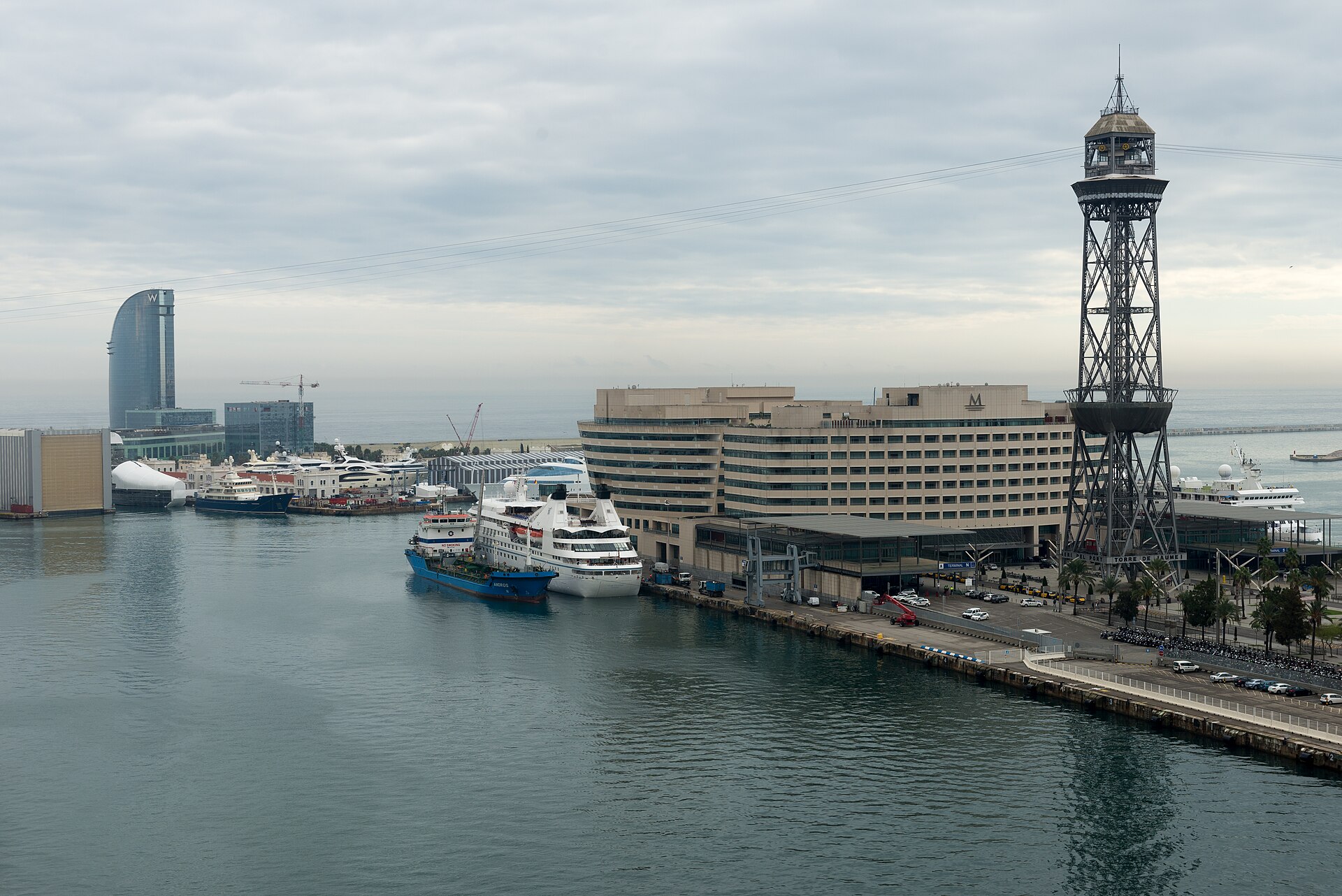
For decades smaller cruise ships berthed at the World Trade Center on the Moll de Barcelona, right at the foot of La Rambla, and passengers walked into the city in ten minutes. That era is ending. The port has already closed WTC North, moving around 340 cruise and ferry calls a year out to the Moll Adossat, and WTC South is due to close at the end of 2026, taking around 70 more calls with it. The 630 metres of quay that frees up is being turned into public space.
If your ship is allocated to WTC South before it closes, enjoy it: Drassanes metro station (L3) is a short walk away, the Gothic Quarter is just beyond, and the port cable car’s Torre de Jaume I is next door. From 2027, plan on the Moll Adossat.
Which terminal will my ship use?
This is the question every cruise passenger asks, and the honest answer is that the port allocates berths call by call, so the only definitive source is the port document or boarding pass your cruise line issues before you sail. That said, the pattern is predictable, because three cruise groups have their own terminals and everyone else shares the public ones:
| Cruise line | Most likely terminal | Why |
|---|---|---|
| MSC Cruises | H | MSC’s own terminal since February 2025 |
| Costa Cruises, AIDA | D or E (Helix) | Carnival Corporation brands have preference at Palacruceros |
| P&O Cruises, Cunard, Princess | D or E (Helix) | Carnival Corporation brands |
| Holland America Line, Seabourn, Carnival Cruise Line | D or E (Helix) | Carnival Corporation brands |
| Royal Caribbean, Celebrity, Silversea | A, B or C for now | Public terminals until the group’s Terminal G opens |
| Norwegian, Oceania, Regent Seven Seas | A, B or C | Public terminals, by allocation |
| Virgin Voyages, Viking | A, B or C | Public terminals, by allocation |
| Smaller and expedition ships | WTC South until the end of 2026, then the Moll Adossat | The city-centre terminals are closing |
Two caveats. First, a line with preference at a terminal does not always get it: on very busy days, ships are spread across whatever berths are free, so a Carnival brand can end up at a public terminal and vice versa. Second, allocations occasionally change a few days before arrival, and very occasionally on the day. If you are arranging a private transfer, give the driver your ship’s name rather than just a terminal letter, and recheck your documents the night before.
Embarkation and disembarkation
If Barcelona is where your cruise starts or ends, the terminal matters more, because you will be arriving with luggage and, often, a flight to catch.
Embarkation day
- Arrive within your check-in window. Lines give each passenger a time slot to spread the crowds; arriving hours early usually means waiting outside.
- Take a taxi or a booked transfer to the terminal door. There is no direct public transport from the airport to the Moll Adossat, and the Cruise Bus is not designed for large suitcases. Tell the driver your ship and terminal.
- Drop your bags with the porters outside the terminal, keep your documents, medication and anything valuable in your hand luggage, and go through check-in and security.
Disembarkation day
- Expect queues for taxis at the busiest times, especially when several ships turn around on the same morning. A pre-booked transfer avoids them.
- If your flight is late in the day, consider a morning in the city: our cruise port guide covers left luggage and how to spend the gap.
- Allow plenty of time for the airport. The drive is usually around half an hour without traffic, but security at El Prat can be slow in summer; our Barcelona airport guide explains the terminals there, and our airport transfer guide compares the options into the city.
Inside the terminals
None of Barcelona’s cruise terminals is a destination in itself. They are processing buildings: check-in counters, security scanners, seating, toilets and a route to the gangway, with the newer private terminals noticeably more spacious and better finished than the older public ones. Do not plan to arrive early and spend a pleasant hour inside, because there is very little to do, and on embarkation days the queue simply moves from the pavement to the hall.
- Step-free access. The terminals are modern and step-free, and staff are used to helping passengers with reduced mobility. If you need assistance, tell your cruise line in advance so that it is waiting for you. Our accessible Barcelona guide covers adapted taxis and getting around the city.
- Bring what you need for the wait. Water, a snack, medication and anything you will want in the first hours on board should be in your hand luggage, not in the suitcase that goes with the porters.
- Do not leave a bag unattended, inside or outside. The terminals are secure, but the taxi ranks and drop-off areas are busy, and opportunists know when the ships turn around.
Busy days at the port
On a quiet day in winter, a single ship may have the quay almost to itself. On a busy day in summer, four, five or more ships can be alongside at once, several of them changing over thousands of passengers at the same time, and every part of the system feels it: the Porta d’Europa road, the taxi ranks, the Cruise Bus queues at the Columbus Monument and the security lines at the airport.
- Weekends are usually the busiest turnaround days, because many Mediterranean itineraries start and end on Saturdays and Sundays.
- Mid-morning and mid-afternoon are the peaks for the Cruise Bus, when passengers on port calls all head into town and then all head back.
- Allow extra time for everything on a busy day, and above all for the return to the ship. An hour of margin before all-aboard is the minimum we would recommend; more on embarkation day.
The city publishes no simple daily ship count for visitors, but your cruise line, or a glance at the quay from the ship’s deck, will tell you whether it is one of those days.
Staying near the port before or after a cruise
If you are starting or ending a cruise in Barcelona, a night or two in the city turns a stressful transfer into a holiday. There is no hotel at the Moll Adossat itself, so the question is which part of the city makes the morning taxi easiest.
- The old port, the Gothic Quarter and El Born are the closest areas to the cruise quay, with a short taxi ride to the terminal and the old city on your doorstep.
- Barceloneta and the waterfront put you by the sea, a little further round the port; our Barceloneta guide covers the neighbourhood.
- The Eixample is further away but has the widest choice of hotels, and the drive to the port is easy outside rush hour.
Our where to stay guide explains the neighbourhoods, and our hotels guide has the properties. Remember the tourist tax, which applies to hotel nights before and after your cruise as well as to the call itself.
Getting between the terminals and the city
| Option | Cost | Best for |
|---|---|---|
| Cruise Bus to the Columbus Monument | €3 one way, €4.50 return | Port days with a daypack; solo travellers and couples |
| Taxi | About €15–25 to the city centre | Groups of three or four, luggage, a straight run to the Sagrada Família |
| Ship’s shuttle | Set by the cruise line | Passengers who prefer to stay with the ship’s arrangements |
| Walking | Free | Only from the WTC terminals, never from the Moll Adossat |
Our taxi guide explains the fares and supplements, and our port-day plan shows how to use the time once you are in town.
The rebuild: what changes between 2026 and 2030
In July 2025 the city and the port signed an agreement that, for the first time, caps the growth of cruise traffic in Barcelona and reorganises the terminals. The Moll Adossat goes from seven terminal sites to five, backed by about €185 million of public and private investment. The timetable, as announced:
| When | What happens |
|---|---|
| End of 2026 | Terminal C is demolished; WTC South closes |
| 2027 | A new public terminal is built on the site of Terminal C, and the Porta d’Europa bridge is doubled |
| 2028 | The new public terminal opens; Terminals A and B are demolished; shore power is installed so that ships can plug in at berth |
| By 2030 | The new layout is fully operational: four private terminals and one public terminal |
For passengers, the main effects are simpler than they look: everything happens at the Moll Adossat, the walk-in-from-the-WTC option disappears, and there may be some building work and berth shuffling around the public terminals in 2027 and 2028. The shore-power connections, once running, will let ships switch off their engines at berth, which matters to a city whose residents have long complained about cruise emissions.
A port in the middle of a debate
It helps to know, as you walk off the ship, that cruise tourism is one of the most argued-about subjects in Barcelona. The city received around 15.7 million tourists in 2025 and has adopted 16 million as its stated ceiling; it has appointed its first commissioner for sustainable tourism; and residents’ groups have marched against mass tourism, with housing costs at the heart of their complaints. Cruise passengers are a particular focus, because so many arrive at once, spend only a few hours in the most crowded parts of the old town and leave again.
The terminal plan is the port’s answer: a cap on growth, fewer terminals, everything moved away from the city centre and ships plugged into shore power by 2028. None of this should put you off visiting. It is simply a reason to spread out, to eat and shop away from La Rambla, and to treat the old town as the neighbourhood it still is. Our is Barcelona worth visiting guide looks at the debate in more depth.
The cruise tax
Since April 2026, cruise passengers calling at Barcelona pay a tourist tax of €11 per person for a call of under 12 hours, and €9 for 12 hours or more, the shorter call being taxed more heavily to discourage brief visits. It is normally collected through your cruise fare rather than at the terminal. The city has also proposed a further municipal charge for short calls, which was not in force when we checked. Our tourist tax guide has the details.
Frequently asked questions
Where do cruise ships dock in Barcelona?
Almost all of them dock at the Moll Adossat, the long cruise quay on the southern side of the port below Montjuïc, which has terminals A, B, C, D, E (the Helix) and H (MSC). The World Trade Center terminals by the city centre are closing: WTC North has already closed and WTC South is due to close at the end of 2026.
How do I find out which terminal my ship uses?
Check the port document or boarding pass from your cruise line, which gives the terminal allocated for your call. MSC uses its own Terminal H; Carnival Corporation brands usually use D or E; most other lines use the public terminals A, B or C.
Can I walk from the cruise terminal to La Rambla?
Not from the Moll Adossat: it is about two kilometres along port roads with no proper pedestrian route. Take the Cruise Bus (€3 one way, €4.50 return) or a taxi. From the WTC terminals, while they remain open, it is a short walk.
Which terminal does MSC use in Barcelona?
MSC Cruises has its own terminal, Terminal H, on the Moll Adossat, which opened in February 2025.
Which terminal does Royal Caribbean use in Barcelona?
For now, usually one of the public terminals, A, B or C, by allocation. A Royal Caribbean Group joint venture has been awarded the new Terminal G on the Moll Adossat, but no opening date has been announced.
What is the Helix terminal?
The Helix is Terminal E, one of Carnival Corporation’s two terminals at Barcelona, opened in 2018 for the group’s largest ships. Carnival brands have preference there, though other lines can be allocated a berth.
How far is the cruise terminal from the airport?
The drive between El Prat airport and the Moll Adossat usually takes around half an hour without heavy traffic. There is no direct public transport link, so most passengers take a taxi or a pre-booked transfer.
Is there a shuttle from the cruise terminals to the city?
Yes. The Cruise Bus runs between the terminals and the Columbus Monument at the bottom of La Rambla, at €3 one way or €4.50 return. Some cruise lines also run their own shuttles, usually for a charge.
Flying in for your cruise? Our Barcelona airport to cruise port guide explains the fixed taxi fare between El Prat and the terminals, the cheaper public transport routes and why we recommend arriving the day before.
Related Barcelona Guides
- Barcelona cruise port guide — getting into town, taxis, the cruise tax and more.
- One day in Barcelona from a cruise ship — hour-by-hour plans for a port day.
- Barcelona airport — terminals, lounges and getting around El Prat.
- Airport transfers — every way between El Prat and the city.
- The waterfront and port — the old port, the marina and the beaches.
- Barcelona tourist tax — including the cruise passenger rates.
Photo Credits
The commercial port and the Moll Adossat cruise quay from the air: El port comercial, La terminal de contenidors APM Terminals i el moll Adossat de creuers by NeusCGarcia, CC0, via Wikimedia Commons.
Cruise ships at the Moll Adossat, seen from Montjuïc: Barcelona, el port amb vaixells de creuer – panoramio by jordi domènech, CC BY-SA 3.0, via Wikimedia Commons.
The Porta d’Europa drawbridge: 2014- Pont de la Porta d’Europa Bascule( Drawable or Movable ) bridge on the Mediterranean Sea in Port of Barcelona, Barcelona, Spain (Ank Kumar) 01 by Ank Kumar, CC BY-SA 4.0, via Wikimedia Commons.
Resilient Lady at the Moll Adossat: Resilient Lady port de Barcelona 01 2025 by 9pm, CC BY-SA 4.0, via Wikimedia Commons.
The World Trade Center quay and the Torre de Jaume I: 15-10-27-Vista des de l’estàtua de Colom a Barcelona-WMA 2788 by Ralf Roletschek, GFDL 1.2, via Wikimedia Commons.