We get commissions for bookings made through this post. Booking links, and any accommodation options shown on the page, are handled by a partner that adds commission tracking automatically. It never costs you more, and it never affects what we recommend. Affiliate disclosure
In July 2024, around 2,800 people marched through central Barcelona, and a few of them sprayed water pistols at diners on restaurant terraces. The photographs went round the world, and ever since, a question that would have seemed absurd a decade ago gets typed into search engines several thousand times a month: is barcelona worth visiting, or has the city stopped wanting you? The short answer is yes, emphatically, and the long answer is that the city’s argument is not with visitors but with a housing crisis it blames on how tourism has been managed. Those are different things, and it is worth understanding the difference before you book.
This page gives the honest version: what the protests are actually about, what the city has changed and what it is proposing to change, what a visitor genuinely experiences on the ground in 2026, and how to visit in a way that does not add to the problem. It also says plainly when Barcelona is not the right choice. Figures were checked in September 2026.
The short version
| The worry | The reality in 2026 |
|---|---|
| “Locals hate tourists” | No. The dispute is about housing and management, not visitors as individuals. Day-to-day hospitality is normal and warm. |
| “I’ll get sprayed with a water pistol” | Very unlikely. A handful of incidents at one march, heavily photographed. Nothing like it is a routine occurrence. |
| “It’s too crowded to enjoy” | True of about six streets and three attractions in July and August. The other 95% of the city is fine. |
| “It’s become expensive” | Accommodation, yes — the highest in Spain. Food, transport and museums remain good value. |
| “Everything is being restricted” | Tourist flats are being phased out and the tourist tax has roughly doubled. Attractions, restaurants and transport are unaffected. |
| “I’ll feel unwelcome” | Only if you behave badly. The reception you get is more or less the reception you earn. |
What the protests are actually about
It is worth stating this precisely, because the international coverage has consistently flattened it into “locals hate tourists”, which is not what the placards say.
Barcelona had 15.7 million tourists in 2025 against a resident population of roughly 1.6 million in the city proper. Rents in the city rose by about 68% over the past decade and purchase prices by around 38%. Ten thousand flats were licensed as short-term tourist accommodation, concentrated in exactly the districts where young people and families needed to live. Long-standing neighbourhood businesses were replaced by souvenir shops paying rents that only tourist footfall could sustain.
That is the grievance. The campaign groups behind the marches argue for tourism degrowth — fewer visitors, better regulated — and the specific demands are about housing, about cruise-ship day-tripping that brings volume without much local spend, and about the pressure on water, waste and health services in high season. They are not, on the whole, arguing that individual visitors are bad people.
The city government has largely accepted the analysis. Barcelona now has a stated ceiling of 16 million visitors and a position summarised as “not one tourist more”. It has appointed its first commissioner for sustainable tourism. It is phasing out every short-term rental licence by November 2028. It roughly doubled the tourist tax in April 2026, and it is consulting on a much higher levy on cruise passengers who spend under twelve hours ashore.
Does any of this affect you as a visitor?
Honestly, less than you would expect. Here is what has actually changed on the ground.
- Accommodation is more expensive and more regulated. The tourist tax now runs €6–12 per person per night depending on category, on top of the room rate, for the first seven nights. Booking a flat requires checking that the listing shows a valid licence number. See our tourist tax guide and the Airbnb phase-out explainer.
- The big attractions require booking. Sagrada Família, Park Güell, Casa Batlló and La Pedrera all use timed entry. This is a crowd-management measure and it works — the queues that defined a visit ten years ago have largely gone, replaced by the requirement to plan.
- Some things have curfews now. The Bunkers del Carmel viewpoint, which became a sunset ritual through social media, now closes in the early evening because the residents living below it could not sleep.
- Cruise arrangements are changing. Terminals are being consolidated at Moll Adossat and the World Trade Center berths are closing, as part of a capped agreement between the city and the port.
- Nothing else. Restaurants serve you. The metro works. Museums are open. Nobody at a ticket desk will ask why you came.
What it actually feels like on the ground
A fair account, from the perspective of a visitor rather than a headline.
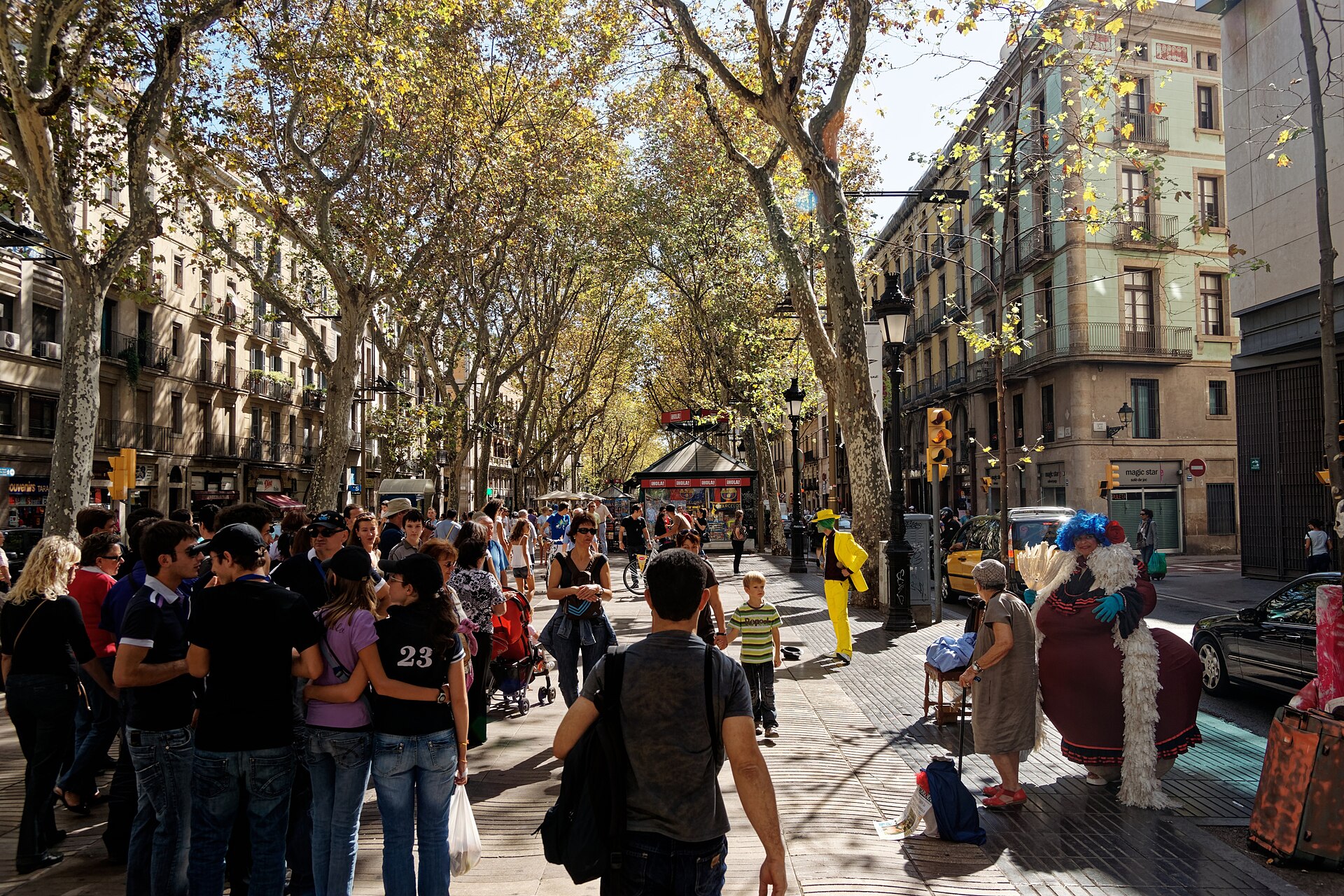
The crowding is real but geographically tiny. Barcelona’s tourism is concentrated into an extraordinarily small area: La Rambla, the streets immediately around the cathedral, the Sagrada Família’s two facades, Park Güell’s monumental zone, the Passeig de Gràcia block containing Casa Batlló, and Barceloneta beach. In July and August those places are genuinely unpleasant. Walk fifteen minutes in any direction and you are in a city going about its business.
The hostility is not directed at you personally. In several years of visiting and writing about this city, the ordinary experience is unremarkable courtesy: waiters, shopkeepers, metro staff and neighbours treating you the way they treat everyone. What does provoke a reaction is behaviour — walking through the Gothic Quarter in swimwear, drinking in the street, groups shouting outside flats at 3am. That reaction is entirely reasonable and is not really about tourism at all.
Catalan matters more than people expect. This is a bilingual city with a genuine linguistic identity, and the single easiest way to be treated well is to open with bon dia rather than buenos días. It costs nothing and it is noticed every time. Our language guide has the twenty words that matter.
The city is not in decline. The food is better than it was five years ago, the museums are excellent, the beach is clean, the metro is among the best in Europe, and the architecture has not moved. Whatever the political argument, the reasons people came in the first place are all still here.
The case for visiting
Set the politics aside for a moment. Barcelona remains, on the merits, one of the three or four best city breaks in Europe, and the reasons are specific.
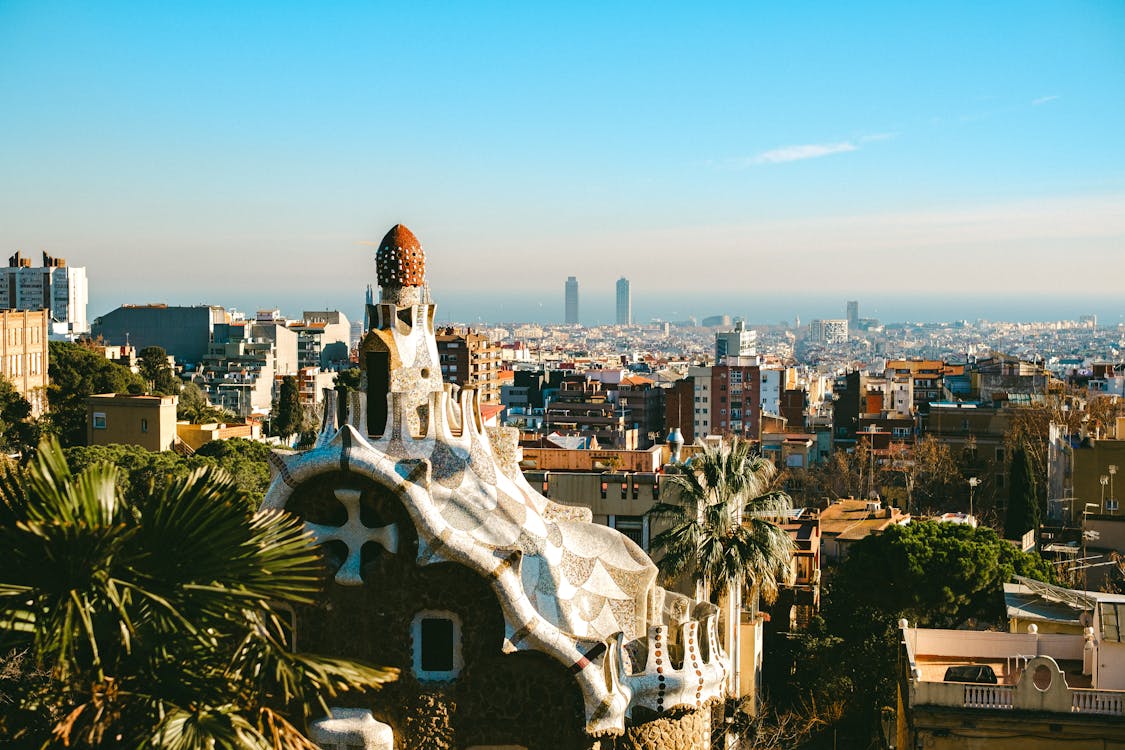
- The architecture is genuinely unique. There is no second Gaudí and no second modernista city. The Sagrada Família is nearing completion after 140 years, which will not happen again in your lifetime. Our Gaudí guide covers the buildings.
- It is a beach city and a great city simultaneously. Almost nowhere else manages both. You can look at a Gothic cathedral in the morning and swim in the Mediterranean after lunch.
- The food is world-class at every price point. Twenty-nine Michelin-starred restaurants and, more usefully, a menú del dia culture that puts three courses and a drink on the table for €14–18. See our food guide.
- It is compact and walkable. You can cross the useful part of the city on foot in an hour, and the metro covers everything else in twenty minutes.
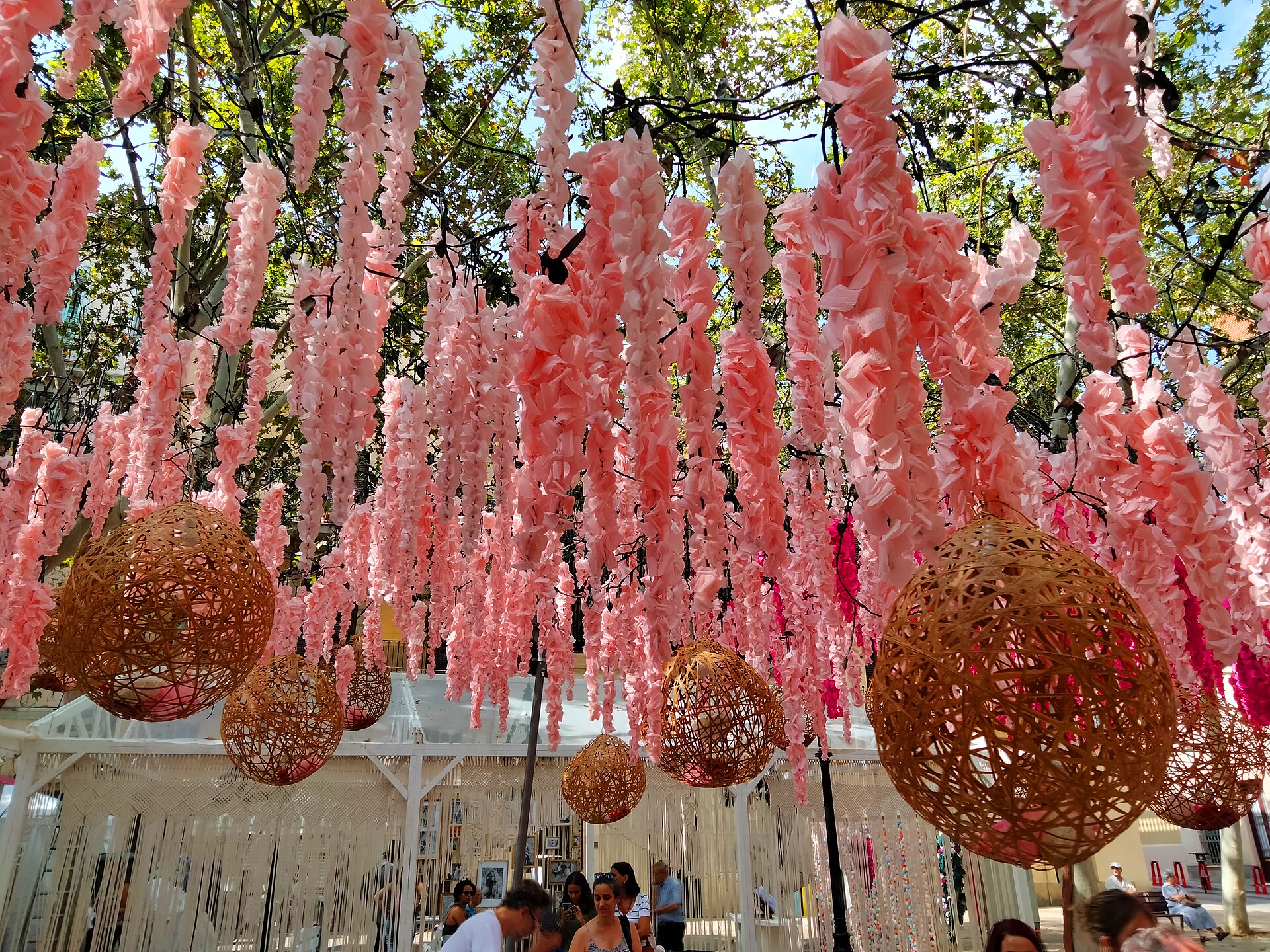
- The festivals are exceptional and mostly free. La Mercè, Sant Jordi, Sant Joan, the Festa Major de Gràcia — these are not tourist events. They are the city celebrating itself, and visitors are welcome at all of them.
- Catalonia is right there. Montserrat, Girona, the Costa Brava, the Penedès wine country and the Pyrenees are all within a couple of hours. Our day trips guide has the list.
The case against — when Barcelona is the wrong choice
There are situations where the honest advice is to go somewhere else, and a guide that never says so is not much use.
- You want a quiet, undiscovered European city. This is not it and never will be again. Go to Valencia, Bologna, Porto or Ljubljana.
- You are coming for a stag or hen weekend. Barcelona has actively legislated against this kind of tourism, the police enforce street-drinking and public-nuisance rules, and you will have a worse and more expensive time than you would elsewhere. This is the one category the city genuinely does not want.
- You can only travel in the first three weeks of August. Peak heat, peak crowds, and a large proportion of the good neighbourhood restaurants closed for the holidays. Not the city at its best.
- You need a cheap city break. Barcelona has the highest hotel rates in Spain. Seville, Valencia and Granada all offer more for less money.
- You want a beach holiday primarily. The city beaches are good for a city; they are not the Costa Brava, let alone the Balearics. Come for the city and treat the beach as a bonus.
How to visit well
None of this is onerous, and most of it makes for a better trip anyway.
Stay in a hotel or an aparthotel
This is the single biggest thing. Hotels are zoned, taxed, regulated and staffed by people on employment contracts; a flat in a residential building is the thing residents are actually angry about. It is also, in 2026, the only option that cannot be cancelled on you at short notice for a licensing problem. Our accommodation guide covers the property types.
Come outside July and August
May, September, October and November are better in every respect: cheaper, cooler, less crowded, and the city is functioning normally. September in particular has warm sea, mild weather and La Mercè. Our month-by-month guide lays out the whole year.
Stay longer, and in fewer places
The economics of overtourism are driven by volume, not by duration. A visitor who stays four nights spends more locally and imposes less strain than four visitors who each stay one. Cruise day-tripping is the extreme version of this, which is exactly why the city is targeting it.
Spread out
Eat in Poble-sec, Sant Antoni or Gràcia rather than on the arteries. Visit Santa Caterina market instead of only La Boqueria. Swim at Bogatell or Mar Bella rather than fighting for a metre of Barceloneta. You will have a better time, spend less, and the money goes to businesses that need it.
Learn the small courtesies
- Cover up away from the beach. Walking through the city in swimwear is against local by-laws and carries a fine, and it is the single most common complaint residents make.
- Do not drink in the street. Also fined, and also enforced.
- Keep the noise down after 22:00, particularly in the old town, where flats sit directly above the bars.
- Say bon dia. Then switch to Spanish or English if that is easier for everyone. The gesture is what matters.
- Do not photograph people’s homes and washing lines. Gràcia and the Gothic Quarter are residential streets, not a set.
Spend locally
Independent restaurants, neighbourhood markets, small shops, local guides. A euro spent in a family-run bar in Sant Antoni does considerably more for the city than the same euro spent in an international chain on Portal de l’Àngel — and, as our shopping guide argues, the independent option is usually better anyway.

What about the cruise question?
Worth addressing separately, because it is the sharpest edge of the argument. Cruise passengers arriving for six or eight hours are, by the city’s own analysis, the least beneficial and most disruptive form of visitor: they arrive in enormous synchronised waves, concentrate on the same handful of streets, and spend comparatively little locally because their food and bed are on the ship.
The city and the port have agreed a cap on cruise growth and are consolidating the terminals. A municipal levy of up to €24 on passengers staying under twelve hours has been proposed, taking the total to roughly €30 with existing charges — it is not yet in force, and the tax actually being collected since April 2026 is €11 for calls under twelve hours and €9 for longer ones.
The honest advice: if you are arriving by cruise ship, you are not doing anything wrong, and the city is not going to be rude to you. But you will see a fraction of Barcelona in a very compressed window on the busiest streets, and you will pay a surcharge for the privilege. If the city interests you, come back and stay. Our cruise port guide covers making the most of a short call.
How Barcelona got here
The context helps, because Barcelona’s situation is not the same as Venice’s or Amsterdam’s and the difference matters.
Until the 1980s Barcelona was an industrial port city that turned its back on the sea. It had beaches nobody swam at, a waterfront occupied by rail yards and factories, and almost no tourism to speak of. The 1992 Olympic Games changed that deliberately and comprehensively: the city demolished the industrial waterfront, built the beaches that exist today, opened the ring roads, and marketed itself to the world with enormous success. Fewer than two million visitors a year became more than fifteen million within three decades.
That is the crucial point. Barcelona did not have tourism happen to it — it went and got it, on purpose, as an economic strategy after deindustrialisation, and it worked better than anyone planned for. Tourism now accounts for a substantial share of the city’s economy and a great many jobs. The current argument is not a rejection of that strategy so much as an attempt to correct its excesses forty years on, which is a harder and less satisfying story than “locals hate tourists” but a considerably more accurate one.
It also explains why the measures the city has chosen are the ones it has chosen. Barcelona is not trying to reduce visitor numbers by making itself unpleasant. It is regulating the parts of the system that generate the most local cost for the least local benefit — short-term rentals that remove housing, cruise calls that bring volume without spending, and unmanaged crowding at a handful of specific sites — while leaving the hotel, restaurant and cultural economy alone.
The other side of the ledger
It is worth stating what tourism gives the city, because guides that only report the grievance give a distorted picture.
- It funds a great deal of restoration. The Sagrada Família is built entirely from ticket revenue and donations — no public money, no church money. Every visitor pays for stone. The same broad model funds conservation at Park Güell, Palau de la Música and Sant Pau.
- It supports the restaurant culture visitors come for. A city of 1.6 million people does not sustain twenty-nine Michelin stars and several thousand serious restaurants on its own.
- It pays for public infrastructure. A quarter of the tourist tax revenue is now earmarked for housing, and the rest funds city services. The tax rise was not designed to punish visitors; it was designed to make them pay a fairer share of what they use.
- It keeps the cultural calendar viable. The Grec festival, Primavera, Sónar and the museum programme all depend on audiences that the resident population alone would not fill.
- It employs a lot of people. Including many of the people at the protests, which is precisely why the campaign is for degrowth and better regulation rather than for abolition.
None of this cancels the housing argument, which is real and serious. But a visitor who stays in a licensed hotel, eats in local restaurants and pays the tax is contributing to the city, not extracting from it. The distinction the debate is drawing is between kinds of tourism, not between tourists and everyone else.
So: should you go?
Yes, with three conditions attached, none of them difficult.
Come outside the peak if you possibly can. A May or October visit is a genuinely different city from an August one — cooler, cheaper, calmer, and functioning normally. This single choice does more than everything else on this page combined.
Stay somewhere licensed, and stay a while. Four nights in a hotel does more good and less harm than one night in a flat, and it is a better holiday.
Behave the way you would at home. Which for the overwhelming majority of visitors requires no adjustment whatsoever — and is, in the end, the whole of the ask.
Barcelona is not a city that has stopped wanting visitors. It is a city that has become specific about what kind of visiting it can sustain, and it has been unusually honest and public about saying so. That candour is worth respecting, and it is also, if you are planning a trip, genuinely useful information. Our first-time tips and three-day itinerary will get you the rest of the way.
Frequently asked questions
Is Barcelona worth visiting in 2026?
Yes. The architecture, food, beaches, festivals and day trips are all as good as they have ever been, and the timed-entry systems have made the major attractions considerably more pleasant than they were a decade ago. The city’s political argument is about housing and tourism management, not about whether you should come.
Do people in Barcelona hate tourists?
No. There is genuine and well-founded anger about a housing crisis that residents attribute to how tourism has been managed, and a small, organised degrowth movement that campaigns visibly. Day-to-day, visitors are treated with ordinary courtesy. Bad behaviour gets a reaction; simply being a visitor does not.
Are the anti-tourism protests dangerous?
No. They are peaceful, publicised in advance, and infrequent. The water-pistol incidents at one 2024 march were a small part of a demonstration of about 2,800 people and were heavily amplified by the coverage. No visitor has been hurt.
Is Barcelona too crowded now?
In July and August, on about six streets and at three attractions, yes. Everywhere else, and every other month, no. The crowding is intensely concentrated and easy to avoid by walking fifteen minutes or visiting in shoulder season.
Has Barcelona banned Airbnb?
Effectively, on a timetable. No new tourist-flat licences have been issued for years and all 10,101 existing ones expire in November 2028 without renewal. Licensed flats can still be booked until then, and any legitimate listing displays its licence number. Stays of 32 nights or more fall outside the rules entirely.
What is the tourist tax in Barcelona?
Between €6 and €12 per person per night since April 2026, depending on accommodation category, plus 10% VAT on the tax itself. It applies to the first seven nights only and under-16s are exempt.
How can I visit Barcelona responsibly?
Stay in a licensed hotel or aparthotel rather than a flat, come outside July and August, stay longer rather than shorter, eat and shop away from the main arteries, cover up away from the beach, do not drink in the street, keep the noise down at night, and open conversations with bon dia.
Should I speak Catalan or Spanish in Barcelona?
Everyone understands Spanish, and most people in tourism speak English. But Catalan is the language of the place and greeting someone with bon dia or gràcies is noticed and appreciated every single time. It takes five minutes to learn and it changes the temperature of an interaction.
Is Barcelona safe for tourists?
Violent crime is rare and the city is safe by European standards. Pickpocketing, however, is genuinely endemic on La Rambla, at Sagrada Família, on the metro and at Sants station — this is the one real risk and it is entirely preventable with sensible precautions.
Is Barcelona expensive?
Accommodation is the most expensive in Spain, with an average room rate of around €195 a night. Almost everything else is good value: a menú del dia lunch runs €14–18, a metro journey costs a little over a euro on a multi-trip card, and several of the best museums are free at set times.
Will Barcelona limit how many tourists can visit?
There is no cap on individual arrivals and none has been proposed. The city has set 16 million annual visitors as a ceiling and is pursuing that through accommodation licensing, cruise-terminal capacity and taxation rather than by turning people away.
Related Barcelona Guides
- Barcelona’s Airbnb phase-out — what is legal now, and what changes in 2028.
- The Barcelona tourist tax — the 2026 bands and how it is collected.
- Barcelona month by month — when to come to avoid the worst of the crowds.
- Barcelona safety — pickpocketing, the real risk, and how to avoid it.
- First-time tips for Barcelona — the practical things nobody tells you.
- Catalan and Spanish in Barcelona — which to use, and the words that matter.
- The complete Barcelona travel guide — the hub for everything else on this site.
Photo Credits
La Rambla: Barcelona – Rambla dels Caputxins – View SSE by Txllxt TxllxT, CC BY-SA 4.0, via Wikimedia Commons.
Festa Major de Gràcia: 121 Festa Major de Gràcia 2024 (Barcelona), plaça de Rovira i Trias, Wedding Chapel by Enric, CC BY 4.0, via Wikimedia Commons.