We get commissions for bookings made through this post. Booking links, and any accommodation options shown on the page, are handled by a partner that adds commission tracking automatically. It never costs you more, and it never affects what we recommend. Affiliate disclosure
The moment of realisation usually happens somewhere over the Pyrenees, when the cabin crew announce the local time and you look at the seat-back map and notice that the little aeroplane is not pointing at Barcelona. If you booked a cheap flight to “Barcelona Girona” or “Barcelona Reus”, you are about to land roughly a hundred kilometres from the city you thought you were going to, and the transfer from girona airport to barcelona — or from Reus — is now the most important part of your travel day. The good news is that both are entirely manageable, both have a direct coach timed to your flight, and neither is expensive. The bad news is that nobody told you before you booked.
This page covers both airports honestly: where they actually are, every way of getting to Barcelona from each, what it costs, how long it takes, and — the part most guides skip — when it is worth not going to Barcelona at all. Fares were checked in September 2026 and change; confirm before you travel.
The two airports at a glance
| Girona–Costa Brava (GRO) | Reus (REU) | Barcelona El Prat (BCN) | |
|---|---|---|---|
| Distance from central Barcelona | ~100 km north-east | ~100 km south-west | ~14 km |
| Direct coach to Barcelona | Sagalés 604, ~75 min | Monbus shuttle, ~90 min | Aerobús, 35 min |
| Single fare | €22 | €17.60 (€31 return) | €7.45 (€12.85 return) |
| Arrives at | Estació del Nord, platforms 28–29 | Central Barcelona | Plaça de Catalunya |
| Realistic door to door | 2h–2h30 | 2h15–2h45 | 50–70 min |
| Trains from the airport itself | No | No | Yes, R2 Nord and metro L9 Sud |
| Best for | Costa Brava, Girona, Figueres | Tarragona, PortAventura, Costa Daurada | Barcelona |
Read that first row again, because it is the whole point. These are two entirely different airports on opposite sides of Catalonia, and the only thing they have in common is that budget airlines have spent two decades calling both of them Barcelona.
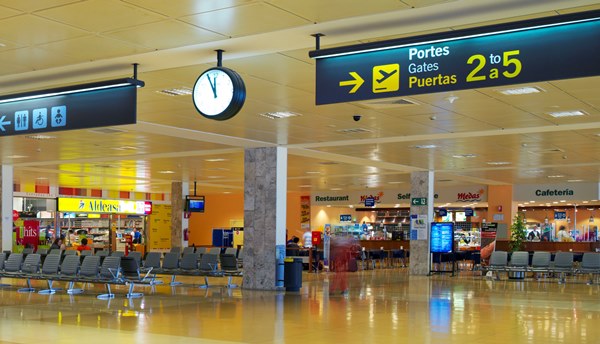
Girona–Costa Brava Airport (GRO)
Girona sits about 100 km north-east of Barcelona, near the Costa Brava, and it is a genuinely pleasant airport to arrive at: one small terminal, short walks, quick baggage, and none of the scale problems that make El Prat tiring. Ryanair built its Spanish operation here in the 2000s and remains the dominant carrier, though the airport handles charter and seasonal traffic too.
The direct coach — the answer for most people
The Sagalés 604 runs from directly outside the terminal to Barcelona’s Estació del Nord, arriving at platforms 28 and 29. Journey time is about 75 minutes and a single costs €22. Under-fours travel free.
What makes this work better than it sounds is that the timetable is built around flight arrivals rather than around a clock, and the operator holds services for delayed flights. In practice you walk out of arrivals and there is a coach either waiting or due shortly. The buses have air-conditioning, free wifi and free luggage.
- Buy on board or online. Both work; online guarantees a seat on a busy summer evening.
- Estació del Nord is not a rail station. It is the long-distance coach terminal on Carrer d’Alí Bei, metro L1 to Arc de Triomf, about ten minutes from Plaça de Catalunya on foot or one metro stop. Our metro guide covers the ticketing.
- Allow for the last departure. If your flight is delayed into the small hours, check that a coach still runs. A taxi from Girona airport to Barcelona costs somewhere in the region of €160–200 and is a very expensive way to learn this.
The train option — slower, but useful
There is no railway station at Girona airport. To reach the high-speed line you take a local bus into Girona city, roughly twenty-five minutes, and then a high-speed train from Girona station to Barcelona Sants in 38 minutes.
Two legs, two tickets, and end to end it is rarely faster than the direct coach. But it makes sense in three cases: if the coach timetable does not suit your flight, if you are heading for a hotel near Sants rather than the centre, or — the good one — if you want to stop in Girona for a few hours, which is a far better use of an afternoon than most people realise.
Taxi and private transfer
A taxi to central Barcelona runs to roughly €160–200 and takes an hour and ten minutes. A pre-booked private transfer is usually a little cheaper. Neither makes sense for one or two people; for a family of four arriving at 23:30 with luggage and a sleeping child, the arithmetic changes.
Hiring a car at Girona
If your trip includes the Costa Brava, the Empordà or the Pyrenees, Girona is arguably a better place to pick up a car than El Prat: you are already outside Barcelona’s traffic and you avoid the city entirely. The desks are in the terminal and the motorway is minutes away. If you are going straight into central Barcelona, do not hire a car — see our getting around Barcelona guide for why.
Reus Airport (REU)
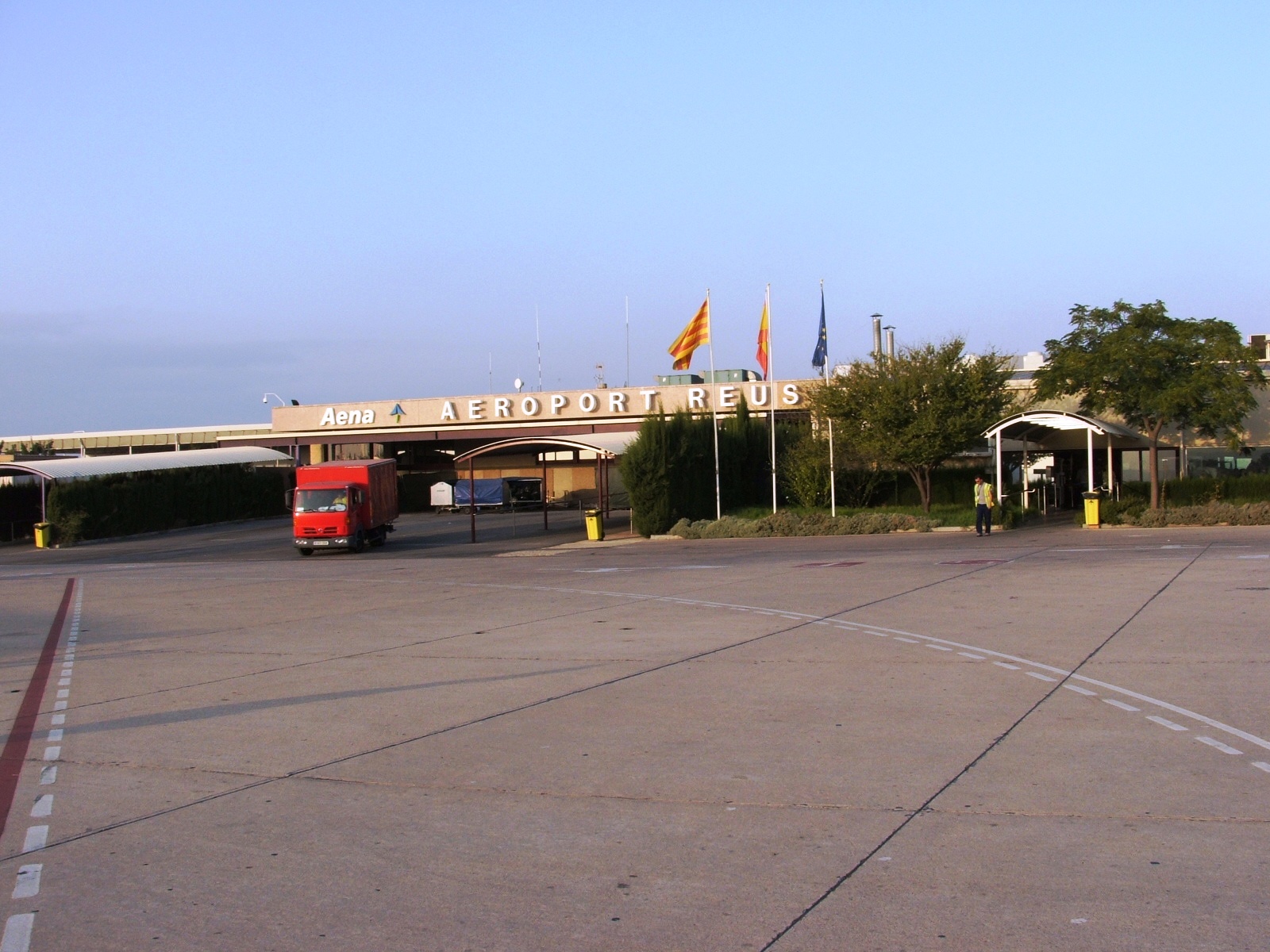
Reus sits about 100 km south-west of Barcelona, next to Tarragona and a few minutes from the Costa Daurada. It is smaller and quieter than Girona — a single low terminal building — and it has always been more seasonal, with traffic concentrated in the summer months.
The direct coach
The only direct public transport from Reus to Barcelona is the Monbus shuttle — long known as the Ryanair bus, and run by Hispano Igualadina until Monbus took the operation over in 2024. It takes about 1 hour 30 minutes, occasionally closer to two in traffic, and costs €17.60 single or €31 return.
Like the Girona coach, departures are keyed to flight schedules rather than to a regular clock-face timetable, which means services can be sparse on days with few flights. This is the important practical difference between the two airports: Girona has enough traffic that there is nearly always a coach; Reus does not always.
Check the timetable against your specific flight before you fly. If there is no coach, your options become expensive quickly.
The train option
There is no station at the airport. You take a local bus or a short taxi into Reus or Tarragona and pick up a train there. Tarragona is on the Rodalies coastal line, with regional services to Barcelona in about an hour and twenty minutes, and the separate Camp de Tarragona high-speed station is roughly 35 minutes from Barcelona Sants by AVE.
Camp de Tarragona is the fast option and it is genuinely quick, but it sits out in open country several kilometres from Tarragona itself, so you will need a taxi or the shuttle bus to reach it. Budget the connection properly rather than assuming it is walkable, because it is not.
Taxi
Around €150–190 to central Barcelona, an hour and a quarter. To Tarragona or Salou it is a fraction of that, which is a hint about what this airport is actually for.
The question nobody asks: should you go to Barcelona at all?
This is where a guide earns its keep. If you have landed at Girona or Reus, you are already somewhere, and that somewhere may be better than an hour and a half on a coach.
From Girona
- Girona city is twenty-five minutes away and is one of the finest small cities in Spain: an intact medieval core, a colossal cathedral staircase, a walkable stretch of Roman wall, and the painted houses along the Onyar that everyone photographs. It is also considerably cheaper than Barcelona to sleep in.
- Figueres and the Dalí Theatre-Museum are about forty minutes north. Our Figueres guide covers it.
- The Costa Brava — Calella de Palafrugell, Begur, Cadaqués — is between forty minutes and an hour and a half by road, and this is what the airport is actually built to serve.
From Reus
- Tarragona is fifteen minutes away and has a Roman amphitheatre above the sea, a UNESCO-listed old town and a genuinely good restaurant scene. It is a much better base than most people assume.
- PortAventura, the theme park at Salou, is about fifteen minutes from the terminal. If that is your destination, do not go anywhere near Barcelona.
- The Costa Daurada beaches — Salou, Cambrils — are on the doorstep.
- The Priorat wine region is under an hour inland and is one of the great wine areas of Spain.
If your trip is really a Barcelona trip, the honest advice is different: pay the extra to fly into El Prat next time. The saving on a Girona or Reus fare is frequently smaller than the €44 return coach fare plus three hours of your holiday. Our El Prat guide covers what arriving at the real Barcelona airport looks like.
Practical points for both airports
- Neither has a railway station. Anything advertised as a “train transfer” involves a bus first.
- Both are small. Security queues are short, but so is the range of food and shops, and both can feel bleak during a long delay. There is very little airside.
- Coaches run to the flight schedule. Late arrivals are usually catered for, but late-night departures thin out fast. Check the last service before you book a late flight.
- Buy return coach tickets if you know your outbound. The Reus return is a genuine saving; the Girona service is priced per leg.
- Leave more time going back than you did coming in. The coach to the airport runs to a fixed timetable, and if the traffic on the AP-7 is bad — which in summer it frequently is — there is no second option.
- The tourist tax applies wherever you sleep in Catalonia, at a lower rate outside Barcelona. See our tourist tax guide.
- Cash is not needed. Both coach operators take cards on board and online.
What it actually costs, all in
| Route | Time | Cost, one way, one person | Cost for four |
|---|---|---|---|
| Girona → Barcelona, Sagalés coach | 75 min | €22 | €88 |
| Girona → Barcelona, bus + high-speed train | 1h45–2h | €25–35 | €100–140 |
| Girona → Barcelona, taxi | 70 min | €160–200 total | €160–200 total |
| Reus → Barcelona, Monbus | 90 min | €17.60 (€31 return) | €70 (€124 return) |
| Reus → Barcelona, bus + AVE from Camp de Tarragona | 1h45–2h15 | €25–45 | €100–180 |
| Reus → Barcelona, taxi | 75 min | €150–190 total | €150–190 total |
| El Prat → Barcelona, Aerobús | 35 min | €7.45 | €29.80 |
The four-person column is the one worth studying. For a family, the taxi from either airport stops looking absurd and starts looking merely expensive — and for a group of four arriving late with luggage, it may well be the right call.
The honest verdict
Girona is fine. The coach is frequent, quick, cheap and timed to your flight. If the fare difference against El Prat is meaningful and you are not in a hurry, it is a perfectly reasonable way to reach Barcelona, and it is a much better way to reach the Costa Brava.
Reus is more marginal. The coach is cheaper but slower, and the service is thinner because the airport is quieter. If your destination is Tarragona, Salou or PortAventura, it is exactly the right airport. If your destination is Barcelona, it is a compromise you should make consciously.
Neither is a disaster. The panic that sets in when people realise their “Barcelona” flight lands in another province is usually out of proportion — this is a bus ride, not a crisis, and it costs less than a decent dinner. Just find the timetable before you fly rather than after you land.
Why these airports are called Barcelona at all
The naming is not an accident and it is not, strictly speaking, a lie — it is a business model. When Ryanair expanded across Europe in the late 1990s and 2000s, its strategy depended on flying into underused regional airports where landing fees were a fraction of what a major hub charged, and where the local authority was often willing to pay for the traffic. Girona and Reus both fitted perfectly: state-owned Aena facilities with spare capacity, sitting within driving distance of a city with global name recognition.
Girona became one of Ryanair’s continental bases and grew from a sleepy charter airport to several million passengers a year on the strength of it. Reus followed a similar if smaller pattern, serving the British and Irish package market heading for Salou. Both were marketed as Barcelona because “Barcelona Girona” sells seats and “Girona” does not.
Two things have changed since. First, Ryanair now flies extensively into El Prat itself, which has taken a good deal of the traffic away from both secondary airports and made the price gap much narrower than it used to be. Second, EU rules on how flights are advertised have tightened, so booking engines are clearer about which airport you are actually flying to than they were a decade ago — though the name still appears alongside Barcelona often enough to catch people out.
The practical upshot: always check the three-letter airport code before you pay. BCN is Barcelona. GRO is Girona. REU is Reus. That is the whole trick, and it takes two seconds.
Arriving late, and what to do about it
The single scenario that turns a manageable transfer into a genuine problem is a late-evening arrival at Reus with no coach. Girona’s higher traffic means there is usually something; Reus, on a quiet weekday in November, may have nothing at all after the last scheduled service.
What to do about it, in order of preference:
- Check the coach timetable against your flight number before you book the flight. Both operators publish schedules keyed to arrivals. Five minutes of checking removes the whole problem.
- Consider staying locally for the first night. A hotel in Reus, Tarragona or Girona city is cheaper than one in Barcelona, gets you to bed an hour sooner, and lets you take a morning train into the city rested. For a late arrival this is often the better plan even when a coach exists.
- Pre-book a transfer if you know you are landing late and the group is three or more. A booked car waiting in arrivals costs less than a metered taxi and considerably less than the stress.
- Do not plan to sleep in the terminal. Both airports are small and both close overnight when there are no flights. This is not El Prat, which has a hotel inside T1.
Going back: leaving from Girona or Reus
The return leg needs more care than the arrival, because the coach now runs to a fixed departure time and you are the one who has to be on it.
- Take the service before the one you think you need. The AP-7 in summer, and around any Catalan public holiday, can add half an hour without warning.
- Coaches leave from Estació del Nord for Girona, and from central Barcelona for Reus. Estació del Nord is metro L1 to Arc de Triomf and is not the same place as Sants — a mistake that has caused a lot of missed flights.
- Allow the full airport time on top. Both terminals are small and quick, but Ryanair’s boarding closes early and neither airport has much to do once you are through.
- A return ticket bought on arrival saves money at Reus and does not at Girona, where fares are priced per leg.
- If you are doing the VAT refund on shopping, note that both airports have far more limited refund facilities than El Prat. Validate at the airport you actually depart from, and allow extra time — our shopping guide covers the process.
Frequently asked questions
How far is Girona airport from Barcelona?
About 100 km north-east, roughly 75 minutes by direct coach. It is not a Barcelona airport in any meaningful sense; it serves Girona and the Costa Brava, and budget airlines market it under the Barcelona name.
How do I get from Girona airport to Barcelona?
The Sagalés 604 coach, from directly outside the terminal to Barcelona’s Estació del Nord in about 75 minutes for €22 single. Departures are timed to flight arrivals and held for delayed flights. Alternatively, a local bus into Girona city and then a 38-minute high-speed train to Sants.
How much is the bus from Girona airport to Barcelona?
€22 for a single with Sagalés. Under-fours travel free. You can buy on board or online; online is worth doing on busy summer evenings.
How far is Reus airport from Barcelona?
About 100 km south-west, next to Tarragona, roughly 90 minutes by the direct Monbus shuttle. Like Girona, it is not a Barcelona airport.
How do I get from Reus airport to Barcelona?
The Monbus shuttle, previously operated by Hispano Igualadina, takes about 1h30 and costs €17.60 single or €31 return. There is no station at the airport, so any train route involves a bus or taxi into Reus or Tarragona first.
Is there a train from Girona or Reus airport to Barcelona?
No. Neither airport has a railway station. Both require a bus first — into Girona city, or into Reus or Tarragona — before you can pick up a train. The direct coaches are usually quicker end to end.
Is it worth flying into Girona or Reus to save money?
Sometimes. Add roughly €44 return for the Girona coach or €31 for the Reus return, plus about three hours of your trip. If the fare saving is larger than that and your schedule is relaxed, yes. If it is €20, fly to El Prat.
How much is a taxi from Girona airport to Barcelona?
In the region of €160–200 for the journey, taking about 70 minutes. From Reus it is roughly €150–190. Both are worth considering only for groups of four, or for very late arrivals when no coach is running.
What happens if my flight is delayed and I miss the coach?
The Girona service is scheduled around flight arrivals and does hold for delays, so in most cases you will not miss it. If you do, or if you land after the last departure, your options are a taxi or an airport hotel. This is the single strongest argument for checking the last coach time before booking a late flight.
Should I stay in Girona or Tarragona instead of Barcelona?
It is a much better idea than most visitors realise. Girona is a superb small city twenty-five minutes from its airport, and Tarragona has Roman ruins above the sea fifteen minutes from Reus. Both are considerably cheaper than Barcelona and both are on the high-speed line if you want a day in the city.
Which airport do most flights to Barcelona use?
Barcelona El Prat, by a very long way — it is one of the largest airports in Europe and sits 14 km from the city centre, about 35 minutes by Aerobús. Girona and Reus are secondary airports used almost entirely by low-cost carriers.
Related Barcelona Guides
- Barcelona El Prat airport — terminals, lounges and what the real Barcelona airport is like.
- Barcelona airport transfers compared — the metro, Aerobús and taxi options from El Prat.
- Travel onward from Barcelona — every route out of the city by train, coach, ferry and air.
- Girona — the city twenty-five minutes from its own airport, and why to stop there.
- Tarragona — Roman ruins above the sea, fifteen minutes from Reus.
- The Costa Brava — what Girona airport is really there for.
- The complete Barcelona travel guide — the hub for everything else on this site.
Photo Credits
Girona–Costa Brava airport terminal: Girona terminal by Arodriguezgo, CC BY-SA 4.0, via Wikimedia Commons.
Reus airport terminal: Reuso oro uosto terminalo pastatas by Grobuonis, Public domain, via Wikimedia Commons.