We get commissions for bookings made through this post. Booking links, and any accommodation options shown on the page, are handled by a partner that adds commission tracking automatically. It never costs you more, and it never affects what we recommend. Affiliate disclosure
On a clear January morning you can stand on the beach at Barceloneta and, from the right spot up on Montjuïc or Tibidabo, make out a faint white line on the northern horizon. That is the Pyrenees, and it is closer than most visitors assume. Skiing near Barcelona is a real option, not a novelty: the Catalan resorts and Andorra between them offer everything from a gentle valley where children learn on a rack railway to one of the biggest lift-linked areas in southern Europe. What they do not offer is a quick hop. Even the nearest slopes take a good chunk of the morning to reach, and that single fact shapes every decision on this page.
This guide ranks the realistic ski areas by how easily you can reach them from the city, gives the 2026–27 lift prices where the resorts have published them, and is honest about the trade-offs: when a day trip makes sense, when it is far better to stay a night, and why in 2026–27 the train is not the easy answer it looks like on a map. For every other route out of the city, from Valencia to Andorra’s duty-free shops, see our Barcelona onward travel guide. Prices were checked in November 2026 on the resorts’ own tariff pages; lift pass prices change with the season and with how far ahead you buy, so treat them as the right order of magnitude and confirm before you go.
The ski areas within reach of Barcelona at a glance
There are three clusters worth knowing about. The Cerdanya valley, due north, holds La Molina and Masella, which share a linked area called Alp 2500. The Ripollès and Pallars valleys hold a string of smaller, quieter resorts run by the Catalan government’s railway company, FGC, under the Pirineu365 brand. Further west and further north sit the two big names: Baqueira-Beret in the Val d’Aran, and the resorts of Andorra. The table sets them side by side.
| Ski area | Where | Getting there from Barcelona | Adult day pass, 2026–27 | Best for |
|---|---|---|---|---|
| La Molina | Cerdanya | Car, or Rodalies R3 train when it runs normally | €49 online (€3 more at the ticket office) | The closest proper resort; first-timers and intermediates |
| Masella | Cerdanya, linked to La Molina | Car | Check masella.com | Wooded runs, the Alp 2500 link |
| Vall de Núria | Ripollès | Car or train to Ribes de Freser, then the rack railway | €23.50 ski only; €41 with the rack railway | Families, beginners, a day in the snow rather than a ski marathon |
| Vallter | Ripollès, by the French border | Car | Check pirineu365.cat | Small, high, uncrowded |
| Espot and Port Ainé | Pallars Sobirà | Car | €42 low season, €46 high season online | A quieter weekend away |
| Boí Taüll | Alta Ribagorça | Car | Check pirineu365.cat | Skiing combined with the Romanesque churches of the Vall de Boí |
| Baqueira-Beret | Val d’Aran | Car; a long drive | Check baqueira.es | The biggest resort in Catalonia; a week, not a day |
| Grandvalira, Pal Arinsal, Ordino Arcalís | Andorra | Direct coach, about three hours from Sants | Check grandvalira.com | Big terrain, ski-in hotels, duty-free shopping on the side |
Two points jump out of that table. First, Vall de Núria’s ski-only pass is just €23.50 because the valley is small, but the real cost is getting up there: with the rack railway the day costs €41. Second, the resorts with the most terrain are also the ones furthest away. There is no resort that is both big and close. You choose one or the other.
Can you really ski on a day trip from Barcelona?
Yes, but it is a long day and you need to be clear-eyed about what you are buying. A day trip to the Cerdanya means leaving the city around dawn, reaching the slopes mid-morning, skiing until the lifts start to close, and getting back after dark, often in Sunday-evening traffic on the roads down from the mountains. If the snow is good and the sky is blue, it is a superb day out. If cloud settles on the summits, you have spent most of the day travelling for a few hours of flat light.
The honest rule of thumb:
- Day trip: realistic for La Molina, Masella and Vall de Núria, if you have a car or an organised coach, and if you are happy with a few hours on snow. It suits people already in Barcelona who want a taste of the mountains, not people who came to Spain to ski.
- One night: the sweet spot for the Cerdanya and the Ripollès. Drive up the evening before, ski a full day, and either stay a second night or come back down in the afternoon. The towns of Puigcerdà, Alp and Ribes de Freser all have hotels and apartments.
- Two nights or more: the minimum for the Pallars resorts, Boí Taüll and Andorra, which are too far for there-and-back.
- A week: the right way to do Baqueira-Beret, which is a destination in its own right rather than an excursion.
If you only have a long weekend in Barcelona and the mountains are a nice idea rather than the point of the trip, give them a miss. The city has more than enough to fill three days, and a ski day squeezed into a short break tends to be the day people regret. If you have a week or more in Catalonia in winter, a night or two in the Pyrenees is one of the best things you can do with it.
Getting to the slopes: train, coach or car
The train, and why 2026–27 is different
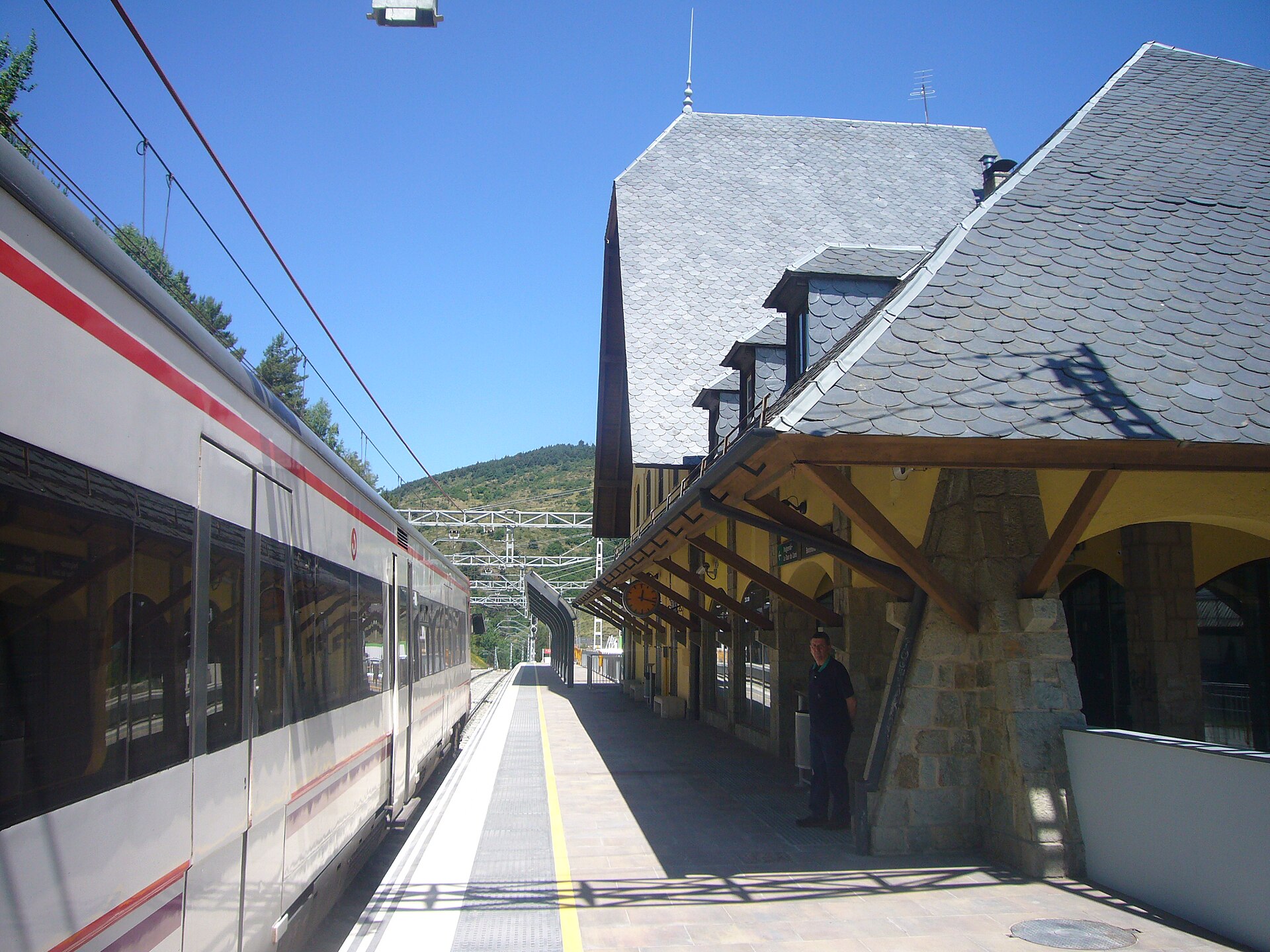
On paper, La Molina is the only major resort in the region you can reach by mainline train. Rodalies line R3 runs from Barcelona north through Vic and Ripoll, climbs into the Cerdanya, and stops at La Molina station on the way to Puigcerdà and the French border at La Tour de Carol. Ribes de Freser, the bottom station for the Vall de Núria rack railway, is on the same line. It is a spectacular ride, and for years it has been the romantic way to go skiing from the city.
For the 2026–27 season, though, treat the train with caution. Since 20 January 2026 the R3 has run about half the trains it did before, with speed restrictions, replacement road services on parts of the line and longer journey times, according to the Rodalies notices. On top of that, rail service is interrupted between La Garriga and El Figaró from 16 November to 14 December 2026, with replacement buses on that stretch, and the timetable for the replacement road service further north was revised again on 9 November. None of that makes the trip impossible, but it does make it slower and less predictable than the timetable suggests, and the first trains of the morning are the ones a skier needs.
If you want to try it, check the R3 notices on the Rodalies de Catalunya website the day before you travel and again on the morning, allow plenty of time for connections, and have a plan for getting from La Molina station up to the slopes, since the station sits below the resort rather than at the foot of the lifts.
The coach
For Andorra, the coach is the sensible way to go, because Andorra has no railway at all. Andorra Direct Bus quotes about three hours from Barcelona Sants and about three and a half from the airport, and several other operators run the route too. Fares vary by operator and by how far ahead you book, so compare them on the operators’ own sites. Once you are in Andorra la Vella, local buses and the resorts’ own shuttles connect the town with the lift bases, though staying in a resort village such as Soldeu, El Tarter or Pas de la Casa saves a lot of shuttling.
For the Catalan resorts, organised day coaches run from Barcelona at weekends in the season, usually bundled with a lift pass and sometimes with equipment hire. They are worth a look if you do not drive: the price is often competitive with doing it yourself, and somebody else deals with the mountain roads. Check exactly what is included, what time the coach leaves the slopes, and whether the ticket is refundable if the resort closes for wind.
The car
Most people who ski from Barcelona drive, and for most of the resorts on this page there is no realistic alternative. The Cerdanya is reached on the C-16 through the Cadí tunnel, the Ripollès resorts via Vic and Ripoll, the Pallars and Boí Taüll via Lleida province, and Baqueira-Beret via the Val d’Aran. Use a route planner for current journey times, which vary a great deal with weekend traffic, and remember that a car hired in the city will not come with snow chains or winter tyres unless you ask for them.
A few practical points for drivers:
- Chains or winter tyres. Carry them from November to April. Mountain roads can be closed to vehicles without them at short notice. Ask the hire company before you book, as not all of them supply chains, and see our Barcelona car rental guide for the rest of the hire process.
- Sunday evenings. The return flow from the Pyrenees into Barcelona on a Sunday afternoon in February is heavy. Leave the slopes early, or stay until after dinner.
- Andorra by car. It is outside the EU customs union, so expect customs checks on the way back into Spain, and check that your hire agreement allows you to take the car there.
- Parking. The big resorts have large car parks at the lift bases, but they fill early on weekends and holidays.
The Cerdanya: La Molina and Masella
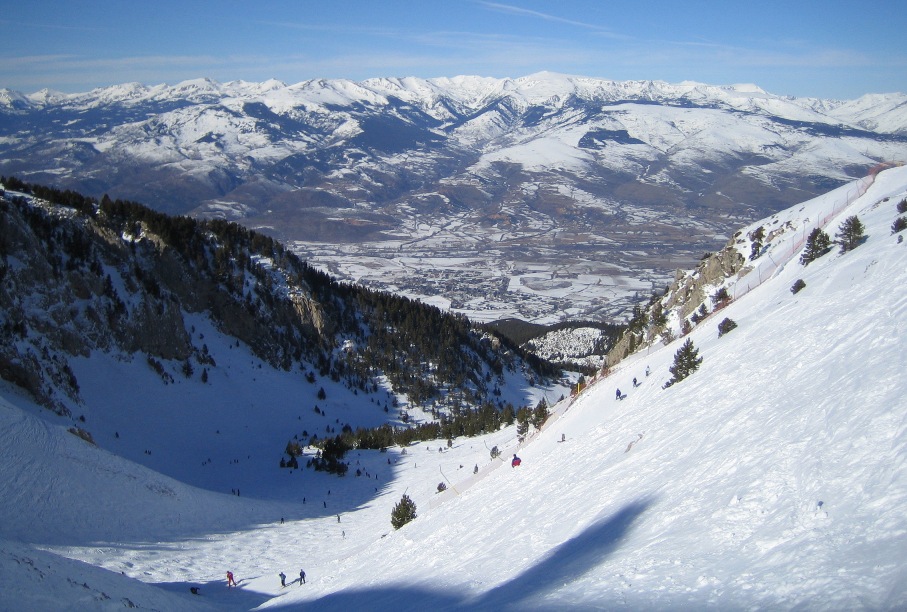
The Cerdanya is a wide, sunny, flat-bottomed valley high in the Pyrenees, shared between Catalonia and France, and it is where most Barcelona skiers end up. La Molina and Masella sit on opposite flanks of the same mountain, the Tosa d’Alp, and their pistes are linked across the top in a combined area sold as Alp 2500. Each resort also sells its own passes, so you can stay on one side if that is all you need.
La Molina
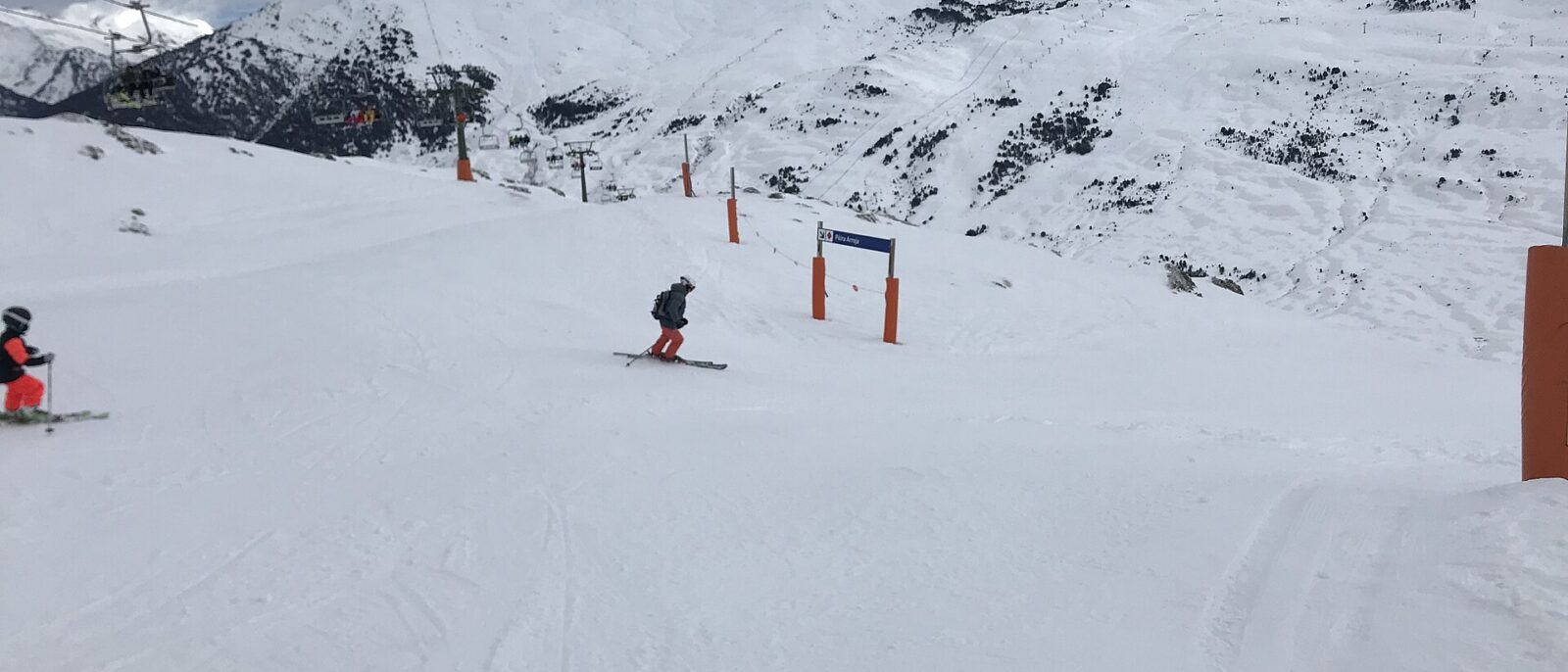
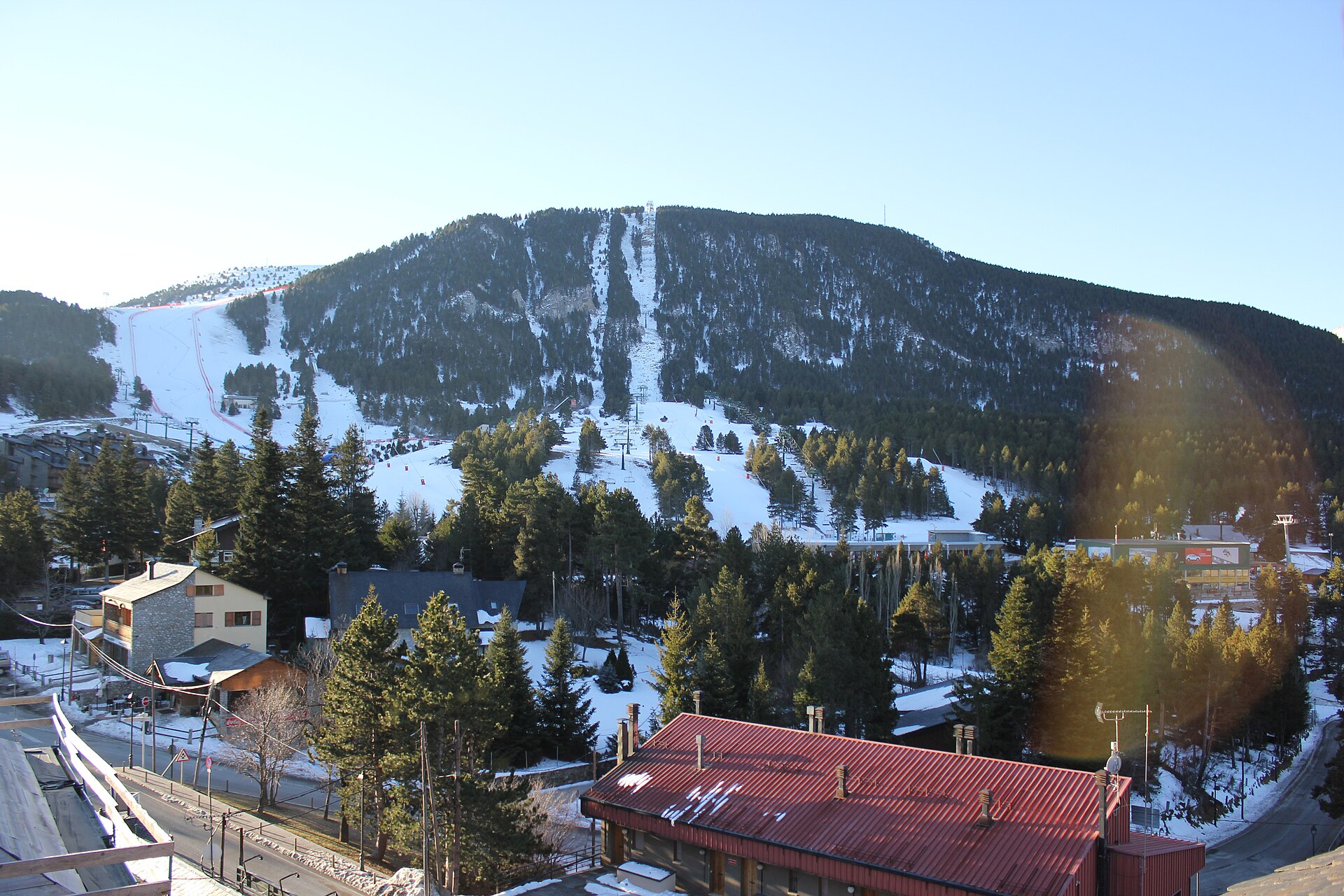
La Molina is one of the oldest ski resorts in Spain and still feels like the Barcelona skier’s home mountain. Its slopes face mostly north, run through pine woods lower down and open out above the tree line, and suit beginners and intermediates particularly well. It has hosted international races, including world championships in snowboarding and para-alpine skiing, which tells you the upper slopes are not trivial, but the character of the place is relaxed rather than macho.
For 2026–27, La Molina’s adult day pass costs €49 bought online, with a €3 supplement at the ticket office. Young people pay €41.50 and children €36, and there is a cheaper beginner pass at €31 for the easy areas. An Alp 2500 pass covering both La Molina and Masella is sold too, along with an Alp 2500 season pass from €1,090. La Molina is part of the Pirineu365 group, so the group’s season pass, below, also covers it.
Who it suits: anyone wanting the shortest realistic trip from the city, families with children in ski school, and groups with mixed abilities. Who it does not suit: experts looking for steep, varied terrain for several days, who will get more from Baqueira or Andorra.
Masella
Masella sits on the southern side of the Tosa d’Alp and is run by its own company rather than by FGC. Its pistes are known for their woods, which hold the snow and the light better than open slopes on grey days, and it has run night skiing on selected evenings in past seasons, so check masella.com for the current programme. It has its own ski school and equipment hire at the base, at Avinguda Peu de Pistes in Masella, near Alp. Masella’s day-pass prices and season-pass offers for the new season are on its own website.
Where to stay in the Cerdanya
Puigcerdà, the valley’s capital, is the liveliest base, with restaurants, a lake to walk round and a proper town square. Alp is closer to Masella and La Molina and has a cluster of hotels and apartments geared to skiers. La Molina itself has a handful of hotels right by the slopes. If you are staying more than a night, Puigcerdà is the better place to spend the evenings; if you only want to ski, stay in Alp or at La Molina and be on the first lift.
The Ripollès: Vall de Núria and Vallter
Vall de Núria
Vall de Núria is unlike any other ski area in the region. There is no road into the valley. You reach it by the Cremallera de Núria, a rack railway that climbs from Ribes de Freser through Queralbs and up a dramatic gorge to a sanctuary, a hotel and a small ski area set around a frozen lake. It is the only resort here that feels like an expedition rather than a car park with lifts.
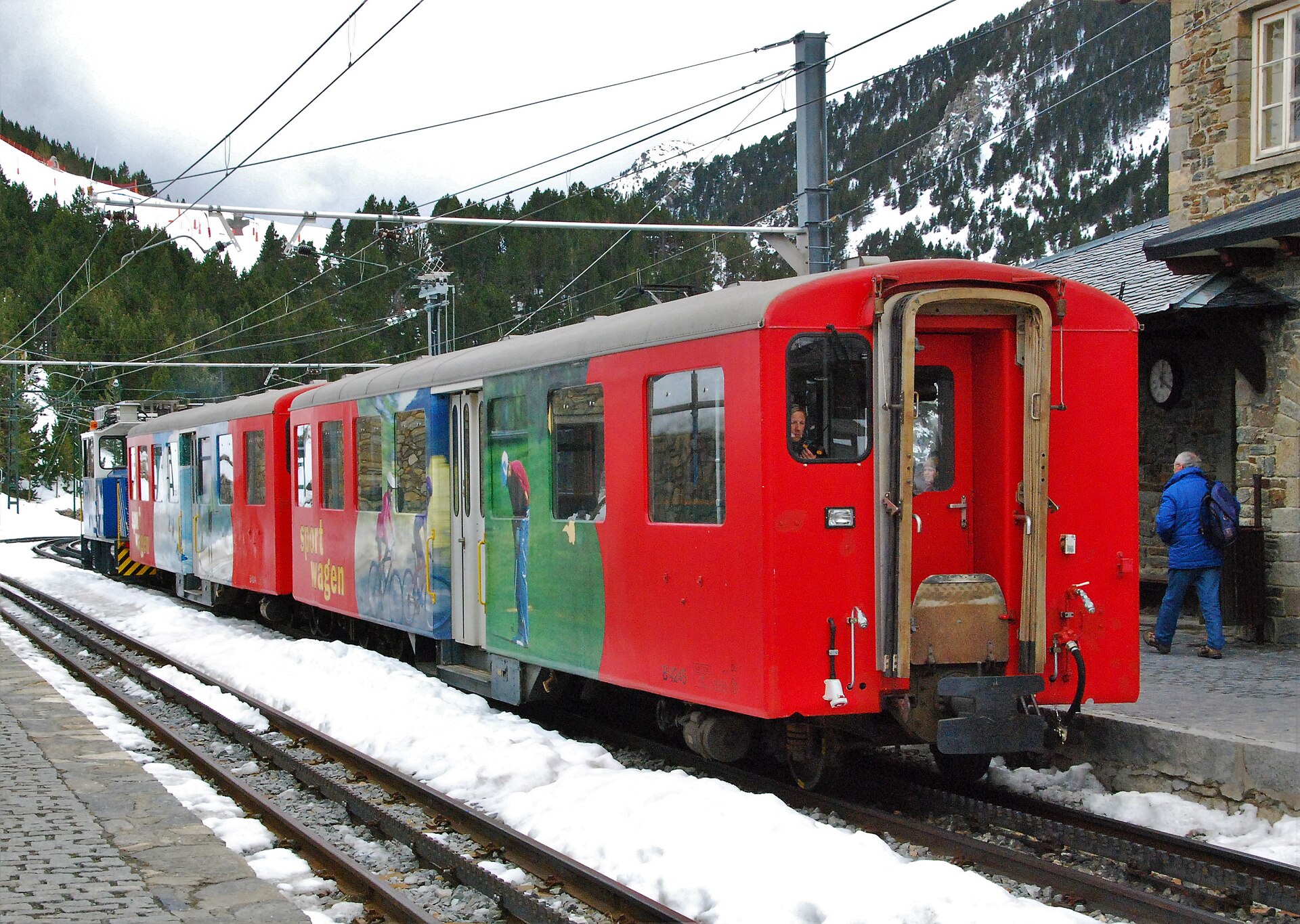
The skiing itself is modest: a compact set of runs best suited to beginners, children and anyone who wants a gentle day. What you are really paying for is the setting, and the prices reflect that. For 2026–27 the ski-only day pass is €23.50, while a day pass bundled with the return rack railway is €41 for adults and €31 for children aged four to thirteen. Since you cannot get to the slopes without the train, the combined ticket is the one most people need.
Núria works well for families with young children and for groups where not everyone skis: non-skiers can sledge, walk around the lake or simply enjoy the ride up. It is also one of the most rewarding places in Catalonia to see the mountains in snow without committing to a full ski day. Ribes de Freser is on the R3, so in a normal year this was the classic car-free ski day from Barcelona; in 2026–27, check the train situation above before you count on it.
Vallter
Vallter, at the head of the Ter valley above Setcases, right against the French border, is a small, high resort with a reputation for being quiet. It is part of the Pirineu365 group, so its pass is covered by the group season pass, and its day prices are on the Pirineu365 website. It suits people who want to avoid crowds and do not need a big area, and it combines well with a night in the Ripollès, a region of Romanesque monasteries and old stone villages that is a pleasure to drive through in winter.
The Pallars: Espot and Port Ainé
The Pallars Sobirà, in the north-west of Catalonia, is serious mountain country: deep valleys, the Aigüestortes i Estany de Sant Maurici National Park, and the white-water river Noguera Pallaresa. Its two ski resorts, Espot and Port Ainé, are part of Pirineu365 and are sold together on a Pallars pass, which costs €545 for an adult season.
Port Ainé has published its tariff calendar for 2026–27, which runs from 1 December 2026 to 4 April 2027, with an adult day pass at €42 online in low season and €46 in high season, plus €5 if you buy at the ticket office. The high-season days are the Christmas holidays (26 to 30 December and 2 and 3 January) and every weekend in February (6–7, 13–14, 20–21 and 27–28). That calendar is a useful guide to when the Catalan Pyrenees are busiest.
These resorts are too far for a day trip from Barcelona, but they reward a weekend: smaller queues than the Cerdanya, good snow on the higher slopes, and valleys that are worth seeing in their own right. Sort, the main town of the Pallars, is the usual base.
Boí Taüll: skiing with the Romanesque churches
Boí Taüll sits above the Vall de Boí in the Alta Ribagorça, one of the most remote corners of Catalonia. The resort is part of the Pirineu365 group, which lists its day prices on the group’s site. What makes the trip distinctive is the valley below it: the Catalan Romanesque churches of the Vall de Boí are a UNESCO World Heritage Site, with Sant Climent de Taüll the best known. Combining a couple of days of skiing with an afternoon among the bell towers is a distinctive kind of trip.
It is a long way from Barcelona, so think of it as a long weekend, ideally with a car. If the churches matter more to you than the skiing, the valley is just as rewarding outside the ski season.
Baqueira-Beret: the big one
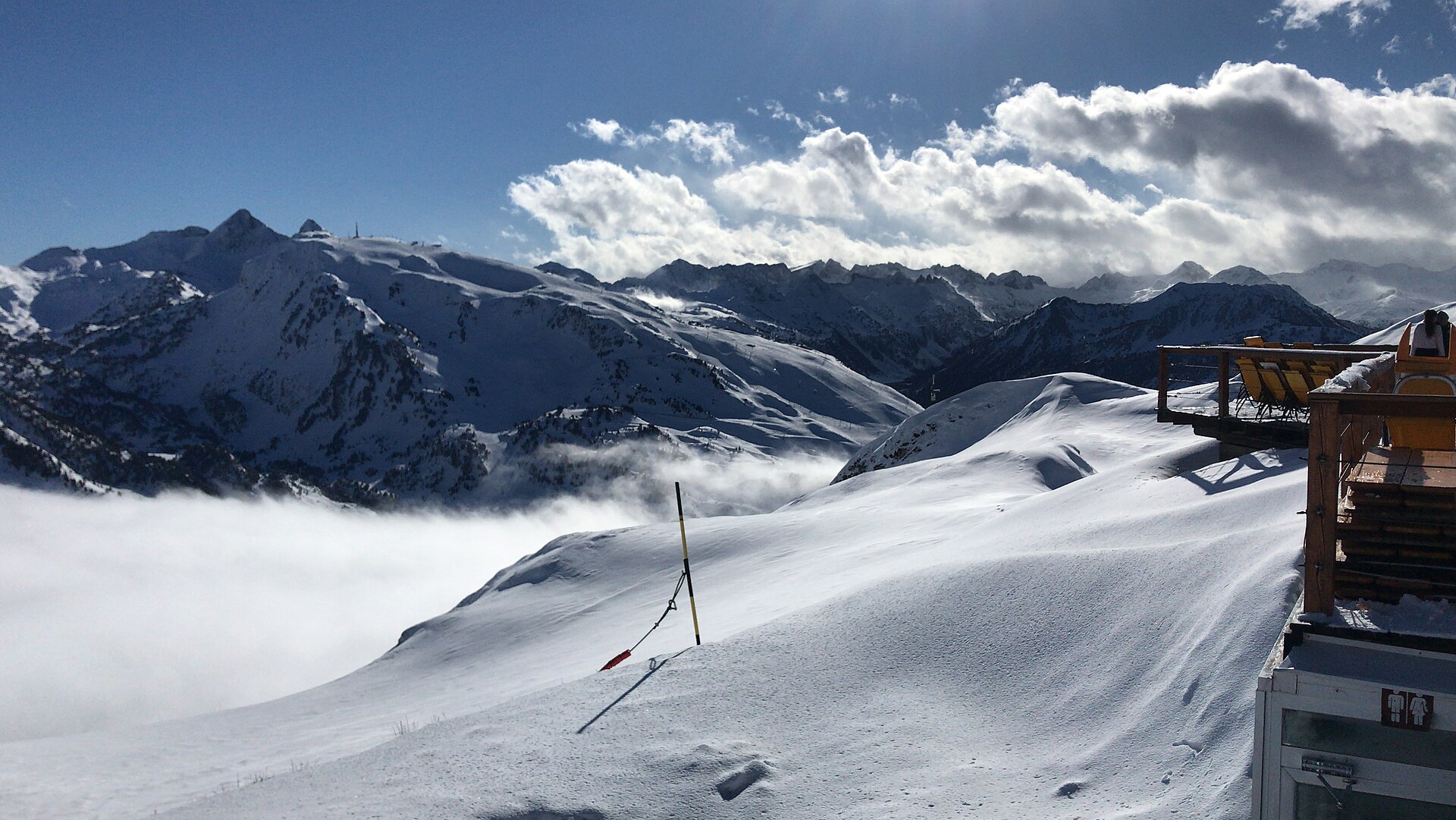
Baqueira-Beret, in the Val d’Aran, is the resort Spanish skiers mean when they talk about skiing in the Pyrenees. The Val d’Aran is the only part of Catalonia that drains north towards the Atlantic rather than south to the Mediterranean, and that orientation tends to bring it more reliable snow than the resorts to the east. The resort is spread across several sectors (Baqueira, Beret, Bonaigua and Baciver) and has the most extensive lift network in Catalonia, with hotels and apartments in Baqueira itself and in the old villages of the valley such as Salardú, Arties and Vielha.
It is also one of the more expensive resorts in the region and the furthest from Barcelona by road. A day trip is a bad idea; even a weekend feels rushed. Baqueira is a ski holiday, and if you are coming to Spain specifically to ski, it is the strongest argument for doing so.
Baqueira’s ticketing works through cards: the BaqueiraTICKET is a free reloadable card for day passes, and the BaqueiraPass costs €25. Prices for 2026–27 are sold through the resort’s own online shop, which also has the opening calendar, so check baqueira.es for both before you book anything else. The resort’s big public event of the winter is the Marxa Beret, a cross-country skiing race on the Pla de Beret, which takes place on Sunday 7 February 2027 over 42, 21 and 10 km courses.
Andorra skiing: Grandvalira, Pal Arinsal and Ordino Arcalís
Andorra is where many Barcelona residents go when they want a proper ski weekend, and for good reason. The country’s resorts are run together as Grandvalira Resorts. Grandvalira itself, which links the sectors of Pas de la Casa, Grau Roig, Soldeu, El Tarter, Canillo and Encamp, describes itself as the largest skiable area in the Pyrenees. Pal Arinsal and Ordino Arcalís, in the north-west of the country, are smaller and sold together as the Nord area.
The headline product for the 2026–27 season is the Andorra Pass, which covers all three areas: Grandvalira’s 215 km plus 93 km at Pal Arinsal and Ordino Arcalís, 308 km in all by the resorts’ own count. A season pass for non-residents costs €1,019 at the price valid until 9 December; the Nord Pass, for Pal Arinsal and Ordino Arcalís only, costs €788. Day-pass prices are on grandvalira.com, and like most big resorts now, Grandvalira prices day tickets so that buying online and in advance is cheaper than turning up.
Andorra or the Catalan resorts?
This is the question most people planning skiing near Barcelona eventually ask, and the honest answer depends on the trip.
- Choose Andorra if you want lots of terrain, a lively après-ski scene, a wide choice of ski-in hotels, and the possibility of a car-free trip by coach. Andorra’s shops, with their lower taxes on electronics, perfume and alcohol, are a bonus for some and a turn-off for others. It is busy, especially at weekends and in the Spanish and French school holidays.
- Choose the Cerdanya if you have a car, want the shortest drive, and are happy with a smaller area. La Molina and Masella together offer plenty for a weekend.
- Choose the Pirineu365 resorts for quieter slopes and the chance to explore the Catalan mountain valleys, accepting longer drives.
- Choose Baqueira if skiing is the point of your trip and you have a week.
The deciding factor is often transport. Without a car, Andorra is the most straightforward option because the coaches are frequent and direct. With a car, the Catalan resorts open up and the Cerdanya becomes very hard to beat for convenience.
The Pirineu365 pass
FGC, the Catalan government’s railway company, runs six ski areas under the Pirineu365 brand: La Molina, Vall de Núria, Vallter, Espot, Port Ainé and Boí Taüll. They share a season pass, which for 2026–27 costs €730 for an adult, €650 for young people and €580 for children. If you live in or near Barcelona, or plan several ski trips in one winter, it pays back quickly against day passes. For visitors, the more relevant point is that the group’s website (pirineu365.cat) is the place to check prices, opening calendars and conditions for all six resorts.
What a day’s skiing from Barcelona costs
The lift pass is only part of the bill. A realistic budget for one person on a day trip to the Cerdanya looks something like this:
| Item | What to expect |
|---|---|
| Lift pass | €49 online at La Molina for an adult in 2026–27; €41 including the rack railway at Vall de Núria |
| Transport | Fuel and tolls split across a car, a coach package, or the R3 train fare |
| Equipment hire | Available at the resorts and in the valley towns; book ahead at weekends |
| Lessons | The major resorts have ski schools; group lessons are cheaper than private ones |
| Lunch | Slope-side restaurants charge resort prices; a packed lunch saves a lot |
Two money-saving tips stand out. First, buy lift passes online: La Molina charges €3 more at the ticket office and Port Ainé €5 more. Second, rent equipment in the valley rather than at the top, where shops on the approach roads are often cheaper and less crowded. If you are only going once, there is no point buying gear; if you are going three or four times, look at the season passes before you buy day after day.
When to go
The ski season in the Catalan Pyrenees and Andorra runs roughly from early December to Easter, with exact dates set by each resort and dependent on snow. Port Ainé’s 2026–27 tariff calendar, 1 December 2026 to 4 April 2027, is typical. Most resorts publish opening dates in the autumn and update them as the snow arrives, so check the resort’s own site before you book anything non-refundable.
Within that season:
- December: the season opens, often with limited terrain until enough snow has fallen. The Christmas holidays are busy.
- January: after the first week, the quietest and often the coldest month, with good snow and empty slopes midweek. The best time for a midweek trip from Barcelona. See our Barcelona in January guide for the city side of the trip.
- February: often the best snow cover of the winter, but weekends are high season at Port Ainé and the roads are busy.
- March: longer, sunnier days and softer spring snow; weekends quieten down after February.
- Easter: a busy holiday period near the end of the season.
If your dates are flexible, go midweek. The difference between a Tuesday and a Saturday at La Molina or Grandvalira is the difference between skiing and queueing.
The snow question
The Pyrenees are not the Alps. The Mediterranean-facing resorts of the eastern Pyrenees, including La Molina, Masella, Núria and Vallter, get less snow than the Atlantic-facing Val d’Aran and often depend on snowmaking. Some winters are generous; others leave resorts open on a handful of runs of man-made snow. The weather also changes fast: a sunny forecast in Barcelona says nothing about wind and cloud on the Tosa d’Alp.
The practical answer is to look at the resort’s conditions page and webcams the evening before, and again in the morning. Most resorts publish open runs, lifts and snow depths daily. If the forecast is bad, it is better to postpone than to drive two or three hours for a closed mountain.
Not a skier? Snow days without skis
The Pyrenees in winter are worth seeing even if you never clip into a binding. Vall de Núria is the obvious choice: the rack railway ride is spectacular, the sanctuary is a destination in its own right, and there is sledging and walking around the valley. Puigcerdà and the Cerdanya villages are lovely in winter light. Many resorts offer snowshoe routes and sledging areas. Andorra’s thermal spa and shopping streets draw plenty of visitors who do not ski at all.
If you want to see the mountains from closer to Barcelona, Montserrat is about an hour from the city and dramatic in clear winter weather, though it does not get reliable snow. Our Montserrat guide covers how to get there.
Packing for a ski trip from Barcelona
The mistake people make when they add a ski day to a city break is packing for Barcelona. A winter afternoon in the city can feel mild; an exposed ridge at 2,000 metres in January does not. You need waterproof outer layers, warm base layers, gloves, a hat, sunglasses or goggles, and sunscreen, because high-altitude sun on snow burns even in winter. Most of the bulky gear can be hired, but clothing usually cannot. If you are flying in with your own skis, both terminals at El Prat handle oversized baggage; see our Barcelona airport guide for the details, and our Barcelona packing list for the city side.
Frequently asked questions
What is the nearest ski resort to Barcelona?
La Molina and Masella, in the Cerdanya valley, are the closest full-size resorts. They share a linked area called Alp 2500. Vall de Núria, in the Ripollès, is a similar distance but is reached by rack railway from Ribes de Freser.
Can you do a ski day trip from Barcelona?
Yes, to La Molina, Masella or Vall de Núria, but expect to leave at dawn and get back after dark. A night in the mountains makes the trip much more enjoyable, and the further resorts (the Pallars, Boí Taüll, Baqueira and Andorra) need at least a weekend.
Can you get to La Molina by train?
La Molina has a station on Rodalies line R3. In 2026–27 the R3 is running a reduced service with longer journey times, and rail service is interrupted between La Garriga and El Figaró from 16 November to 14 December 2026, with replacement buses. Check the Rodalies notices before you travel.
How much does a day’s skiing cost near Barcelona?
An adult day pass at La Molina costs €49 online for 2026–27. Port Ainé charges €42 in low season and €46 in high season online. Vall de Núria’s ski-only pass is €23.50, or €41 with the rack railway. Add transport, hire and lunch on top.
Is Andorra better than the Catalan resorts?
Andorra has more terrain and is easier to reach without a car, thanks to direct coaches of about three hours from Barcelona Sants. The Catalan resorts are quieter, and the Cerdanya ones are the quickest to reach by car. The right choice depends on whether you drive and how long you have.
When is the ski season in the Pyrenees?
Roughly from early December to Easter, depending on snow. Port Ainé’s 2026–27 tariff calendar runs from 1 December 2026 to 4 April 2027. Check each resort’s own site for its dates and daily conditions.
Is Baqueira-Beret worth it from Barcelona?
For a ski holiday of several days, yes; it is the biggest resort in Catalonia and tends to get more reliable snow than the eastern resorts. For a day trip, no: it is too far.
Related Barcelona Guides
- Barcelona onward travel: every route out of the city
- Day trips from Barcelona
- Car rental in Barcelona
- Barcelona in January
- Barcelona in December
- Barcelona train stations
- Montserrat from Barcelona
- Barcelona airport guide
Photo Credits
Peaks above the cloud at Baqueira-Beret: Baqueira-Beret 03 by Cantabrucu, CC0, via Wikimedia Commons.
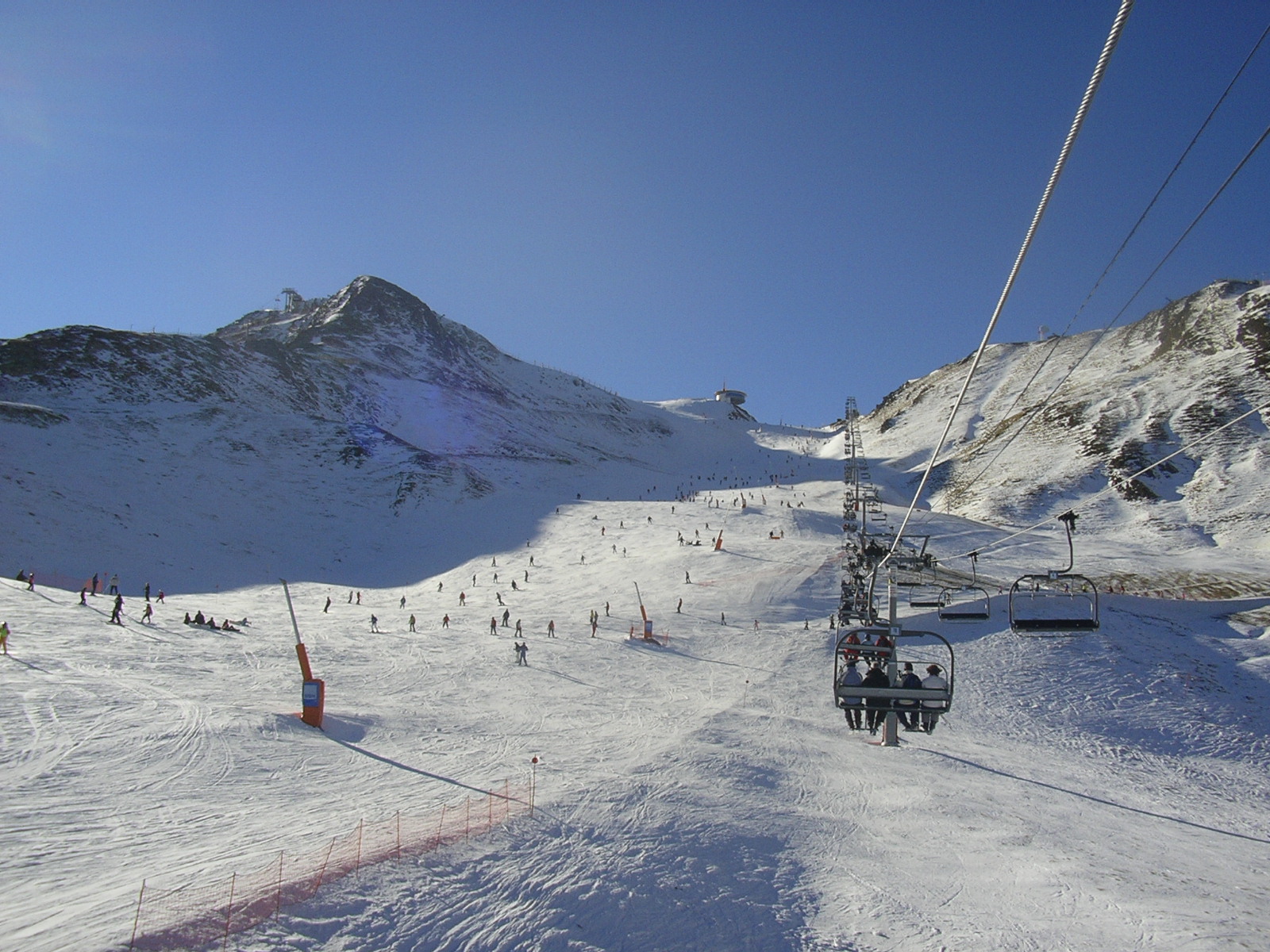
Skiers on the slopes at Baqueira-Beret (featured image): Baqueira-Beret 04 by Cantabrucu, CC0, via Wikimedia Commons.
Ski runs above La Molina: Hill conditions La Molina by LauraHale, CC BY-SA 3.0, via Wikimedia Commons.
La Molina station on the R3: Estació de La Molina (Alp – Baixa Cerdanya) 01 by Jordiferrer, CC BY-SA 3.0, via Wikimedia Commons.
The Cremallera de Núria rack railway: Cotxes B 4244 i B 4245 del Cremallera de Núria by The STB, CC BY-SA 4.0, via Wikimedia Commons.
The Pas de la Casa sector of Grandvalira: Estació d’esquí Pas de la Casa, Andorra, 2006 by Carlesmari, CC BY 3.0, via Wikimedia Commons.
The Masella side of the Tosa d’Alp: Coma Oriola by Ensopegador, CC BY-SA 3.0, via Wikimedia Commons.