We get commissions for bookings made through this post. Booking links, and any accommodation options shown on the page, are handled by a partner that adds commission tracking automatically. It never costs you more, and it never affects what we recommend. Affiliate disclosure
Barcelona is one of the best-connected cities in southern Europe and almost nobody uses it that way. A single station gets you to Madrid in two and a half hours, Seville in six, Paris in six and a half, and the Balearics are a three-and-a-half-hour ferry away. Planning travel from barcelona onward — as one leg of a longer trip rather than a return excursion — is the difference between seeing one city and seeing a region. This page is the reference for every onward route out of the city: which ones are worth doing, how long they really take, what they cost, and which of them are better skipped.
One distinction matters before you read on. This is about onward legs — one-way journeys to somewhere you will sleep. If you want a return excursion that gets you back to your Barcelona hotel the same evening, that is a different question, and our day trips from Barcelona guide is the page for it. Prices and times below were checked in September 2026 and move constantly; treat them as the right order of magnitude and confirm with the operator before booking.
Every onward route at a glance
| Destination | Best mode | Time | Typical fare | Worth it? |
|---|---|---|---|---|
| Madrid | High-speed train | 2h30 | €9–90 | Yes — the flagship route |
| Valencia | Train | 2h40–3h30 | €20–60 | Yes, and underrated |
| Zaragoza | High-speed train | 1h30 | €15–50 | Yes, as a stopover |
| Seville | High-speed train | ~5h30–6h | €35–110 | Yes, but consider flying |
| Málaga / Córdoba | Direct AVE | ~4h30–6h | €35–110 | Córdoba yes, Málaga marginal |
| Bilbao and the north | Alvia train or flight | ~6h45 by rail | €30–70 | Fly, unless you like trains |
| Palma and the Balearics | Ferry or flight | 3h30 fast ferry | €16–80 | Yes — ferry beats flying here |
| Perpignan and Languedoc | Train | 2–3 h | from €29 | Yes, easily |
| Toulouse | Train via Narbonne | ~4 h | from €29 | Yes |
| Marseille | Direct AVE | ~5h30 | from €39 | Yes, one train a day |
| Lyon | Direct train | 5h06 | from €39 | Yes |
| Paris | Direct TGV | 6h30 | from €39 | Yes, if you like the journey |
| Andorra | Coach | ~3 h | €30–45 | Only for skiing or shopping |
| Lisbon, Porto | Flight | ~2 h in the air | €40–160 | Fly; the rail route is a full day |
Where you leave from
Four departure points cover almost everything, and confusing them is the single most common mistake on this page.
- Barcelona Sants — every high-speed and long-distance train, domestic and international. Metro L3 and L5, plus Rodalies. Allow 25–30 minutes for the security scan. Our Barcelona train stations guide covers the layout.
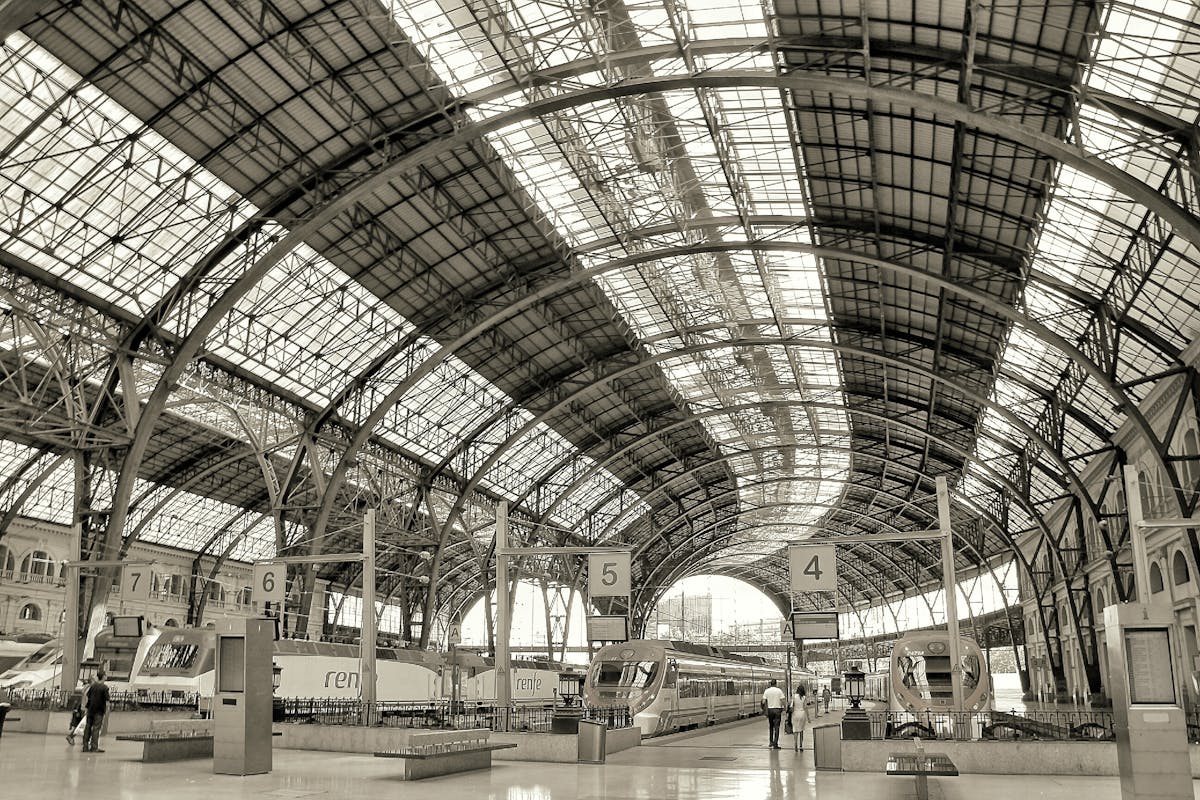
- Estació de França — a beautiful, underused station near Barceloneta that handles a handful of medium-distance services. Check your ticket carefully; a small number of trains leave from here rather than Sants.
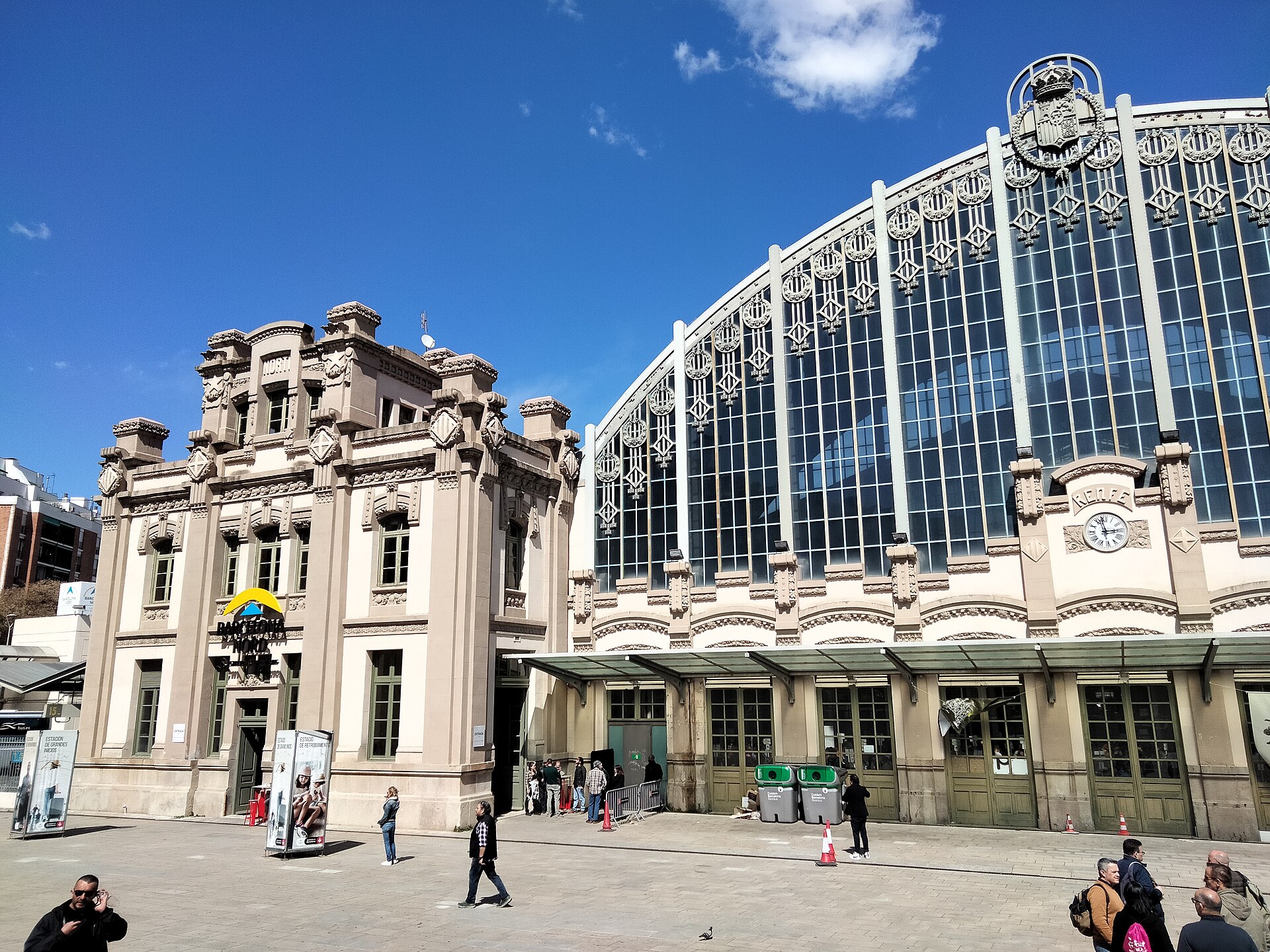
- Estació del Nord — the long-distance coach station, in a converted 1911 railway building on Carrer d’Alí Bei. Metro L1 to Arc de Triomf. This is where ALSA, Andorra services and most international coaches leave from.
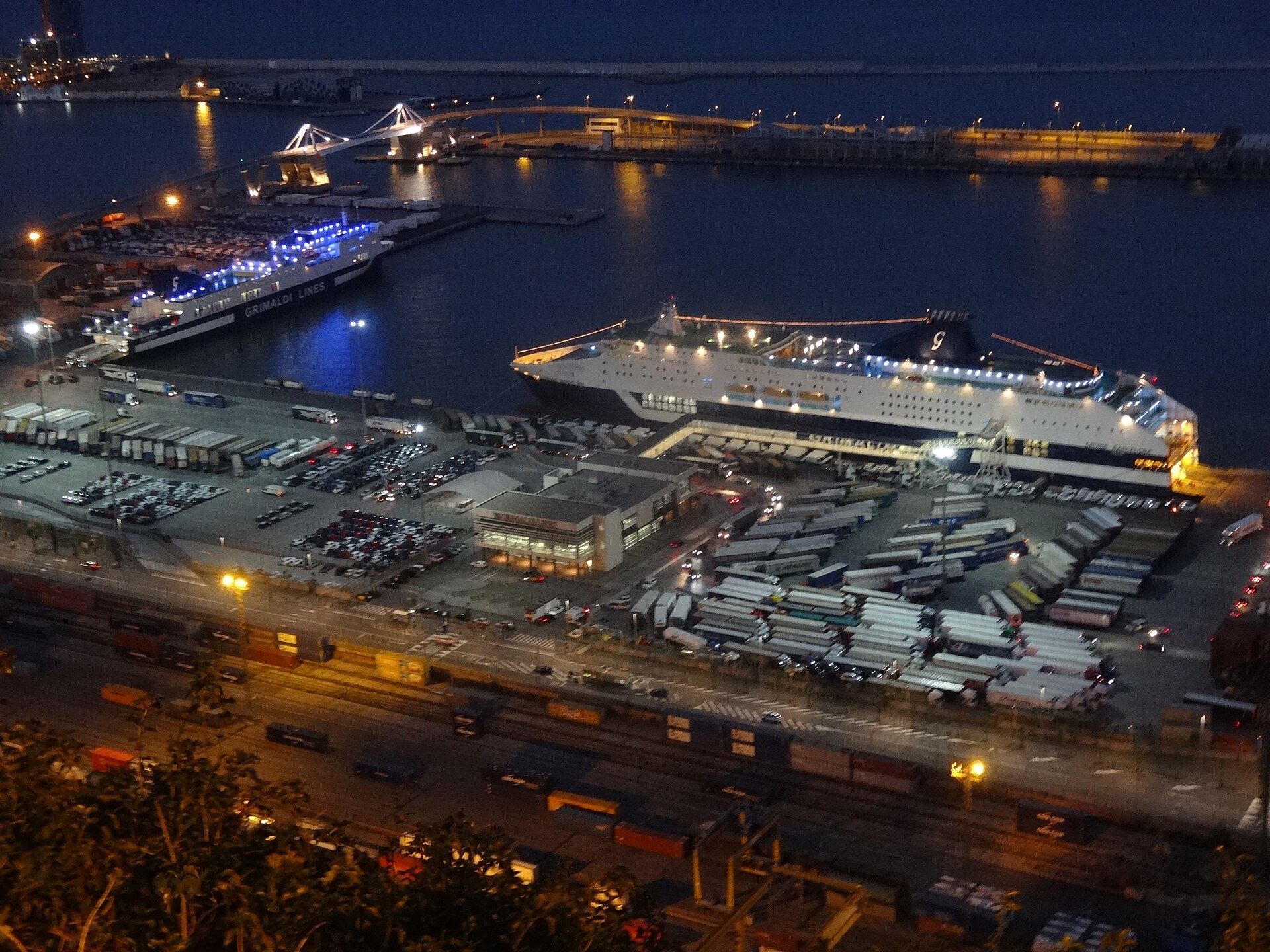
- Moll de Barcelona and the ferry terminals — Baleària, Trasmed and GNV sail to the Balearics from the port. Grimaldi Lines runs the long routes to Italy. See our Barcelona cruise port guide for the geography, which is not intuitive.
And of course El Prat airport, forty minutes from the centre — the BCN airport guide covers terminals, lounges and the shuttle.
Onward within Spain
Madrid — 2h30
The flagship route and the busiest domestic corridor in the country: three competing high-speed operators, roughly forty departures a day, and advance fares from €9. Flying is slower door to door and rarely cheaper. Our full Barcelona to Madrid guide compares train, plane and coach in detail, including the honest verdict on doing it as a day trip.
Valencia — 2h40 to 3h30
The most under-appreciated onward leg from Barcelona. Valencia is three hours down the coast, has a Gothic old town, a genuinely extraordinary Calatrava science complex, the best paella in Spain by common consent, and roughly half Barcelona’s hotel prices. The rail line along the coast is being progressively upgraded and journey times vary by service, so check whether you are booking a fast Euromed or a slower regional train — the difference is over an hour.
Verdict: if you have a spare two nights on a Barcelona trip and cannot decide where to spend them, spend them here. It is the closest thing to a Barcelona-quality city at Andalusian prices.
Zaragoza — 1h30
Everybody passes through Zaragoza on the way to Madrid and almost nobody stops, which is a shame. Ninety minutes from Sants, it has the enormous Basílica del Pilar, a Roman theatre, a Moorish palace and an old town full of tapas bars that cost half what El Born charges. It works beautifully as a one-night stop that breaks the Barcelona–Madrid journey without adding a day.
Seville, Córdoba and Málaga — 4h30 to 6h
Direct AVE services run from Sants to Córdoba, Seville and Málaga, with a handful of intermediate stops. Ouigo has added a direct Seville service too. This is a serious journey — five and a half to six hours to Seville — and it is where the case for flying starts to hold.
The honest comparison: a flight to Seville is about 1h30 in the air, so roughly four and a half hours door to door once you add both airports. The train is six hours end to end but centre to centre, with no baggage limits and a great deal more comfort. If the fares are similar, take the train. If the flight is half the price, take the flight and accept the queues.
Córdoba is the smart middle option — around four and a half hours, and the Mezquita is arguably the single most extraordinary building in Spain. Málaga is a long way to go for a city that is more airport than destination, unless the Costa del Sol is the point.
Bilbao, San Sebastián and the north — 6h45 by rail
There is one Alvia service a morning, leaving Sants around 08:45 and arriving in Bilbao mid-afternoon. It is a pleasant, scenic run across the top of Spain and a genuinely long day. The alternative is a short flight.
Verdict: fly, unless you actively enjoy long train journeys — in which case this is one of the better ones in Spain. San Sebastián requires a change or a bus, and both are easier from Bilbao than direct from Barcelona.
Onward by sea
The Balearics — Palma, Ibiza, Menorca
This is the one route where the boat beats the plane on every measure that matters. Baleària, Trasmed and GNV all sail Barcelona–Palma, with up to five crossings a day year-round. The fast ferry does it in 3 hours 30 minutes; the conventional overnight boats take up to 8h30 and let you sleep through the crossing. Fares start around €16–20 and typically land in the €20–80 band per person.
Why it beats flying: no airport transfer at either end, generous luggage, you can take a car, and the overnight sailing saves you a hotel night. Palma’s ferry terminal is a short taxi from the old town. The flight is 50 minutes in the air and about four hours door to door once both airports are counted.
Practical points: book vehicle space well ahead in summer; foot passengers rarely need to. Cabins on the overnight boats are worth the supplement — the reclining-seat option is a poor night’s sleep. Ibiza and Menorca are reachable directly from Barcelona on some sailings and via Palma on others; check the routing rather than assuming.
Italy — Civitavecchia, Genoa, Porto Torres
Grimaldi Lines runs long crossings from Barcelona to Italian ports, most usefully to Civitavecchia for Rome and to Genoa. These are overnight or longer — twenty hours or so to Civitavecchia — and they exist mainly for freight and for people taking cars.
Verdict: a genuine adventure and an appalling use of holiday time. Take it if the journey is the point, or if you have a vehicle. Otherwise fly: Barcelona to Rome is under two hours.
Onward into France
The rail link over the border is Barcelona’s most underused asset. Since the high-speed line through the Pyrenees opened, France is genuinely close, and the trains run from the same station as everything else.
Perpignan and Languedoc — 2 to 3 hours, from €29
The easiest international leg from Barcelona, and the cheapest. Perpignan is a properly Catalan French city — the street signs are bilingual and the food is closer to Girona’s than to Lyon’s. From there, Narbonne, Béziers, Montpellier and Carcassonne are all short hops on French regional trains.
Toulouse — about 4 hours, from €29
One change at Narbonne, and a good onward destination in its own right. There is also a slow, scenic alternative over the Pyrenees via Latour-de-Carol on the Ligne de Cerdagne, which takes most of a day and is one of the great European railway journeys if you have the time to spare.
Marseille — about 5h30, from €39
One direct train a day, an AVE running under Renfe’s own operation, leaving Barcelona in the late afternoon. It is a long but easy run along the coast. Marseille then connects onward to Nice, Aix and the whole of Provence.
Lyon — 5h06, from €39
A direct morning departure, and the natural gateway to eastern France and Switzerland. Faster than Marseille despite being further, because the route is more direct.
Paris — 6h30, from €39
Two direct TGV Duplex services a day, typically mid-morning and mid-afternoon, running at up to 320 km/h through Perpignan, Narbonne, Montpellier and Valence. Fares start at €39 in second class and €59 in first.
The honest comparison: Barcelona to Paris is about two hours in the air. The train is 6h30. But the train leaves from a city-centre station, arrives at Gare de Lyon, has no baggage limits, no security theatre and a restaurant car, and works out at roughly seven hours door to door against five for the flight. Two hours is a fair price for a considerably better day, and the fares are frequently lower. Book early — these two trains sell out.
Brussels and beyond — about 8h30
Via Lyon and a TGV connection, from around €68. Perfectly doable in a day and a genuine alternative to flying if you are heading for the Low Countries or onward to Germany. Allow a proper connection window; the Spanish leg is not covered by French delay guarantees.
Andorra and the Pyrenees
Coaches run from Estació del Nord and from El Prat to Andorra la Vella in about three hours, at €30–45 each way. There is no train — Andorra has never had one — and driving means a mountain road that can be genuinely difficult in winter.
The honest verdict: Andorra is worth the journey for two things, skiing and duty-free shopping, and for very little else. The principality is a strip of retail parks and apartment blocks in an extremely beautiful valley, and the beauty is doing a lot of work. If you want the Pyrenees, the Catalan side — the Vall de Núria, the Cerdanya, the Aigüestortes national park — is more attractive, easier to reach and does not involve a border queue.
Building a multi-city trip
The single most useful trick in European travel is the open-jaw booking: fly into one city, out of another, and never backtrack. It usually costs no more than a return and it saves a full day.
Four itineraries that work well from Barcelona:
- Barcelona → Madrid → Seville, fly home from Seville. Three cities, two train legs, about nine hours of travel in total across a ten-day trip. The classic Spanish route and it earns its reputation.
- Barcelona → Valencia → Madrid. Cheaper, less obvious, and Valencia is the best value stop in Spain. Roughly six hours of trains all in.
- Barcelona → Perpignan → Toulouse → Paris. The French route, all by rail, all inside a week, and considerably more interesting than flying between the two capitals.
- Barcelona → Palma → Menorca, fly home from Palma. Ferry out, island-hop, fly back. Works beautifully from June to September and is nearly empty in May and October.
Whichever you choose, our Barcelona and beyond guide has the regional context, and how many days to spend in Barcelona will help you decide how much of the trip to give the city itself.
Booking, passes and practicalities
Where to buy
- Spanish domestic: renfe.com, ouigo.com, iryo.eu. All sell in English. Compare on an aggregator first, then buy direct.
- Cross-border to France: book through SNCF Connect or a reseller. Renfe’s own site handles some but not all international services, which causes a lot of confusion.
- Ferries: Baleària, Trasmed and GNV sell direct; the aggregators are useful for comparing sailings across operators.
- Coaches: ALSA for Spain, and the operator’s own site for Andorra.
Rail passes
Interrail and Eurail are poor value from Barcelona specifically, because every high-speed train here requires a compulsory paid seat reservation for pass holders — often €10–30 a leg, and sometimes more than the advance fare you could have bought outright. A pass makes sense if you are doing many short regional hops across several countries; it rarely makes sense for two or three long Spanish legs.
Luggage
Spanish high-speed trains put bags through a scanner before boarding, but there is no weight limit worth worrying about and no charge. This is the single biggest practical advantage of rail over budget airlines on these routes: two large suitcases cost nothing on a train and can cost €80 on a Ryanair booking.
Timing your connections
Allow 30 minutes at Sants for the security scan and to find the platform, which is announced late. For a ferry, allow an hour before sailing as a foot passenger and ninety minutes with a vehicle. For a flight, add the forty minutes from the city centre to El Prat before you even start counting — the airport transfer comparison has the real times.
Routes that are not worth it
Being useful means saying which of these to skip.
- Barcelona to Lisbon by land. There is no direct train and the journey involves changes, a very long day and a coach leg. Fly; it is two hours and frequently under €60.
- Barcelona to Málaga by train, unless you specifically want the journey. Six hours to reach a city that is mostly a gateway to somewhere else.
- Barcelona to Italy by ferry, for anyone without a vehicle. Twenty hours against a two-hour flight is a romantic idea and a bad plan.
- Andorra for anything but skiing or shopping. Three hours each way to a retail park. The Catalan Pyrenees are better in every respect.
- Day trips to Madrid. Two peak fares, twelve tired hours, and a city that deserves three days. Our Madrid guide explains why in detail.
Flying onward, and when it is the right call
El Prat is one of the largest airports in Europe and it is very well served for short-haul, which means the flying option is always on the table. The question is when it beats the alternatives.
The rule of thumb
On these routes, a flight costs you roughly three hours of overhead — forty minutes to the airport, ninety minutes before departure, and thirty to fifty minutes to get from the arrival airport into the city at the far end. So a flight beats a train only when the flight saves more than three hours of journey time.
| Destination | Train time | Flight time | Overhead-adjusted winner |
|---|---|---|---|
| Madrid | 2h30 | 1h15 | Train, comfortably |
| Valencia | 2h40–3h30 | 1h | Train |
| Seville | 5h30–6h | 1h30 | Roughly even; price decides |
| Bilbao | 6h45 | 1h15 | Flight |
| Paris | 6h30 | 2h | Close; the train is the better day |
| Lisbon | A full day with changes | 2h | Flight, decisively |
| Rome | Overnight ferry or two days by rail | 1h50 | Flight, decisively |
| Palma | 3h30 by fast ferry | 50 min | Ferry, once transfers are counted |
The budget-airline catch
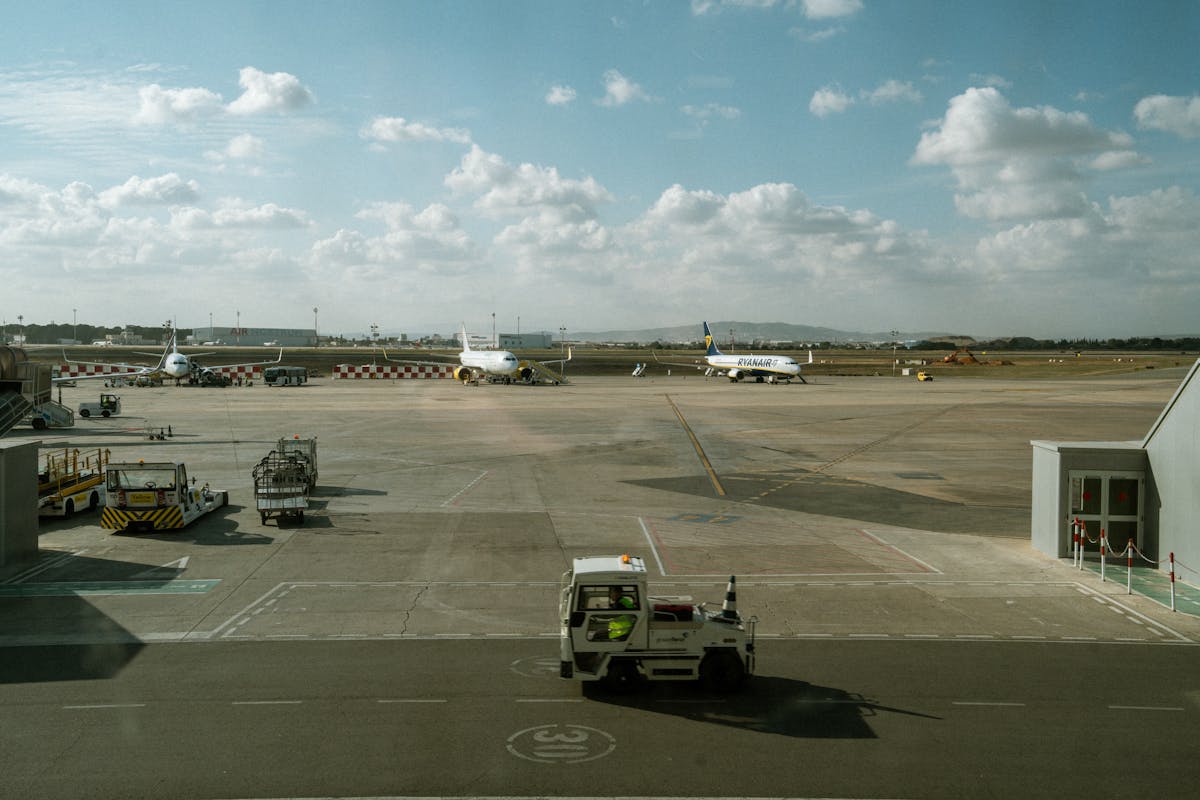
Two things routinely turn a cheap flight into an expensive one. The first is baggage: a €29 fare with two hold bags is a €90 fare, and the train has no equivalent charge. The second is the airport at the other end — a number of low-cost carriers serve secondary airports an hour or more from the city they claim to fly to, and the transfer is neither cheap nor quick. Check which airport you are actually landing at before comparing prices.
At the Barcelona end, note that some budget services use Girona or Reus rather than El Prat, both of which are around 100 km from the city. That is fine on the way out if you plan for it, and a genuine problem if you discover it at the last minute.
Catalonia’s own onward stops
The most overlooked category on this page: places close enough that most visitors treat them as day trips, but good enough to deserve a night. Turning one of them into an overnight stop on the way somewhere else costs almost nothing and changes the trip.
- Girona — 38 minutes by AVE. A walled medieval city with a colossal cathedral staircase, an intact Jewish quarter and a river lined with painted houses. It is on the way to France, so it slots into a northbound trip for free.
- Figueres — about an hour. The Dalí Theatre-Museum, which the artist designed himself and is buried under, is one of the strangest and best museums in Europe. Half an hour further than Girona and a natural pairing with it — our Figueres and the Dalí museum guide has the practicalities.
- Tarragona — about 35 minutes by high-speed train. A Roman amphitheatre on a cliff above the sea, plus a UNESCO-listed old town. It is on the way south towards Valencia, though the fast Euromeds stop at Camp de Tarragona outside the town; the slower Intercity trains still call at the city station, which makes a stopover easy.
- Lleida — about an hour. Rarely visited by foreign tourists, with a spectacular fortified cathedral on a hill. It sits directly on the Madrid line and makes a plausible break in that journey if Zaragoza does not appeal.
- The Costa Brava — one to two hours. Better reached by bus or car than by train, since the rail line runs inland. Cadaqués, Begur and Calella de Palafrugell are the ones worth the effort.
Crossing the French border
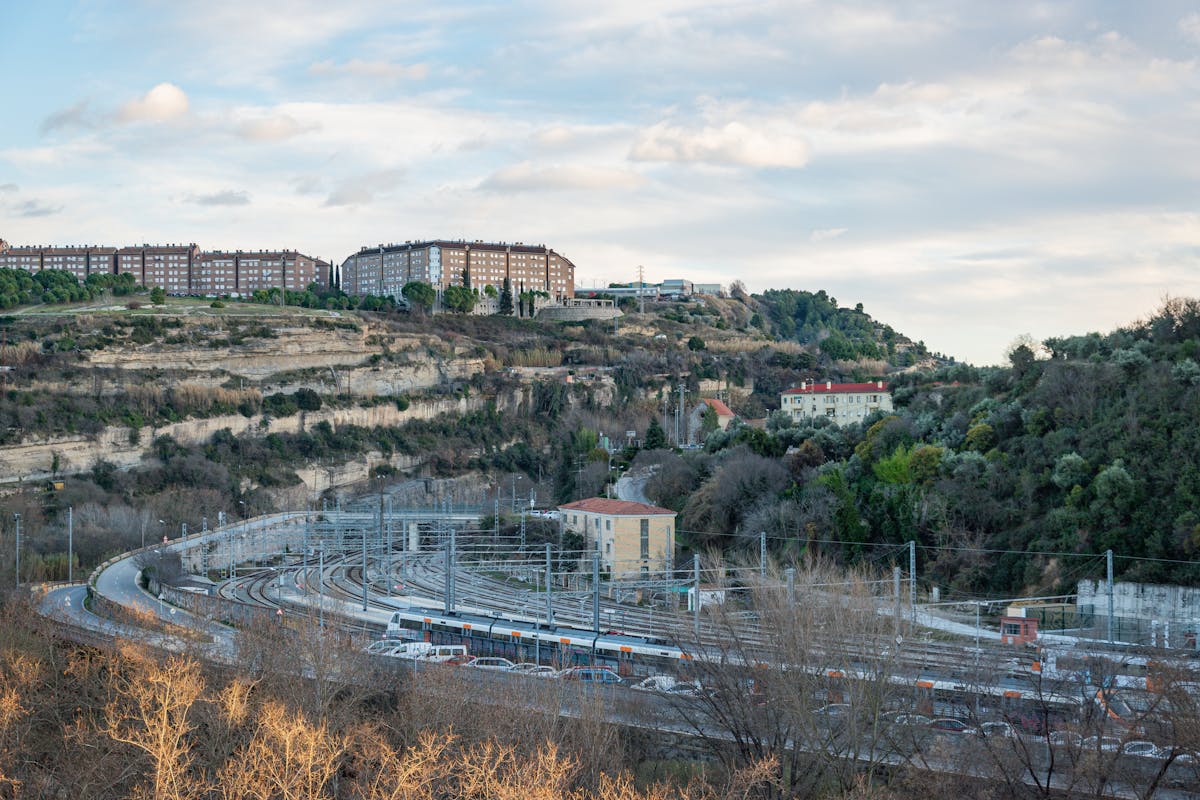
Spain and France are both in Schengen, so there are no routine passport checks on the trains, and in practice the border is invisible — you notice it because the announcements change language. A few things do change, though, and they catch people out.
- Ticketing systems do not talk to each other. A Renfe ticket to Perpignan and an SNCF ticket onward from Perpignan are two separate contracts. If the first is late and you miss the second, nobody owes you a replacement. Leave a real connection window — an hour is sensible, ninety minutes at a busy station.
- French regional trains (TER) are cheap and do not require reservations, which makes hopping along the Languedoc coast very easy once you are across.
- Mobile roaming is fine for EU and EEA plans in both directions. UK plans vary by provider since Brexit; check before you rely on it.
- Border spot-checks do happen at times of heightened security, particularly on the coach routes. Carry your passport or national ID card, not a photocopy.
- The old slow line via Portbou and Cerbère still exists and is dramatically cheaper than the high-speed route. It involves a change at the border and takes far longer, but it runs right along the cliffs and is a beautiful trip in its own right.
Driving out of Barcelona
Hiring a car makes sense for exactly one category of onward travel: destinations the trains do not serve well. That means the Costa Brava villages, the Pyrenees, the inland Catalan comarques and the Priorat wine country. For everything on the main rail corridors, the car is slower, more expensive and considerably more stressful.
- Do not collect the car in the city centre. Pick it up at El Prat or at an out-of-town office on your way out. Central Barcelona driving is difficult, parking is €25–35 a day and the low-emission zone is camera-enforced.
- Tolls are significant. The AP-7 and AP-2 carry charges on parts of their length, and the motorway network around Barcelona is not cheap. Budget for it.
- Fuel is cheaper away from the motorway. Service-station prices on the AP-7 run well above town prices a few kilometres off it.
- Most French and Spanish city centres have low-emission zones now. If your route includes Madrid, Paris, Lyon or Marseille, check the rules before you arrive rather than after the fine does.
- One-way international hires attract large drop-off fees. Returning a Spanish car in France can add several hundred euros. Check before booking, not after.
How to sequence a longer trip
Three principles that consistently produce better trips out of Barcelona.
Travel in the morning, arrive by early afternoon. A 09:00 departure gets you into the next city in time to check in, walk around and have a proper first evening. An 18:00 departure costs you the whole day and delivers you tired to an unfamiliar station after dark.
Put the longest leg in the middle. Jet lag and the last-day scramble both argue for keeping the first and final days simple. If one leg is six hours, make it day four, not day one.
Book the accommodation before the transport on any festival date. Trains between Spanish cities are rarely sold out; hotels in a city holding a festival routinely are. Our Barcelona month-by-month guide flags the dates that move prices, and the same logic applies at the other end of every leg on this page.
Bikes, pets, wheelchairs and other awkward cargo
The practicalities that decide the mode as firmly as any timetable.
- Bicycles. Folding bikes travel free on every Spanish train as ordinary luggage. Full-size bikes are accepted on some high-speed services in a dedicated space that must be reserved, and refused on others, so check the specific train rather than the operator. Rodalies regional trains take bikes freely outside the weekday peaks, which makes the Costa Brava and the Penedès easy to reach on two wheels. The ferries take bikes without fuss.
- Pets. Renfe carries small animals in a carrier up to a stated weight for a modest fee, with a limit on the number per train; larger dogs are permitted on some services and not others. The Balearic ferries are the most pet-friendly option by a distance, with kennels and, on some sailings, pet-friendly cabins. Airlines are the most restrictive and by far the most expensive.
- Reduced mobility. Renfe’s free Acerca assistance covers boarding and alighting at Sants and at every major Spanish station, but it must be booked ahead — allow at least half a day, and more at busy times. SNCF runs an equivalent scheme at the French end, and the two do not talk to each other on a cross-border journey, so book both. Our accessible Barcelona guide covers the city side.
- Skis and outsize baggage. Fine on trains and coaches, expensive on aircraft. This is the main reason the Andorra coach is the sensible way to reach the slopes rather than a flight into Toulouse.
- Left luggage on the way out. Sants has lockers, and so do several of the private storage points around the city centre. If your train is at 19:00 and checkout was at 11:00, this is the difference between a wasted day and a good one.
What it costs to leave, and where the savings are
Onward travel is usually the second-largest line in a multi-city budget after accommodation, and it is the one most easily reduced. Four levers, in order of how much they actually save.
- Book 60 to 90 days out. On the Spanish high-speed network this is worth more than every other tactic combined — the difference between a €12 fare and a €90 one on the same seat.
- Travel mid-week and off-peak. Friday evening and Sunday afternoon are the most expensive departures of the week on every domestic route. A Tuesday morning train is routinely half the price.
- Take the stopping service. Thirty extra minutes on a train that calls at Camp de Tarragona or Zaragoza frequently saves €20–30, and the seats are identical.
- Price two singles rather than a return. There is no return discount worth having on most of these routes, and mixing operators in each direction is normal.
Where the savings are not: rail passes on Spanish high-speed services, first class on a journey under three hours, and any flight whose headline fare excludes a bag you are definitely taking. Our Barcelona on a budget guide applies the same thinking to the city itself.
A note on emissions
It is worth stating the obvious once. On every route in the table at the top of this page where the train is competitive on time, it is also somewhere between five and twenty times better on carbon than the equivalent flight — the Spanish high-speed network runs on an increasingly renewable grid, and the ferries, while not clean, carry freight and vehicles that would otherwise travel by road.
This is not a reason to make yourself miserable getting to Lisbon overland. It is a reason to notice that on the Madrid, Valencia, Zaragoza, Perpignan, Lyon and Paris legs, the low-carbon option is also the faster, more comfortable and often cheaper one. That coincidence does not hold everywhere in Europe, and it is one of the genuine advantages of starting a trip in Barcelona.
Frequently asked questions
Where do long-distance trains leave from in Barcelona?
Barcelona Sants, for essentially every high-speed and long-distance service, domestic and international. A handful of medium-distance trains use Estació de França instead, so check your ticket. Long-distance coaches leave from Estació del Nord.
How long is the train from Barcelona to Paris?
6 hours 30 minutes on the direct TGV Duplex, with two departures a day and fares from €39 in second class. It runs at up to 320 km/h via Perpignan, Montpellier and Valence and arrives at Gare de Lyon.
Is there a direct train from Barcelona to Marseille?
Yes, one a day, operated as an AVE and typically leaving Barcelona in the late afternoon for a journey of about five and a half hours. Fares start around €39.
What is the best way to get from Barcelona to Mallorca?
The fast ferry, which takes 3 hours 30 minutes and starts around €16–20. It beats flying door to door once airport transfers are counted, carries as much luggage as you like, and takes cars. Overnight conventional sailings take up to 8h30 and save you a hotel night.
Can you get a train from Barcelona to Andorra?
No. Andorra has no railway. Coaches run from Estació del Nord and from El Prat airport in about three hours for €30–45 each way, and there is no faster public option.
How long does it take to get from Barcelona to Seville by train?
About five and a half to six hours on the direct high-speed services, with a handful of intermediate stops including Zaragoza and Córdoba. Fares run roughly €35–110 depending on how far ahead you book.
Is a rail pass worth it for travel from Barcelona?
Usually not. Spanish high-speed trains require a compulsory paid seat reservation for Interrail and Eurail holders, and that fee frequently exceeds the advance fare for the same seat bought outright. Passes suit many short regional hops, not a few long Spanish legs.
What is the cheapest way to leave Barcelona?
An advance promo fare on a low-cost high-speed operator, from about €9 to Madrid. For international destinations, a budget flight will usually be cheapest on the headline fare, though not once you add baggage and airport transfers.
Should I fly or take the train from Barcelona to Madrid?
Take the train. It is 2h30 centre to centre against 1h15 in the air, which becomes 3h30 against 4h30–5h30 once you count airport transfers, security and baggage reclaim.
What is the most scenic route out of Barcelona?
The slow line over the Pyrenees via Latour-de-Carol towards Toulouse, which takes most of a day and climbs through the Cerdanya. The coastal run towards Valencia and the AVE crossing into France through Perpignan are both attractive and considerably faster.
Can I take a car on the ferry from Barcelona?
Yes, on all the Balearic services and on the Grimaldi routes to Italy. Book vehicle space well in advance in summer; foot passengers can usually book much closer to departure.
For the full comparison on the route south, our Barcelona to Valencia guide sets the Euromed against the Intercity, the coaches and the drive, explains which station each train uses at both ends, and answers the question of whether to break the journey in Tarragona.
For the island people ask about most, our Barcelona to Ibiza guide compares the overnight ferry with the hour-long flight in detail: who sails and who flies, what the crossing is really like with and without a cabin, taking a car across, and the real cost for a solo traveller, a couple and a family.
For the full story on the train to France, our Barcelona to Paris by train guide covers the direct TGV in detail: the morning and afternoon departures, how to find the €39 fares, the cheaper split ticket via Perpignan, the fallback routes via Lyon and along the coast, and an honest comparison with flying.
Related Barcelona Guides
- Barcelona to Madrid — the flagship route, compared across train, plane and coach.
- Day trips from Barcelona — the return excursions, as distinct from the onward legs here.
- Barcelona’s train stations — Sants, França and Passeig de Gràcia, and which one you actually need.
- Barcelona El Prat airport — terminals, lounges and getting there in time.
- Barcelona and beyond — the regional context for a longer Catalan trip.
- How many days in Barcelona — how much of a multi-city trip to give the city itself.
- The complete Barcelona travel guide — the hub for everything else on this site.
Photo Credits
Estació del Nord: 070 Estació del Nord (Barcelona), façana c. Nàpols, estació d’autobusos Barcelona Nord by Enric, CC BY-SA 4.0, via Wikimedia Commons.
Grimaldi Lines ferry terminal: Terminal of Grimaldi Lines at night – Barcelona 01 by Jordiferrer, CC BY-SA 4.0, via Wikimedia Commons.