We get commissions for bookings made through this post. Booking links, and any accommodation options shown on the page, are handled by a partner that adds commission tracking automatically. It never costs you more, and it never affects what we recommend. Affiliate disclosure
The fastest train from Barcelona to Valencia takes about two hours and forty minutes, and it does not stop in Tarragona. That surprises a lot of people, because Tarragona sits right on the line, and until 2020 the same trains pulled into its seafront station a few minutes’ walk from the Roman amphitheatre. Since the new bypass opened, the fast trains call instead at Camp de Tarragona, a modern station in the fields outside town, and the old route through the city is left to slower services. It is the single most useful thing to know if you are planning Barcelona to Valencia with a stop on the way, and it shapes almost every choice below.
This guide compares the train, the bus, the car and the plane between Spain’s second and third cities, explains which stations each service uses, and answers the question in the title honestly: whether Tarragona, or anywhere else on the way, is worth breaking the journey for. For all the routes out of Barcelona, see our onward travel guide. Fares and timetables were checked in October 2026; prices on this route move with demand, so treat them as the right order of magnitude.
Barcelona to Valencia at a glance
| Option | Time | Price | Stations | Verdict |
|---|---|---|---|---|
| Euromed train | From about 2h40 | From about €20 booked ahead | Barcelona Sants to València Joaquín Sorolla | The best option for most people |
| Intercity train | Longer, with more stops | Similar or a little less | Barcelona Sants to València Nord, via Tarragona city | Best for a Tarragona stopover or arriving right in the centre |
| Bus | About 4h15 (ALSA) to 5h15 (FlixBus) | Roughly €19–70 | Barcelona Nord to València bus station | Only if the trains are full or expensive |
| Car | About 3h30–4h | Fuel, plus parking in Valencia | Door to door; the AP-7 is toll-free | Good for exploring the coast on the way |
| Plane | Short in the air, long door to door | Varies | El Prat to Manises | Not worth it |
By train
The train is the obvious choice. It runs city centre to city centre, it is comfortable, it is usually faster than driving, and the fares, booked in advance, are reasonable. Renfe runs the direct long-distance trains on this route: about sixteen a day in total, eight in each direction, most of them Euromed services. Booking sites sometimes show other operators on the route too; check what they actually offer, because the low-cost companies that have transformed the Barcelona–Madrid route have been adding services along the Mediterranean, and a journey with a change is not the same as a direct train.
Euromed: the fast option
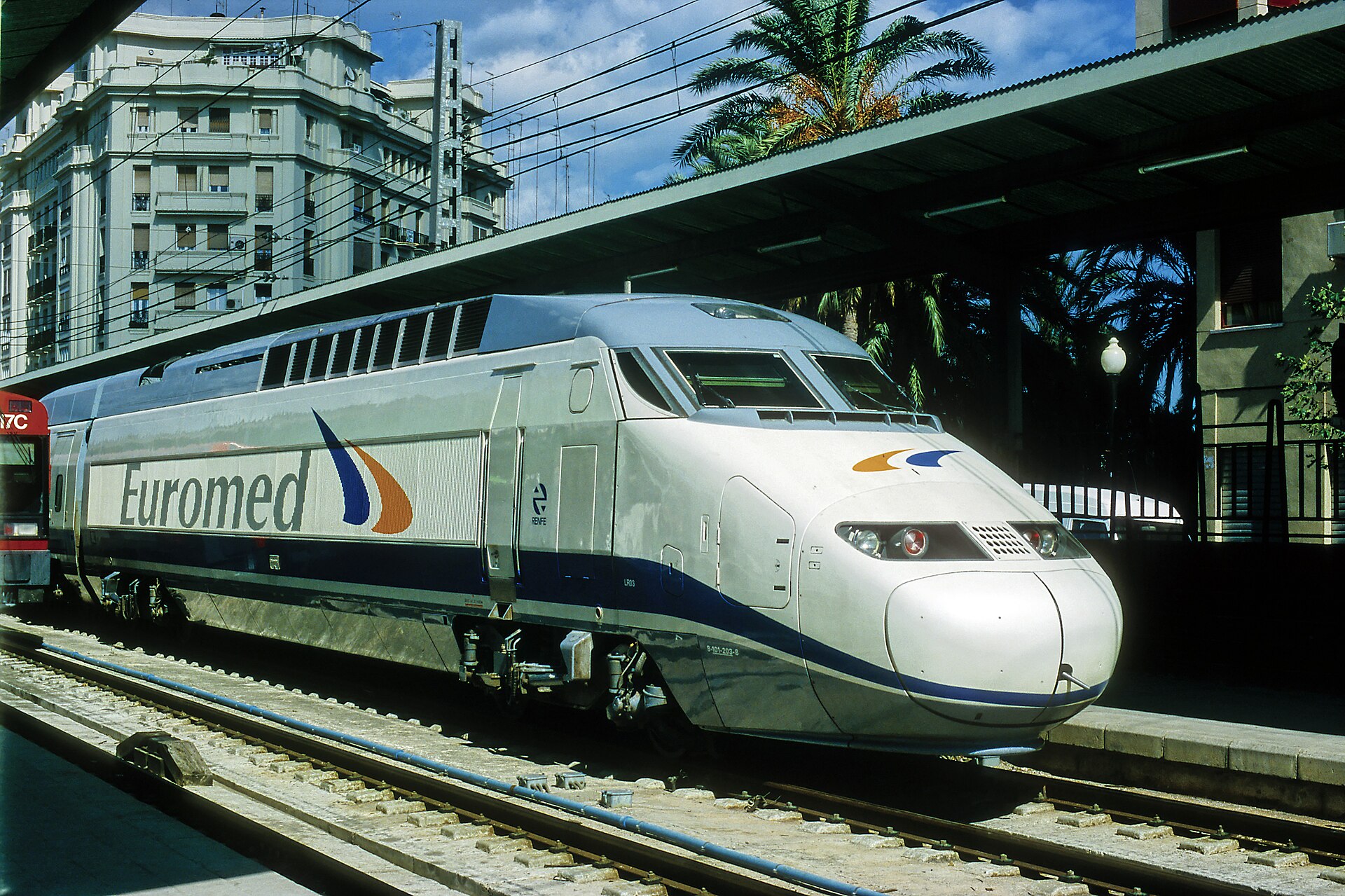
Renfe’s Euromed is the train most people take. It leaves from Barcelona Sants, runs on the high-speed line as far as Camp de Tarragona, then follows the Mediterranean Corridor south through the Ebro valley and Castelló to València Joaquín Sorolla, the city’s high-speed station. The fastest services take about two hours forty minutes. There are six Euromeds a day in each direction, a sixth having been added in 2025, spread from early morning to evening.
Fares are set by demand, like airline tickets. Booked a few weeks ahead, the cheapest seats start at about €20; on the day, especially on Friday and Sunday afternoons and around holidays, the same seat can cost several times as much. Book directly with Renfe, choose a fare that allows changes if your plans might move, and do not leave it until the last minute in summer or at Easter.
Intercity: the slower train that stops in Tarragona
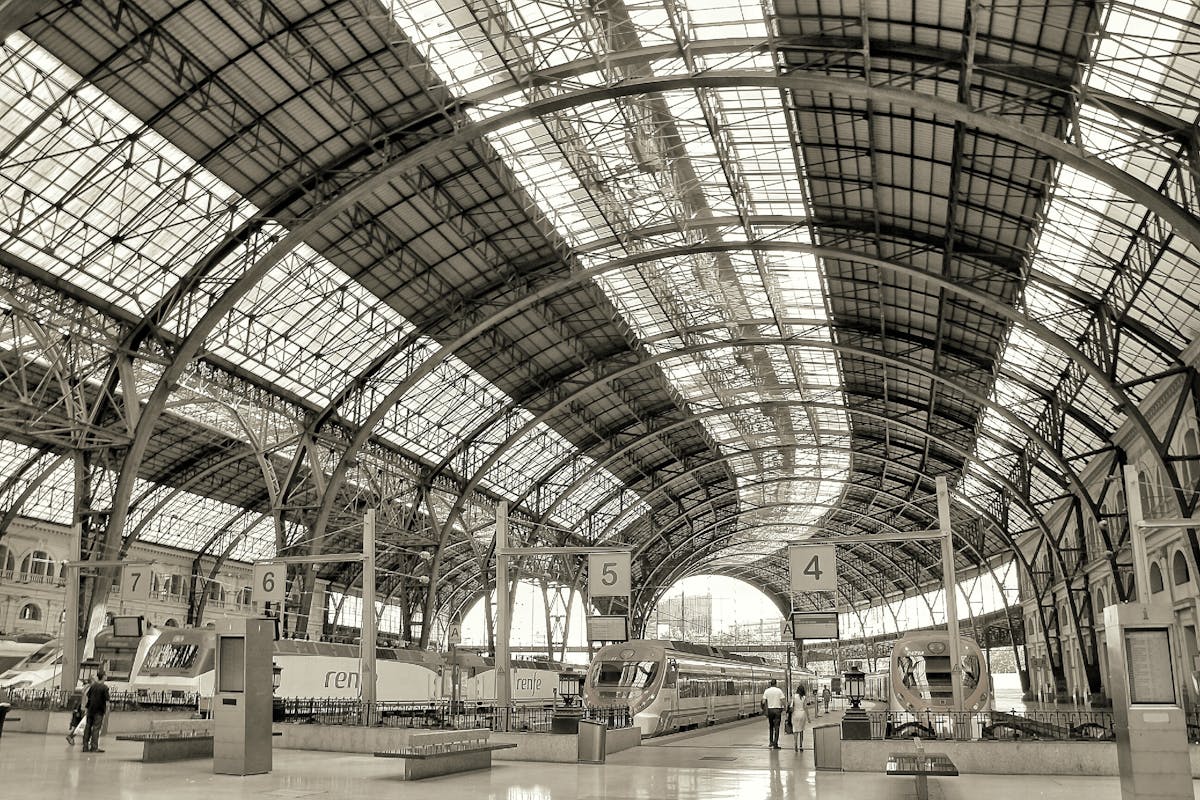
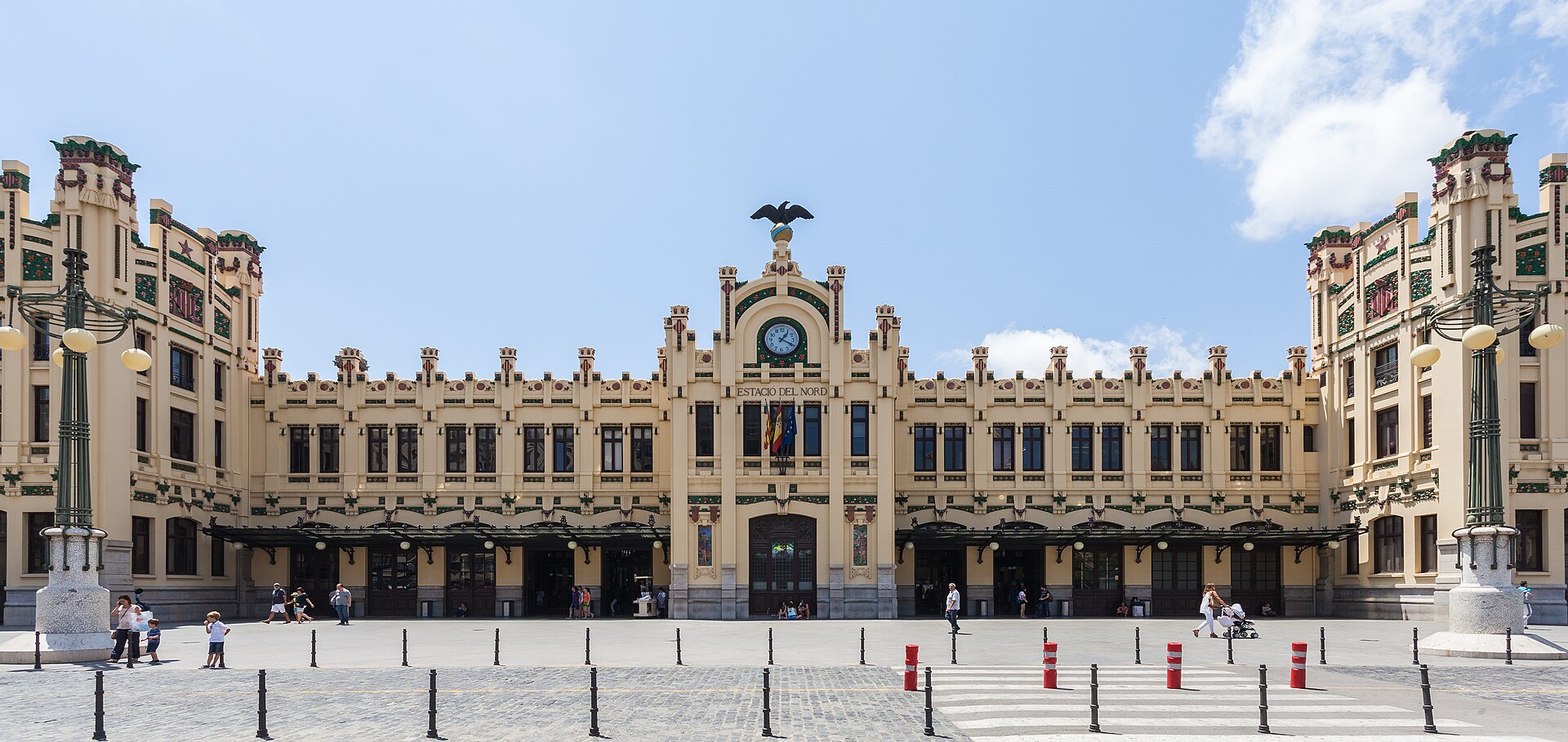
When the bypass around Tarragona opened in January 2020, the Euromeds moved to Camp de Tarragona and the city’s own station, on the seafront below the old town, lost its fast trains. The slower Intercity services, the old Talgos, kept calling there, and they still run along the coast through Tarragona to València Nord, the grand modernista station in the very centre of Valencia. They take longer than the Euromed and there are only a few a day, but they are the train to choose if you want to stop in Tarragona itself, and València Nord is a far more convenient place to arrive than Joaquín Sorolla.
The stations at each end
- Barcelona Sants is the city’s main station, on metro lines L3 and L5. Long-distance trains have a security check, so allow time. Our train stations guide explains Sants and the city’s other stations.
- València Joaquín Sorolla, where the Euromeds arrive, is a little south of the centre. The old town is about a 20-minute walk away, or a short taxi ride.
- València Nord, where the Intercity trains arrive, is right in the centre, beside the bullring and a few minutes’ walk from the Plaça de l’Ajuntament. Even if you arrive at Joaquín Sorolla, it is worth looking inside for the tiled booking hall.
Regional trains
Slow regional trains also run down the coast, including the Rodalies R16 from Barcelona to Tortosa via Tarragona, but there is no sensible regional route all the way to Valencia without changes, and on a journey of this length the time adds up quickly. The R16 has also had a poor reputation for punctuality, though it improved markedly after a timetable change in 2025. Regional trains are, however, the cheap way to reach Tarragona for a day trip from Barcelona.
Which train should you book?
| If you want | Book | Why |
|---|---|---|
| The fastest journey | Euromed | About 2h40 from Sants to Joaquín Sorolla |
| To arrive in the heart of Valencia | Intercity | València Nord is right in the centre |
| To stop in Tarragona’s old town | Regional or Intercity to Tarragona, then Intercity on | The Euromed stops only at Camp de Tarragona, outside the city |
| The cheapest fare | Whichever is cheapest on your date, booked weeks ahead | Prices move with demand on every train |
| To travel with lots of luggage or small children | Euromed, direct | One train, no changes, reserved seats |
| To see the Ebro Delta or Peñíscola on the way | A hire car | Neither is easy to reach by train |
Booking tips
- Book on Renfe’s own website or app. Booking platforms are convenient for comparing operators and routes, but some add fees, and buying direct makes changes and refunds simpler.
- Book early, especially for Fridays and Sundays. These are the busiest days on the route, with weekend travellers and students heading home, and the cheapest seats go first.
- Choose your fare type carefully. The cheapest tickets usually come with the most restrictions on changes and refunds. If your plans might move, a more flexible fare can be cheaper in the end.
- Check both directions before you commit. The cheapest outward train is not always paired with a cheap return, and a single ticket each way is often as good value as a return.
- Arrive early at Sants. Long-distance trains have a luggage security check, and the boarding gates close a few minutes before departure.
What you see from the window
The Euromed leaves Barcelona through tunnels and suburbs, then runs out across the vineyards of the Penedès on the high-speed line before dropping towards Camp de Tarragona. South of there the landscape opens up: the Ebro, the edge of its delta, and then, through the province of Castelló, mile after mile of orange and lemon groves, with the mountains on one side and glimpses of the Mediterranean on the other. If you want the best chance of a sea view on the way south, sit on the left. The final approach into Valencia crosses the huerta, the market gardens that have fed the city for centuries.
By bus
Coaches leave from Barcelona Nord, the bus station in the old modernista railway terminus on Carrer d’Alí Bei (metro L1 Arc de Triomf), for Valencia’s main bus station.
- ALSA runs roughly hourly, with the fastest services taking about four hours fifteen minutes, and fares of roughly €19–70 depending on how far ahead you book and the type of service.
- FlixBus runs a few times a day, taking about five hours fifteen minutes, for roughly €28–40.
Our verdict: the bus is a fallback rather than a plan. It takes at least an hour and a half longer than the Euromed, and an advance train ticket often costs no more. It earns its place when the trains are sold out or the only seats left are expensive, typically on a summer Friday or at the start of a bank-holiday weekend.
By car
Valencia is about 350 kilometres from Barcelona down the AP-7 motorway, which is now toll-free along its whole length between the two cities. Allow about three and a half to four hours without stops, more in summer traffic. Driving makes sense if you want to explore the coast on the way, the Ebro Delta, Peñíscola or the beaches south of Tarragona, or if you are carrying a lot. It makes much less sense if you are simply going from city to city: you will pay for fuel and then for parking in Valencia, where a car is more of a burden than a help. Our car rental guide covers hiring in Barcelona, including one-way fees, which can be steep.
A two-day drive down the coast
If you have a car and no hurry, the coast between Barcelona and Valencia makes a fine two-day road trip, with the best of it on the way rather than at either end:
- Morning: Tarragona. About an hour and a quarter from Barcelona. Park outside the old town and walk the Roman sites and the cathedral.
- Afternoon: the Ebro Delta. Another hour or so south. Drive the flat lanes between the rice fields and lagoons around Deltebre, look for flamingos, and have a rice dish for a late lunch, which is what this area grows.
- Evening: Peñíscola. About an hour further on. Stay the night in or near the walled old town on its headland, and watch the sun set over the castle.
- Next day: on to Valencia, an hour and a half or so down the AP-7, stopping at Sagunt for its castle if you have time, and return the car before you reach the city centre, where you will not need it.
Check the one-way fee before you book a car to drop in Valencia, because it can wipe out the savings of driving.
By plane
Do not fly. Even if you find a flight, the time in the air is the only short part of the journey: getting out to El Prat, clearing security, waiting to board and then getting into Valencia from its airport at Manises adds up to more than the train takes from Sants, which is already in the city. The train is also far more pleasant and, for most bookings, no more expensive.
Should you stop in Tarragona?
Tarragona was Tarraco, the capital of a Roman province, and its remains are a UNESCO World Heritage Site: an amphitheatre on the edge of the sea, the vaults of a chariot-racing circus running under the old town, long stretches of Roman wall, and a Gothic cathedral at the top of the hill. It is one of the best Roman sites in Spain, and it lies almost exactly on the way to Valencia. So, should you stop?
Our honest answer: yes, if you like Roman history and you can travel light; otherwise, see it as a day trip from Barcelona instead.

How to do it
- Take a morning train from Barcelona to Tarragona’s city station. Regional trains and the Intercity both call there; it is about an hour from Barcelona.
- Spend four or five hours in the old town: the amphitheatre, the Roman circus and praetorium, the walk along the walls, the cathedral and lunch on the Rambla Nova or in the Plaça de la Font. Our Tarragona guide has the route.
- Catch an afternoon Intercity from the same station to València Nord, arriving in the centre of Valencia in time for dinner.
The catches
- Luggage. Walking Tarragona’s hilly old town with a suitcase is no fun. Check what luggage storage is available before you go, or travel with a small bag.
- The Euromed does not help. If you want the fast train for the second leg, you will need to get out to Camp de Tarragona, a taxi or bus ride from town, which eats into your time.
- Fewer trains. The Intercity runs only a few times a day, so plan around its timetable rather than hoping to catch the next one.
If you have only a couple of days in Barcelona and are heading to Valencia anyway, the stopover is a clever way to see Tarragona without spending a whole extra day on it. If you have a week, a separate day trip from Barcelona, with no luggage and no connection to make, is easier. Our day trips from Barcelona guide compares it with the alternatives.
Other stops worth considering
- The Ebro Delta. The great wetland of rice fields, lagoons and birds where the Ebro meets the sea, around Amposta and Deltebre, is a wonderful detour by car, and harder to see without one.
- Peñíscola. A walled old town and castle on a rocky headland, built up by the Templars and later the seat of an antipope, just over the border into the Valencian Community. It is best reached by car, or by taxi from Benicarló station.
- Sagunt. A short ride north of Valencia, with a Roman theatre and a long hilltop castle, and an easy half-day trip from Valencia itself.
Valencia in brief
Valencia is a very different city from Barcelona: smaller, flatter, a little more relaxed, and for many visitors a delightful surprise. Its highlights are easy to list:
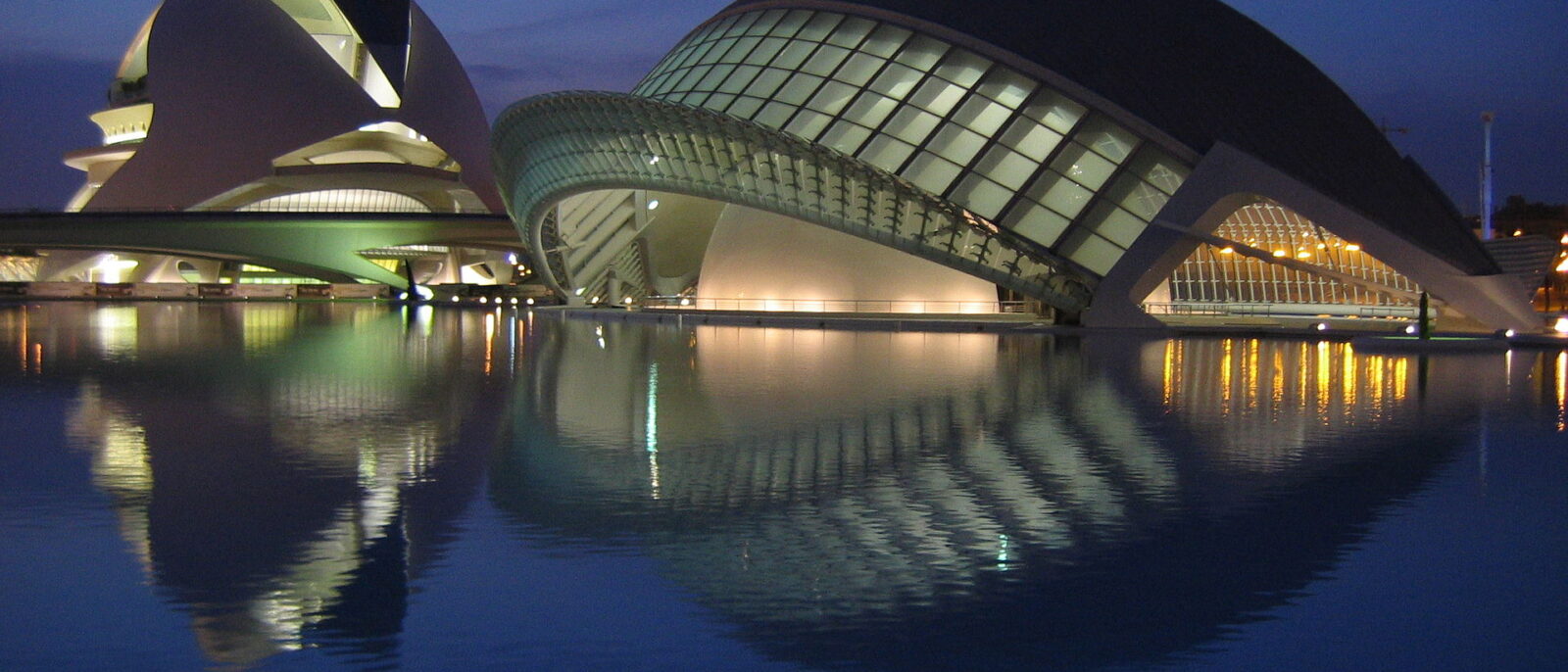
- The City of Arts and Sciences, Santiago Calatrava’s futuristic complex of museums, an opera house, a planetarium and an aquarium in the old riverbed.
- The Turia Gardens, a park of several kilometres laid out in the bed of the river, which was diverted after a catastrophic flood in 1957. It is the best way to cross the city on foot or by bike.
- The old town, with the cathedral, the Gothic silk exchange of La Llotja (a UNESCO World Heritage Site) and the Mercat Central, one of the finest food markets in Spain.
- Paella. This is its home. The original paella valenciana is made with chicken, rabbit and beans, not seafood, and the classic place to eat it is out at the Albufera lagoon south of the city.
- The beach. Long, wide sandy beaches, such as Malvarrosa, are a tram ride from the centre.
- Las Fallas. In mid-March the city builds huge satirical sculptures and burns them in a week of fireworks and noise; it is spectacular, crowded and booked out well ahead.
Getting into Valencia from the station
- From València Nord you are already in the centre: the Plaça de l’Ajuntament is a few minutes’ walk away, the cathedral and the Mercat Central about fifteen minutes, and the Xàtiva metro station is opposite.
- From Joaquín Sorolla you are a short distance south of the centre. Walking to the old town takes about 20 minutes; taxis wait outside; and the City of Arts and Sciences is within reach along the old riverbed of the Turia.
- From the bus station, on the north side of the Turia gardens, it is a pleasant walk across the park into the old town, or a short taxi ride with luggage.
When to go
Valencia shares Barcelona’s Mediterranean climate, but a little hotter and drier. Spring and autumn are the most pleasant times to visit; July and August are hot, and the city empties of locals in August much as Barcelona does. The one date to plan around is Las Fallas, from 15 to 19 March, when the city is at its most spectacular and its most crowded: hotels sell out months ahead, prices climb, and the trains from Barcelona fill up, so book everything early or avoid that week altogether. Our Barcelona month-by-month guide covers the seasons at the Barcelona end of the trip.
Valencia to Barcelona: the return journey
The journey back works exactly the same way in reverse. Euromeds leave from Joaquín Sorolla and arrive at Barcelona Sants; Intercity trains leave from València Nord and call at Tarragona’s city station on the way. Allow time for the security check at either Valencia station. If you are flying home from Barcelona, remember that Sants is on the R2 Nord line to the airport, about 20 minutes away, which makes a Euromed to Sants and a train straight to El Prat an easy end to a trip. Our airport transfer guide has the details.
Day trip or overnight?
You can do Valencia as a day trip from Barcelona: an early Euromed, a long day in the city and an evening train back. It is about five and a half hours on trains for perhaps eight hours on the ground, and it works if you are short of time and determined. But it is a long day, and Valencia rewards a slower visit, with an evening in the old town, paella for lunch the next day and time for the City of Arts and Sciences. Our view: stay at least one night, ideally two, and if you are travelling on through Spain, make Valencia a stop on the way south rather than an excursion from Barcelona.
Valencia or Madrid as your second city?
Many visitors to Barcelona want to add one more Spanish city, and the choice usually comes down to Valencia or Madrid. They are very different trips.
- Choose Valencia for a slower pace, beaches within easy reach of the centre, the best paella in Spain, the striking modern architecture of the City of Arts and Sciences and a compact, walkable old town. It is closer, at about two hours forty minutes by Euromed, and it feels like a natural continuation of the Mediterranean coast.
- Choose Madrid for world-class art (the Prado, the Reina Sofía and the Thyssen), grand boulevards, a bigger and more intense city, and a very different, inland, Castilian character. It is about two and a half hours away by high-speed train, with far more departures and fierce competition on fares.
Our Barcelona vs Madrid guide compares the two biggest cities in more depth, and our Barcelona to Madrid guide covers that journey. If you can, do both: Barcelona, Valencia and Madrid make a natural triangle by train.
Beyond Valencia
Valencia is a good hinge for onward travel. High-speed trains run from Joaquín Sorolla to Madrid and to Alicante, and ferries sail from Valencia’s port to the Balearic Islands. If you are building a route around Spain, it is easy to go Barcelona, Valencia, Madrid and back, or Barcelona, Valencia and on down the coast. Our Barcelona to Madrid guide covers the direct route between the two biggest cities, and our onward travel guide covers the rest.
Frequently asked questions
How long is the train from Barcelona to Valencia?
The fastest Euromed trains take about two hours forty minutes from Barcelona Sants to València Joaquín Sorolla. The slower Intercity services, which stop in Tarragona’s city station and arrive at València Nord, take longer.
How much is the train from Barcelona to Valencia?
Fares depend on demand. Booked a few weeks ahead, the cheapest Euromed seats start at about €20; last-minute fares at busy times can be several times higher.
Does the Barcelona to Valencia train stop in Tarragona?
The fast Euromed stops at Camp de Tarragona, a station outside the city, not at Tarragona’s city station. The slower Intercity trains do call at the city station, a short walk from the old town.
Which station does the train from Barcelona arrive at in Valencia?
Euromed trains arrive at València Joaquín Sorolla, south of the centre. Intercity trains arrive at València Nord, in the heart of the city.
Is the bus from Barcelona to Valencia cheaper than the train?
Sometimes, but not always. ALSA coaches take about four hours fifteen minutes and cost roughly €19–70; FlixBus takes about five hours fifteen minutes for roughly €28–40. An advance Euromed ticket can cost about the same and is much faster.
Is the motorway from Barcelona to Valencia toll-free?
Yes. The AP-7 between Barcelona and Valencia is now free of tolls. The drive of about 350 kilometres takes around three and a half to four hours.
Can you do Valencia as a day trip from Barcelona?
Yes, with an early train out and an evening train back, but it is a long day with about five and a half hours of travel. One or two nights in Valencia is far more rewarding.
Is it worth stopping in Tarragona on the way to Valencia?
If you like Roman history and are travelling light, yes: take a morning train to Tarragona’s city station, spend a few hours in the old town, and continue on an afternoon Intercity to València Nord. With heavy luggage, a separate day trip from Barcelona is easier.
Valencia is also one of the gateways to the Balearic Islands, with ferries across to Ibiza. If the islands are part of your plan, our Barcelona to Ibiza guide compares the direct overnight ferry from Barcelona with the flight, and explains when each one makes sense.
Related Barcelona Guides
- Onward travel from Barcelona — every route out of the city.
- Barcelona to Madrid — the high-speed route between the two biggest cities.
- Tarragona — the Roman city on the way south.
- Barcelona’s train stations — Sants, França and the rest.
- Day trips from Barcelona — the best of Catalonia within a few hours.
- Car rental in Barcelona — if you want to drive the coast.
Photo Credits
The City of Arts and Sciences at dusk: Ciudad de las ciencias noche by Chosovi, CC BY-SA 2.5, via Wikimedia Commons.
The facade of València Nord station: Estación del Norte, Valencia, España, 2014-06-30, DD 122 by Diego Delso, CC BY-SA 4.0, via Wikimedia Commons.
A first-generation Euromed at València Nord: Bf Valencia Norte, 9 101 203 by Falk2, CC BY 3.0, via Wikimedia Commons.