We get commissions for bookings made through this post. Booking links, and any accommodation options shown on the page, are handled by a partner that adds commission tracking automatically. It never costs you more, and it never affects what we recommend. Affiliate disclosure
There is a version of Barcelona shopping that involves queueing on Passeig de Gràcia for a bag you could have bought in any capital city, and there is a version that involves an espadrille workshop that has been making the same shoe for the better part of a century, a shop that sells nothing but candles, and a Sunday flea market under a mirrored canopy. shopping in barcelona is unusually good precisely because the second version survives — the city’s zoning has protected small independent retail far better than most European cities managed, and the result is that the interesting shops are still there if you know which streets to walk down.
This is the reference hub: the districts, what each is actually good for, which Spanish and Catalan brands are worth carrying home, the markets, the rules on opening hours and Sunday trading, how the VAT refund works for non-EU visitors, and a clear-eyed account of what is not worth buying. Prices and rules were checked in September 2026; opening hours in particular change, so confirm anything critical before you make a special journey.
Barcelona shopping at a glance
| If you want… | Go to… | Budget |
|---|---|---|
| International luxury and flagships | Passeig de Gràcia | €€€–€€€€ |
| Spanish high street at volume | Portal de l’Àngel, Plaça de Catalunya | €–€€ |
| Independent design and concept stores | El Born, Carrer del Rec | €€–€€€ |
| Small local designers and vintage | Gràcia, Carrer de Verdi | €–€€ |
| Vintage, records and streetwear | El Raval, Carrer de la Riera Baixa | €–€€ |
| Traditional Catalan crafts | The Gothic Quarter’s old shops | €€ |
| Food to take home | La Boqueria, Santa Caterina, Sant Antoni | €–€€ |
| Flea market and junk | Els Encants, Glòries | € |
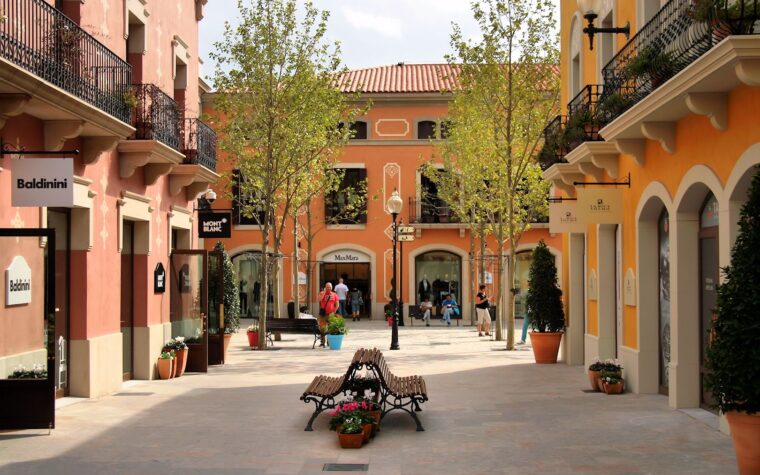
| Outlet brands at a discount | La Roca Village, 40 min out | €€ |
The districts, in order of usefulness
Passeig de Gràcia — the luxury spine
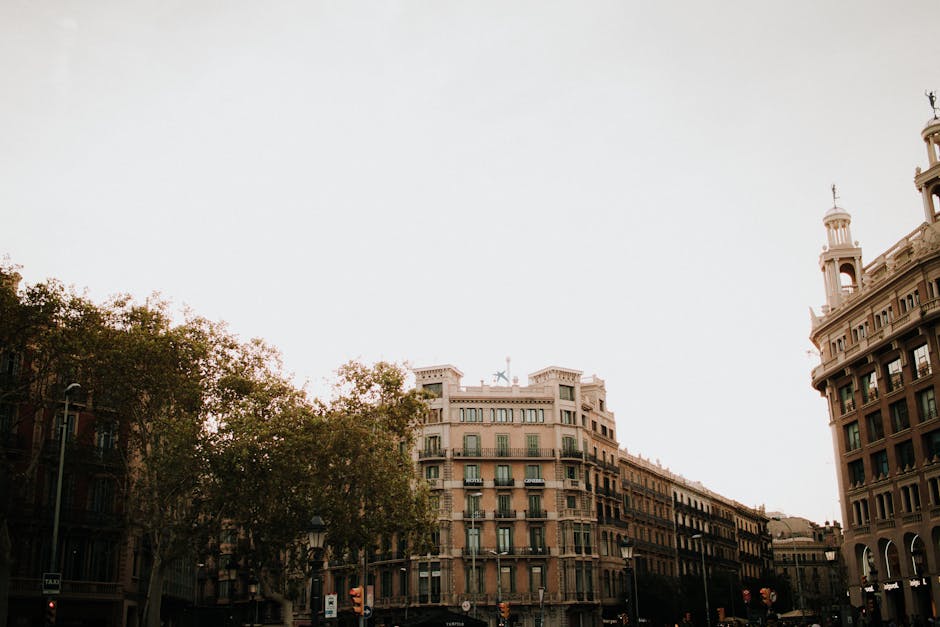
The obvious one, and it earns its place for a reason that has nothing to do with retail: this is also the greatest concentration of modernista architecture in the city. Casa Batlló and La Pedrera are both on it, the Manzana de la Discordia block sits halfway along, and the pavement tiles under your feet were designed by Gaudí. You can do the architecture and the shopping in the same walk, which is not true of any comparable street in Europe.
The retail runs from the international luxury houses at the Plaça de Catalunya end up towards the more approachable Spanish brands nearer Diagonal. Expect Loewe, Chanel, Gucci, Prada and Cartier alongside Zara’s flagship, Massimo Dutti and Uniqlo.
The honest note: nothing here is cheaper than it is at home, and the luxury houses price identically across Europe. The reason to shop Passeig de Gràcia is the Spanish brands — Loewe is a Spanish house, and Zara, Massimo Dutti and Bimba y Lola are all substantially cheaper here than in London or New York. The rest is window shopping with very good architecture. Our Eixample guide covers the buildings.
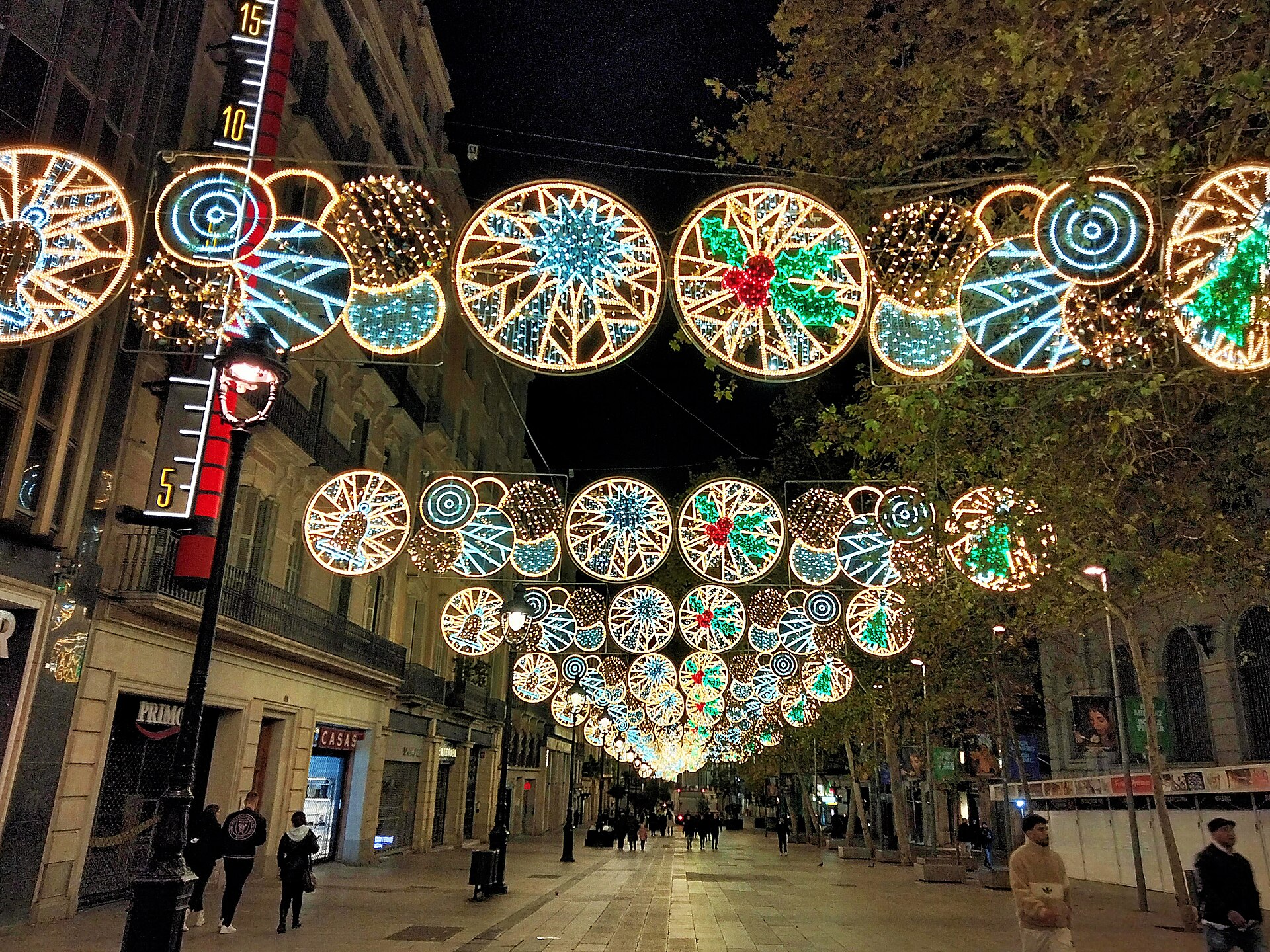
Portal de l’Àngel — the high street
A short pedestrianised avenue running from Plaça de Catalunya down towards the cathedral, and reputedly the most expensive retail rent in Spain. It is the Spanish high street at full volume: Zara, Mango, H&M, Bershka, Sephora, El Corte Inglés a few steps away on the plaça.
It is efficient and it is heaving. If you need a charger, a swimming costume or a jumper because the weather turned, this is where to get it in twenty minutes. If you are looking for anything with character, keep walking.
El Born — the best shopping in the city
If you only have one afternoon, spend it here. The streets around Carrer del Rec, Carrer dels Banys Vells and Passeig del Born hold the densest concentration of genuinely good independent shops in Barcelona: Catalan and Spanish designers, concept stores, small leather workshops, ceramics, and a scattering of the sort of shop that sells exactly one category of thing and does it beautifully.
It is also the most pleasant district to walk, which matters when shopping is a five-hour activity. Medieval streets, the Santa Maria del Mar basilica in the middle, and enough good bars to break the afternoon up properly. See our El Born guide.
Gràcia — small designers and no crowds
Up beyond Diagonal, Gràcia is a former village that never quite joined the city, and its shopping reflects that: small, independent, locally owned, and priced for residents rather than visitors. Carrer de Verdi and Carrer de Torrijos are the two to walk, with clothing by Catalan designers, vintage, independent bookshops, ceramics and a good deal of homeware.
This is where Barcelona residents actually shop, and it shows in the prices. Our Gràcia guide has the wider picture, including where to eat afterwards.
El Raval — vintage, records and streetwear
Carrer de la Riera Baixa is the vintage street: a short run of second-hand clothing shops, record stores and skate shops that has been there since the 1990s. It is scruffy, cheap, and by some distance the most interesting place in the city to buy clothes if you are under thirty or dress as though you are.
The surrounding Raval also holds independent bookshops, art supplies and the MACBA shop, which is one of the better museum shops in Spain. Ordinary street awareness applies here after dark.
The Gothic Quarter — old shops and a lot of tat
The Gothic Quarter contains both extremes. On one side, a handful of shops that have been trading for well over a century and are genuinely remarkable — a candle shop, an espadrille workshop, a herbalist, a shop selling nothing but hats. On the other, an unbroken run of flamenco-dress fridge magnets and mass-produced “handmade” ceramics that were made nowhere near here.
The rule is simple: the further you get from the main tourist arteries, the better it gets. Carrer de la Palla and Carrer dels Banys Nous for antiques and old bookshops; Carrer d’Avinyó for younger independent fashion. Our Gothic Quarter guide maps the streets.
Diagonal and L’Illa — the malls
Avinguda Diagonal west of Passeig de Gràcia is the local upmarket shopping axis, with L’Illa Diagonal and El Corte Inglés Diagonal as the anchors, plus Pedralbes Centre. It is where affluent Barcelona shops, it is air-conditioned, and it opens straight through from 10:00 to 21:00 without the afternoon closure. In August that last point is worth more than it sounds.
What is actually worth buying
The useful question is not where to shop but what to carry home. These are the things Barcelona does better or cheaper than elsewhere.
- Espadrilles. The traditional Catalan rope-soled shoe, still hand-made in a couple of long-established Gothic Quarter workshops. Around €25–60 depending on style, and they will fit them to you properly.
- Leather. Spanish leather goods are excellent and considerably cheaper than Italian equivalents. Loewe at the top end, Camper for shoes, and a number of small workshops in El Born making bags to order.
- Ceramics. Genuine Catalan and Spanish ceramics — as opposed to the imported kind — are worth carrying. Look for pieces with a maker’s mark and expect to pay accordingly.
- Olive oil and tinned seafood. The single best-value thing to bring home from Spain. A tin of good Galician cockles or Cantabrian anchovies costs a fraction of what it does abroad, travels perfectly and is a far better gift than a fridge magnet.
- Turrón, chocolate and saffron. All cheap here, all expensive elsewhere. Buy saffron in a proper delicatessen rather than at a market stall aimed at tourists — the price difference reflects the quality difference.
- Cava. Half the price of the equivalent champagne and, from a good Penedès producer, genuinely excellent. See our Penedès wine guide if you want to buy at the source.
- Spanish high-street fashion. Zara, Massimo Dutti, Mango and Bimba y Lola are all noticeably cheaper in Spain than abroad, and the stock is better.
- Design objects. Barcelona has a serious design culture, and the shops attached to MACBA, the Fundació Miró and the Design Museum sell things you will not find at home.
- Books and prints. Independent bookshops are thriving here in a way they are not in most of Europe, and the second-hand print and poster trade around Carrer de la Palla is genuinely good.
What is not worth buying
Being useful means being blunt about this.
- Football shirts from street stalls. They are counterfeit, they are badly made, and the club shops are not much more expensive. Buy at the official store or do not bother.
- “Handmade” ceramics on Las Ramblas. They are neither handmade nor local. The mark-up is enormous and the same items appear in every tourist strip in southern Europe.
- Flamenco anything. Flamenco is Andalusian. Buying a flamenco dress in Barcelona is like buying a kilt in Cornwall — nobody here will be impressed, and the Catalans least of all.
- Saffron from a market stall aimed at visitors. Frequently adulterated or simply dyed safflower. Buy it in a proper delicatessen.
- Anything from a shop on Las Ramblas. As a general rule with very few exceptions, the rents on that street are paid by mark-ups on people who will never come back.
- Duty-free at the airport. On alcohol and tobacco within the EU there is no saving at all; the “duty free” shop at El Prat is simply a shop.
Markets
Barcelona has around forty municipal markets and they are the best shopping in the city that does not involve clothes. Three matter most to visitors.
- La Boqueria, on Las Ramblas — the famous one, extraordinary to look at and now heavily geared to visitors. Go early, go for the produce and the seafood counters at the back rather than the fruit-juice stalls at the front, and accept that you are sharing it with several thousand people.
- Santa Caterina, in Sant Pere — the one with the wave-shaped coloured roof, five minutes from the cathedral and a fraction as busy as La Boqueria. This is where to buy food you actually intend to eat.
- Sant Antoni — restored, magnificent, and largely local. On Sundays the surrounding market becomes a book and collectors’ fair that has been running for decades and is one of the best free things to do in the city.
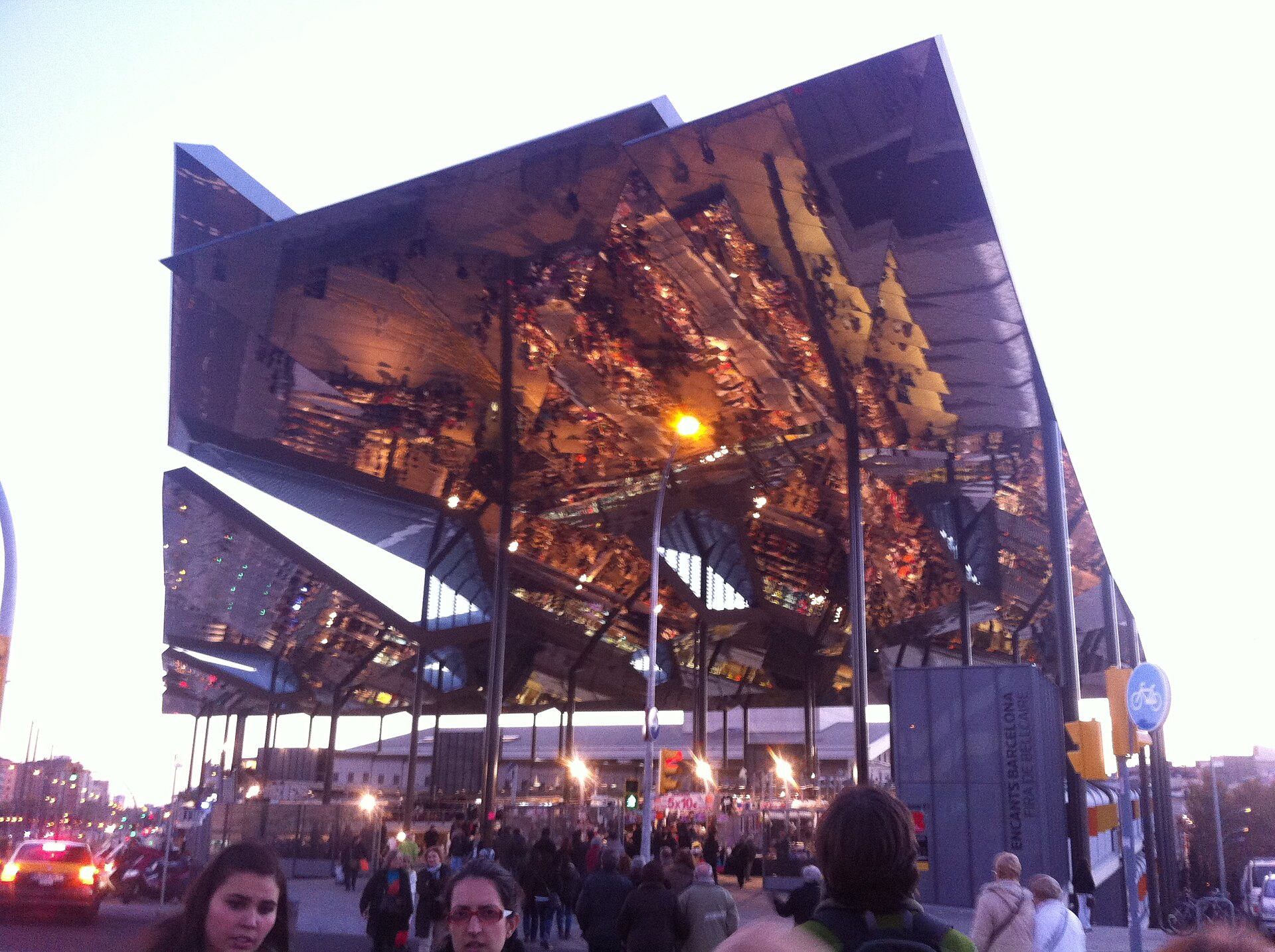
Els Encants, out at Glòries, is the flea market: a genuinely ancient institution — one of the oldest in Europe — rehoused in 2013 under a spectacular mirrored canopy. It runs several days a week and holds auctions in the morning. Most of it is junk, which is the point; the pleasure is in the hunt. Our Barcelona markets guide has the full list and the opening days.

Opening hours, and the Sunday problem
This trips up more visitors than anything else on this page, so it is worth being precise.
- Independent shops generally open Monday to Saturday, roughly 09:30 or 10:00 to 14:00, then close for the afternoon and reopen from about 17:00 to 20:00. Many small shops do not open on Saturday afternoons at all.
- Chains, department stores and malls open straight through, roughly 10:00 to 21:00 or 22:00, Monday to Saturday.
- Sunday is closed, with one significant exception. Shops inside the designated high-tourist-influx zone — which covers Ciutat Vella and most of the Eixample — are permitted to open on Sundays and public holidays only between 15 May and 15 September, and only from 12:00 to 20:00.
- Outside that window, a Sunday in Barcelona is not a shopping day. Markets, restaurants, museums and the big attractions all operate; the shops do not. Plan accordingly.
- Public holidays follow Sunday rules, and Catalonia has a lot of them. 25 and 26 December in particular close the city almost completely.
The sales — rebaixes
Spain’s sales are seasonal and, by tradition, substantial. The winter rebaixes start around 7 January, immediately after Three Kings, and run into late February or early March. The summer rebaixes start in early July and run through August.
Two practical points. The discounts are real and the first fortnight is when the good stock goes, so the first week of January and the first week of July are when to be here. And the sale periods are no longer legally fixed as they once were, so individual retailers start and end at slightly different times — the dates above are convention rather than regulation. Our month-by-month guide puts them in the context of the rest of the calendar.
Tax-free shopping for non-EU visitors
If you live outside the EU you can reclaim Spanish IVA — 21% on most goods — on purchases you take home. Spain abolished its minimum-spend threshold, so any purchase qualifies.
- Ask at the till, with your passport. The shop issues a DIVA form, usually digitally.
- Validate before check-in at the DIVA self-service kiosks at El Prat. Scan the barcode; a green screen means you are done. Occasionally you will be sent to a customs desk to show the goods, which is why you do this before you check your bags.
- Collect the refund at the operator’s desk in the terminal, or take the slower card refund.
- Expect 12–16% back, not 21%, after the refund operator’s commission.
- Allow 45 extra minutes at the airport. The kiosks queue badly at the morning peak — see our El Prat guide.
The old shops, and why they still exist
Barcelona has a formal category for this: emblematic establishments, a protected list of businesses whose premises, fittings and signage the city has designated as heritage. It exists because the rent rises of the 2010s were killing century-old shops at a rate that alarmed even the property industry, and it means a number of extraordinary places are still trading in the Gothic Quarter and El Born rather than having become another phone-case kiosk.
A handful worth seeking out. All are long-established, all are small, and all keep traditional hours with an afternoon closure — check before making a special journey, because these are the shops most likely to shut for a fortnight in August.
- Cerería Subirà, on Baixada de Llibreteria — a candle shop trading since 1761 and generally reckoned the oldest shop in Barcelona. The double staircase and the interior are worth the visit even if you do not want a candle, and you probably will.
- La Manual Alpargatera, on Carrer d’Avinyó — espadrilles made on the premises since the 1940s, fitted properly, in a workshop that has shod a great many people you have heard of and does not make a fuss about it.
- Herboristeria del Rei, tucked off Carrer del Vidre — a herbalist since the 1820s, with a cabinet-lined interior that has barely changed. Dried herbs, teas, soaps.
- Sombrerería Obach, on Carrer del Call in the old Jewish quarter — hats, since the 1920s, and staff who will tell you honestly that the one you have chosen is wrong for your head.
- Casa Gispert, on Carrer dels Sombrerers in El Born — roasted nuts, dried fruit and chocolate since the 1850s, still using a wood-fired roaster at the back. One of the best things you can carry home in a suitcase.
- Vila Viniteca, also in El Born — a serious wine shop with an equally serious food shop opposite. This is where to buy cava and Priorat if you want something better than supermarket stock.
- Papabubble, on Carrer Ample — handmade boiled sweets, pulled and cut in the window. Cheap, theatrical and unfailingly good with children.
Catalan and Spanish brands worth knowing
Most visitors know Zara and stop there. The interesting middle ground is a set of Spanish and specifically Catalan labels that are either unavailable at home or considerably cheaper here.
- Camper — Mallorcan, founded 1975, the best-known Spanish shoe brand and a fixture on Passeig de Gràcia and in El Born.
- Munich — a Catalan sneaker company that started making handball shoes in the 1930s and is now a proper streetwear label. Rarely stocked outside Spain.
- Custo Barcelona — the loud, printed, unmistakably Barcelona label, founded here in the 1980s. You will either love it or find it unbearable; there is no middle position.
- Desigual — also founded in Barcelona, also colourful, considerably cheaper in Spain than in its overseas stores.
- Bimba y Lola — Galician, mid-priced bags and accessories, and one of the labels where the price difference between Spain and abroad is most obvious.
- Adolfo Domínguez and Pedro del Hierro — grown-up Spanish tailoring at prices that would be startling in London.
- Loewe — Spanish, founded 1846, and the leather is exceptional. Priced as luxury everywhere, so buy it here for the range rather than the discount.
- Lupo, Bagués-Masriera and the Barcelona jewellers — the modernista jewellery tradition survives, and Masriera’s enamel pieces in particular are unlike anything you will find elsewhere.
A shopping walk that actually works
Half a day, on foot, covering the range rather than one price band. Start after 10:00, when things open, and build in an afternoon gap — a lot of the small shops close between 14:00 and 17:00, and fighting that is pointless.
- Plaça de Catalunya, 10:00. El Corte Inglés for anything practical you have forgotten, then walk down Portal de l’Àngel briskly.
- Carrer de la Palla and Carrer dels Banys Nous, 10:45. Antique shops, old prints, second-hand books. Quiet, cheap to browse, and the prettiest stretch of the Gothic Quarter.
- Baixada de Llibreteria and Carrer d’Avinyó, 11:30. The old shops — candles, espadrilles, hats.
- Lunch in El Born, 13:30. Preferably somewhere with a menú del dia; see our tapas guide.
- Carrer del Rec and Passeig del Born, 15:00. Independent design, concept stores, ceramics. This is the productive part of the day.
- Casa Gispert and Vila Viniteca, 17:30. Buy the things that go in the suitcase: nuts, chocolate, wine, oil.
- Passeig de Gràcia, 18:30, if you have energy. Otherwise skip it and look at the buildings on another day, which is the better use of it anyway.
If you would rather have the walk laid out as a full itinerary with timings and stops, our Barcelona walking tours guide covers the routes and which guided options are worth paying for.
Practicalities that save money and irritation
Payment
Cards are accepted essentially everywhere, including market stalls. Two traps. First, always decline dynamic currency conversion — if the card terminal offers to charge you in pounds or dollars, say no; it costs 3–6% for nothing. Second, a small number of very traditional shops still have a minimum card spend, usually around €10. Our money guide covers the rest.
Sizing
Spanish and Italian sizing runs small, particularly across the shoulders and in shoes. A British 42 is often a Spanish 44. Shoe sizes use the European scale throughout. Try things on: the return rules here are less generous than you may be used to.
Returns and your rights
Spanish law gives you a guarantee against defects, but it does not give you an automatic right to return something simply because you changed your mind. Many shops offer exchange or credit within a stated period as a matter of policy, and plenty of small independents offer nothing at all. Sale items are frequently final. Ask at the till before you buy, and keep the receipt.
Every registered shop must hold official complaint forms — fulls de reclamació — and must produce one on request. Asking for one is a recognised escalation and resolves most disputes quickly.
Carrying it home
Two things routinely go wrong. Liquids — oil, wine, vermouth — cannot go in hand luggage, so either check a bag or buy after security. And ceramics need real packing; the shop will usually wrap them properly if you ask, and it is worth waiting the extra five minutes.
Haggling
Not a thing in Barcelona shops, and attempting it in a boutique will be met with polite bafflement. The exception is Els Encants and the informal end of the flea markets, where a modest negotiation is expected and enjoyed.
Souvenirs worth having, under €20
The gap in most shopping guides. These are the things that are cheap, genuinely local, and will not embarrass you at home.
- A tin of Cantabrian anchovies or Galician cockles from a good delicatessen — €8–18, and a revelation to anyone who has only had the supermarket kind.
- A bar of good Catalan chocolate, or a packet of neules, the rolled wafers eaten at Christmas.
- A bottle of cava from a small Penedès producer — €10–15 buys something considerably better than most €30 champagne.
- A bottle of Catalan vermouth. Vermut is a genuine local institution and the bottles are cheap.
- A tile or small ceramic piece with a maker’s mark, from an El Born workshop rather than a Ramblas stall.
- A print or old poster from the antique shops on Carrer de la Palla — €10–20 and far better than a photograph of the Sagrada Família.
- A bag of Casa Gispert’s roasted almonds, which cost very little and do not survive the journey home in any household.
- A book from one of the independent bookshops — Catalan poetry in translation, or a design monograph from the MACBA shop.
Shopping in the rain, and shopping with children
Almost all of Barcelona’s shopping is outdoors, in streets, which is glorious in May and grim in October. The wet-weather options are the malls on Diagonal, El Corte Inglés at Plaça de Catalunya, and the covered markets — Santa Caterina and Sant Antoni both work perfectly well as a rainy hour. Our rainy day guide has the rest.
With children, the honest answer is that clothes shopping is not a family activity anywhere. What does work: Papabubble’s sweet-making window, the market halls, the museum shops at CosmoCaixa and MACBA, and Els Encants, which is essentially an enormous treasure hunt. Our Barcelona with kids guide covers days that everyone enjoys rather than tolerates.
Getting between the shopping districts
Everything on this page is reachable on the metro in under twenty minutes from Plaça de Catalunya, and most of it is walkable from most of the rest. The one exception is Els Encants, which is genuinely out at Glòries and worth the ride.
| District | Nearest metro | Walk from Plaça de Catalunya |
|---|---|---|
| Portal de l’Àngel | Catalunya (L1, L3) | On the doorstep |
| Passeig de Gràcia | Passeig de Gràcia (L2, L3, L4) | 5 min to the bottom end |
| Gothic Quarter | Liceu or Jaume I (L3, L4) | 10 min |
| El Born | Jaume I (L4) | 15 min |
| El Raval (Riera Baixa) | Liceu or Sant Antoni (L3, L2) | 15 min |
| Gràcia (Verdi) | Fontana or Joanic (L3, L4) | 30 min uphill; take the metro |
| Diagonal malls | Maria Cristina (L3) | Metro, 15 min |
| Els Encants | Glòries (L1) | Metro, 10 min |
| Sant Antoni market | Sant Antoni (L2) | 20 min |
If you are moving between several of these in a day, a T-casual or a travel card pays for itself quickly — our Barcelona metro guide explains which ticket makes sense for how long you are staying.
Shopping, tourism and the local question
Worth saying, because it changes how you shop and this site would rather be honest about it than not. Barcelona has been arguing with itself about tourism for well over a decade, and retail is one of the sharper edges of that argument. Rising rents in Ciutat Vella pushed out hundreds of neighbourhood businesses in favour of souvenir shops and international chains, and the city’s response — the protected register of emblematic establishments, restrictions on new souvenir shops in the old town, zoning limits on ground-floor uses — exists precisely because residents pushed for it.
What this means in practice for a visitor is straightforward and not remotely burdensome. Money spent in an independent shop stays in the neighbourhood; money spent on a mass-produced magnet leaves it immediately. Buying a tin of anchovies at Santa Caterina, a pair of espadrilles from a workshop that makes them, or a bottle of cava from a wine shop rather than a chain is not a sacrifice — those things are better and frequently cheaper. It is simply where the good shopping is anyway.
The corollary is worth stating too: nobody in Barcelona objects to visitors shopping. The complaint is about the monoculture that follows when only one kind of shop can afford the rent. Walking two streets off the main arteries is the single most useful thing you can do, for your own purchases and for the city.
Common mistakes
- Arriving at 15:00 and finding everything shut. The afternoon closure is real and catches almost every first-time visitor. Shop mornings and evenings.
- Planning a shopping day on a Sunday outside the 15 May–15 September window. The city will be open; the shops will not.
- Buying liquids after you have checked in. Oil, wine and vermouth cannot go through security in hand luggage. Buy them before you pack, or airside.
- Doing the VAT refund at the last minute. The kiosks at El Prat queue badly, and you must validate before you check your bags.
- Assuming everything is negotiable. It is not, outside the flea markets.
- Doing La Roca Village on a short first visit. A whole day for a discount you can mostly replicate in the January or July sales in the city.
Frequently asked questions
Where is the best place to shop in Barcelona?
El Born for independent design and small shops, Passeig de Gràcia for flagships and architecture in the same walk, Gràcia for local designers at local prices, and El Raval for vintage. Portal de l’Àngel is the mainstream high street and is efficient rather than interesting.
Are shops open on Sundays in Barcelona?
Mostly not. Shops in the designated tourist zone — Ciutat Vella and much of the Eixample — may open on Sundays and public holidays only between 15 May and 15 September, and only from 12:00 to 20:00. Outside that window, expect closed shutters, though markets, museums and restaurants operate normally.
What should I buy in Barcelona?
Espadrilles, Spanish leather goods, good olive oil, tinned Cantabrian or Galician seafood, turrón, cava, Catalan ceramics with a maker’s mark, and Spanish high-street fashion — Zara, Massimo Dutti and Bimba y Lola are all cheaper here than abroad.
Is shopping in Barcelona cheaper than in other European cities?
For Spanish brands, yes, and noticeably. For international luxury, no — the houses price uniformly across Europe. For food and drink, dramatically cheaper. For electronics, no.
When are the sales in Barcelona?
The winter rebaixes begin around 7 January and run to late February; the summer rebaixes begin in early July and run through August. The first fortnight of each is when the stock is worth having.
Can I claim VAT back on shopping in Barcelona?
If you live outside the EU, yes, with no minimum spend. Request a DIVA form at the till with your passport, validate it at the self-service kiosks at El Prat before check-in, and collect the refund in the terminal. Expect roughly 12–16% back after commission.
Is La Roca Village worth the trip from Barcelona?
It depends on what you want. It is genuinely cheaper for leather goods, shoes and out-of-season outerwear, and no cheaper at all for sportswear or current-season fashion. On a short first visit it is a poor use of a whole day — our full La Roca Village guide sets out both sides.
Where do locals shop in Barcelona?
Gràcia’s Carrer de Verdi and Torrijos, the neighbourhood markets, Sant Antoni, and the Diagonal malls for anything mainstream. Almost nobody who lives here shops on Las Ramblas or Portal de l’Àngel by choice.
What is Els Encants?
Barcelona’s flea market, at Glòries, and one of the oldest in Europe. It was rehoused in 2013 under a mirrored canopy that reflects the stalls below. Most of the stock is junk; the pleasure is in finding the exception, and there are morning auctions several days a week.
Is Passeig de Gràcia worth visiting if I am not buying anything?
Absolutely. It is simultaneously the luxury retail street and the greatest concentration of modernista architecture in the city, with Casa Batlló and La Pedrera both on it and Gaudí-designed pavement tiles underfoot. Walk it for the buildings and ignore the shops.
Where can I buy food to take home from Barcelona?
Santa Caterina or Sant Antoni market for quality without the crowds, and a proper delicatessen for saffron, oil and tinned seafood. La Boqueria is spectacular to look at but priced for visitors at the front of the hall.
Related Barcelona Guides
- La Roca Village — the outlet day trip, honestly assessed.
- Barcelona’s markets — all forty of them, and the ones worth a detour.
- El Born — the best district for independent shopping, with the bars to break it up.
- The Eixample — Passeig de Gràcia’s architecture, which is the real reason to walk it.
- Gràcia — where residents shop, and what it costs.
- Money and payments — cards, currency conversion traps and tipping.
- The complete Barcelona travel guide — the hub for everything else on this site.
Photo Credits
Portal de l’Àngel at Christmas: 105 Avinguda del Portal de l’Àngel (Barcelona), Nadal 2024 by Enric, CC BY 4.0, via Wikimedia Commons.
Els Encants flea market: Barcelona – Els Encants Nous (Novembre 2013) 04 by Jahidalgoaloy, CC BY-SA 4.0, via Wikimedia Commons.