We get commissions for bookings made through this post. Booking links, and any accommodation options shown on the page, are handled by a partner that adds commission tracking automatically. It never costs you more, and it never affects what we recommend. Affiliate disclosure
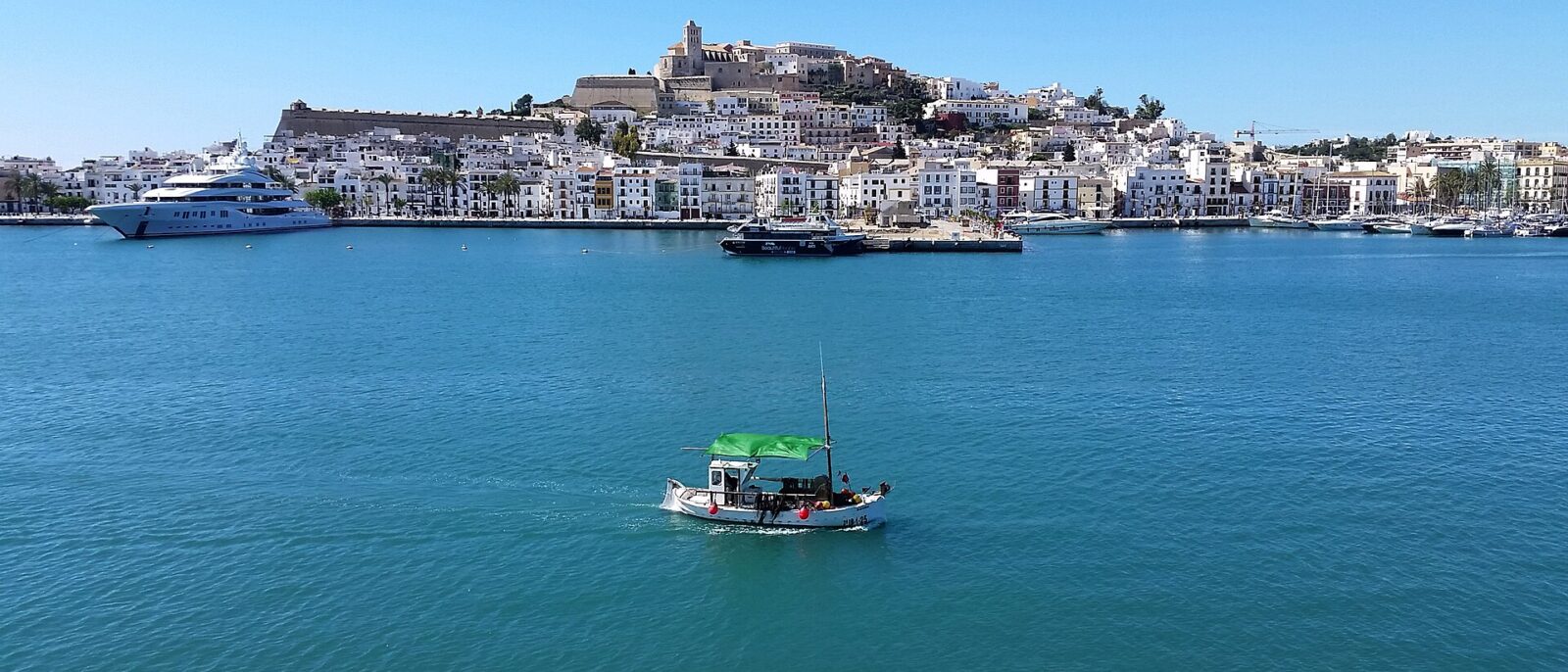
Take the evening ferry out of Barcelona and you fall asleep somewhere off the Catalan coast; wake early, climb up to the deck with a coffee, and the first thing you see is the old walled town of Dalt Vila, white houses stacked up beneath the cathedral, catching the first sun over Ibiza harbour. The same journey by air takes about an hour and five minutes once you are on the plane, and the rest of the day goes on airports. That, in short, is the choice for Barcelona to Ibiza: a slow, cheap-ish, surprisingly civilised night at sea, or a fast hop that is quick in the air and slower than it looks door to door.
This guide compares the ferry and the flight honestly, with 2026 prices, times and the practical details: which companies sail and fly, what the overnight crossing is really like, when it is worth taking a cabin, what to do if you are bringing a car, and how the two options compare for one person, a couple and a family. For every other route out of Barcelona, see our onward travel guide. Prices were checked in October 2026; both fares and timetables are highly seasonal, so treat them as the right order of magnitude.
Barcelona to Ibiza at a glance
| Flight | Ferry | |
|---|---|---|
| Time on board | About 1 hour 5 minutes | About 8–9 hours, usually overnight |
| Door to door | About 3–4 hours | About 10–11 hours, but you sleep through most of it |
| Price | From about €30 off-peak; far more in July and August | From about €30 for a seat; cabins and vehicles extra |
| Frequency in summer | Many flights a day, mostly Vueling, plus Ryanair | A few crossings a day across three companies |
| Luggage | Low-cost fares charge for checked bags | Generous; bring what you like |
| Vehicles | No | Yes: cars, motorbikes and bicycles |
| Best for | Short trips, light packers, anyone short of time | Drivers, heavy packers, families, budget travellers who can sleep anywhere |
The short answer
Fly if you are going for a long weekend, travelling light, or simply want to be on a beach by lunchtime. In summer there are flights almost every hour, the flight itself is short, and booked well ahead the fares can be low.
Take the overnight ferry if you are bringing a car, a lot of luggage or a pet, if you are a family for whom four plane tickets plus bag fees add up quickly, or if you like the idea of saving a night’s hotel and arriving at dawn. Book a cabin if you want to sleep properly; the reclining seat is cheap, but it is a long night.
Flying from Barcelona to Ibiza
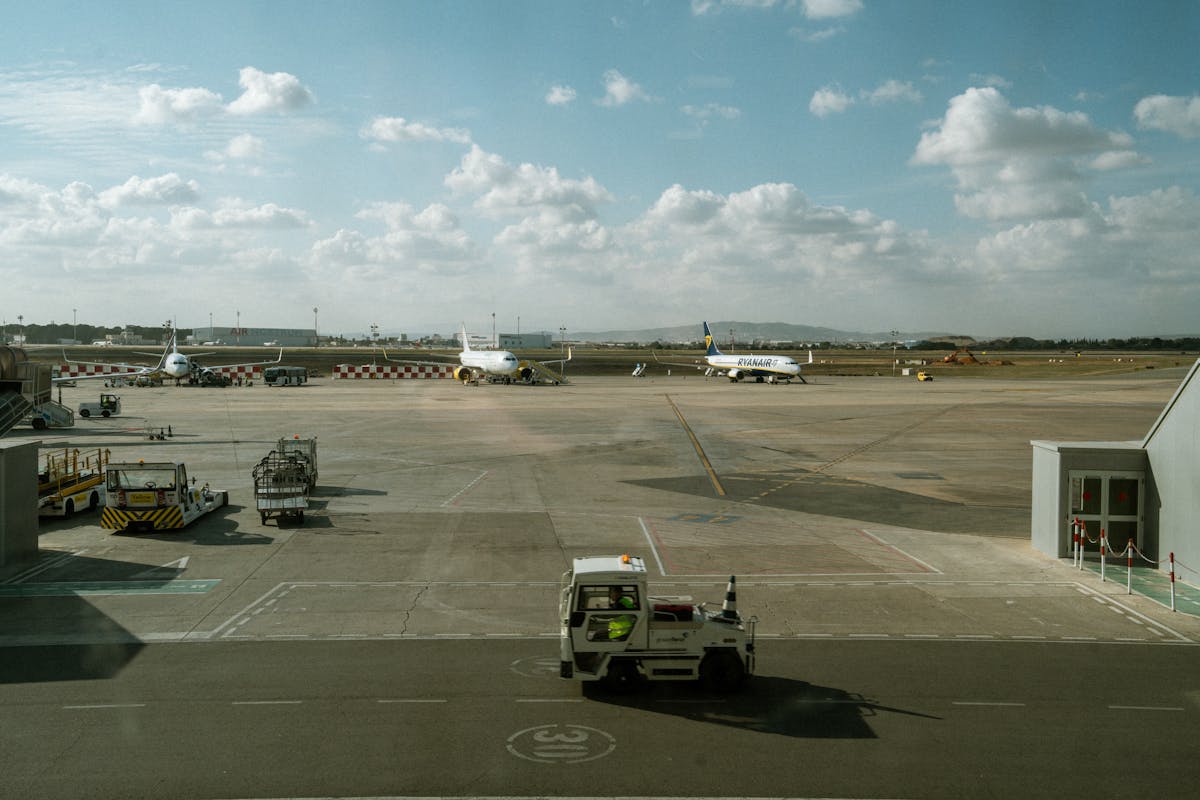
The flight is one of the shortest on the Spanish network: about an hour and five minutes in the air from El Prat to Ibiza airport. Vueling, which is based at Barcelona, flies the route the most, around thirteen or fourteen times a day at the height of summer, and Ryanair adds a few more daily flights. In winter the timetable is much thinner.
- Fares start at around €30 one way off-peak, and booking about six weeks ahead tends to find the lower prices. In July and August, and around the opening and closing parties of the club season, fares rise steeply, especially on Fridays and Sundays.
- Bags are where low-cost fares catch people out. The cheapest tickets usually include only a small under-seat bag; a cabin case or a checked bag costs extra, and on a short route that can double the price.
- Door to door, the flight is not as quick as it looks. Allow about 30 to 40 minutes from the centre of Barcelona to the airport, an hour or more for bag drop and security, the flight, then a short bus or taxi ride from Ibiza airport into Ibiza town. Three to four hours is realistic.
Our Barcelona airport guide explains El Prat’s two terminals, and our airport transfer guide compares the ways to get there from the city.
From Ibiza airport into town
Ibiza airport is on the south of the island, only a few kilometres from Ibiza town. Buses run from outside the terminal to Ibiza town, Sant Antoni and the main beach resorts, and the ride into town takes around 15 to 20 minutes. Taxis wait outside too, but in high summer the queue for them can be long and the island’s taxi fleet is notoriously stretched, especially late at night. If you are arriving at a busy time with a lot of luggage, a pre-booked transfer or a hire car collected at the airport saves a wait.
Booking tips
- For flights, book about six weeks ahead for the best fares, avoid Friday evenings and Sunday afternoons in summer if you can, and price in your bags before you compare.
- For the ferry, compare the three companies on a booking site, then book direct with the one you choose; check what the cheapest fare allows if you need to change it.
- Book cabins and vehicle space first. Seats rarely sell out; cabins and car spaces do, especially on summer weekends.
- Check the return before the outward. At the end of the season, and around the closing parties, the boats and planes back to Barcelona can be fuller than the ones going out.
The ferry from Barcelona to Ibiza
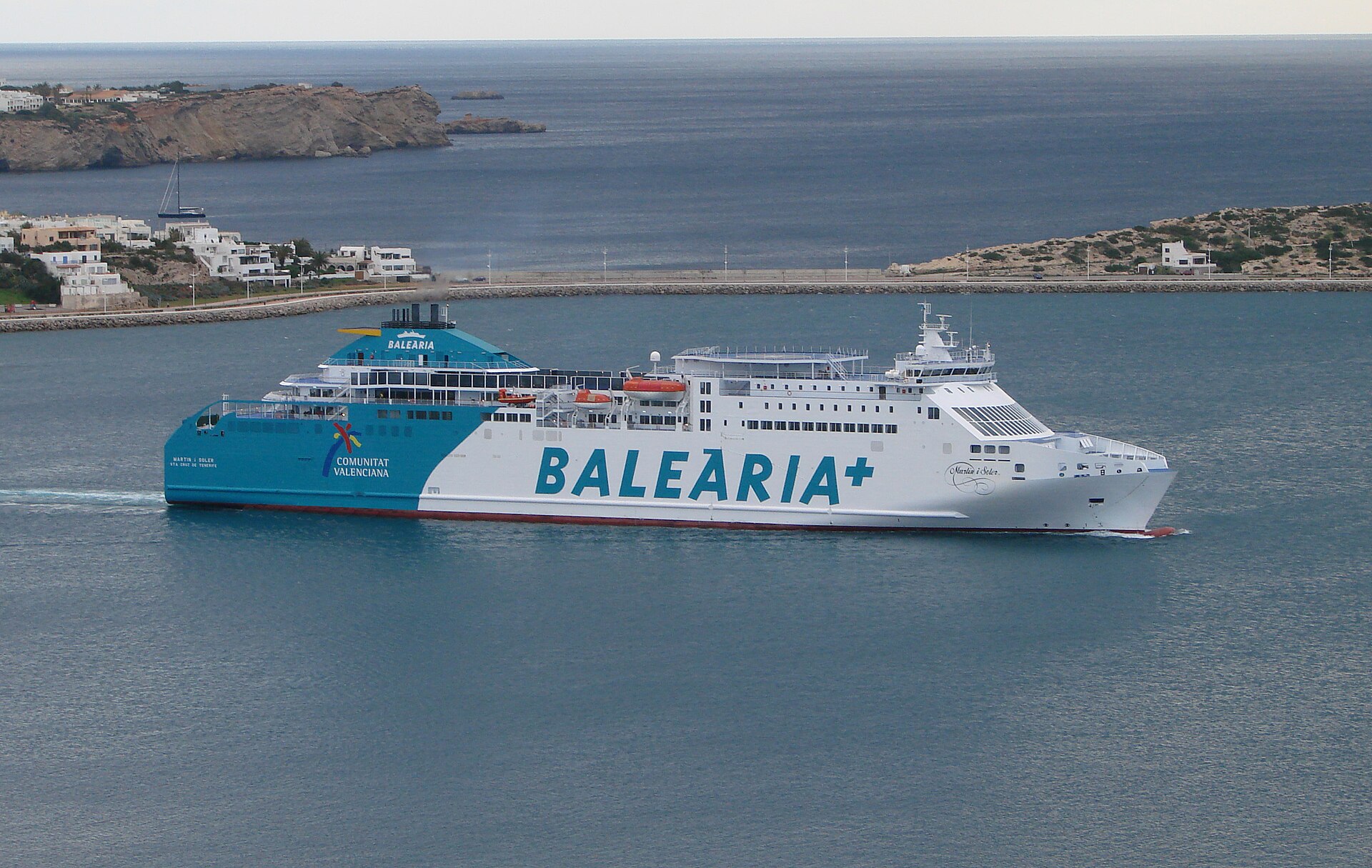
Three companies sail between Barcelona and Ibiza: Baleària, Trasmed and GNV. Most crossings take around eight to nine hours, and the classic sailing leaves Barcelona in the evening and arrives in Ibiza town early the next morning. In summer there are several crossings a day between the three companies; in winter there are fewer, and the timetable is worth checking well before you travel.
Prices and classes
- A seat, usually a reclining armchair in a lounge, starts at around €30 one way, and more in summer.
- A cabin costs considerably more, but for an overnight crossing it is the difference between arriving rested and arriving wrecked. Cabins usually have two to four berths and a private bathroom, and in high summer they sell out early.
- Vehicles, from bicycles to cars and motorbikes, are charged separately, by size.
- Pets are carried on most crossings, with conditions, and some ships have pet-friendly cabins. Check the company’s rules before you book.
On board
These are big, comfortable ships rather than little island boats: there are bars, a self-service restaurant, shops, lounges and outside decks. The food is ordinary and not cheap, so many people bring a picnic for the evening. If you have only a seat, bring a warm layer, an eye mask and earplugs; the lounges are kept cool and the lights rarely go fully down.
Leaving Barcelona
The Balearic ferries leave from the ferry terminals in Barcelona’s port, and the terminal depends on the company, so check your ticket and allow time to find it. The port is large and the terminals are not all close to public transport, so with luggage a taxi is the easy option. Foot passengers usually need to check in well before departure, and drivers earlier still; your booking will tell you exactly how early.
Arriving in Ibiza
Ferries arrive at the port of Ibiza town, Eivissa, on the south-east coast, either at the quays close to the old town or at the outer Botafoc quay across the bay, depending on the ship. From the outer quay it is a short taxi or bus ride into town; from the inner quays you can walk to the old town and the marina. Allow for the fact that you will arrive very early: hotels will not have your room ready until the afternoon, so plan breakfast in the port, a walk up to Dalt Vila, or a morning on the beach, and ask your hotel whether it can store bags.
The overnight crossing, step by step
- Early evening: get to the right terminal in Barcelona’s port with time to spare, by taxi if you have luggage. Foot passengers check in and walk on; drivers queue at the vehicle lanes earlier.
- Boarding: find your cabin or your seat, drop your things, and head up on deck. Watching Barcelona slide past, with Montjuïc and the cruise ships lit up behind you, is one of the best moments of the trip.
- Evening at sea: dinner in the self-service restaurant or your own picnic, a drink in the bar, and an early night.
- Dawn: the ship slows as it approaches Ibiza; get up in time to see Dalt Vila from the deck.
- Arrival: foot passengers walk off; drivers return to the car deck when called and drive off once the ramp is down. Then breakfast in the port and the day begins, a long way ahead of anyone on the first flight.
What to pack for the crossing
- An overnight bag you can keep with you. If you are taking a car, you will not be allowed back to the vehicle deck during the crossing, so everything you need for the night must come up with you.
- A warm layer. The lounges and cabins are air-conditioned, sometimes fiercely.
- Earplugs and an eye mask, especially if you are sleeping in a seat.
- Snacks and water, because the on-board food is ordinary and priced accordingly.
- Seasickness remedies, if you need them, taken before you sail rather than once you feel ill.
- A swimsuit in the top of your bag. You will arrive hours before your room is ready, and the beach is the best place to wait.
Ferry or flight: the real costs
Per-person prices tell only half the story, because the ferry saves a night’s accommodation and the flight adds bag fees. Here is how the two compare for different groups, using typical off-peak prices; in high summer, everything is more expensive and the gap narrows or widens with demand.
| Group | Flight | Ferry | Our pick |
|---|---|---|---|
| One person, a backpack | Cheap if booked early, with only an under-seat bag | Cheap with a seat; you arrive tired | Flight, unless you want to save a hotel night |
| A couple with suitcases | Two fares plus two checked bags | Two seats or a shared cabin, luggage included | The ferry with a cabin, if you have the time |
| A family of four | Four fares plus bags, and an early start | One cabin for four, plus a car if you want one | Ferry, almost always |
| Anyone bringing a car | Not possible | Vehicle fare plus passengers | Ferry |
| A long weekend | Hours, not a night | Two nights at sea out of three | Flight |
The overnight crossing, honestly
The night ferry has a romance the flight cannot match. You board in the evening light, watch Barcelona shrink behind you from the deck with a drink, have dinner, and go to bed. In the morning the island is there. With a cabin, it is a genuinely pleasant way to travel, and it turns the journey into part of the holiday.
Without a cabin, it is a different story. The reclining seats are fine for a few hours and hard work for a whole night; the lounges can be noisy with groups and televisions, and you arrive at dawn having slept badly, with a hot day ahead and a hotel room that will not be ready until mid-afternoon. If you are young, on a budget and good at sleeping anywhere, it is a bargain. If not, pay for the cabin or take the plane.
Two more honest points. First, the Mediterranean is usually calm in summer, but in the cooler months strong northerly winds can make a crossing uncomfortable and occasionally delay or cancel a sailing; if you are prone to seasickness, take precautions and pick a cabin low and in the middle of the ship. Second, the ferry is a commitment of time: if you have only three or four days, spending two nights of them at sea is a poor use of the trip.
Taking a car or motorbike
The ferry is the only way to bring your own vehicle, and on Ibiza, where the best beaches and coves are scattered around the island, having one is very useful. A few things to know:
- Book early in summer. Vehicle space is limited and sells out before passenger space.
- Check your hire car’s terms. Many rental companies do not allow their cars on ferries. If you do not have your own vehicle, it is usually simpler to hire a car on Ibiza itself. Our car rental guide explains the usual conditions in Barcelona.
- Arrive early. Vehicles board before foot passengers, and check-in closes well before departure.
Travelling with children
For families, the ferry has real advantages. Children can move about, there is room for everything from buckets and spades to pushchairs, and a cabin turns the crossing into an adventure rather than an ordeal: put them to bed in Barcelona and wake them up in Ibiza. Bringing the family car also means bringing your own child seats. The flight, on the other hand, is over almost before it starts, which suits toddlers who will not sit still for long, and it avoids the very early arrival that can leave small children exhausted on the first day. If you fly, book seats together in advance and allow plenty of time at El Prat, which is busy with families in summer.
Going on to Formentera
Formentera, Ibiza’s small, flat neighbour, has no airport, so everyone arrives by sea. The usual route is a fast ferry from Ibiza town’s port to La Savina, which takes around half an hour, with frequent sailings in summer from several companies. If you are coming from Barcelona specifically for Formentera, check whether your ferry company sells a through ticket via Ibiza; otherwise, fly or sail to Ibiza and walk across the port to the Formentera boats. Taking a car to Formentera is possible but rarely worthwhile: the island is small enough for bikes, scooters and the bus.
Ferries from Valencia and Dénia
Barcelona is not the only way to Ibiza by sea. Ferries also sail from Valencia and, on the shortest crossing to the island, from Dénia on the Costa Blanca. If you are travelling down the coast anyway, it can make sense to cross from further south. Our Barcelona to Valencia guide covers the first leg.
When to go
Ibiza’s season runs from about May to October. July and August are the peak: the hottest weather, the busiest beaches, the highest prices for flights, ferries and rooms, and the club season in full swing. June and September are, for most people, the best months: warm sea, long days, the clubs open, and slightly lower prices. In May and October the island is calmer and cheaper, and the weather is usually still kind. In winter much of the island closes, there are fewer flights and ferries, and Ibiza becomes a quiet, local place, lovely in its own way but a very different trip.
The big clubs open their seasons with parties in late May and June and close them with parties in late September and early October. Flights and ferries around those weekends fill up fast.
Ibiza in brief
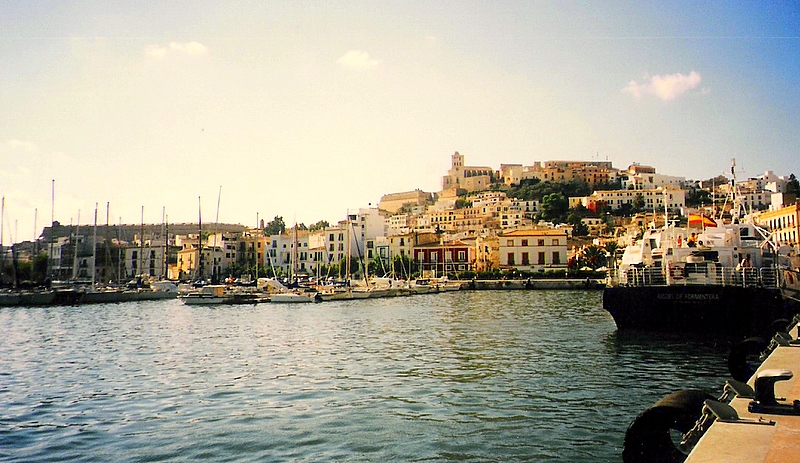
Ibiza is two islands in one, and most visitors only see one of them. There is the famous Ibiza of superclubs, beach parties and sunsets in Sant Antoni; and there is the quieter island of pine-covered hills, whitewashed villages, hippy markets and turquoise coves. A few highlights:
- Dalt Vila, the fortified old town of Ibiza, with its Renaissance walls, cathedral and views across the harbour; it is part of a UNESCO World Heritage Site that also covers the island’s Posidonia seagrass meadows.
- The coves, from busy, beautiful Cala Comte in the west to small, quiet calas in the north. A car or scooter makes them far easier to reach.
- The sunset in Sant Antoni, where the bars along the rocks have made watching the sun go down into an institution.
- The clubs, which are world-famous, open from late spring to early autumn, and very expensive.
- Formentera, the small, flat neighbouring island with some of the clearest water in the Mediterranean, a short ferry ride from Ibiza town.
Like the rest of the Balearic Islands, Ibiza charges its own tourist tax on overnight stays, separate from Barcelona’s, so expect a second line on your hotel bill. Our Barcelona tourist tax guide covers the Catalan side.
Can you do Ibiza as a day trip from Barcelona?
Not sensibly. Even with the first flight out and the last flight back, you would spend half the day in airports and pay peak fares for the privilege, and the ferry is out of the question for a day. Two nights is the realistic minimum: fly out on a Friday evening and back on Sunday night, or take the overnight ferry out and fly back. A week lets you see both sides of the island and add Formentera.
Ibiza on a budget
Ibiza has a reputation as one of the most expensive places in the Mediterranean, and in July and August it earns it. It can be done more cheaply, though:
- Travel in June or September, when the weather is still excellent and prices for flights, ferries and rooms are noticeably lower.
- Take the ferry with a seat if you can sleep anywhere, which also saves a night’s accommodation.
- Stay in a family-run hostal in a village or a smaller resort rather than a hotel in the party hotspots.
- Use the buses, which link the main towns and many beaches, rather than taxis.
- Eat at lunchtime, when many restaurants offer a set menu, and shop at the supermarkets for beach picnics.
- Choose your nights out. The superclubs charge high entry prices and higher drinks prices; the free beach bars, the sunset in Sant Antoni and the smaller clubs cost a fraction.
Mallorca or Menorca instead?
If you are drawn to the islands but not necessarily to Ibiza, Mallorca is the easier hop from Barcelona: ferries to Palma take from about three and a half hours on Baleària’s fast ferry to about eight and a half hours on the overnight boats, with up to five sailings a day all year, and fares from around €20. Menorca, the quietest of the larger islands, is also reached by ferry from Barcelona. Our onward travel guide covers all the Balearic routes.
Frequently asked questions
How long is the ferry from Barcelona to Ibiza?
Most crossings take about eight to nine hours. The classic sailing leaves Barcelona in the evening and arrives in Ibiza town early the next morning.
How much is the ferry from Barcelona to Ibiza?
A seat starts at about €30 one way, more in summer. Cabins, vehicles and pets cost extra, and cabins sell out early in high season.
How long is the flight from Barcelona to Ibiza?
About an hour and five minutes in the air. Door to door, including getting to El Prat, security and the transfer into Ibiza town, allow three to four hours.
Which airlines fly from Barcelona to Ibiza?
Vueling flies the route most often, around thirteen or fourteen times a day in high summer, and Ryanair also operates several daily flights. There are far fewer flights in winter.
Is it cheaper to fly or take the ferry to Ibiza?
For one person travelling light and booking early, flying is often cheaper. For a couple with luggage, and especially for a family or anyone with a car, the ferry is usually better value, particularly with a cabin that saves a night’s hotel.
Can I take my car on the ferry to Ibiza?
Yes. Baleària, Trasmed and GNV all carry vehicles. Book early in summer, and check whether your hire company allows its cars on ferries, because many do not.
Is the overnight ferry to Ibiza comfortable?
With a cabin, yes: it is a pleasant way to travel and saves a night’s accommodation. With only a reclining seat, it is a long night, and you arrive early in the morning before your hotel room is ready.
Where does the Barcelona ferry arrive in Ibiza?
At the port of Ibiza town, either at the quays near the old town or at the outer Botafoc quay, depending on the ship. From Botafoc it is a short taxi or bus ride into town.
Related Barcelona Guides
- Onward travel from Barcelona — every route out of the city, including the other Balearic ferries.
- Barcelona airport — terminals, lounges and getting around El Prat.
- Airport transfers — every way between El Prat and the city.
- Barcelona to Valencia — the route south, and another way to Ibiza.
- The waterfront and port — Barcelona’s harbour.
- Car rental in Barcelona — if you plan to take a car across.
Photo Credits
Dalt Vila above Ibiza harbour: Dalt Vila 20160421 111948 by RoxFuchs, CC BY-SA 4.0, via Wikimedia Commons.
A Baleària ferry arriving in Ibiza: Martin i soler ibiza by Jose Antonio Moreno Monge, CC BY-SA 2.0, via Wikimedia Commons.
Ibiza harbour and Dalt Vila: EIVISSA 03 (1590144509) by Jaume Meneses, CC BY-SA 2.0, via Wikimedia Commons.