We get commissions for bookings made through this post. Booking links, and any accommodation options shown on the page, are handled by a partner that adds commission tracking automatically. It never costs you more, and it never affects what we recommend. Affiliate disclosure
Why Modernist Barcelona Goes Far Beyond Gaudi
Antoni Gaudi gets all the headlines, but the Catalan Modernisme movement that flourished between 1880 and 1910 was a collective effort. Lluis Domenech i Montaner designed the Palau de la Musica Catalana and the Hospital de Sant Pau (both UNESCO World Heritage Sites). Josep Puig i Cadafalch built Casa Amatller and the Casa de les Punxes. Josep Maria Jujol collaborated on Park Guell and designed the Casa Lluis Munoz. Together these architects created the most concentrated stretch of Art Nouveau buildings on earth, and a serious Barcelona architecture trip should include all of them. This guide to barcelona modernist architecture covers the movement beyond Gaudi: the major works, the architects, the principles of modernisme barcelona, and the best routes for experiencing this catalan art nouveau tradition.
Whether you are an architecture enthusiast wanting depth beyond Gaudi or a curious traveller wondering why so many Eixample buildings look extraordinary, this guide gives you the complete picture of domenech i montaner, Puig i Cadafalch, and the wider movement.

Understanding Catalan Modernisme
Modernisme was the Catalan branch of the broader European Art Nouveau movement (Jugendstil in Germany, Liberty in Italy, Modernist style in France). The Catalan version had three distinguishing features:
- Catalan identity: Modernisme emerged alongside the Catalan cultural renaissance (Renaixenca). Buildings often featured Catalan flags, dragons (Saint George), and Catalan inscriptions.
- Total art: Modernist architects designed everything: building, furniture, fabrics, light fixtures, even cutlery.
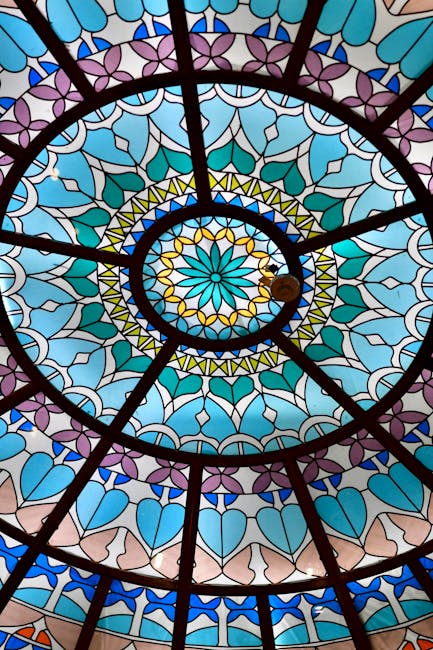
- Decorative excess: Carved stone, wrought iron, mosaic, stained glass, sculpture, and painting all combined in single buildings.
The movement was sustained by the wealthy Catalan industrial class, who built family homes (cases) and commissioned cultural buildings to display their patronage. Most major Modernist buildings are private apartments built between 1880 and 1910.
The Three Main Modernist Architects
Antoni Gaudi (1852-1926)
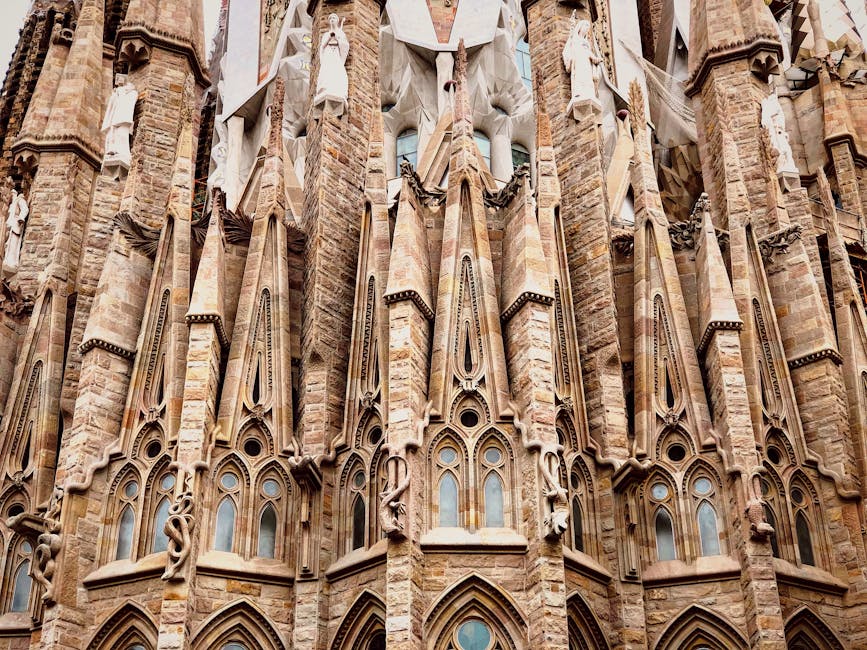
The most famous, with the Sagrada Familia, Park Guell, Casa Batllo, Casa Mila, Casa Vicens, and Palau Guell. Covered in detail in our complete Gaudi buildings list.
Lluis Domenech i Montaner (1850-1923)
The most architectural of the three. His buildings emphasise structural innovation: iron-and-glass construction, exposed brick, and geometric mosaic patterns. Major works include Palau de la Musica Catalana, Hospital de Sant Pau, Casa Lleo Morera, and Casa Fuster.
Josep Puig i Cadafalch (1867-1956)
The most varied. His buildings draw from medieval, neo-Gothic, and Catalan vernacular sources. Major works include Casa Amatller, Casa de les Punxes, and Casaramona (now Caixa Forum).
Josep Maria Jujol (1879-1949)
Gaudi’s collaborator and a major architect in his own right. His own work tends to be smaller-scale residential.
Enric Sagnier (1858-1931)
Prolific Modernist architect with hundreds of buildings in Barcelona. Major works include Casa Mulleras and the Aduana (Customs House).
The Top Non-Gaudi Modernist Sites
1. Palau de la Musica Catalana
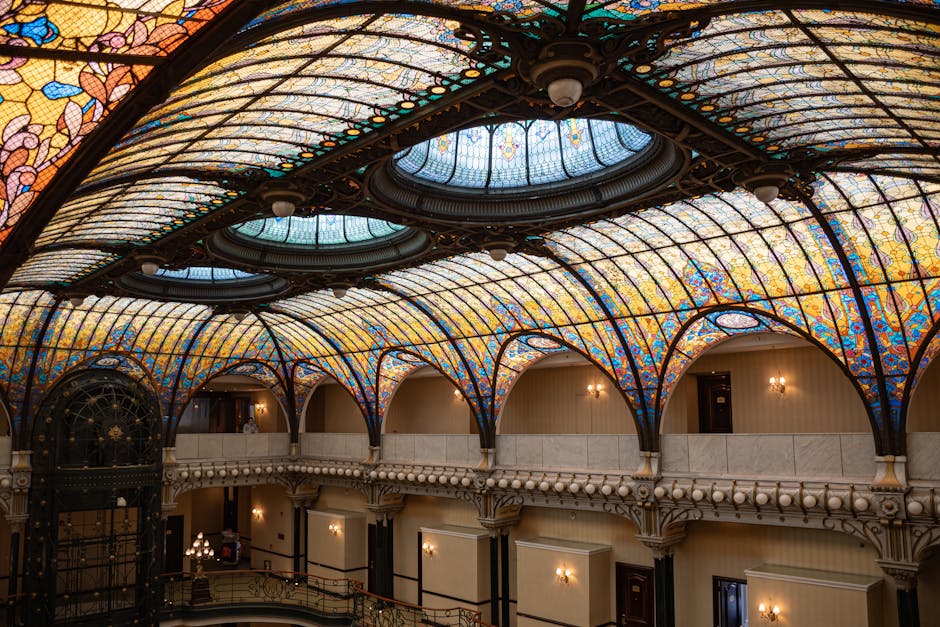
Domenech i Montaner’s masterpiece, completed in 1908. The interior is one of the most spectacular concert halls on earth: stained-glass skylight in the central ceiling, sculpted figures of muses on the back wall, and Modernist mosaic throughout. UNESCO World Heritage Site.
- Address: Carrer del Palau de la Musica 4-6.
- Hours: Daily guided tours and concerts.
- Tickets: 22 EUR for the 50-minute guided tour; 20 to 70 EUR for concerts.
- Closest metro: L1 or L4 Urquinaona.
2. Hospital de la Santa Creu i Sant Pau
Domenech i Montaner’s monumental hospital complex (1902-1930), with 27 pavilions covering nine city blocks. The interior is a masterpiece of mosaic, sculpture, and structural design. UNESCO World Heritage Site.
- Address: Carrer de Sant Antoni Maria Claret 167.
- Hours: Daily 9:30 AM to 5:30 PM (winter); 9:30 AM to 7:30 PM (summer).
- Tickets: 16 EUR adults; free for under-16s.
- Closest metro: L5 Sant Pau Dos de Maig.
3. Casa Lleo Morera
Domenech i Montaner’s elegant Modernist residence on the Block of Discord (Mancana de la Discordia). The interior is a riot of sculpted decoration. Limited interior tours.
- Address: Passeig de Gracia 35.
- Tours: Limited; check the official site.
- Closest metro: L2, L3, L4 Passeig de Gracia.
4. Casa Amatller
Puig i Cadafalch’s neo-Gothic-influenced home for chocolate magnate Antoni Amatller (1898-1900). Right next door to Casa Batllo on the Block of Discord.
- Address: Passeig de Gracia 41.
- Hours: 10:00 AM to 7:00 PM.
- Tickets: 19 to 25 EUR depending on tour type.
- Closest metro: L2, L3, L4 Passeig de Gracia.
5. Casa de les Punxes (Casa Terradas)
Puig i Cadafalch’s most fanciful work (1905), with six neo-Gothic-style turrets. Currently a venue and exhibition space.
- Address: Avinguda Diagonal 420.
- Hours: Variable; check current status.
- Closest metro: L3 or L5 Diagonal.
6. Casa Fuster
Domenech i Montaner’s elegant 1910 residence at the top of Passeig de Gracia. Now a 5-star hotel; the lobby and cafe are open to the public.
- Address: Passeig de Gracia 132.
- Closest metro: L3 Diagonal.
7. Caixa Forum (Casaramona)
Puig i Cadafalch’s Modernist textile factory, converted to a cultural centre. Free admission to the building; programming includes art exhibitions and concerts.
- Address: Avinguda Francesc Ferrer i Guardia 6.
- Hours: 10:00 AM to 8:00 PM.
- Tickets: Free.
- Closest metro: L1 or L3 Plaça Espanya.
8. Pavellons de la Finca Guell
Gaudi pavilions but the surrounding park and architectural ensemble include works by other Modernist architects.
9. Cementiri de Poblenou Modernist Mausoleums
The Poblenou Cemetery has dozens of Modernist mausoleums by various architects. A free, contemplative architectural visit.
10. Casa Calvet (Gaudi)
An early Gaudi work that is conventional by his standards but a beautiful Modernist commercial-residential building. A restaurant occupies some rooms.

The Block of Discord (Mancana de la Discordia)
The single most concentrated stretch of Modernist architecture on Earth. The block of Passeig de Gracia between Carrer del Consell de Cent and Carrer d’Arago contains:
- Casa Lleo Morera: Domenech i Montaner.
- Casa Mulleras: Enric Sagnier.
- Casa Bonet: Marcelia Coquillat.
- Casa Amatller: Puig i Cadafalch.
- Casa Batllo: Gaudi.
You can walk the block in 5 minutes; allow 60 minutes if you photograph each facade properly. All five buildings predate 1910.
The Quadrat d’Or (Golden Square)
The 200-block area bounded by Plaça Catalunya, Diagonal, Aribau, and Passeig de Sant Joan contains over 100 listed Modernist buildings. The official Quadrat d’Or walking guide is available at Palau Robert. Allow 2 to 3 hours for a thorough walk.
The Annual 48h Open House Festival
Each October, more than 100 Eixample buildings open their doors to the public for free guided tours. This is the rare opportunity to see the inside of buildings normally closed to visitors. Books up fast; check the official festival site.
Modernist Walks
Half-Day: Block of Discord
- 10:00 AM: Coffee on Passeig de Gracia.
- 10:30 AM: Casa Lleo Morera (exterior or limited interior).
- 11:00 AM: Casa Amatller (interior tour).
- 12:00 noon: Casa Batllo (interior tour).
- 1:30 PM: Lunch on a Passeig de Gracia terrace.
Full-Day Modernist Marathon
- 9:00 AM: Coffee.
- 9:30 AM: Sagrada Familia visit.
- 11:00 AM: Walk Avinguda Gaudi to Hospital de Sant Pau.
- 11:30 AM: Hospital de Sant Pau interior tour.
- 1:30 PM: Lunch.
- 3:00 PM: Walk to the Block of Discord. Casa Amatller and Casa Batllo.
- 5:00 PM: Casa Mila rooftop tour.
- 6:30 PM: Walk to Palau de la Musica.
- 7:30 PM: Concert or tour at Palau de la Musica.
Free Modernist Walking Day
- 9:00 AM: Free walk through the Quadrat d’Or; pick up the guide at Palau Robert.
- 11:00 AM: Caixa Forum (free entry).
- 1:00 PM: Lunch.
- 3:00 PM: Walk Block of Discord exteriors (free to view).
- 4:30 PM: Walk along Avinguda Gaudi.
- 6:00 PM: Walk into the Quadrat d’Or smaller streets.
Modernist Style and Vocabulary
- Trencadis: Broken-tile mosaic. Pioneered by Gaudi but used by all major Modernist architects.
- Flora and fauna ornament: Carved leaves, flowers, animals, and human figures.
- Wrought iron: Gates, balconies, and lampposts often feature elaborate ironwork.
- Stained glass: Coloured-glass windows are a Modernist signature.
- Catalan symbolism: Saint George, the dragon, the Catalan flag, and Catalan-language inscriptions.
- Asymmetry: Modernist facades rarely have perfect symmetry.
- Sculptural details: Almost every wall, doorway, and balcony has carved decoration.
- Tile patterns: Encaustic floor tiles in rich colours.
- Curved organic forms: Especially Gaudi; less so in Domenech and Puig.
- Brick and exposed structure: Domenech particularly favoured exposed industrial materials.
The Modernist Movement in Context
Modernisme was politically and culturally radical for its time. Catalonia in the late 19th century was experiencing economic boom and a cultural awakening (Renaixenca) after centuries of Spanish suppression of Catalan culture and language. Modernisme expressed this revival through:
- Catalan iconography: Buildings featured Catalan flags, dragons, and folkloric scenes.
- Local materials: Catalan brick, stone, and tile.
- Catalan language: Inscriptions in Catalan rather than Castilian Spanish.
- Workshop tradition: Architects collaborated with Catalan artisans, sustaining traditional crafts.
The movement ended around 1910 as architectural taste shifted toward the cleaner Noucentisme style. The Spanish Civil War (1936-1939) and the Franco regime’s suppression of Catalan culture pushed Modernisme out of fashion. The 1992 Olympics revived interest, and the 2005 UNESCO inscription cemented Modernisme’s global status.
Related Sites Beyond Barcelona
Modernisme spread across Catalonia. Worth visiting:
- Reus (1 hour by train): Gaudi’s hometown, with several Modernist buildings.
- Terrassa (45 minutes by train): Modernist textile factories converted to cultural centres.
- Sitges: The Cau Ferrat and Maricel museums house Modernist art.
Modernist Tours
Several Barcelona companies offer Modernist-focused walking tours:
- Palau Robert official walks: Free with map; self-guided.
- Casa Amatller guided architecture tours.
- Modernisme Route walks: Various private operators.
- Real Catedra Gaudi at the University of Barcelona: Academic tours.
Most tours run 35 to 65 EUR for a half-day; longer specialist tours up to 120 EUR.
For Specific Trip Types
For Architecture Enthusiasts
Spend 2 to 3 days. Day 1 = Sagrada Familia plus Hospital de Sant Pau plus Block of Discord. Day 2 = Casa Mila plus Casa Vicens plus Palau de la Musica. Day 3 = Quadrat d’Or walk plus smaller buildings.
For Casual Visitors
One half-day on the Block of Discord covers the highlights without committing too much time.
For Photographers
Block of Discord at sunset; Hospital de Sant Pau in morning light; Palau de la Musica from above the entrance.
For History Buffs
Combine Modernisme with the broader Catalan cultural Renaixenca by visiting the Catalan History Museum (MUHBA) and the Palau de la Generalitat (open occasionally).
Practical Tips
- Book key interiors in advance. Palau de la Musica, Casa Amatller, Casa Batllo, Casa Mila.
- Book the 48h Open House Festival weeks ahead.
- Wear comfortable walking shoes. The Quadrat d’Or covers many blocks.
- Carry a water bottle. Especially in summer.
- Bring a camera with a wide-angle lens. Modernist buildings reward wide framing.
- Best photography times: 8:00 to 10:00 AM and after 5:00 PM.
- Free entry options: Caixa Forum, Open House Festival, exterior facades.
- Audioguides are excellent. 5 to 8 EUR per visit.
- Quiet inside the Palau. The acoustics are sensitive.
- Don’t touch the trencadis. Body oils degrade the broken-tile surfaces.
- Stay alert for pickpockets. Particularly at queues outside Casa Batllo and Casa Mila.
Combining with the Rest of Your Trip
- Modernisme + Tasting menu: A Palau de la Musica concert followed by Disfrutar dinner.
- Modernisme + Hospital de Sant Pau gardens: Combine the architecture with the gardens.
- Modernisme + Sagrada Familia: The two big architecture days back to back.
- Modernisme + Costa Brava: Add a Reus or Sitges day for Modernist art outside the city.
Frequently Asked Questions
Who are the major Modernist architects besides Gaudi?
Domenech i Montaner, Puig i Cadafalch, Josep Maria Jujol, and Enric Sagnier.
Is Palau de la Musica worth visiting?
Yes. The interior is one of the most extraordinary concert halls in the world. Take a guided tour or attend a concert.
What is the Block of Discord?
The single block on Passeig de Gracia containing five major Modernist buildings (Casa Lleo Morera, Casa Mulleras, Casa Bonet, Casa Amatller, Casa Batllo).
Are exterior facades free to view?
Yes. The Block of Discord and the Quadrat d’Or buildings can be photographed from the street.
How long do I need for Modernisme?
Half a day for the Block of Discord; a full day for Block of Discord plus Hospital de Sant Pau plus Palau de la Musica; 2 days for a deep marathon.
What is the 48h Open House Festival?
An annual October weekend when 100+ Eixample buildings open their doors for free guided tours. Books up fast.
Where is Hospital de Sant Pau?
10 minutes’ walk from the Sagrada Familia, north on Avinguda Gaudi.
Is the Caixa Forum worth visiting?
Yes. Puig i Cadafalch’s textile factory is now a free cultural centre with rotating exhibitions.
Can I see inside Casa Lleo Morera?
Limited interior access; check the official Casa Lleo Morera site for current tour availability.
What is the most important Modernist site after Sagrada Familia?
Palau de la Musica Catalana for its interior; Hospital de Sant Pau for its architectural ensemble; Casa Mila for its rooftop.
Is Modernisme just in Barcelona?
No. Catalonia has Modernist buildings throughout (Reus, Terrassa, Sitges, Olot). Barcelona has the densest concentration.
Are there guided Modernist tours?
Yes. From 35 to 65 EUR for half-day; specialist academic tours longer.
What is the difference between Modernisme and Art Nouveau?
Modernisme is the Catalan version of the broader European Art Nouveau movement. Catalan Modernisme has stronger Catalan identity and craftsmanship traditions.
Should I see Modernisme on a first or return visit?
First-time visitors typically focus on Gaudi. Returning visitors often dedicate time to Modernisme beyond Gaudi.
Where else can I see Modernisme in Catalonia?
Reus (Gaudi’s hometown), Terrassa (textile factory architecture), Sitges (Cau Ferrat museum).
Final Thoughts: Barcelona’s Architectural Ensemble
Gaudi was the genius, but the wider barcelona modernist architecture tradition is what makes the city’s architectural ensemble unique in the world. A serious visit should include the Palau de la Musica, the Hospital de Sant Pau, the Block of Discord, and Casa Vicens. With these added to the major Gaudi sites, you have one of the most concentrated architectural pilgrimages on earth.
For more, see our Gaudi Barcelona pillar, the complete Gaudi buildings list, the Sagrada Familia guide, the Casa Batllo vs Casa Mila comparison, and the Eixample neighbourhood guide.
Many buildings that are normally closed to the public, modernista apartment blocks and workshops among them, open their doors for one weekend in late October during 48h Open House BCN. Our Barcelona in October guide explains how the festival works, how to pre-register for the visits that need it, and what else the month has to offer.