We get commissions for bookings made through this post. Booking links, and any accommodation options shown on the page, are handled by a partner that adds commission tracking automatically. It never costs you more, and it never affects what we recommend. Affiliate disclosure
In November 2028 every one of the 10,101 licensed tourist flats in Barcelona will stop being legal on the same day. Not a cap, not a tightening — a cliff edge, written into a plan that the Spanish Constitutional Court upheld in March 2025 and that no new licence has been issued under since 2017. The barcelona airbnb ban is the most drastic policy any major European city has aimed at short-term rentals, and if you are planning a trip for 2027 or later, it changes where you can stay.
This page explains what the rules actually say, what is already happening on the platforms, what it means for travellers booking now, and what your alternatives are — including the thirty-two-night rule that remains entirely legal and is the answer for anyone spending a month or more here. Everything was checked in September 2026. Where a date or a number is likely to move, we say so, and this is a live policy that will keep moving.
What the rule actually is
| Question | Answer |
|---|---|
| Licensed tourist flats today | 10,101 |
| New licences available | None, and none since 2017 |
| All existing licences expire | November 2028, non-renewable |
| Legal challenge | Dismissed by the Constitutional Court, March 2025 |
| Hotels, hostels, guesthouses | Unaffected |
| Rentals of 32 nights or more | Still legal — a residential let, not tourist accommodation |
| Registration number required | NRU, compulsory since 1 July 2025 |
| Maximum fine for operating illegally | €600,000 |
The mechanism is simple and unusually final. Barcelona’s tourist accommodation plan — the PEUAT — froze the number of licensed tourist dwellings in 2017 and has issued none since. In 2024 the city announced that rather than continuing to manage the existing stock, it would let the whole lot lapse. Every habitatge d’ús turístic licence in the city expires in November 2028 and cannot be renewed. The flats revert to being ordinary homes.
Property owners challenged it, arguing expropriation without compensation. The Constitutional Court dismissed the appeals in March 2025. Barring a political reversal — possible, but there is no sign of one — the deadline stands.
What is already happening
The 2028 cliff gets the headlines, but the practical changes have already begun and they affect trips being booked right now.
Listings are disappearing
Several thousand flats have already returned to the residential market, some because owners have concluded that a two-year runway is not worth the management overhead, others because they were never licensed in the first place and enforcement has caught up with them. The stock of legitimate short-term rentals in Barcelona is shrinking every month.
Every listing now needs a number
Since 1 July 2025 Spain has required a national registration number — the NRU — issued through the Property Registry, on top of the Catalan HUT licence. Platforms must display it. A listing without one is not merely dubious; it is one enforcement order away from removal, and the platforms have forty-eight hours to comply once ordered.
Enforcement has teeth
Barcelona has issued more than 9,000 fines and around 11,600 cease-and-desist orders against irregular tourist flats since 2016, with penalties reaching €600,000. In December 2025 the Spanish government fined Airbnb €64 million over more than 65,000 listings nationwide that lacked valid licences. This is not a city sending polite letters.
Prices are moving
Fewer legal flats plus undiminished demand produces the obvious result. Short-term rental rates in central Barcelona have risen and hotel occupancy with them. Meanwhile the tourist tax on a licensed holiday apartment is now €9.50 per person per night — higher than a four-star hotel’s €8.40 — which erodes the cost advantage that made flats attractive in the first place. See our Barcelona tourist tax guide for the full band table.
What it means if you are booking now
For a trip in 2026 or 2027
Licensed flats still exist and are still legal, so you can book one. The rule is to verify, not to avoid. Before you pay:
- Look for the licence number. A legitimate Barcelona listing displays an HUT number — typically formatted as HUTB followed by six digits — and, since July 2025, a national NRU registration number. Both should be visible on the listing.
- Be suspicious of anything without one. Not because you personally face a fine — you do not — but because an unlicensed listing can be taken down at forty-eight hours’ notice, potentially days before your trip, and the platform’s rehousing guarantee is not the same as having somewhere to sleep in August.
- Check the minimum stay. Listings advertising thirty-one nights or fewer without a licence number are operating illegally. Ones advertising thirty-two nights or more are in a different, legal category entirely.
- Prefer a hotel for a short trip. For three or four nights the flat’s advantages — kitchen, space, laundry — matter less than the certainty, and the price gap has narrowed considerably.
For a trip from November 2028
Assume there will be no legal tourist flats in Barcelona. Plan around hotels, aparthotels, hostels and guesthouses, all of which are entirely unaffected by the ban. Our where to stay in Barcelona guide covers the neighbourhoods and what each one is good for.
Why Barcelona did this
It is worth understanding the argument, because it explains why a reversal is unlikely and why the surrounding measures — the doubled tourist tax, the cruise terminal cuts — arrived at the same time.
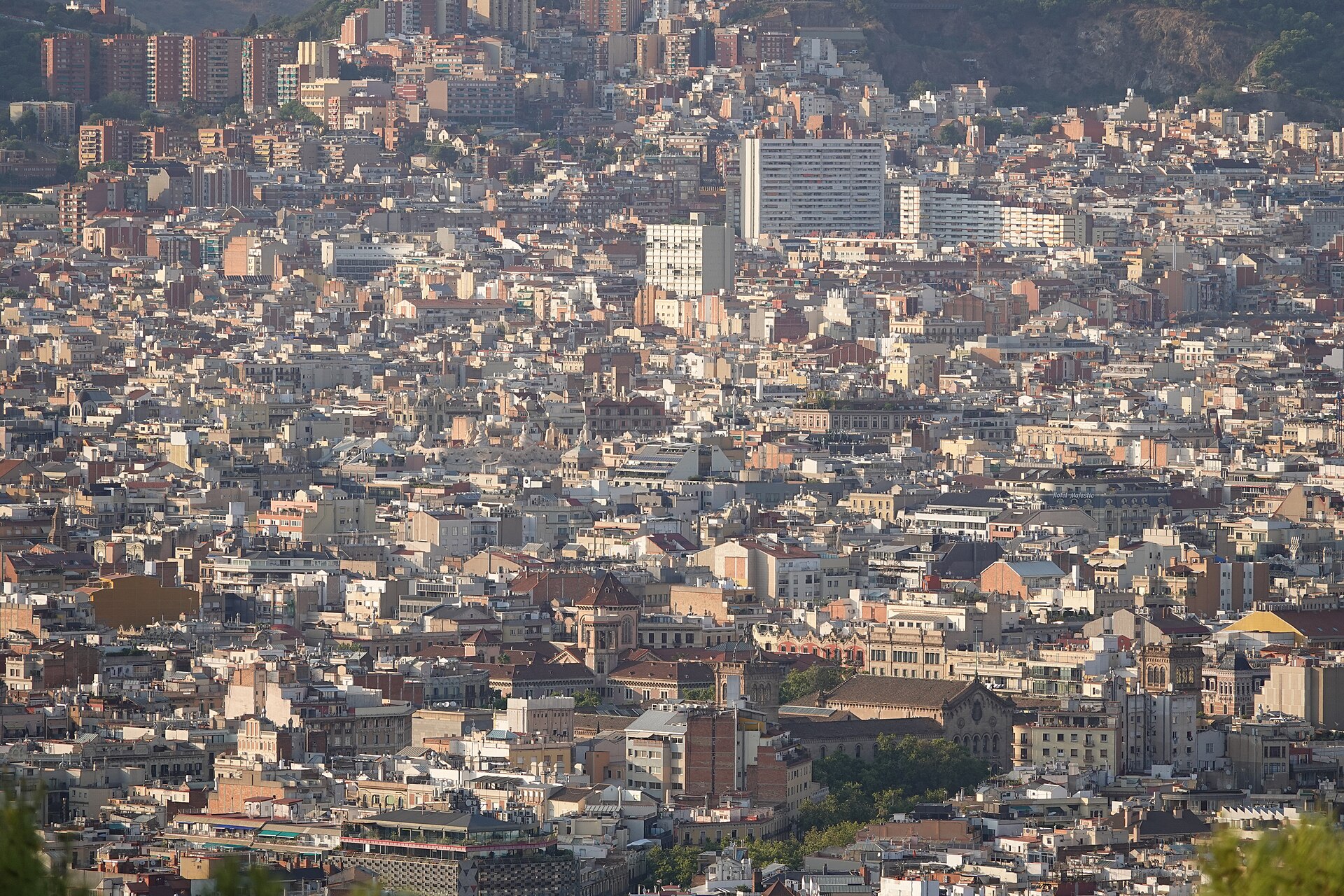
Barcelona has around 1.6 million residents inside the city proper and takes something in the order of 26 million visitors a year. In the neighbourhoods where tourist flats concentrated — Ciutat Vella, Barceloneta, the Dreta de l’Eixample, parts of Gràcia — the effect on the housing market was severe: rents rose faster than incomes for more than a decade, and long-term tenancies became scarce in exactly the streets that visitors most want to stay in. Ten thousand flats is not a rounding error in a city this size.
The counter-argument, made by owners and by the hotel-adjacent economy, is that removing 10,000 units of accommodation from a city with record visitor numbers pushes prices up rather than down and simply transfers the money to hotels. Both things can be true. What is not in doubt is that the political consensus in Barcelona has hardened, that residents’ associations have been campaigning on this for fifteen years, and that a quarter of tourist tax revenue is now formally earmarked for housing.
How it compares with other cities
Every European city with a tourism problem has tried something. Barcelona is the only one that has decided to end the sector outright, which is worth seeing in context.
| City | Approach | Effect |
|---|---|---|
| Barcelona | All licences expire November 2028 | Sector eliminated |
| Amsterdam | 30-night annual cap, permit, four-guest limit | Sharply reduced, not ended |
| Berlin | Permit required for whole-flat lets | Reduced, patchily enforced |
| Paris | 120-night annual cap, registration, compensation rule in the centre | Large market, tightly policed |
| Lisbon | Licence freeze in the historic centre | Frozen at current levels |
| New York | Host must be present, maximum two guests | Effectively ended whole-flat lets |
The interesting comparison is New York, which achieved something close to Barcelona’s outcome through a different mechanism — requiring the host to be physically present — and did it in a single step in 2023. The result there was a rapid contraction in listings and a rise in hotel rates, which is roughly what Barcelona is betting is a price worth paying.
How Barcelona got here
This did not arrive out of nowhere. The sequence is worth knowing because it explains why the policy has survived a change of mayor and a Constitutional Court challenge.
- 1992 — the Olympics remake the waterfront and put Barcelona on the global city break map. Visitor numbers begin a thirty-year climb.
- 2010–2014 — the platforms arrive and tourist flats spread fastest in Ciutat Vella and Barceloneta. Residents’ associations start organised campaigns; the phrase turistificació enters everyday use.
- 2014 — the city fines Airbnb for advertising unlicensed flats, one of the first such penalties anywhere in Europe.
- 2017 — the PEUAT tourist accommodation plan freezes licence numbers. No new licences from this point.
- 2024 — the council announces that rather than managing the frozen stock, all licences will expire in 2028.
- March 2025 — the Constitutional Court dismisses owners’ appeals.
- July 2025 — Spain’s national NRU registration requirement takes effect, giving platforms a compliance obligation.
- December 2025 — Airbnb fined €64 million nationally over unlicensed listings.
- April 2026 — the tourist tax roughly doubles, with holiday flats taxed above four-star hotels.
Read as a sequence, the 2028 expiry looks less like a sudden lurch and more like the last step of a plan that has been running for a decade.
Your alternatives
Hotels
Entirely unaffected, and Barcelona has a lot of them across every price band. The tourist tax on a four-star is €8.40 per person per night, lower than on a licensed flat, and the practical advantages — a front desk, luggage storage before check-in and after check-out, someone to fix a problem — matter more on a short trip than most people expect.
Aparthotels
The obvious middle ground, and the sector that stands to gain most from the ban. An aparthotel is a licensed hotel with kitchens in the rooms: you get the self-catering and the space without the legal cliff. Registered as hotels, they pay the hotel tax band and they will still exist in 2029.
Hostels and guesthouses
Also unaffected, and Barcelona’s hostel scene is unusually good — plenty of private double rooms alongside dorms, and the tourist tax is only €6 per person per night. For solo travellers and anyone under about thirty this is often the best value in the city.
The 32-night rule
The important one, and the least understood. A rental of thirty-two nights or more is a residential let under Catalan law, not tourist accommodation. It needs no HUT licence, it falls outside the ban entirely, and it is exempt from the tourist tax. If you are a remote worker, a student, a long-stay visitor or anyone with a month to spend, this is not a loophole being tolerated — it is the legal category the whole policy is trying to push the market back towards.
Practically, that means looking at the long-term rental market rather than the holiday platforms: local agencies, the Catalan classified sites, university housing services and the growing number of operators marketing month-plus furnished flats to remote workers. Expect to pay a deposit and to sign something, and expect the monthly rate to be dramatically below thirty-two nights of holiday-flat pricing.
Staying outside the city
Barcelona’s rules end at the city boundary. Municipalities along the coast and inland have their own, generally much looser, licensing regimes, and they also charge the regional tourist tax without Barcelona’s €5 municipal surcharge. Sitges is thirty-five minutes on the R2, Badalona and the Maresme towns are on the R1, and Girona is an hour by high-speed train. Whether the commute is worth it depends on how much of your trip is in the city — see our Sitges guide and the day trips guide.
Booking a hotel well in the new market
If the practical upshot of all this is that you will be staying in a hotel, it is worth doing that properly rather than defaulting to whatever the aggregator shows first.
- Book earlier than you used to. The removal of thousands of flats has tightened the market, and May, June, September and October now sell out in a way they did not five years ago. Three months ahead for those months is not excessive.
- Compare the total, not the room rate. Add the tourist tax — €8.40 per person per night in a four-star, €12 in a five-star — and check whether breakfast is included. Barcelona hotels frequently price breakfast at €18–25 a head, which is poor value when a bar breakfast is about €5.
- Look at the second ring. Sant Antoni, Poble Sec, Sants and the upper Eixample are ten to fifteen minutes from the centre by metro and noticeably cheaper, and several of them are better places to spend an evening than the Gothic Quarter.
- Consider an aparthotel for families. A kitchen and a separate bedroom for roughly hotel money is the closest replacement for what a tourist flat offered, and it is legally secure.
- Check the metro line, not the map distance. Barcelona is bigger than it looks and the metro is what makes it small. A hotel two minutes from an L3 station is more central in practice than one that looks closer on a map. See the metro guide.
- Read the noise reviews. Barcelona is loud at night in the old city, and the flats-to-hotels shift has not changed that. If you are a light sleeper, an interior-facing room in the Eixample beats a balcony in El Born.
Our budget Barcelona guide covers the rest of the trade-offs, and the family hotels guide is the place to start if you are travelling with children.
What this does not affect
A certain amount of confused reporting has attached itself to this story, so to be clear:
- Hotels of any category — unaffected. There is a separate planning restriction on new hotels in central districts, but existing ones continue.
- Hostels and guesthouses (pensions) — unaffected.
- Rooms in an occupied home — a different licence category with its own rules, not covered by the 2028 expiry of whole-flat licences.
- Long lets of 32 nights or more — legal, untaxed as tourism, and the explicit policy objective.
- The rest of Catalonia — each municipality sets its own rules. Barcelona’s are the strictest in Spain by a distance.
- Visiting Barcelona at all — nothing here restricts who can come or for how long. It is a housing policy, not a visitor cap.
Visiting a city that is pushing back
None of this makes Barcelona hostile to visitors. Anyone who has been here recently knows the city is warm, patient and considerably better at hospitality than most places with a fraction of its visitor numbers. But it is a city having a real argument with itself about tourism, and it is a better trip if you understand that.
What actually helps, in descending order of usefulness: stay somewhere legal, so your money is not part of the problem the city is trying to solve. Spread out — the pressure is concentrated in about six streets, and Sant Antoni, Poble Sec, Sants and the upper Eixample are genuinely good and barely touristed. Eat where people live rather than where the coaches stop. Learn four words of Catalan, which costs nothing and is noticed immediately; our language guide has the ones that matter. Keep noise down in residential streets after eleven, because the flats above the bar are people’s homes. And come outside July and August if you possibly can.
The city’s own strategy is explicitly about spreading visitors beyond the centre, which is why it promotes neighbourhoods like Poble Sec and Gràcia and why our hidden gems page exists. Following that advice is not self-denial: those neighbourhoods are where the good food and the cheap rounds are.
Will it actually happen?
The honest answer is that the direction is certain and the exact endpoint is not. The legal challenges have been dismissed, the political consensus in the city is strong, and the plan is already being implemented through the registration and enforcement regime rather than waiting for 2028. Several thousand flats have already gone.
What could change is the shape of the endgame. A future council could create a small new licence category, or carve out exceptions for owner-occupied buildings, or extend the deadline for particular districts. Spain’s national government is moving in the same direction rather than the opposite one, which makes a reversal from above unlikely. And the city has committed publicly and repeatedly, which raises the political cost of retreating.
For planning purposes: book flats with confidence for 2026 and with care for 2027, and assume hotels from 2028. If you are watching the policy closely, the thing to follow is not the 2028 date but the monthly attrition — the number of licences actually surrendered, which is the real measure of how fast this is happening.
Frequently asked questions
Is Airbnb banned in Barcelona?
Not yet, and not the platform itself. Whole-flat short-term rentals require a licence, no new licences have been issued since 2017, and all 10,101 existing ones expire in November 2028 without renewal. Until then, licensed flats remain legal and bookable.
Can I still book an apartment in Barcelona in 2026?
Yes, provided it holds a valid HUT licence and a national NRU registration number, both of which should be displayed on the listing. Anything without them risks being removed from the platform at short notice.
What happens in November 2028?
All 10,101 tourist flat licences expire simultaneously and cannot be renewed. From that point, short-term letting of whole flats to visitors is not legal in Barcelona. Hotels, hostels, guesthouses and aparthotels are unaffected.
How can I tell if a listing is legal?
Look for an HUT number — usually HUTB plus six digits — and an NRU registration number on the listing itself. If a host cannot produce either, do not book. The Generalitat maintains a public register you can check against.
Is there a legal way to rent a flat in Barcelona long-term?
Yes. Rentals of thirty-two nights or more are residential lets rather than tourist accommodation: no licence needed, no tourist tax, and entirely outside the ban. That is the route for remote workers, students and anyone spending a month or more in the city.
Will hotel prices go up?
Almost certainly, and they already have. Removing 10,000 units of accommodation from a city with record visitor numbers is not a recipe for lower prices. Book earlier than you would have five years ago, particularly for May, June and September.
Does this apply to the rest of Spain?
No. Barcelona’s rules are the strictest in the country. Other Spanish cities have licensing regimes of varying severity, and the national NRU registration requirement now applies everywhere, but nowhere else has set a date to end the sector entirely.
Am I breaking the law if I stay in an unlicensed flat?
No — the legal obligation sits with the owner and the platform, not the guest. The risk to you is practical rather than legal: an enforcement order can remove the listing and cancel your booking at forty-eight hours’ notice.
With the licensed flat market shrinking every year, most visitors will end up in a hotel, a hostel or an aparthotel instead — and the shift is already showing up in what those cost. Our Barcelona accommodation guide sets out the current price bands, the tourist tax by category, and why an aparthotel is often the closest legal substitute for the flat you were planning to book.
The licence phase-out is one part of a wider argument the city is having with itself about how much tourism it can sustain, and visitors reasonably want to know whether they are still welcome in the middle of it. Our guide to whether Barcelona is worth visiting sets out what the protests are actually about, what has changed on the ground, and how to visit without adding to the problem.
Related Barcelona Guides
- Where to Stay in Barcelona — which neighbourhood suits which kind of trip.
- Barcelona Tourist Tax — including why a flat is taxed more than a four-star hotel.
- Barcelona Neighbourhoods — the districts, in detail.
- Barcelona on a Budget — where the savings are now.
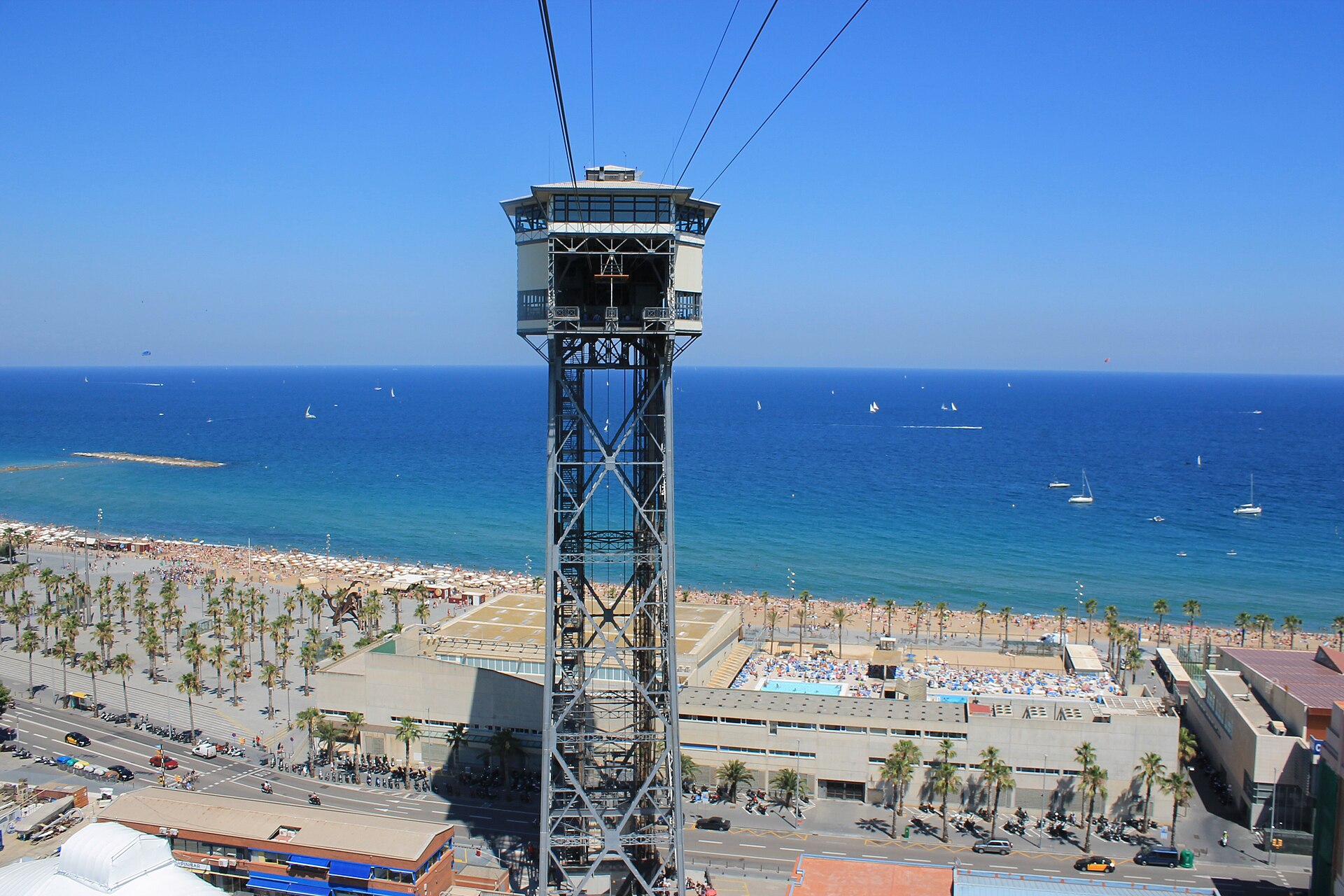
- Barceloneta — the neighbourhood at the centre of the argument.
- Barcelona Travel Guide — the full planning pillar.
- First-Time Visitor Tips — arriving well informed.
Photo Credits
Eixample and Gràcia rooftops: Barcelona Eixample & Gràcia cityscape from Montjuïc 2026-08-14 by Ilkka Simomaa, CC BY 4.0, via Wikimedia Commons.
Barceloneta from the cable car: La Barceloneta, Barcelona, Spain – panoramio (11) by Gustavo de la Sota, CC BY-SA 3.0, via Wikimedia Commons.
Remaining photographs from the barcelonatourism.org library.