We get commissions for bookings made through this post. Booking links, and any accommodation options shown on the page, are handled by a partner that adds commission tracking automatically. It never costs you more, and it never affects what we recommend. Affiliate disclosure
The difference between a good night and a terrible one in a Barcelona hostel is usually decided at the booking stage, and it has almost nothing to do with the star rating. Two properties four streets apart, at the same price, with the same photographs of a rooftop terrace, can deliver a quiet eight hours of sleep or a 4am corridor singalong. Choosing between barcelona hostels is really a question of matching a property to the kind of trip you are actually having — and the single most useful thing this page can do is help you work out which of those two hostels you have just found.
What follows segments the city’s hostels by traveller type rather than ranking them, because a ranked list is useless when the top entry is a party hostel and you are here to see Gaudí. It also covers what a dorm bed genuinely costs in 2026, the districts, the security realities, and the point at which a hostel stops being cheaper than a hotel. Prices were checked in September 2026 and move sharply with season.
What a hostel actually costs
| What | Shoulder season | July and August |
|---|---|---|
| Dorm bed, 8–12 beds | €18–28 | €30–45 |
| Dorm bed, 4–6 beds | €26–40 | €40–60 |
| Female-only dorm | €22–35 | €35–50 |
| Private twin or double in a hostel | €70–110 | €110–160 |
| Tourist tax, per person per night | €6.00 plus VAT | €6.00 plus VAT |
| Typical breakfast add-on | €4–7 | €4–7 |
| Locker padlock, if you did not bring one | €3–5 | €3–5 |
| Towel hire | €2–4 | €2–4 |
Two things stand out. Summer is 40–60% more expensive, which is a bigger swing than the hotel market sees. And a private room in a hostel is rarely good value — at €90 or more you are into three-star hotel territory, where you get a lift, daily cleaning and a bathroom nobody else uses. Book a hostel for the dorm and the social life, or book a hotel; the middle option mostly combines the costs of one with the compromises of the other.
The single most important question: party or quiet?
Barcelona’s hostel scene divides cleanly in two, and booking the wrong side of the line is the mistake nearly everyone makes once.
Party hostels
These are explicit about what they are: an in-house bar, organised pub crawls most nights, communal drinking games, a rooftop that stays open late, and a clientele in its early twenties. The best of them are genuinely excellent at what they do — if you are travelling alone and want to have met fifteen people by Tuesday, this is the fastest way to do it in Europe.
They cluster around Plaça Reial and the lower Gothic Quarter, close to the bars, and a few sit near the beach in Barceloneta. Kabul, on Plaça Reial, has been the archetype for decades and is entirely honest about it.
Do not book one if: you need to be up early for a Sagrada Família slot, you are over about thirty, you are a light sleeper, or you are travelling as a couple. The noise is not incidental — it is the product.
Quiet and social hostels
The much larger and more interesting category, and the one most visitors should be in. These have common rooms, communal dinners, walking tours and a bar that closes at a civilised hour — sociable without being a nightclub. Design-led properties like Generator Barcelona in the upper Eixample and Casa Gracia sit here, as do most of the Sant Jordi group’s locations away from the old town.
How to tell the difference before booking:
- Look for the words “party”, “social”, “pub crawl” and “bar” in the property’s own description. Hostels that want that crowd say so plainly.
- Read the one-star and two-star reviews from the last six months and search for the word “sleep”. If people are complaining about noise, believe them.
- Check whether there is a bar inside the building. This is the single most reliable predictor.
- Check the age policy. Some quiet hostels set an upper limit of 35 or 40; some party hostels set one too, which tells you exactly what they are.
- Look at the location. A hostel on Plaça Reial or Carrer Escudellers is in the noise regardless of its own policy.
Choosing by traveller type
Solo travellers in their twenties
You have the most choice and the best value. A dorm bed in a social hostel with an organised programme — walking tours, communal dinners, a rooftop — is the whole point of hostelling and Barcelona does it as well as anywhere in Europe. Pick a mid-size property (60–150 beds) rather than a very large one, where you can vanish, or a very small one, where the social life depends entirely on who happens to be there.
Our solo travel guide covers the wider question of eating and going out alone here, which Barcelona makes unusually easy.
Solo travellers over thirty
Perfectly well catered for, but be selective. Look for design-led hostels with private rooms and a proper common area, or the smaller boutique-style properties in Gràcia and the Eixample. Avoid anything within two streets of Plaça Reial. Check the age policy before booking — a handful of hostels genuinely will not accept guests over 35, and finding that out at reception is a bad evening.
Couples
Honestly, think twice. A private double in a hostel typically runs €70–160 and gets you a small room, a shared bathroom on some properties, and a common area full of people ten years younger. At that price a three-star hotel is available. The exception is a couple travelling for a month or more who genuinely want the social side, or a design hostel where the private rooms are properly finished — some are excellent. See our accommodation guide for the alternatives.
Women travelling alone
Barcelona’s hostels are safe and the city is safe, with the standard caveat about pickpocketing rather than anything more serious. Most properties offer female-only dorms, usually at a small premium, and they are worth taking — not because mixed dorms are dangerous but because they are quieter and the bathroom arrangements are simpler. Look for lockable individual lockers large enough for a full backpack, curtained pod beds, and 24-hour staffed reception rather than a keypad.
Families and groups
Many hostels sell whole dorms as a private room, which is much better value than it sounds: a six-bed dorm booked exclusively for four people can undercut two hotel rooms substantially. Rules on children vary enormously — some hostels have a minimum age of 18, some welcome families — so check rather than assume. Our family accommodation guide covers the aparthotel option, which is usually the better answer with young children.
Long stays and digital nomads
Barcelona has a serious remote-work population and several hostels have leaned into it with co-working floors, monthly rates and desks that are actually desks. If you are staying a month or more, ask about a monthly rate directly — the published nightly price is rarely the best available for a long booking, particularly between November and March.
The districts, and what each means for a hostel stay
- Gothic Quarter and El Raval. The cheapest and most central, the heart of the party scene, and the noisiest. Wonderful if that is the trip you want. Ordinary street awareness applies late at night, particularly in El Raval.
- El Born. Quieter than the Gothic Quarter, better food, a short walk to everything, and a handful of small, good hostels. Probably the best all-round location.
- Eixample. Where the big design-led hostels are. Wide streets, good metro, safe at night, five to fifteen minutes from the old town. Slightly less atmospheric and considerably easier to sleep in.
- Gràcia. Village squares, cheap local bars, almost no tourists, and a metro ride from the centre. The best choice for a second visit or a longer stay.
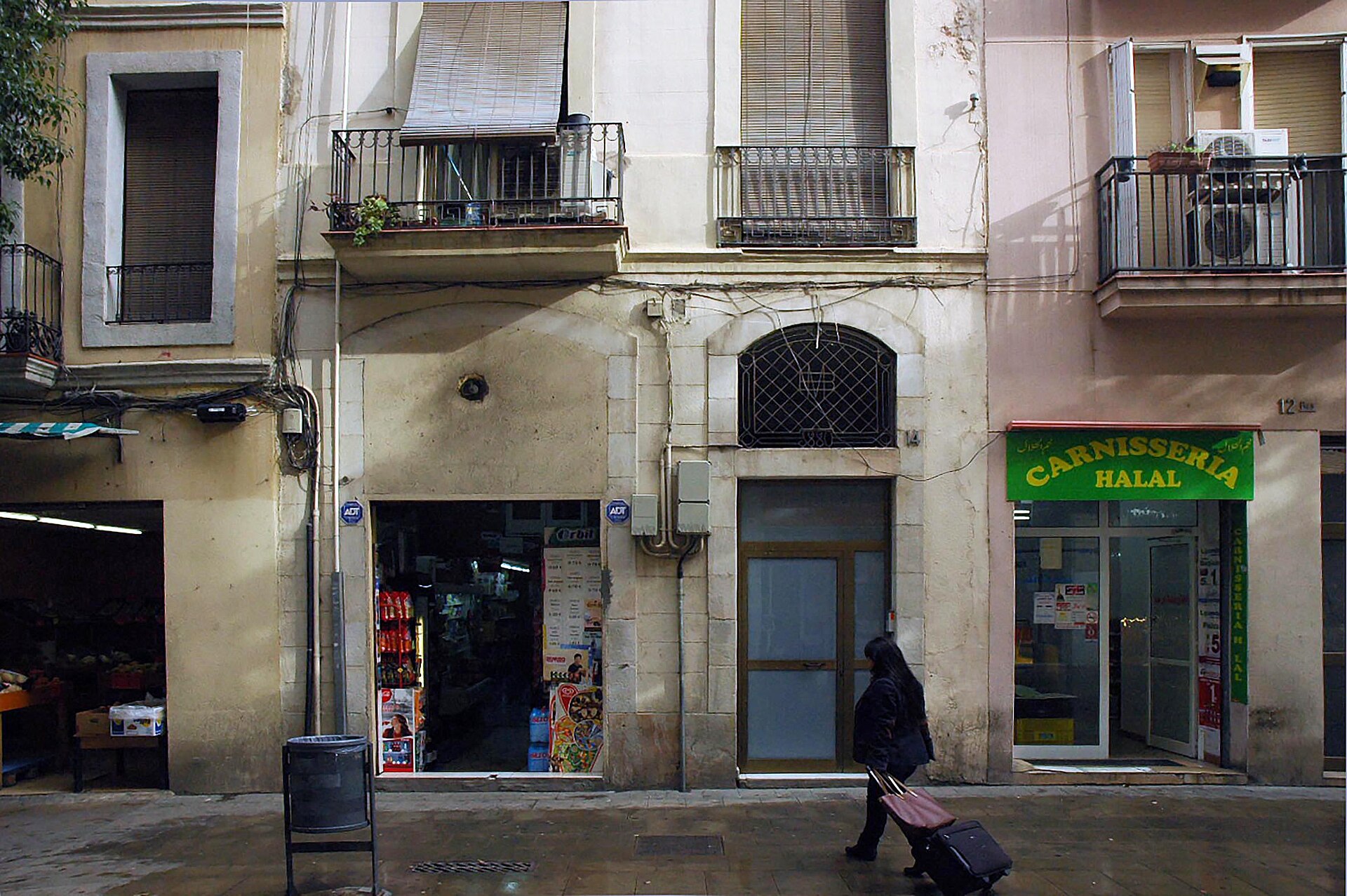
- Poble-sec. Underrated: genuinely local, cheap, a tapas street of its own in Carrer Blai, and ten minutes from Plaça Espanya. Good value and rising.
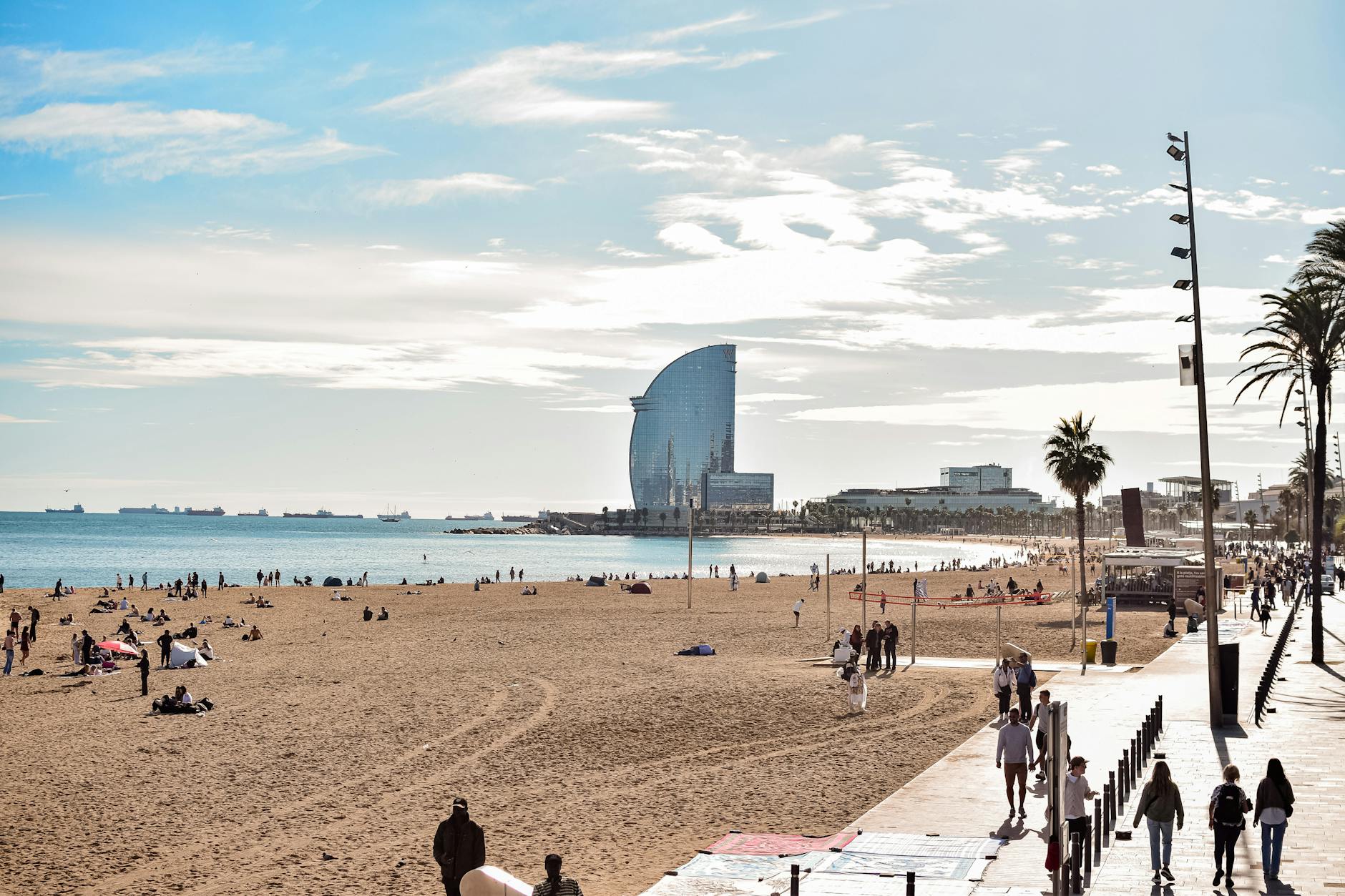
- Barceloneta and the beach. Beach hostels are a specific proposition — great in July, less so in February, and a twenty-minute walk from the medieval city. Expect a young, party-leaning crowd.
- Sagrada Família and Sant Antoni. Residential, quiet, well connected, and often noticeably cheaper for the same standard of property.
What a good Barcelona hostel has in 2026
The category has changed enormously in fifteen years, and the baseline is now higher than most people expect. A well-run modern hostel here should offer all of the following, and if it does not, there is another one two streets away that does.
- Curtained pod beds with an individual reading light and at least one power socket per bed. This is now standard; a hostel still selling open metal bunks is behind.
- A locker per bed, large enough for a 60-litre backpack, inside the room rather than in a corridor. Bring your own padlock — it is cheaper than buying one at reception and better than the ones they sell.
- Air-conditioning. Non-negotiable from June to September, when the city does not cool down at night.
- A real kitchen, with hobs, a fridge with labelled shelves and enough pans. This is where the actual savings are: a market breakfast and a cooked dinner turn a €25 bed into a genuinely cheap day.
- 24-hour reception. Flights land late here. A keypad-only entry means nobody to help if something goes wrong at 2am.
- Free luggage storage before check-in and after checkout. Universal, and it saves a wasted half-day at either end.
- A rooftop or a terrace. In this climate, an outdoor common space is worth more than an indoor one, and most decent properties have one.
- Laundry. €5–8 a load, and worth planning around on a longer trip.

Security, honestly assessed
Hostels in Barcelona are safe. The risk is not violence — it is theft, and almost all of it is opportunistic rather than targeted.
- Use the locker every time, including for a two-hour nap. The overwhelming majority of hostel thefts are from unlocked lockers and unattended bunks.
- Bring your own padlock, a small combination one rather than a key. Keys get lost; combinations do not.
- Keep passport, cards and phone in a small bag that goes with you, including to the shower. Every experienced hosteller does this and nobody thinks it is odd.
- The real risk is outside the hostel. Pickpocketing on La Rambla, at Sants and on the metro is endemic and is the thing that actually spoils trips. Our Barcelona safety guide has the specifics.
- Do not leave a laptop on a common-room table while you go to the bar. This is the one that catches remote workers.
- Check the property has individual room keycards rather than a single door code shared with the whole building.
Booking well
- Book earlier than you think for summer. Good hostels sell out in July and August weeks ahead, and the ones left at the last minute are left for a reason.
- Compare the platform against the hostel’s own site. Independent hostels often have a direct rate that undercuts the aggregators, or throws in breakfast.
- Read the cancellation terms. Hostel bookings are frequently non-refundable within 48 hours, and the deposits are real.
- Check what the tourist tax adds. €6 per person per night is roughly a quarter of a shoulder-season dorm bed, and it is collected at the property, not at booking.
- Check-in is usually 14:00 or 15:00 and checkout 10:00 or 11:00 — earlier than a hotel. Plan for the gap, and use the luggage room.
- A four-bed dorm at €38 versus a twelve-bed at €22 is the real decision. The smaller room is quieter, the bathroom queue is shorter, and on a three-night stay the difference is €48 — about the price of one good dinner. For most people the four-bed is worth it.
When a hostel is the wrong choice
Being useful means saying this plainly.
- If you need reliable sleep — for work, for an early flight, for health reasons — a dorm is a gamble regardless of how good the property is. Somebody will pack a bag at 05:00.
- If you are a couple, unless you specifically want the social side. The private-room maths does not work.
- If you are travelling in July or August on a tight budget, a €45 dorm bed against a €120 three-star double for two people is no longer a saving at all.
- If you have a lot of expensive equipment — cameras, laptops — and no way to secure it.
- If you are staying a month or more. A room in a shared flat is dramatically cheaper and, since it is a residential tenancy rather than tourist accommodation, entirely legal under the rules that are removing short-term rentals. Our guide to the rental phase-out explains the 32-night threshold.
Making a hostel stay cheap, properly
The bed is only part of the cost. The rest is where the real difference between a €60 day and a €120 day gets made.
- Cook two meals in three. A market shop at Santa Caterina or Sant Antoni costs a fraction of eating out and is a genuinely good way to spend an hour.
- Take the menú del dia for lunch rather than dinner. Three courses and a drink for €14–18 on weekday lunchtimes is the best-value meal in the city — see our food guide.
- Use the free museum slots. MNAC is free on Saturday afternoons and the first Sunday of the month; several others follow similar patterns. Our free things to do guide has the list.
- Buy a T-casual rather than single tickets. Ten journeys on one card, shareable between people, and far cheaper per trip.
- Skip the city passes. On a hostel budget you are unlikely to visit enough paid attractions for a pass to pay back — our city passes guide does the arithmetic.
- Do the free walking tour on day one, tip properly, and use it to orient yourself. Our walking tours guide covers which ones are worth it.
Dorm etiquette, for people who have not done this before
None of this is written down anywhere and all of it is enforced by the collective irritation of eleven strangers. The rules are simple and universal.
- Pack your bag the night before an early start. Rustling a plastic carrier at 05:30 is the cardinal sin of hostelling, and the reason experienced travellers pack in the corridor.
- Use the corridor, not the room. Phone calls, video calls and conversations happen outside the dorm. Always.
- Headphones, at all hours. Not a speaker, not “quietly”, not “just one song”.
- Do not turn the main light on after midnight. Use your phone torch. Every pod bed has its own reading light for exactly this reason.
- Keep your things on your bunk or in your locker, not spread across the floor. Twelve people share about four square metres of walkable space.
- Shower quickly in the morning. There is a queue and everyone has a Sagrada Família slot.
- Label your food and take it out of the fridge when you leave. Hostel kitchen fridges are archaeological sites and staff clear them ruthlessly.
- Do not have sex in a shared dorm. Genuinely needs saying, apparently.
The corollary: if someone breaks these rules, say something politely at the time rather than seething. In a mixed-nationality dorm the offender frequently has no idea, and a friendly word almost always works.
Hostels and Barcelona’s accommodation rules
Worth understanding, because it is why hostels are having a moment here.
Barcelona is phasing out its entire licensed short-term rental sector: all 10,101 tourist-flat licences expire in November 2028 and none will be renewed. Hostels, hotels and guesthouses are unaffected — they are a different legal category, properly zoned, inspected and taxed, and the city has no argument with them. The practical effect is that the budget end of the market is shifting from flats towards hostels and aparthotels, and the better hostels have been investing accordingly.
Two consequences for a visitor. First, a hostel booking cannot be cancelled on you for a licensing problem, which a flat booking increasingly can. Second, expect hostel prices to keep firming as that supply moves across — the €18 bed is becoming rarer, and booking further ahead matters more each year. Our guide to the rental phase-out has the detail.
On the tax: hostels sit in the lowest band, at €6 per person per night plus 10% VAT, against €7 for most hotels and €9.50 for a tourist flat. It applies to the first seven nights of a stay and under-16s are exempt. It is collected at the property and will not appear on your booking confirmation, so budget for it separately — on a five-night stay it is €30, which is more than a night’s bed.
A three-night hostel trip, costed
To make the numbers concrete. One person, shoulder season, six-bed dorm, eating sensibly rather than austerely.
| Item | Cost |
|---|---|
| Three nights, six-bed dorm at €30 | €90 |
| Tourist tax, three nights | €19.80 |
| T-casual metro card (10 journeys) | about €12 |
| Two menú del dia lunches | €32 |
| One dinner out, one cooked in the hostel | €30 |
| Breakfast from the market, three days | €12 |
| Sagrada Família with audio guide | €26 |
| Park Güell monumental zone | €18 |
| Drinks and incidentals | €40 |
| Total | about €280 |
That is a genuinely full three days in one of Europe’s best cities for under €100 a day, excluding flights. Do the same trip in a party hostel with two pub crawls and it is closer to €400; do it in July with a €45 bed and it is €340 before you have bought a drink. The season and the hostel type move the number far more than anything else on the list.
Frequently asked questions
How much is a hostel in Barcelona per night?
A dorm bed in a well-rated hostel runs €18–40 in shoulder season, rising 40–60% in July and August. A four- or six-bed dorm costs more than an eight- or twelve-bed one. Add €6 per person per night in tourist tax, collected at the property.
Which are the best hostels in Barcelona?
It depends entirely on what you want. For a party atmosphere, the long-established properties around Plaça Reial. For design-led comfort and a calmer scene, the larger hostels in the upper Eixample and Gràcia. For value and a local neighbourhood, look at Poble-sec and Sant Antoni. Ranking them against each other is meaningless when they are aiming at different trips.
Are hostels in Barcelona safe?
Yes. The realistic risk is opportunistic theft rather than anything more serious, and it is almost entirely preventable: use the locker every time, bring a combination padlock, and keep your passport, phone and cards on you. The bigger risk is pickpocketing on the street, particularly on La Rambla and the metro.
What is the difference between a party hostel and a normal hostel in Barcelona?
A party hostel has a bar inside the building, runs organised pub crawls most nights and expects noise until the small hours. A social hostel has a common room, communal dinners and walking tours, and quietens down by midnight. Both describe themselves accurately, so read the property’s own words and the recent reviews.
Do Barcelona hostels have female-only dorms?
Most do, usually at a small premium. They tend to be quieter as well as more private. Look also for curtained pod beds, in-room lockers big enough for a full backpack, and a staffed 24-hour reception.
Are hostels cheaper than hotels in Barcelona?
For one person in a dorm, substantially. For two people, the gap narrows fast and closes entirely in high season — a €45 dorm bed each is €90, which buys a three-star double room. A private room inside a hostel is rarely good value at all.
Do I need to book Barcelona hostels in advance?
In July and August, yes, weeks ahead — the good ones sell out. From November to March you can often book a few days out and still have a choice. Check the cancellation terms either way, because hostel deposits are frequently non-refundable.
What should I bring to a hostel in Barcelona?
A combination padlock, a small day bag that goes everywhere with you, a quick-dry towel (hire is €2–4 a time), earplugs, an eye mask, flip-flops for the shower, and a power bank. Sheets are provided; sleeping bags are usually not permitted.
Which area should I stay in for a hostel in Barcelona?
El Born or the Eixample for the best all-round balance, the Gothic Quarter if you want the party scene, Gràcia or Poble-sec for value and a local neighbourhood, and Barceloneta if the beach is the point. All are within twenty minutes of each other on the metro.
Is there an age limit at Barcelona hostels?
Some properties set an upper limit of 35 or 40, and some set a minimum of 18. Neither is universal, but both exist and neither is always prominent on the booking page. Check before you pay if you are outside the typical range.
Can families stay in Barcelona hostels?
Some welcome families and many will sell a whole small dorm as a private room, which can beat two hotel rooms on price. Others have a minimum age of 18. Policies vary more here than in almost any other accommodation category, so confirm directly.
Related Barcelona Guides
- Barcelona hotels and accommodation — every property type, and where hostels sit against them.
- Where to stay in Barcelona — choosing the district before the property.
- Barcelona on a budget — where the savings actually are, beyond the bed.
- Solo travel in Barcelona — eating, going out and meeting people alone.
- Barcelona safety — pickpocketing and how to avoid it.
- The Barcelona tourist tax — including the lower hostel band.
- The complete Barcelona travel guide — the hub for everything else on this site.
Photo Credits
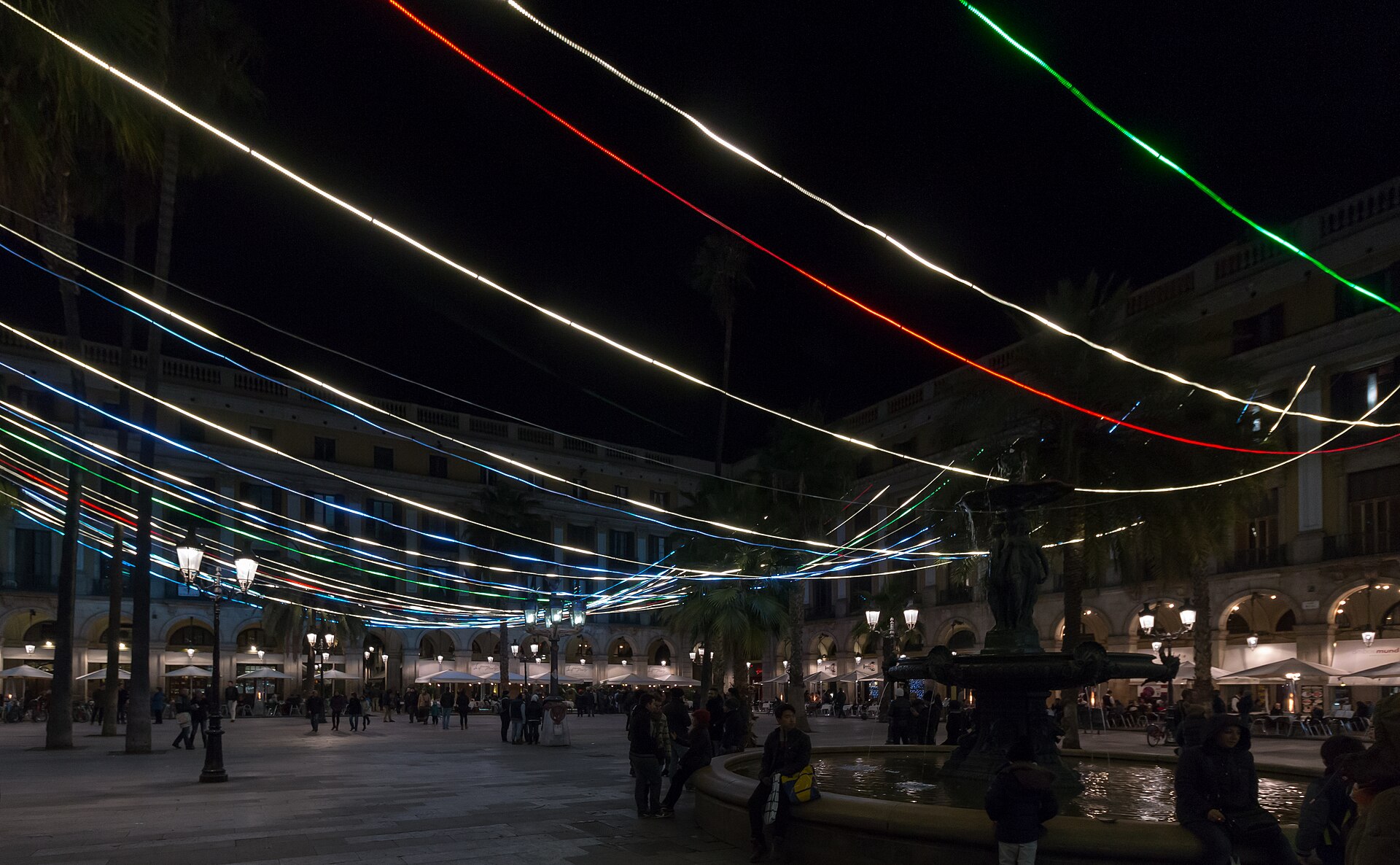
Plaça Reial at night: Barcelona – Nacht – Placa Reial 001 by Mummelgrummel, CC BY-SA 4.0, via Wikimedia Commons.
Carrer Blai, Poble-sec: Blai 14 by Xavier Badia Castellà, CC BY-SA 3.0, via Wikimedia Commons.