We get commissions for bookings made through this post. Booking links, and any accommodation options shown on the page, are handled by a partner that adds commission tracking automatically. It never costs you more, and it never affects what we recommend. Affiliate disclosure
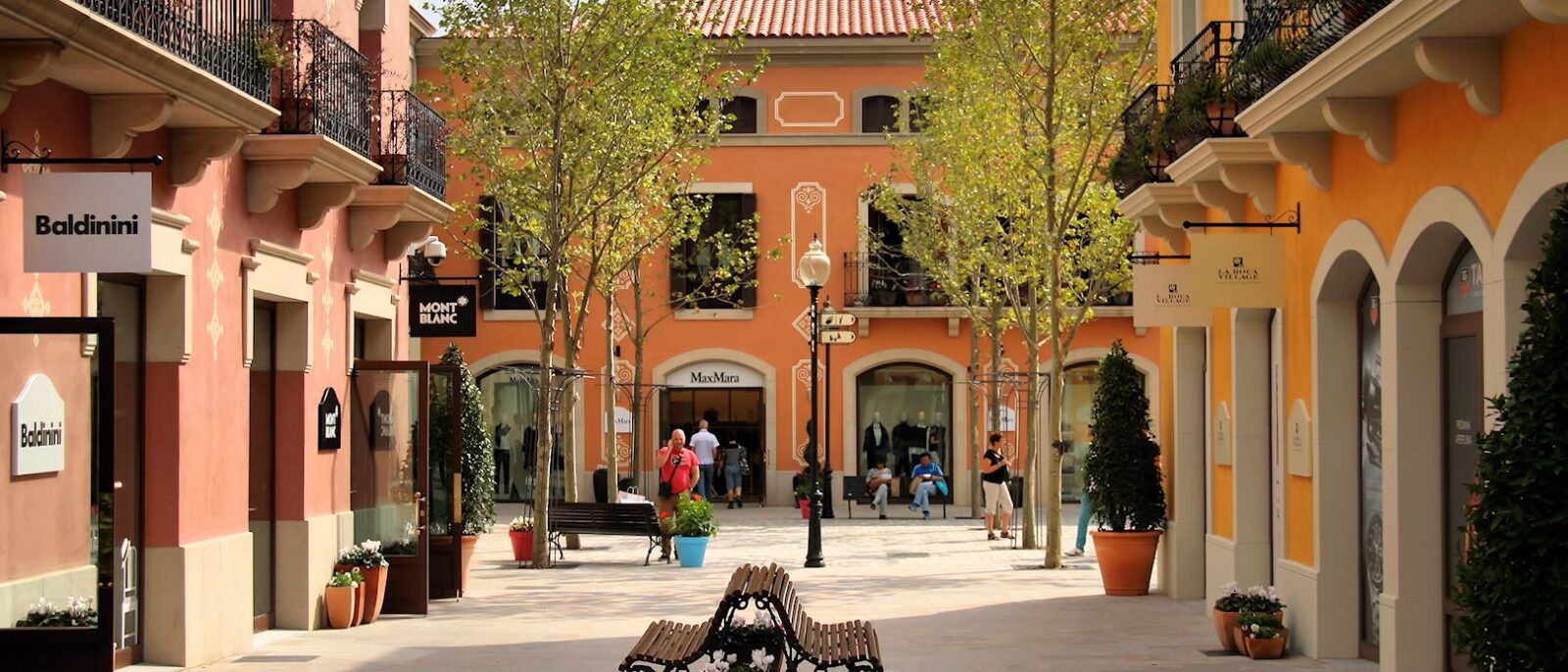
Forty minutes north-east of Barcelona, in the middle of nowhere in particular, somebody built a fake Catalan village out of pastel stucco and wrought-iron balconies and filled it with 130-odd outlet boutiques. la roca village is unashamedly artificial, unusually pleasant to walk around, and — this is the part that matters — genuinely cheaper than the shops on Passeig de Gràcia, provided you go in knowing what you are looking for. Go without a plan and you will spend six hours and €400 on things you did not want at a discount you cannot verify.
This guide covers all four ways of getting there and what each really costs, which brands are worth the trip and which are not, how the tax-free refund actually works for non-EU visitors, when to go and when to stay away, and the honest case for skipping it entirely. Prices were checked in September 2026; treat them as the right order of magnitude and confirm the current fares before you travel.
La Roca Village at a glance
| What | Detail |
|---|---|
| Entry | Free |
| Opening hours | 10:00–21:00, seven days a week, all year |
| Boutiques | 130+, mostly mid-to-high-end fashion and accessories |
| Advertised discount | Up to 60% off the original retail price |
| Travel time from central Barcelona | 40 min by direct coach; 50–70 min by train and bus |
| Shopping Express coach | €25 return online, €27 on board; children 3–12 €14/€16 |
| Train + L51 bus | Roughly €4–4.20 each way on the R2, plus the local bus fare |
| Realistic time needed | 4–6 hours including travel |
| Best days | Tuesday to Thursday, out of season |
| Worst days | Saturdays, and the January and July sale weeks |
What La Roca Village actually is
La Roca Village opened in 1998 and belongs to the Bicester Collection, the same group behind Bicester Village outside Oxford and Las Rozas Village outside Madrid. The formula is identical everywhere: a purpose-built open-air street of small boutiques, each stocking last season’s lines, overruns and outlet-specific production from a single brand, at a marked discount from the original list price.
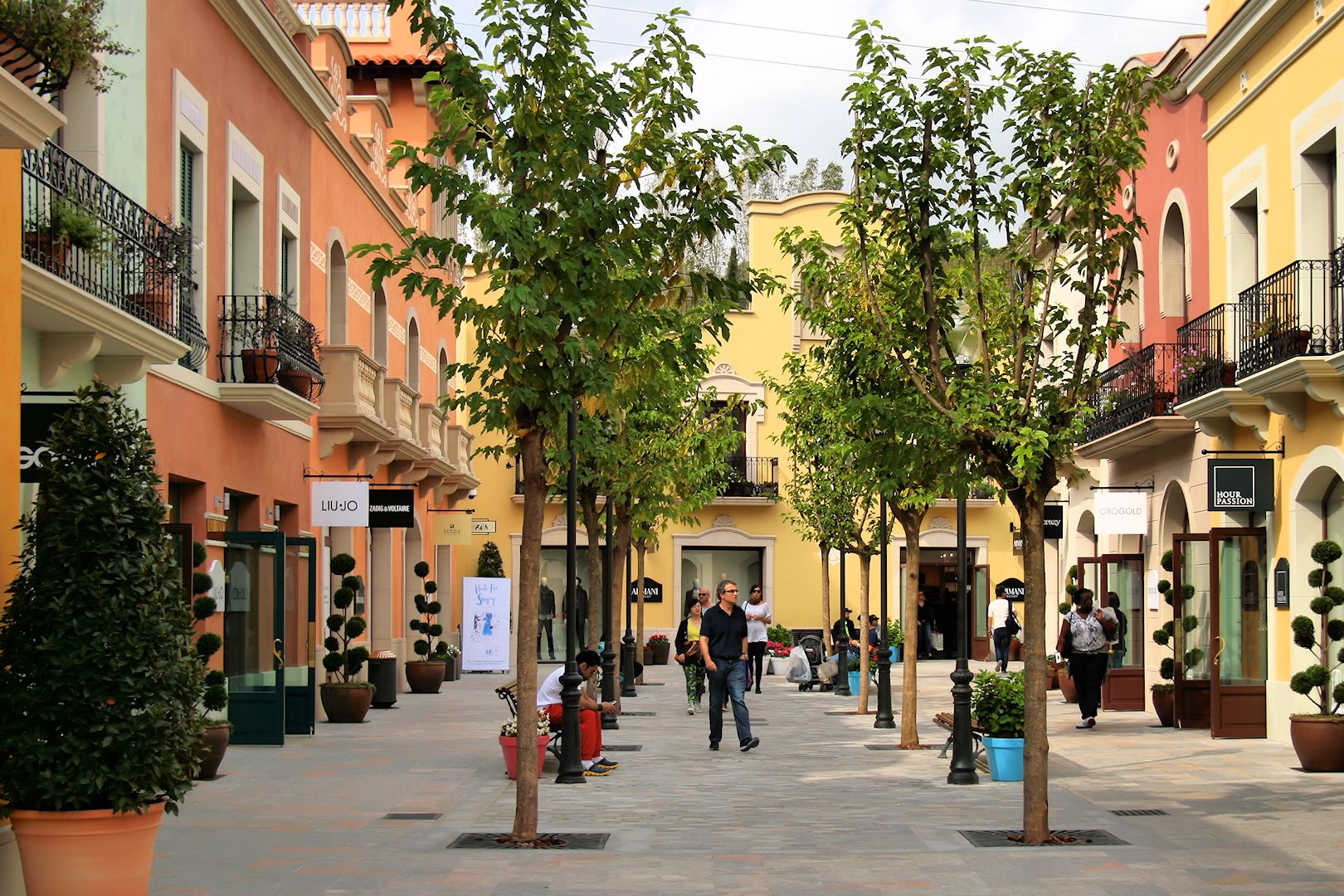
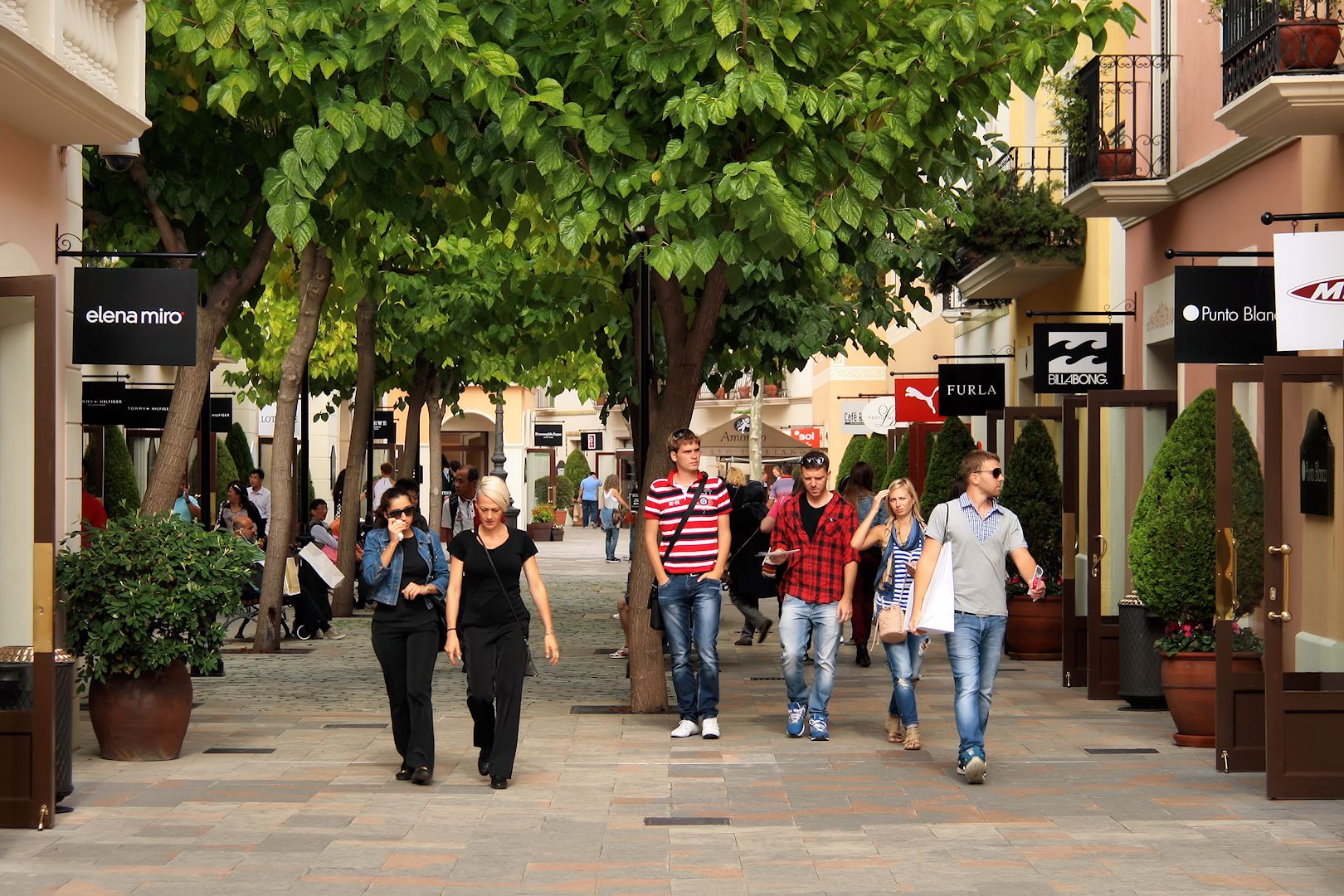
The setting is a stage set — pastel façades, balconies with geraniums, a fountain, benches under plane trees — and it works better than it has any right to. It is far more agreeable than a covered mall, and on a warm day it is a genuinely nice place to spend a few hours. There are cafés, a couple of proper restaurants, clean toilets, free wifi and a hands-free shopping service that will carry your bags to a collection point so you are not lugging them from shop to shop.
What it is not is a Catalan village. La Roca del Vallès, the real town, is a few minutes down the road and has nothing to do with the outlet. If you were hoping to combine shopping with a bit of authentic Catalonia, this is not the day trip for that — try Girona instead.
Which brands are there
The line-up shifts, but the consistent core is Spanish and Italian mid-to-premium fashion with a scattering of genuine luxury. Expect to find versions of the following, and note that the list changes several times a year — check the village’s own directory before you commit to the journey for one specific shop.
- Spanish high street and premium: Bimba y Lola, Adolfo Domínguez, Camper, Desigual, Pedro del Hierro, Punto Blanco, El Ganso.
- Italian and international mid-premium: Furla, Max Mara, Liu Jo, Elena Mirò, Tommy Hilfiger, Calvin Klein, Guess, Diesel, Michael Kors, Hugo Boss.
- Luxury, in outlet form: a rotating cast that has included Armani, Bally, Loewe, Jimmy Choo, Mont Blanc and Zadig & Voltaire. Stock is thin, sizes are erratic, and this is where the queueing happens.
- Sport and outdoor: Nike, Adidas, Puma, Salomon, The North Face, Billabong.
- Home, beauty and accessories: Villeroy & Boch, Bang & Olufsen, Rituals, watch and sunglasses specialists.
What is not there
No Zara, no Mango, no Massimo Dutti, no H&M — the Inditex group and the fast-fashion chains do not do outlet villages in Spain, and they are cheaper on the high street in Barcelona anyway. No Chanel, no Hermès, no Rolex. And, importantly for anyone hoping to bring home something Catalan, almost nothing local: this is international brand retail, not Barcelona shopping. For that, the city’s food markets and neighbourhood shops are a far better bet.
Getting to La Roca Village: four options compared
The village sits beside the AP-7 motorway near Santa Agnès de Malanyanes, about 40 km from central Barcelona. Nothing takes you directly to the door except the coach and a taxi, so pick based on how much you value the last mile.
| Option | Time each way | Cost | Verdict |
|---|---|---|---|
| Shopping Express coach | 40 min | €25 return online | Easiest; best for two or more if you value the fixed schedule |
| Rodalies R2 + L51 bus | 50–70 min | ~€6–8 return per person | Cheapest; fine if you are comfortable with two changes |
| Sagalés direct bus from Barcelona | ~50 min | ~€8–12 return | A decent middle ground when the schedule suits |
| Taxi or ride-hail | 35–45 min | €55–75 each way | Only worth it for a group of four with heavy bags |
The Shopping Express coach
The village’s own branded coach, operated by Catalunya Bus Turístic, is the path of least resistance. It costs €25 return booked online (€27 on board), children 3–12 pay €14 online or €16 on board, and under-3s go free. The journey is about forty minutes.
Departures leave from Barcelona’s Estació del Nord, with some services also picking up on Passeig de Gràcia, spread across the morning and early afternoon. Returns run from the village roughly hourly from mid-morning until about 21:15, which means you can stay until closing and still get back. It runs daily, all year.
Two things worth knowing. First, book online — it is two euros cheaper and, more usefully, it guarantees you a seat on a specific departure, which matters at weekends and during the sales. Second, the return is not always as flexible as people assume; check whether your ticket ties you to a specific return time or lets you take any coach. If in doubt, ask at boarding rather than at 20:45 in the car park.
Train plus bus, the cheap way
The Rodalies R2 Nord line runs from Barcelona Sants via Passeig de Gràcia to Granollers Centre in about half an hour, roughly every fifteen minutes. From Granollers, the L51 bus (Sagalés) runs to the village entrance in ten to fifteen minutes; a taxi from the station does the same for around €12–15.
The catch is fares. Granollers sits in zone 3, so a standard city travel card or T-casual does not cover the journey — you need a Rodalies ticket, roughly €4–4.20 each way, plus the local bus fare on top. All in, expect €12–16 return per person including the connection. For one person that is a saving over the coach; for a couple it is marginal; for a family it is not worth the faff.
One genuine advantage: the train runs far more often than the coach, so if you decide at 14:00 that you have had enough, you are not waiting for a scheduled departure. Our guide to Barcelona’s train stations explains where the R2 platforms are at Sants and Passeig de Gràcia, both of which are easy to miss.
Driving
There is a large free car park, and if you already have a hire car this is comfortably the best option — half an hour up the AP-7 or the C-60 and you park at the gate. But hiring a car for the day, at €45–70 plus fuel and tolls, makes no sense against a €25 coach ticket. See our getting around Barcelona guide for why a car in the city itself is generally a mistake.
Is it actually cheaper? The honest answer
Sometimes, substantially. Sometimes not at all. The discount is calculated against the brand’s original full retail price, not against what the item currently sells for on the high street or online — which means a jacket marked “was €400, now €180” may well be sitting on a Spanish department store website at €200 in the seasonal sale, for no travel time and no coach fare.
Where the village genuinely wins:
- Leather goods and shoes. Camper, Furla and the Italian labels routinely knock 40–50% off items that rarely discount elsewhere, and the sizes tend to be complete.
- Outerwear out of season. Buying a winter coat in June, or a linen jacket in November, is where the real money is.
- Premium basics. Shirts, knitwear and jeans from Hugo Boss, Tommy Hilfiger and Calvin Klein are consistently well below city prices.
- Homeware. Villeroy & Boch and the kitchen brands are the least-picked-over corner of the village and often the best value in it.
Where it does not:
- Anything current-season. Outlet villages carry some made-for-outlet production that never existed at the “original” price. If the tag looks suspiciously pristine and the styling is very now, be sceptical.
- Sportswear. Nike and Adidas outlet stock is heavily discounted in Barcelona itself, and the Passeig de Gràcia and Diagonal branches run aggressive sales.
- Sunglasses and small accessories. The markdowns are thin and the queues are long.
- Anything you have not already priced. This is the single biggest trap. Check the item online on your phone before you buy. The wifi is free and it takes thirty seconds.
The VIP card, and whether it is worth anything
The village pushes a free VIP or “Shopping Passport” card that typically adds a further 10% off in participating boutiques. It is free, it takes two minutes at the information point, and there is no reason not to get one — but participation varies by shop and the biggest names often opt out. Treat it as a small bonus, not a reason to travel.
Tax-free shopping for non-EU visitors
If you live outside the EU, you can reclaim Spanish VAT (IVA, generally 21% on clothing and accessories) on purchases you take home with you. Since Spain abolished the old minimum spend, there is no threshold — any purchase qualifies. The process:
- Ask for the tax-free form at the till, with your passport. Boutiques at La Roca Village are used to this and most issue a digital DIVA form on the spot.
- Validate at the airport before check-in, at the DIVA self-service kiosks at Barcelona El Prat. You scan the form’s barcode; if the machine shows a green screen you are done. Occasionally it asks you to present the goods at customs, which is why you validate before you check your bags.
- Collect the refund at the refund operator’s desk in the terminal, or take the card-refund option and wait a few weeks.
- Leave time. The DIVA kiosks at El Prat can have a substantial queue in the morning peak. Allow an extra 45 minutes on top of what you would normally budget — our El Prat airport guide has the terminal layout.
Note that the refund operator takes a commission, so you will get back roughly 12–16% of the purchase price rather than the full 21%. On a €200 spend that is around €25 — real money, and about the price of the coach.
When to go, and when to stay away
The best times
- Tuesday to Thursday, any time of year. The village is calm, the boutiques are properly stocked and staffed, and you can actually try things on.
- Mid-morning. Arrive at opening and the first coachloads have not landed; the 10:00 to 12:30 window is the most civilised.
- Late November and early December, before the Christmas rush and after the autumn stock has been marked down.
The worst times
- Saturdays, especially in summer. It is genuinely unpleasant: full car park, queues to enter the popular boutiques, and no chance of a table for lunch.
- The January and July sale periods. Yes, the discounts stack. No, it is not worth it — the stock is picked over by the second week and the crowds are at their peak.
- Rainy days. Everything is outdoors. There is no covered walkway, and a wet afternoon here is miserable. If the forecast is bad, our rainy day in Barcelona guide has better options.
- Public holidays. Spanish holidays bring domestic day-trippers in volume, and Catalonia has plenty of them.
Practicalities
How long to allow
Four to six hours door to door is realistic: forty minutes each way plus three to four hours in the village. Serious shoppers manage a full day; most people are done in three hours and wish they had booked an earlier return. Do not plan anything else in Barcelona for that day — you will get back tired, laden and disinclined to go out.
Food
There are cafés, a food court and a couple of sit-down restaurants including a decent Catalan option. Prices are what you would expect at a captive-audience site: a sandwich and a coffee around €10–12, a proper lunch €25–35. It is fine, not memorable. If you care about eating well, eat in Barcelona before you go — and if you want a genuinely good market lunch, that is what the city’s food markets are for.
With children
It is manageable but not fun for them. There is open space to walk, a small play area, and the coach journey is short enough. But three hours of clothes shopping is three hours of clothes shopping. If you are travelling as a family, our Barcelona with kids guide has days out that everyone will enjoy rather than tolerate.
Luggage and carrying things
The hands-free service, where boutiques send your purchases to a central collection point for you to pick up on the way out, is free and genuinely useful. Use it from the first purchase. There are also lockers near the entrance.
Payment and cards
Every boutique takes cards. Decline the “pay in your home currency” option at the terminal — dynamic currency conversion costs you 3–6% for nothing. Our Barcelona money guide covers this and the other card traps in more detail.
The honest verdict: should you go at all?
If you are in Barcelona for four days or fewer, on a first visit, and you have not yet seen the Sagrada Família or eaten a proper Catalan lunch, then no. Spending a fifth of your trip in an artificial retail park to save €80 on a coat is a poor trade, and this site would rather tell you that than sell you a coach ticket.
Go if any of these apply:
- You are on a longer stay, or a repeat visit, and have already done the essentials.
- You have a specific list — a Camper size, a Furla bag, a Boss suit — and you have priced it at home first.
- You are travelling from outside the EU and the VAT refund materially changes the arithmetic.
- It is raining on a beach day and you were going to shop anyway.
Skip it if you want Barcelona shopping rather than brand shopping. Passeig de Gràcia has the flagships and the architecture in one walk, the Eixample side streets have the independents, Gràcia has the small designers, and El Born has the concept stores. None of them require a coach.

How to work the village in three hours
The single biggest mistake is wandering. The street is long, it loops, and by the time you reach the far end you have spent ninety minutes looking at brands you do not care about. A better plan:
- Before you leave Barcelona, pull up the boutique directory on the village’s site and write down five shops. Five. Anything beyond that is browsing, and browsing is what eats the day.
- Get the VIP card first, at the information point by the entrance. Two minutes, free, and it is worth 10% in the shops that participate.
- Do the luxury boutiques first, before 11:30. They are the ones that develop a door queue, and their stock is the thinnest, so being early is worth more there than anywhere else.
- Use the hands-free bag drop from your first purchase. It costs nothing and it changes the experience completely.
- Price-check on your phone before every purchase over about €80. Free wifi, thirty seconds, and it is the difference between a bargain and a story you tell yourself on the coach home.
- Eat early or eat late. Between 13:30 and 15:00 there is nowhere to sit.
- Book the return coach you actually want, not the last one. Very few people need the 21:15.
Sizing, fit and returns
Spanish and Italian sizing runs small, particularly in shoulders and shoes. If you normally take a 42 in a British or American brand, expect to need a 44 here. Fitting rooms exist in every boutique but queue at peak — another argument for arriving at opening.
Returns are the part people get caught by. Outlet stock is frequently sold as final sale, and where returns are accepted they are usually accepted only at that boutique, not at the brand’s city stores and not online. In practice: if it does not fit in the fitting room, do not buy it hoping to sort it out later. You will not be coming back.
La Roca Village versus Barcelona’s other outlets
La Roca is the famous one, but it is not the only option, and for some shoppers it is not the best one. Two alternatives are closer to the city and both are genuinely cheaper on the travel side.
| Where | Getting there | Character | Best for |
|---|---|---|---|
| La Roca Village | 40 min by coach; R2 to Granollers plus L51 bus | Open-air, premium and luxury brands, high polish | Leather goods, designer labels, a day out |
| Viladecans, The Style Outlets | ~30 min south by Rodalies plus a short bus | Covered, mainstream high-street brands | Sportswear, everyday clothes, rainy days |
| Mataró Parc | ~35 min north on the R1 coastal line | A retail park rather than a village | Bulk basics and household goods |
| City centre sales (January, July) | Walk or metro | Full high street, full stock | Everything, if your dates happen to line up |
The honest summary: if you want premium labels and are prepared to travel, La Roca. If you want Nike trainers and a rain-proof roof, Viladecans. If you are in Barcelona during the official rebaixes — the state-regulated sale periods in January and July — the city’s own shops often beat all of them, with no journey at all.
Combining La Roca with something else
Because the village sits in the Vallès Oriental, north-east of the city, it does not combine neatly with anything most visitors want to see. The Costa Brava is further up the same motorway but an hour beyond; Montserrat is in completely the wrong direction. If you are driving, the one pairing that works is the Montseny natural park, half an hour north, which is beautiful in autumn and has villages worth a lunch.
Realistically, though, treat La Roca as its own day and do not try to bolt anything on. Our day trips guide covers the excursions that genuinely pair with each other.
Frequently asked questions
How do I get from Barcelona to La Roca Village?
The Shopping Express coach from Estació del Nord takes about 40 minutes and costs €25 return online. The cheaper alternative is the Rodalies R2 train to Granollers Centre, roughly €4–4.20 each way, then the L51 bus or a short taxi to the village gate.
How much is the La Roca Village Shopping Express bus?
€25 return booked online and €27 bought on board for adults; €14 online or €16 on board for children aged 3–12; free for under-3s. Book online — it is cheaper and it secures a seat on a specific departure.
What are La Roca Village’s opening hours?
10:00 to 21:00, seven days a week, all year round. Individual boutiques occasionally close a little earlier, and a handful of public holidays affect hours — check the village’s site before travelling on a Spanish holiday.
Is there an entrance fee for La Roca Village?
No. Entry is free, parking is free, and the VIP discount card is free.
Is La Roca Village actually cheaper than shopping in Barcelona?
For leather goods, shoes, out-of-season outerwear and premium basics, usually yes — often 40–50% below city prices. For sportswear, current-season fashion and small accessories, frequently not. The discount is measured against original retail, not against what the item costs today in a city sale.
How long should I spend at La Roca Village?
Three to four hours in the village, or four to six hours door to door from central Barcelona. Most people finish sooner than they expected and wish they had booked an earlier coach back.
Can I claim tax back at La Roca Village?
If you live outside the EU, yes. Ask for the DIVA tax-free form at the till with your passport, validate it at the self-service kiosks at Barcelona El Prat before you check in, and collect the refund in the terminal or by card. Expect to recover roughly 12–16% after the operator’s commission.
What is the best day to visit La Roca Village?
Tuesday to Thursday, arriving around opening. Avoid Saturdays entirely, and avoid the January and July sale weeks unless you enjoy queueing for picked-over stock.
Does La Roca Village have Zara or Mango?
No. The Inditex group and the Spanish fast-fashion chains do not trade in outlet villages here. Both are cheaper on the high street in Barcelona, and there is a very large Zara on Passeig de Gràcia.
Is La Roca Village worth it on a short trip?
Honestly, no. On a first visit of four days or fewer there are better uses of a whole day. It makes sense on a longer or repeat stay, when you have a specific list, or when the non-EU VAT refund tips the maths.
The outlet is one option among several, and for a lot of visitors it is not the best one. Barcelona’s own districts — El Born for independents, Gràcia for local designers, the Gothic Quarter for century-old workshops — frequently beat it on both interest and price. Our guide to shopping in Barcelona compares the whole city, including what to buy and what to leave on the shelf.
Related Barcelona Guides
- Barcelona’s markets — where to buy things that were actually made near here.
- The Eixample — Passeig de Gràcia, the flagship stores and the side-street independents.
- Day trips from Barcelona — the Catalan alternatives if you would rather see a real town.
- Money and payments in Barcelona — cards, currency conversion traps and tipping.
- Barcelona El Prat airport guide — where the VAT refund kiosks are and how long to allow.
- Barcelona on a rainy day — better wet-weather plans than an open-air outlet village.
- The complete Barcelona travel guide — everything else on this site.
Photo Credits
La Roca Village street: La Roca Village Chic Outlet Shopping (15275455890) by Jorge Franganillo, CC BY 2.0, via Wikimedia Commons.
Shoppers at La Roca Village: La Roca Village Chic Outlet Shopping (15275528448) by Jorge Franganillo, CC BY 2.0, via Wikimedia Commons.
La Roca Village square: La Roca Village Chic Outlet Shopping (15275593127) by Jorge Franganillo, CC BY 2.0, via Wikimedia Commons.