We get commissions for bookings made through this post. Booking links, and any accommodation options shown on the page, are handled by a partner that adds commission tracking automatically. It never costs you more, and it never affects what we recommend. Affiliate disclosure
Why a Complete Gaudi Buildings List Matters for Any Barcelona Trip
Antoni Gaudi (1852-1926) designed dozens of buildings, but only a fraction are routinely visited. This complete gaudi buildings list covers every significant work the architect created in Barcelona and the surrounding region: the seven UNESCO-inscribed sites, the lesser-known interiors that take Gaudi enthusiasts an extra hour to find, the half-dozen religious commissions, and the residential and public projects that often get cut from typical itineraries. By the end of this article you will have a complete map of all gaudi buildings in and around Barcelona, ranked by historical importance and visiting practicality, with current ticket prices and access information for 2026.
This is the article we wish we had been handed on our first Barcelona trip. Whether you are a casual visitor wanting to know what to prioritise, a serious architecture enthusiast planning a multi-day Gaudi marathon, or a returning traveller seeking the lesser-known sites, this list of gaudi works barcelona covers it all. We have organised the buildings by location and importance so you can plan a logical day or week.
The Seven UNESCO-Inscribed Gaudi Sites
UNESCO has inscribed seven Gaudi works as World Heritage Sites under the title “Works of Antoni Gaudi” (1984, expanded 2005). These are the headline destinations.
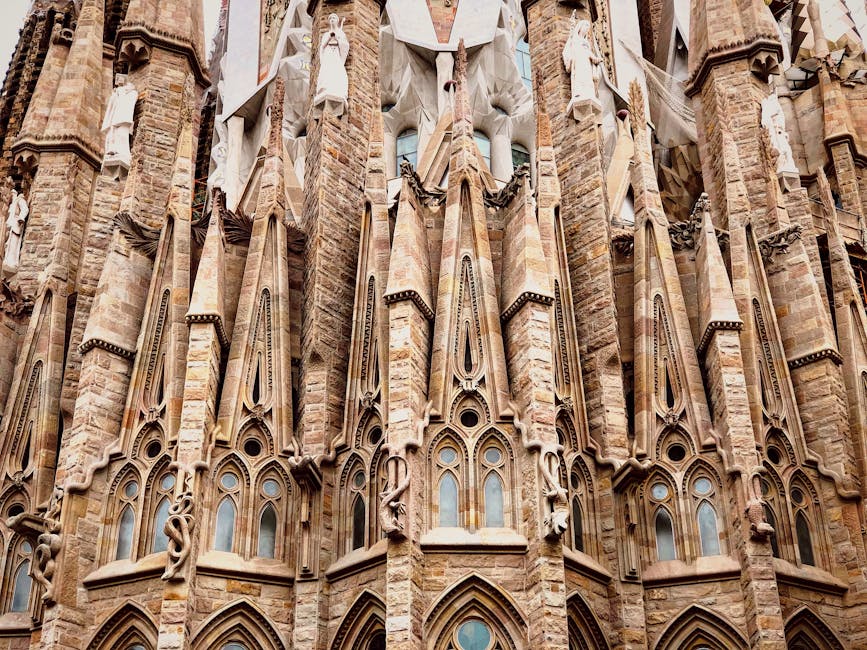
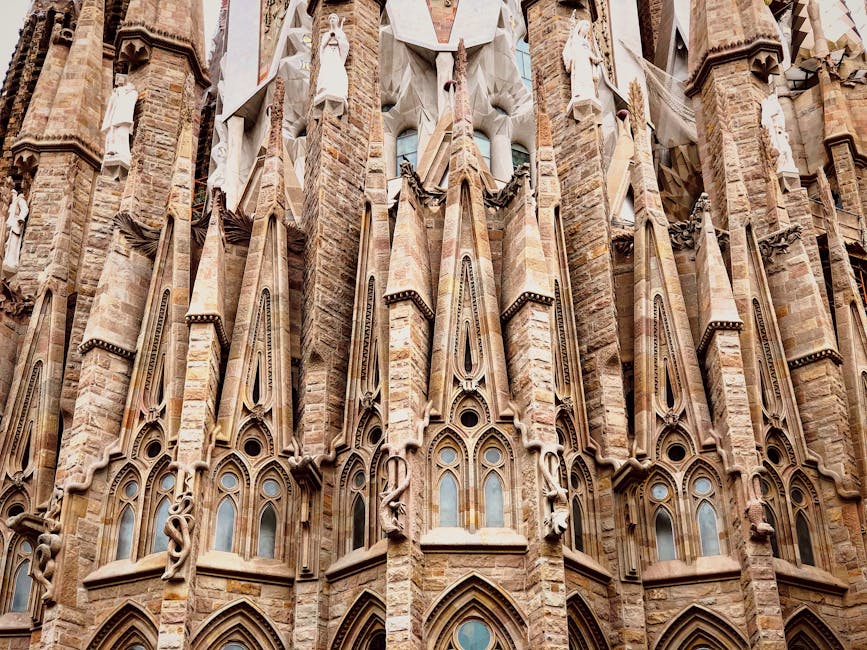
1. Sagrada Familia (Eixample)
The most extraordinary basilica on earth. Construction began in 1882 and is approaching completion in 2026 with the Tower of Jesus Christ. Allow 90 to 120 minutes inside; book online 4 to 8 weeks ahead.
- Address: Carrer de Mallorca 401.
- Hours: 9:00 AM to 8:00 PM daily; reduced winter hours.
- Tickets: 26 EUR basic; 40 EUR with tower access.
- Closest metro: L2 or L5 Sagrada Familia.
For the full guide, see our Sagrada Familia article.
2. Park Guell (Carmel)
The hilltop wonderland of mosaics, dragons, and gingerbread gatehouses. The Monumental Zone is ticketed; the wider park is free.
- Address: Carrer d’Olot 5 (main entrance).
- Hours: 9:30 AM to 7:30 PM (summer); 9:30 AM to 5:30 PM (winter).
- Tickets: 18 EUR adults; 13 EUR children.
- Closest metro: L3 Vallcarca or Lesseps.
See our Park Guell guide.
3. Casa Batllo (Eixample)
Gaudi’s most colourful and dreamlike facade, on the famous Block of Discord on Passeig de Gracia. Recently renovated with augmented-reality interior tours.
- Address: Passeig de Gracia 43.
- Hours: 9:00 AM to 10:30 PM daily.
- Tickets: 35 to 75 EUR depending on experience.
- Closest metro: L2, L3, L4 Passeig de Gracia.
4. Casa Mila / La Pedrera (Eixample)
Gaudi’s last residential project. The undulating limestone facade and the rooftop with surreal warrior-helmet chimneys are the highlights.
- Address: Passeig de Gracia 92.
- Hours: 9:00 AM to 6:30 PM (winter); 9:00 AM to 8:30 PM (summer).
- Tickets: 28 to 49 EUR.
- Closest metro: L3 or L5 Diagonal.
See our Casa Batllo vs Casa Mila comparison.
5. Palau Guell (Raval)
An early Gaudi work (1886-1888), commissioned by his patron Eusebi Guell as a town residence. The interior includes ornate parabolic arches, intricate ironwork, and a stunning rooftop with chimney sculptures (Gaudi’s first use of trencadis mosaic).
- Address: Carrer Nou de la Rambla 3-5.
- Hours: 10:00 AM to 7:00 PM (Tuesday to Sunday); closed Mondays.
- Tickets: 12 EUR adults; free for under-10s.
- Closest metro: L3 Liceu or Drassanes.
6. Casa Vicens (Gracia)
Gaudi’s first major commission (1883-1885) and his earliest work in the UNESCO inscription. The Moorish-Mudejar-influenced facade was a complete departure from European architectural norms of the time. Open to the public since 2017.
- Address: Carrer de les Carolines 18-24.
- Hours: 10:00 AM to 8:00 PM daily.
- Tickets: 18 EUR adults; 11 EUR children.
- Closest metro: L3 Lesseps or Fontana.
7. Crypt of Colonia Guell (Santa Coloma de Cervello)
The experimental basilica that prefigured the Sagrada Familia. Gaudi designed it for a workers’ colony south of Barcelona. Only the crypt was completed; the upper church was never built. The structural innovations here led directly to Gaudi’s Sagrada Familia design.
- Address: Calle Claudi Guell, Santa Coloma de Cervello.
- Hours: 10:00 AM to 5:00 PM (Tuesday to Sunday); closed Mondays.
- Tickets: 9 EUR adults; 5 EUR children.
- Access: FGC train S33 or S8 from Plaça Espanya to Colonia Guell (25 minutes).
Other Gaudi Buildings in Barcelona
Beyond the UNESCO seven, Gaudi designed many other buildings, some open to the public, others private but visible from the street.
8. Casa Calvet (Eixample)
An early commercial residence (1898-1899). Conventional by Gaudi standards but features beautiful bay windows and original interiors. Some rooms house a restaurant; the building is not generally open for tours.
- Address: Carrer Casp 48.
- Public access: Restaurant in some rooms; ground floor.
9. Bellesguard (Tower) / Casa Figueras (Sant Gervasi)
A neo-Gothic-influenced manor (1900-1909) built on the site of a 14th-century royal residence. Small medieval-style towers, sculpted stained-glass windows, and a beautiful interior.
- Address: Carrer Bellesguard 16-20.
- Hours: 10:00 AM to 3:00 PM (Tuesday to Sunday).
- Tickets: 16 EUR adults.
- Closest metro: FGC L7 Avinguda Tibidabo plus 15-minute walk.
10. Pavilions of Finca Guell (Pedralbes)
The gates and small pavilions of the original Guell country estate. The famous wrought-iron dragon gate is a masterpiece of Gaudi metalwork (1884-1887).
- Address: Avinguda Pedralbes 7.
- Hours: Variable; check the official Real Catedra Gaudi website.
- Tickets: Around 6 EUR.
- Closest metro: L3 Palau Reial.
11. Casa Batllo’s Adjacent Buildings
The Casa Batllo facade is part of a sequence of Modernista buildings on the Block of Discord. While only Casa Batllo is by Gaudi, the adjacent Casa Lleo Morera (Domenech i Montaner) and Casa Amatller (Puig i Cadafalch) form an architectural ensemble worth photographing together.
12. Sagrada Familia Schools
A small school building Gaudi designed in 1909 for the children of the Sagrada Familia construction workers. Beautifully restored and now a small museum within the Sagrada Familia complex. Access included with basilica ticket.
13. Lampposts in Plaça Reial (Gothic Quarter)
Gaudi’s first public commission (1879). Two ornate cast-iron lampposts with caduceus serpents wrapping the bases. Free to view.
- Address: Plaça Reial.
- Closest metro: L3 Liceu.
14. Cascada Fountain (Parc de la Ciutadella)
A young Gaudi worked on the design of this 1881 monumental fountain as an architecture student. The dragon at the base is his contribution. Free to view.
- Address: Parc de la Ciutadella.
- Closest metro: L4 Ciutadella Vila Olimpica.
15. Torre Gaudi (Galera, southern coast)
A small water tower south of Barcelona, less visited but architecturally important.
16. Casa Botines (Leon)
Outside Barcelona but worth mentioning for completists. A neo-Gothic Gaudi residential and commercial building in Leon, northern Spain. Now a museum and restaurant.
17. El Capricho (Comillas, Cantabria)
A 1885 villa in the small town of Comillas, Cantabria. One of Gaudi’s earliest residential commissions. Open to the public.
How to Plan a Gaudi Itinerary
Day 1: The Eixample Concentration
The Eixample contains four major Gaudi sites within walking distance.
- 9:00 AM: Sagrada Familia (90-120 minutes).
- 11:00 AM: Walk to Sagrada Familia Schools.
- 12:00 noon: Lunch in the Eixample.
- 2:00 PM: Casa Batllo or Casa Mila interior.
- 4:00 PM: Block of Discord facade walk.
- 5:00 PM: Coffee on Passeig de Gracia.
Day 2: The Hill Sites
- 9:30 AM: Park Guell Monumental Zone.
- 11:00 AM: Three Crosses Hill.
- 12:00 noon: Walk to Casa Vicens.
- 1:00 PM: Casa Vicens interior visit.
- 2:30 PM: Lunch in Gracia.
- 4:00 PM: Bellesguard tower visit.
Day 3: The Old City and Outskirts
- 10:00 AM: Palau Guell visit.
- 11:30 AM: Plaça Reial lamppost photos.
- 12:00 noon: Cascada fountain in Parc de la Ciutadella.
- 1:00 PM: Lunch in El Born.
- 2:30 PM: Train to Colonia Guell.
- 3:30 PM: Crypt visit.
- 5:00 PM: Train back.
- 7:00 PM: Pavilions of Finca Guell (free, brief).
Combination Tickets and Discounts
Gaudi Bundle Tickets
Several third-party operators sell combined tickets covering the Sagrada Familia, Park Guell, and Casa Batllo or Casa Mila. Savings are typically 5 to 15 percent over individual tickets, but flexibility is reduced. Buy individual tickets directly through the official sites for full flexibility.
Articket BCN
The 35 EUR culture pass includes 6 museums; not Gaudi-focused but pairs well with a multi-day visit.
Barcelona Card
Includes free or discounted entry at several Gaudi sites. From 55 EUR for 3 days. See our T-Mobilitat and travel cards guide.
Gaudi Walking Tours
Many Barcelona-based companies offer guided Gaudi walking tours focused on the Eixample, the Old City, or the full UNESCO seven. Half-day tours typically cost 35 to 75 EUR per person; full-day private tours 200 to 500 EUR.
Some recommended operators:
- Real Catedra Gaudi at the University of Barcelona: Academic-level tours of his work.
- Gaudi Experience tours: Half-day Eixample-focused walks.
- Self-guided audio tours: Apps like GuruWalk, Voicemap, and Rick Steves’ Audio Europe.
Gaudi’s Life and Influences
Gaudi was born in 1852 in Reus, a town south of Barcelona. He studied at the Llotja School of Architecture in Barcelona, qualifying in 1878. His early career was conventional, but he developed an idiosyncratic style influenced by:
- Catalan Modernisme: The local Art Nouveau movement.
- Neo-Gothic revival: The medieval-romantic style of the late 19th century.
- Catholic devotion: Gaudi was deeply religious; his work is filled with Catholic symbolism.
- Catalanism: The political and cultural movement promoting Catalan identity.
- Nature: Gaudi famously said “the straight line belongs to men, the curved one to God.”
- Mathematical surfaces: Catenary arches, hyperboloids, paraboloids – all derived from natural forms.
Gaudi was struck by a tram in 1926 at age 73; he died three days later. His funeral procession through Barcelona streets was attended by hundreds of thousands.
Gaudi Style and Vocabulary
Recognising Gaudi’s signature elements helps you appreciate the buildings even from outside:
- Trencadis (broken-tile mosaic): Gaudi’s signature decorative technique. He used it on the Park Guell bench, the Sagrada Familia roof, the Pavilions, and more.
- Catenary arches: The chain-shaped curves that distribute weight perfectly. The structural foundation of Sagrada Familia and Colonia Guell.
- Hyperboloids and paraboloids: 3D mathematical surfaces that create the swooping ceilings of his buildings.
- Ruled surfaces: Surfaces that can be drawn with a straight edge despite appearing curved.
- Naturalistic ornament: Carved leaves, flowers, animals, and human figures.
- Catholic symbolism: Crosses, religious figures, and iconography embedded throughout.
- Wrought-iron work: Gates, balconies, and lampposts often feature elaborate metalwork.
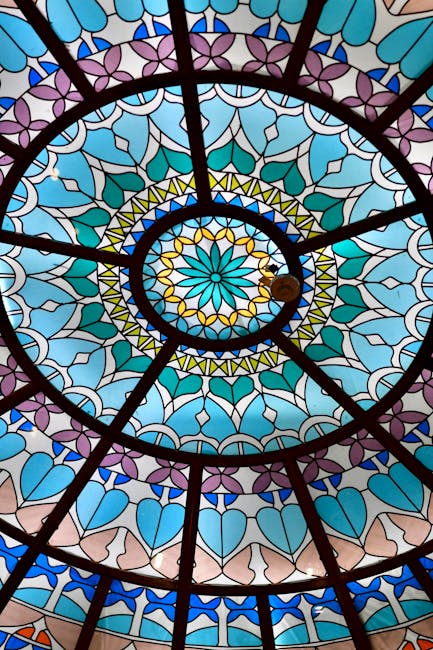
- Polychromatic surfaces: Bright colours from broken tiles, ceramics, and glass.
Gaudi Centenary 2026
2026 marks the 100th anniversary of Gaudi’s death. The city is celebrating with:
- Special evening illuminations on the major buildings.
- Restored access to some normally-closed interiors.
- A dedicated walking route through the Eixample.
- Special exhibitions at the Museu Frederic Mares and other museums.
- Sagrada Familia completion of the Tower of Jesus Christ as the centenary’s centrepiece.
Practical Tips for a Gaudi Marathon
- Book everything online in advance. Sagrada Familia 4 to 8 weeks ahead; Park Guell, Casa Batllo, Casa Mila 1 to 2 weeks; Casa Vicens, Palau Guell, Bellesguard 3 to 5 days.
- Buy tickets only from official sites. Third-party resellers can mark up prices.
- Allow proper time per visit. 90 to 120 minutes for major sites; 45 to 60 for smaller ones.
- Audioguides are worth the extra fee. Add 5 to 8 EUR per visit.
- Comfortable walking shoes. Gaudi sites involve cobbled streets, stairs, and uneven surfaces.
- Watch the weather. Rooftop visits (Casa Mila, Casa Batllo, Sagrada Familia tower) work best on clear days.
- Photography rules vary. Most allow no flash, no tripods.
- Avoid midday in summer. Sites are crowded; rooftops are hot.
- First slot of the day is best. 9:00 AM and 9:30 AM slots are the least crowded.
- Combine sites geographically. Don’t zigzag across the city.
- Take rest breaks. A Gaudi marathon is mentally and physically tiring.
- Save the Sagrada Familia for golden hour. If you can manage it, the late afternoon light through the western stained glass is unforgettable.
Where to Stay for a Gaudi-Focused Trip
The Eixample is the obvious choice. Recommended hotels:
- Hotel Casa Fuster (Passeig de Gracia 132): A 5-star Modernista building near Casa Vicens.
- Hotel Mandarin Oriental (Passeig de Gracia 38): Walking distance to Block of Discord.
- Hotel Praktik (multiple Eixample locations): Mid-range design hotels in restored Modernista buildings.
- Hotel Bagues (Passeig de Gracia 75): 5-star next to Casa Batllo.
- Hotel Yurbban Trafalgar: Mid-range with a rooftop pool overlooking Sagrada Familia.
For more, see our where to stay in Barcelona guide.
Beyond Gaudi: Other Modernista Architects
Gaudi was not alone. The Catalan Modernisme movement included several major contemporaries whose work pairs naturally with a Gaudi tour:
- Lluis Domenech i Montaner: Casa Lleo Morera, Hospital de Sant Pau, Palau de la Musica Catalana.
- Josep Puig i Cadafalch: Casa Amatller, Casa de les Punxes.
- Josep Maria Jujol: Gaudi’s collaborator at Park Guell, Casa Batllo, and Casa Mila.
- Enric Sagnier: Casa Mulleras, Casa Macaya.
For a complete walk through Eixample architecture, see our Eixample neighbourhood guide.
Frequently Asked Questions
How many Gaudi buildings are in Barcelona?
Around 14 to 17 significant Gaudi works exist in Barcelona, including 7 UNESCO-inscribed sites. Many smaller projects (lampposts, fountains, school buildings) bring the total to over 20.
Which Gaudi building should I visit first?
The Sagrada Familia. It is his masterpiece and the most iconic.
Is Casa Vicens worth visiting?
Yes, especially for serious Gaudi fans. As his first major commission it shows the formative beginnings of his style.
What is the best Gaudi tour?
Self-guided with the official audioguides at each site is excellent. For deeper context, a 4-hour guided walking tour focused on the Eixample is the standard option.
How long does it take to see all the Gaudi buildings?
Three to five days for a thorough visit, depending on how many interiors you see and whether you visit Colonia Guell.
Are Gaudi buildings free?
The Cascada fountain, Plaça Reial lampposts, and Park Guell free area are free. The other major sites have entry fees from 12 to 75 EUR.
Can I visit the Sagrada Familia at sunset?
Yes. Late afternoon slots show the western stained glass at its most spectacular.
Is Park Guell accessible?
The main paths are; some areas have stairs. Wheelchair access is partial. See our Park Guell guide.
Do I need a ticket for the Block of Discord exterior?
No. Photographing the Casa Batllo, Casa Amatller, and Casa Lleo Morera facades from Passeig de Gracia is free.
Where is Bellesguard?
In the upper Sant Gervasi district, on the foothills of Tibidabo. About 15 minutes’ walk from the FGC L7 Avinguda Tibidabo station.
What is the easiest Gaudi day?
The Eixample concentration: Sagrada Familia plus Casa Batllo plus Casa Mila in one full day with a long lunch in between.
Is Casa Mila open at night?
Yes, the “Magic Pedrera” evening show runs after dark. About 39 EUR.
What is trencadis?
The broken-tile mosaic technique Gaudi pioneered. Used on Park Guell’s bench, Sagrada Familia roof, and many other works.
What is Gaudi’s most famous building?
The Sagrada Familia, by a wide margin. Casa Mila and Park Guell are next.
Where is Gaudi buried?
In the crypt of the Sagrada Familia. The tomb is visible through a small window during normal visiting hours.
Final Thoughts: A Career Worth Walking
The complete gaudi buildings list is the kind of resource that turns a casual visit into a deep architectural pilgrimage. Pick the major UNESCO sites for any first trip; add the lesser-known interiors (Casa Vicens, Palau Guell, Bellesguard) for a second visit; and round out with the smaller works (lampposts, the Cascada, the Pavilions) for a complete picture. Gaudi’s career spans more than 50 years and 30 buildings, and the city he transformed remains the only place on earth where his vision can be experienced in full.
For more, see our Gaudi Barcelona pillar, the Sagrada Familia guide, the Park Guell guide, the Casa Batllo vs Casa Mila comparison, and the Eixample neighbourhood guide for the wider Modernista context.
Of everything on this list, Casa Milà is the one that best repays a slow visit — it was Gaudí’s last civil commission and the most structurally radical thing he built. Our La Pedrera guide works through the ticket tiers, the four spaces you actually see inside, and the details most visitors walk straight past.