We get commissions for bookings made through this post. Booking links, and any accommodation options shown on the page, are handled by a partner that adds commission tracking automatically. It never costs you more, and it never affects what we recommend. Affiliate disclosure
The Sagrada Família Has Reached Its Most Important Milestone Since Construction Began
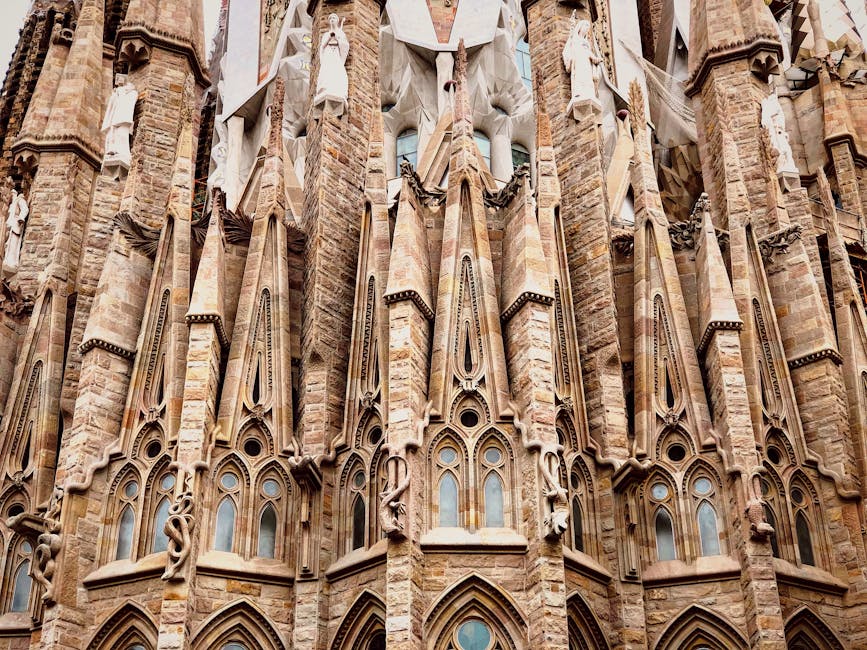
On February 20, 2026, workers installed the upper arm of the cross atop the Tower of Jesus Christ — the basilica’s central spire and tallest point at 172.5 metres. The completion was a milestone 144 years in the making (construction began 1882) and made the Sagrada Família the tallest church building in the world, surpassing the previous record holder, Ulm Minster in Germany (161.5 metres). For the first time since Antoni Gaudí’s original vision in 1883, all 14 of the basilica’s planned spires are complete: four for the apostles at the Nativity façade, four at the Passion façade, four for the Evangelists, one for the Virgin Mary, and the central Tower of Jesus Christ. While work continues on the controversial Glory Façade and its monumental stairway (projected through 2034), the basilica’s main structural completion in 2026 is the most significant milestone in modern architectural history. This complete guide to the sagrada familia completion date covers what’s done, what remains, and what to expect when visiting in 2026 and beyond — answering the question travellers most ask: when will sagrada familia be finished?
The Tower of Jesus Christ: 172.5 Metres of Engineering
The central tower — known officially as the Tower of Jesus Christ — is the basilica’s tallest structure. Completed in February 2026 with the installation of the upper cross arm. The tower sits directly over the central crossing of the basilica’s nave and transept and culminates in a four-pointed cross visible from across central Barcelona.
Tower Specifications
- Total height: 172.5 metres.
- Position: Above the central crossing of nave and transept.
- Structure: Reinforced concrete with stone facing.
- Decoration: Glass mosaics that catch light from sunrise to sunset; the lit cross at night is visible across the city.
- Material composition: Mediterranean stone from Catalonia; Murano glass mosaic; bronze and ceramic.
- Significance: The basilica’s central spire — symbolically the seat of Christ above the church.
The Final Installation
The upper arm of the cross was lifted into position by crane on February 20, 2026. The remaining decorative work on the tower will continue through 2027-2030 with smaller decorative elements added as the basilica’s interior continues to evolve.
The 14 Towers Complete: A Vision Realised
Gaudí planned 18 towers in total — 14 of which now stand complete. The remaining 4 (the Tabernacle Tower and three smaller towers at the Glory Façade) will be added as that façade is completed in the coming decade.
The 14 Completed Towers
- Nativity Façade (4 towers): Each dedicated to one of the 4 apostles (Matthew, Judas, Simon, Barnabas). Heights 90-99 metres. The first towers built (1925-1955).
- Passion Façade (4 towers): Dedicated to Apostles James, Bartholomew, Thomas, Philip. Heights 90-99 metres. Completed 1976.
- Evangelist Towers (4 towers): Dedicated to the 4 Gospel writers (Matthew, Mark, Luke, John). Heights 130-135 metres. Completed 2021-2023.
- Virgin Mary Tower: 138 metres. Completed 2021.
- Tower of Jesus Christ (central): 172.5 metres. Completed February 2026.
The Remaining 4 Towers
- Tabernacle Tower: Will mark the apse area; planned to coincide with Glory Façade completion.
- Three Glory Façade Towers: Smaller; flank the Glory Façade entrance.
The Glory Façade: The Final Frontier
The Glory Façade — the grand southern entrance — is the basilica’s third and largest façade. Construction continues through 2034. The plans:
- Sculptures: Hundreds depicting the Glory of God, the Last Judgment, and humanity’s place in creation.
- The Monumental Staircase: A controversial planned stairway that would extend 60 metres across Carrer de Mallorca, requiring the relocation or demolition of buildings on the south side. The Barcelona city council and basilica board are still negotiating the staircase’s fate as of 2026.
- Three smaller spires: Will flank the Glory Façade.
- The Tabernacle Tower: Will be built between the Glory Façade and the apse.
The Controversial Staircase Question
The original plan calls for a monumental staircase descending from the Glory Façade across Carrer de Mallorca and possibly displacing residential buildings on the south side. Modern Barcelona’s residents and the city council argue against displacement; some compromises being explored include a partial staircase, redirecting it sideways, or replacing it with a pedestrian zone. The basilica architects and the Junta Constructora maintain Gaudí’s original vision should be preserved. Resolution of the staircase question is expected by 2027-2028.
What’s Inside the Basilica Now
The interior is now substantially complete and operating. Visitors can experience:
The Nave: Forest of Stone Columns
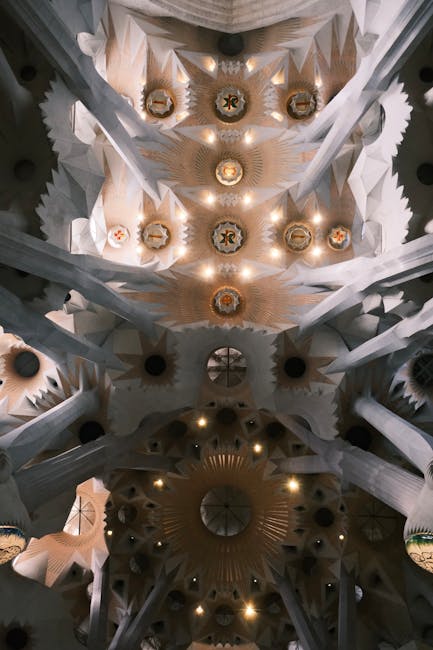
The basilica’s central nave — completed 2010 and consecrated by Pope Benedict XVI in November 2010 — is one of the most spiritually moving spaces in any European city. Tree-trunk columns split into branches at the top, supporting the geometric vaults. Stained glass walls (designed primarily by Joan Vila-Grau) cast kaleidoscopic colour across the space throughout the day. The technical innovation: the ceiling appears to “float” because the structural support is internalized in the columns.
The Crypt
The crypt beneath the apse holds Gaudí’s tomb. He died in 1926 after being struck by a tram on his way to confession at the Church of Sant Felip Neri.
The Stained Glass
The ongoing stained-glass programme — most installed 2016-2025 — transforms the interior light throughout the day. The Nativity-side glass uses cool blues and greens for morning; the Passion side uses warm oranges and reds for afternoon. The full programme will continue evolving through 2030.
The Apse
The semicircular eastern end of the basilica, complete with seven chapels dedicated to seven saints — completed 2010-2012.
The Towers and Spire Climbs
Visitors can ascend two towers (Nativity Façade or Passion Façade) by elevator. Tower tickets 35-45 EUR; allow extra 30 minutes. The towers offer the best panoramic views of central Barcelona.
Visiting Sagrada Família in 2026 and Beyond
Tickets and Pricing
- Basic admission: 26 EUR adults; free under 11.
- With audio guide: 30-35 EUR.
- With tower ascent (Nativity or Passion): 35-45 EUR.
- Full access (basilica + audio + both towers): 45-50 EUR.
- Family ticket (2 adults + 2 kids): 60-80 EUR.
- Combined Sagrada Família + Park Güell ticket: 40-45 EUR.
How to Book
- Official site (sagradafamilia.org): Cheapest; book 2-4 weeks ahead.
- Authorised resellers (Get Your Guide, Viator): Slight markup.
- Walk-up: Sells out daily; rarely available same-day.
Best Times to Visit
- Early morning (9 AM): Quietest; best for photography.
- Late afternoon (4-6 PM): Western light through Passion-side stained glass.
- Closing time visits: Last admissions 30-45 minutes before close.
- Avoid: Peak summer midday (long queues even with online tickets); religious holidays.
Allow How Much Time
- Basic visit: 90 minutes.
- With towers and audio guide: 2-2.5 hours.
- Full deep-dive (with photography): 3+ hours.
What to Expect (Visitor Experience)
Entrance and Security
Bags screened; restrictions on large suitcases and food. Drinks (sealed bottles) allowed.
Audio Guide
Excellent; available in 15+ languages. Worth the extra 5-10 EUR.
Photography
Permitted throughout; flash discouraged. The interior light is best for photos at midday and during late afternoon.
Accessibility
Wheelchair-accessible at ground level. Tower elevators not wheelchair-accessible. Reduced-mobility tickets available.
Religious Considerations
The basilica is an active Catholic place of worship. Mass schedules vary; tourists redirected during services. Consult the official site for current Mass times.
The Construction Story (For Visitors Wanting Context)
Pre-Gaudí
- 1881: The Spiritual Association of Devotees of Saint Joseph commissions an architect named Francesc de Paula del Villar to design the basilica.
- 1882: Construction begins on March 19, the feast of Saint Joseph.
- 1883: Villar resigns over differences with the project’s developer, Josep Maria Bocabella.
Gaudí Era (1883-1926)
- 1883: Antoni Gaudí, age 31, takes over the project. His vision is far more ambitious than Villar’s original neo-Gothic design.
- 1909-1925: First phase; the basilica becomes the focus of Gaudí’s life — he abandons other projects to work on it.
- June 7, 1926: Gaudí is struck by a tram on the Carrer de les Corts Catalanes. He’s not initially recognised; the hospital staff initially thinks he’s a beggar. He dies three days later in Hospital de la Santa Creu.
Post-Gaudí (1926-2010)
- 1936: Spanish Civil War. Anarchists destroy Gaudí’s workshop with most of his original plans and models. Construction halts.
- 1952-1970: Reconstruction begins under the leadership of Domenec Sugrañes (Gaudí’s collaborator) and successors.
- 1976: Passion Façade begins.
- 2000-2010: Major progress on the nave, transept, and apse. Pope Benedict XVI consecrates the basilica on November 7, 2010.
Final Phase (2010-2026)
- 2010-2014: Nave and transept completion.
- 2015-2020: Towers of the Apostles, Evangelists, Virgin Mary; main structural pieces.
- February 20, 2026: Tower of Jesus Christ central spire complete; basilica becomes tallest church in the world.
- 2026 onwards: Glory Façade construction continues.
- Projected complete: 2034.
What’s Different in 2026 vs Earlier Visits
- Tower of Jesus Christ now visible: The central spire reshapes the basilica’s external silhouette.
- Tallest church in the world: 11 metres taller than Ulm Minster.
- Nighttime illumination: The cross atop the central tower is lit nightly; visible across central Barcelona.
- Photography: The full silhouette now matches Gaudí’s models.
- Reduced visitor entrance changes: The Glory Façade entrance plan is being adjusted as construction continues there.
Practical Tips
- Book online 2-4 weeks ahead for best ticket selection.
- Add the audio guide — it transforms the visit.
- Tower ascents (Nativity or Passion) are spectacular; choose one based on your timing.
- Modest dress required (shoulders covered; no shorts above the knee).
- Photography permitted; tripods restricted.
- The interior is air-conditioned — bring a layer.
- Combine with Hospital de Sant Pau (15-min walk) for a Modernist day.
- Stay for the late-afternoon stained-glass light show.
- Visit the museum below the basilica for additional context.
- Mass schedule changes — verify before visiting.
- The Sagrada Familia is most spiritually moving when entered slowly — allow 30+ minutes after first impression.
Sample Sagrada Família Day
Morning
- 9:00 AM: Sagrada Família basilica entrance with audio guide. Allow 90 minutes.
- 10:30 AM: Tower ascent (Nativity Façade for morning light or Passion for afternoon).
- 11:30 AM: Coffee at a Eixample cafe.
Lunch
- 1:00 PM: Lunch at Cervecería Catalana or Bar Mut.
Afternoon
- 2:30 PM: Walk to Hospital de Sant Pau (15 min); tour the Modernist hospital pavilion complex (16 EUR; allow 90 minutes).
- 5:00 PM: Coffee in the Hospital gardens.
Evening
- 7:00 PM: Dinner at Casa Calvet (Gaudí-designed dining room) or Tapas 24.
- 9:00 PM: Walk past Sagrada Família at night — the lit cross atop the Tower of Jesus Christ is the most photographed nighttime view in Barcelona.
What’s Next: 2026-2034
2026-2028
- Glory Façade staircase question resolved.
- Tower of Jesus Christ glass mosaics and decorative elements completed.
- Continued stained-glass installation in the apse and nave.
2028-2030
- Glory Façade sculptures and decorative work.
- Possible monumental staircase or alternative design.
2030-2034
- Glory Façade completion.
- Tabernacle Tower built.
- Three additional Glory Façade spires installed.
- Final 18-tower silhouette achieved.
Frequently Asked Questions
When was the Sagrada Família completed?
The structural completion of the Tower of Jesus Christ on February 20, 2026, marked the most significant milestone. The Glory Façade and full completion are projected for 2034.
Is the Sagrada Família the tallest church in the world?
Yes — at 172.5 metres, surpassing Ulm Minster (161.5 metres).
Why did construction take so long?
Funding has come entirely from private donations and visitor tickets — no government or church state funding. The Civil War destroyed Gaudí’s plans; reconstruction took decades.
Can I visit during construction?
Yes — the basilica has been open to visitors since 1936 in some form; the modern visitor experience operates throughout construction.
What’s included in the ticket?
Basic ticket includes interior visit. Towers, audio guide, and museum are extra.
Is the audio guide worth it?
Yes — among the best museum audio guides in any European city.
Should I climb the towers?
Yes — spectacular views of central Barcelona. Choose one (Nativity for morning light; Passion for afternoon).
How long does a visit take?
90 minutes basic; 2-2.5 hours with towers; 3+ hours for serious photography.
Is photography permitted?
Yes; flash discouraged; tripods restricted.
What about Mass?
Active Catholic worship venue; tourists redirected during Mass times.
Is the basilica wheelchair-accessible?
Ground level yes; tower elevators not wheelchair-accessible.
Should I visit Park Güell separately?
Yes — different Gaudí experiences. Combined ticket saves a few euros.
What’s the dress code?
Shoulders covered; no shorts above the knee.
Is there a museum?
Yes — below the basilica; included with full-access tickets.
Best time of day?
Early morning for quiet; late afternoon for stained-glass light.
Can I see the Tower of Jesus Christ from outside?
Yes — visible from anywhere within 1 km of the basilica.
What’s the controversial staircase about?
Gaudí’s original plan called for a monumental staircase that would require demolishing residential buildings on Carrer de Mallorca’s south side. The city is negotiating compromises.
Will the Sagrada Família ever be finished?
Projected completion is 2034 for the basic structure including Glory Façade. Decorative work may continue beyond.
Can I attend Mass?
Yes — Mass schedule on the official site. Free attendance for worshippers; tickets required for tourists outside Mass times.
Final Thoughts: The Greatest Church-Building Achievement of the 21st Century
The right approach to the sagrada familia completion date in 2026 is to recognise that you are visiting at the most significant architectural milestone of the basilica’s 144-year construction. The Tower of Jesus Christ now stands at 172.5 metres — making the Sagrada Família the tallest church in the world. Book the audio guide, climb a tower, and visit at sunrise or sunset for the stained-glass light show. The basilica is no longer “under construction” in the sense of incomplete — it’s the most completed Sagrada Família anyone alive has ever seen, and the structural achievement is now one of Europe’s most extraordinary cultural sites.
For more, see our Gaudí pillar, the Modernist architecture guide, the architecture tours guide, and the Casa Batlló vs Casa Milà guide.