We get commissions for bookings made through this post. Booking links, and any accommodation options shown on the page, are handled by a partner that adds commission tracking automatically. It never costs you more, and it never affects what we recommend. Affiliate disclosure
There is a moment on most Barcelona trips when someone says “let’s just find somewhere” and you end up at a table on a pedestrianised street with laminated menus in six languages, paying €22 for a paella that arrived in the kitchen frozen. It is entirely avoidable, and the gap between that meal and the one two streets away is enormous. The best restaurants barcelona has to offer run from four three-Michelin-star kitchens down to a Barceloneta bar with fluorescent lighting that has been frying the same potato bomb since 1944, and the good news is that quality here correlates far more with knowing where to walk than with what you spend.
This guide covers the whole range: the tasting-menu temples worth planning a trip around, the neighbourhood classics that locals actually book, the century-old dining rooms, the best value in each district, what to eat and when to eat it, and — as always — where not to go. Prices were checked in September 2026 and are in euros; menus move, so treat them as the right order of magnitude and confirm before you go.
What you will pay, by kind of place
| Kind of place | Per person | Book ahead | What you get |
|---|---|---|---|
| Three-star tasting menu | €250–350+ | 3–6 months | A four-hour event, wine extra |
| One or two-star | €120–220 | 3–8 weeks | Serious cooking, shorter |
| Modern bistro / Bib Gourmand | €45–70 | 1–2 weeks | Where locals eat well |
| Classic Catalan dining room | €40–65 | Days to a week | Rice, seafood, white tablecloths |
| Serious tapas bar | €25–45 | Turn up, or queue | The most reliable good meal in the city |
| Menú del dia (weekday lunch) | €13–20 | None | Three courses, bread and a drink |
| Vermut and a plate | €8–15 | None | The best-value hour in Barcelona |
The single most useful line in that table is the menú del dia. Spanish law effectively created it, most kitchens still offer it Monday to Friday at lunch, and for €13–20 you get three courses, bread and a glass of wine or a beer in restaurants that charge three times that in the evening. Eating your main meal at lunch is how residents eat, it is how you eat well cheaply, and it frees your evening for tapas.
The three-star four
Barcelona has 29 Michelin-starred restaurants holding 42 stars between them, and four of those hold three. That is a remarkable concentration for a city of this size — only a handful of places on earth can match it — and all four are genuinely different from one another.
Disfrutar
Three elBulli alumni — Oriol Castro, Eduard Xatruch and Mateu Casañas — running what is, by most measures, the most influential restaurant on the planet right now. It went to the top of the World’s 50 Best list and the stars followed. The cooking is playful in a way that could be insufferable and instead is joyful: the multi-spherification olive, the panchino with caviar, courses that arrive as jokes and land as technique. Book the moment reservations open, several months out, and expect to pay €300 or more before wine. It is in the Eixample, near the university.
Lasarte
Martín Berasategui’s Barcelona outpost, run day to day by Paolo Casagrande, and the most classically luxurious of the four. Basque foundations, Mediterranean produce, a dining room that behaves like a serious restaurant rather than a laboratory. If you want the three-star experience without the theatre, this is the one.
Cocina Hermanos Torres
Javier and Sergio Torres opened in a converted tyre workshop out in Les Corts in 2018, took two stars that year and a third in 2023. The room is the story: there is no back-of-house, the kitchen occupies the centre of the space and the tables are arranged around it, so you eat inside the brigade rather than beyond a door. The cooking is seasonal, Catalan-rooted and less conceptual than Disfrutar’s.
ABaC
Jordi Cruz — the youngest Spanish chef ever to hold a star — up in the quiet upper city at Tibidabo’s foot, with a hotel attached. Technically dazzling, sometimes to a fault, and the most likely of the four to divide opinion. The lunch menu, when it is offered, is the least painful route in.
Is a three-star meal worth it?
Honestly: only if the meal is the reason for the trip. Three hundred euros a head buys eight excellent dinners elsewhere in this city, and Barcelona’s genius is not really at that altitude — it is in the bar with six things on the counter. If you want the experience, do it once, do it at lunch if a lunch menu exists, and book absurdly early. If you want to eat brilliantly for a week, spend the same money across the rest of this page and you will eat better in aggregate.
Two stars, one star, and the sensible middle
The tier below the headline four is where Barcelona gets genuinely interesting, because the prices halve and the cooking does not.
- Cinc Sentits — two stars, Eixample, Catalan produce cooked with restraint and a tasting menu that stays the right length. The most emotionally coherent fine-dining meal in the city.
- Mont Bar — two stars, and still shaped like a bar, with a counter and an à la carte you can order lightly from. The most approachable two-star in Barcelona by a distance.
- Enigma — Albert Adrià’s, and about as far from a normal restaurant as a restaurant gets. Extraordinary if you are in the mood; exhausting if you are not.
- Aleia — two stars in a modernista palace on Passeig de Gràcia, Portuguese chef, Catalan ingredients.
- Enoteca Paco Pérez — two stars, in the Hotel Arts by the beach, and the strongest seafood cooking at this level in the city.
Below that, the one-star list runs long and the Bib Gourmand list — Michelin’s marker for good cooking at moderate prices — is where a lot of the best value in Barcelona sits. Berbena in Gràcia, Bar Cañete on Carrer Unió, Suculent in El Raval, Gresca in the Eixample: all of them cost €50–70 and all of them cook better than the price implies.
The classics: dining rooms that have been here longer than you
Barcelona has an unusual density of very old restaurants, several of them still good. They are touristed — of course they are, they have been famous for a century — but they are not tourist traps, which is a different thing.
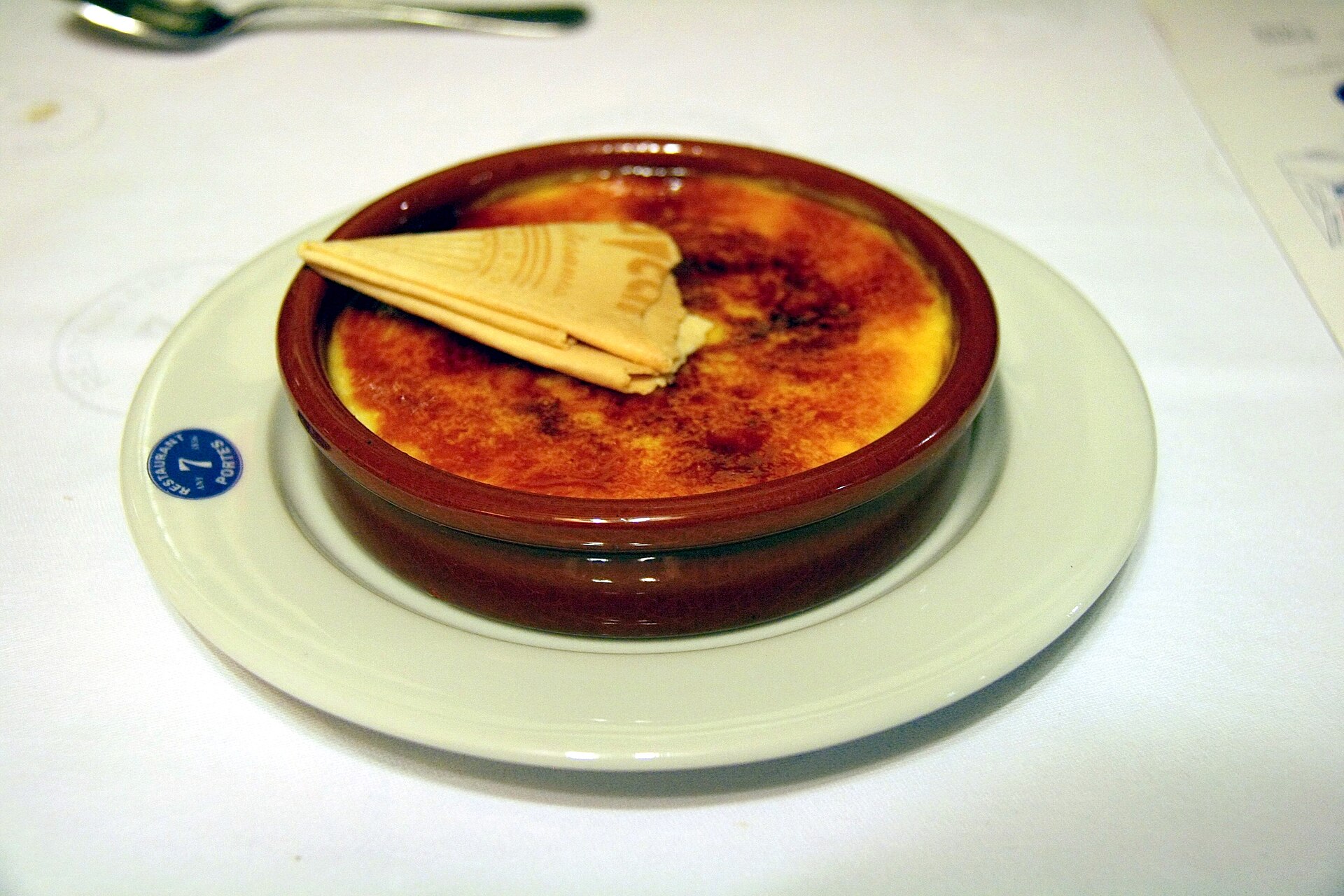
- 7 Portes (1836, Port Vell) — the great rice restaurant, with a different arròs every day of the week and a dining room of marble and mirrors. Go at lunch, order the rice of the day, and do not skip the crema catalana.
- Can Culleretes (1786, Gothic Quarter) — the oldest restaurant in Barcelona and the second oldest in Spain. Straightforwardly old-fashioned Catalan cooking, reasonable prices, walls of signed photographs.
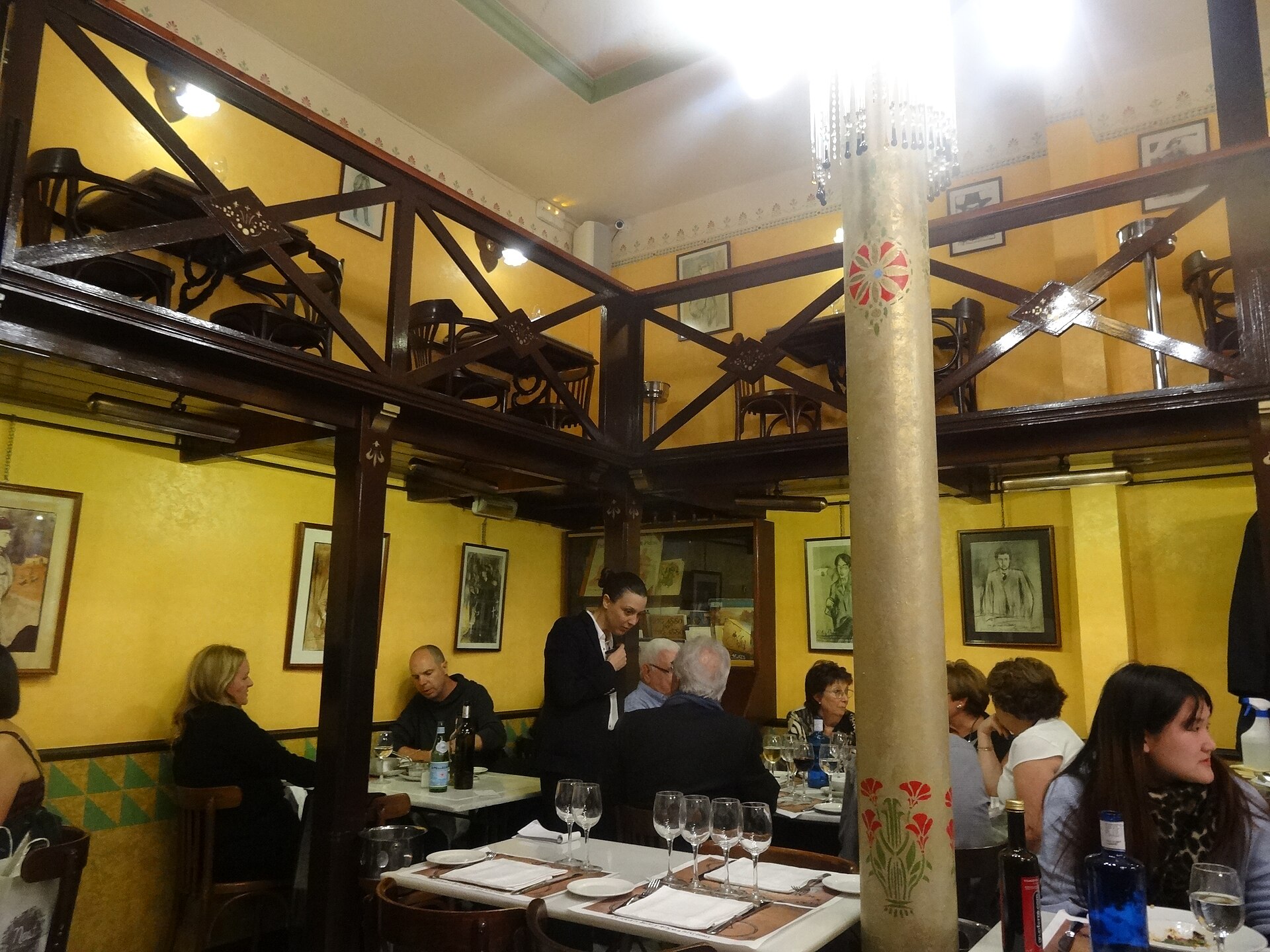
- Els Quatre Gats (1897, Gothic Quarter) — the modernista tavern where Picasso had his first exhibition and designed the menu. The food is decent rather than remarkable; you are paying for the room, and the room is worth it.
- Ca l’Isidre (El Raval) — a family-run institution with a serious cellar, the sort of place where the market produce dictates the menu and the owner still works the floor.
- Can Solé (1903, Barceloneta) — old-school seafood and rice in the old fishermen’s quarter, tiled and unchanged.
Our Catalan cuisine guide explains what to order in places like these, and the paella and rice guide covers the crucial distinction between paella, arròs negre and fideuà — which matters more here than anywhere.
Where to eat, neighbourhood by neighbourhood
Barcelona’s food geography is unusually legible. Each district has a character and a few reliable names, and knowing which district you are in tells you most of what you need.
El Born and the Gothic Quarter
The densest concentration of good eating in the old city, and also the densest concentration of bad. The rule is simple: the further you get from Las Ramblas and the closer to Santa Maria del Mar, the better it gets.
- Cal Pep — a counter, no menu, whatever Pep decides. Queue from opening or do not bother. One of the great Barcelona experiences.
- El Xampanyet — a cava bar near the Picasso Museum, tiled to the ceiling, anchovies and vermut, standing room only. Cash-friendly and gloriously unchanged.
- Bar del Pla — a modern tapas bar doing classic dishes properly. Book.
- Bodega La Puntual — a quieter Born option with good rice and better wine.
See our El Born guide and Gothic Quarter guide for the wider streets.
El Raval
Barcelona’s most mixed neighbourhood and, increasingly, its most interesting for food. Bar Cañete on Carrer Unió is the standard-bearer — a long marble counter, waiters in white jackets, seafood and croquetas done at a level that shames places charging twice as much. Suculent nearby is the modern option. Further in, the neighbourhood’s Pakistani and Filipino restaurants are among the best value in central Barcelona. The El Raval guide has the geography.
Barceloneta and the waterfront
Seafood, and one great bar. La Cova Fumada is a fluorescent-lit hole in the wall that invented the bomba — a potato croquette with meat inside and two sauces on top — in the 1940s, and still makes the best one. It takes cash, closes early, and has no sign. Around it, Can Solé and Els Pescadors do proper sit-down seafood and rice.
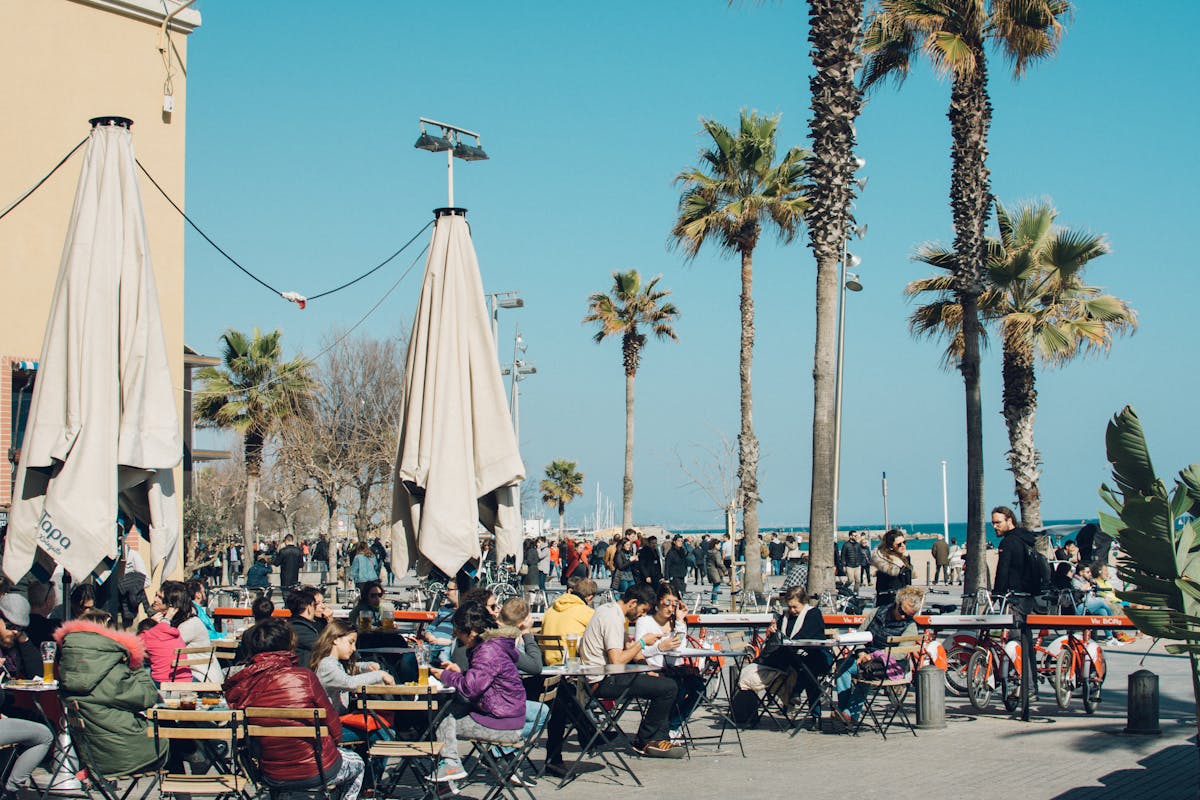
The rule on the beachfront itself: the restaurants with someone outside holding a menu are not the ones you want. Walk one block inland. See the seafood guide and the Barceloneta guide.
Eixample
Where a lot of the serious cooking lives, because this is where the money lives. Disfrutar, Cinc Sentits, Mont Bar, Gresca and Bar Mut are all here, along with Cervecería Catalana — a permanently rammed tapas bar on Carrer de Mallorca that is genuinely good despite being in every guidebook, if you can face the wait. Our Eixample guide covers the district.
Gràcia
The old village, now the best neighbourhood in Barcelona for eating like a local rather than a visitor. Small squares, small restaurants, prices about twenty per cent below the centre. La Pubilla near the Mercat de l’Abaceria does an outstanding breakfast and lunch; Berbena is the modern star. The Gràcia guide has the squares worth sitting in.
Poble Sec
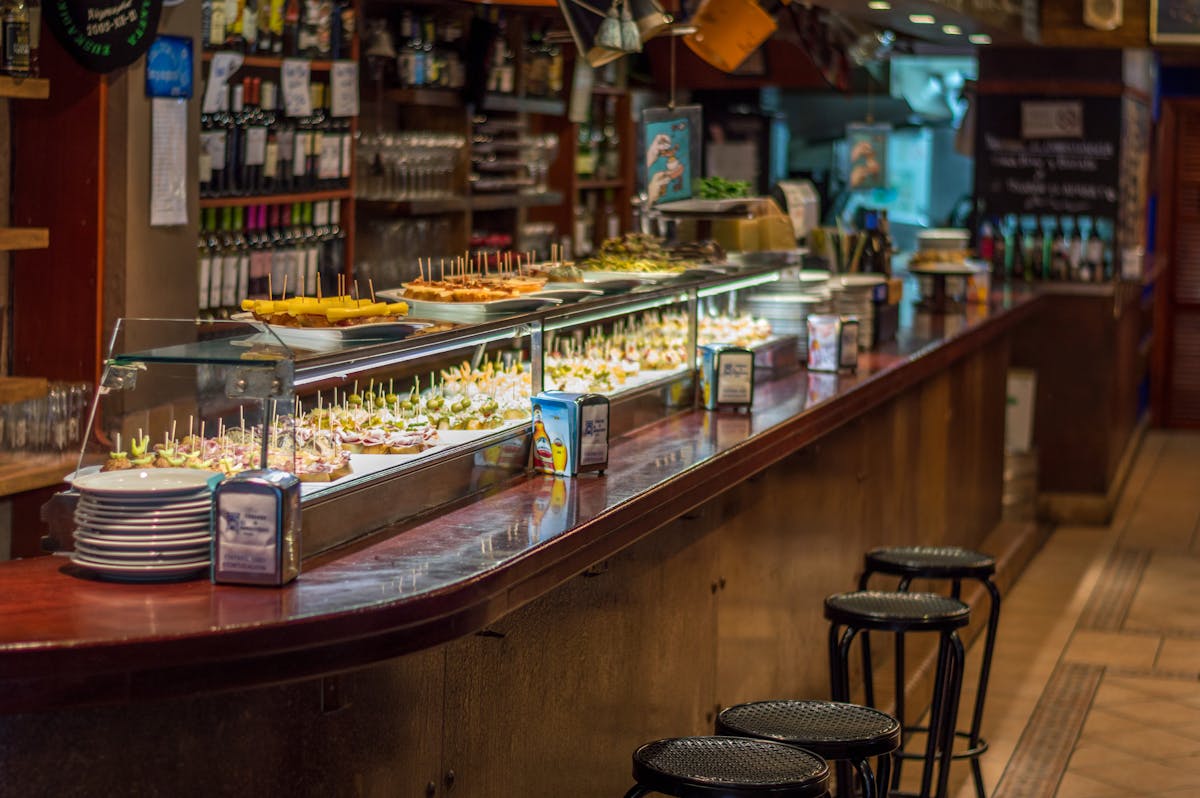
Carrer de Blai is a pintxo street — bars where you take what you want from the counter and pay by the stick at the end, most of them €1.50–2.50 each. Quimet & Quimet, a few streets away, is a standing-room-only montadito bar with the best tinned seafood in Barcelona and one of the great wine lists in a room the size of a garage. Both are ideal for a cheap, excellent evening. See the Poble Sec guide.
Sant Antoni and Sants
Where Barcelona’s food scene has been quietly migrating as the centre has priced itself up. The restored Mercat de Sant Antoni anchors a neighbourhood full of new bars and old bodegas, most of them still charging local prices. Our Sant Antoni guide covers it.
The best meal in Barcelona is probably tapas
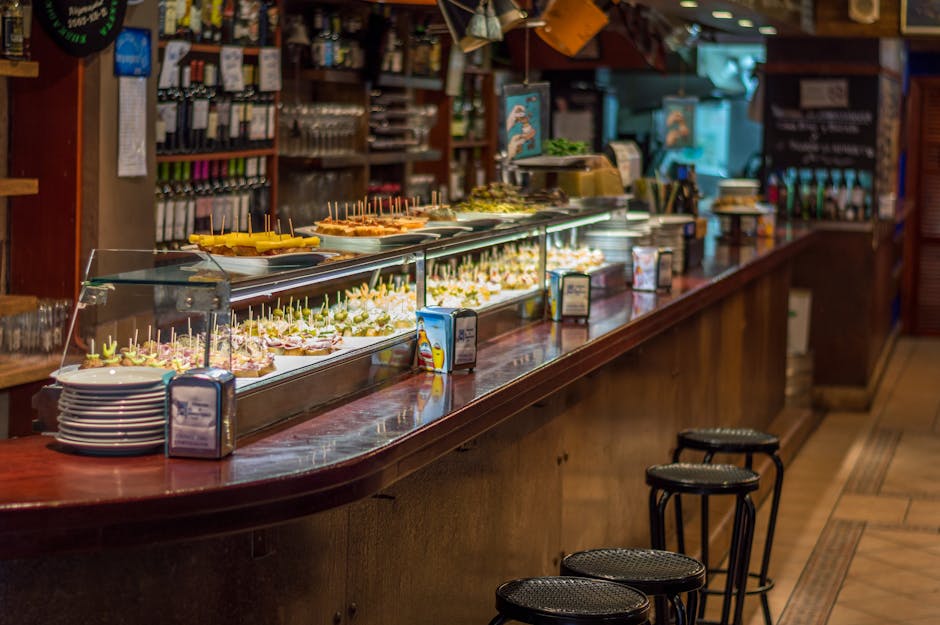
It is worth saying plainly: for most visitors, the best food experience in this city will not be in a restaurant with a tablecloth. It will be standing at a counter with a vermut, ordering four things, and moving on. That is how the city actually eats, it costs €25–40 a head, and it is more fun.
The mechanics matter. Order a few things at a time rather than everything at once. Do not sit at a table if the counter is free, because the counter is where the food is. Prices are usually higher on the terrace than inside — legally so, and clearly posted. And Barcelona is a Catalan city rather than an Andalusian one, so the free-tapa-with-a-drink tradition largely does not apply here; you order and you pay.
Our best tapas guide ranks the bars properly, and the food tours guide covers whether a guided crawl is worth the money — it usually is, on your first day, and usually is not after that.
What to order when you have no idea what to order
A short list that works almost anywhere, in roughly the order you would eat it. None of it is obscure, all of it is Catalan rather than generically Spanish, and ordering it marks you out as someone who has done at least five minutes of reading.
- Pa amb tomàquet — bread rubbed with tomato, oil and salt. It arrives with everything and it is the foundation of the whole cuisine. If a place makes it badly, leave.
- Escalivada — aubergine, pepper and onion roasted over embers until they collapse, served cold with oil. The best vegetable dish in Catalonia.
- Esqueixada — shredded raw salt cod with tomato and onion. A summer dish and a revelation if you think you dislike salt cod.
- Bombas — the Barceloneta potato-and-meat croquette with alioli and spicy sauce, invented at La Cova Fumada and copied everywhere since.
- Calçots — only from roughly January to March. Charred spring onions eaten with romesco, with a bib, badly and happily. If you are here in the season, build an afternoon around them.
- Arròs negre — squid-ink rice, and better in Barcelona than paella will ever be.
- Fideuà — the same idea made with short noodles instead of rice, from the coast south of here.
- Suquet de peix — the fisherman’s stew, potatoes and white fish in an almond-thickened broth. The great cold-weather dish of the coast.
- Botifarra amb mongetes — Catalan sausage with white beans. Unfashionable, unimprovable.
- Crema catalana — the custard with the burnt sugar crust, and the argument with France that Catalans will happily have with you.
Our Catalan cuisine guide goes through all of these properly, including what is seasonal and what is not.
What to drink
Getting this right improves a meal here more than choosing a different restaurant would.
Vermut is the Barcelona aperitif and the thing to order before lunch at the weekend or before dinner in the evening — sweet red vermouth on ice with an olive and a slice of orange, usually around €3–4, usually accompanied by something salty. The ritual is called fer el vermut and it is one of the genuinely great things about being here.
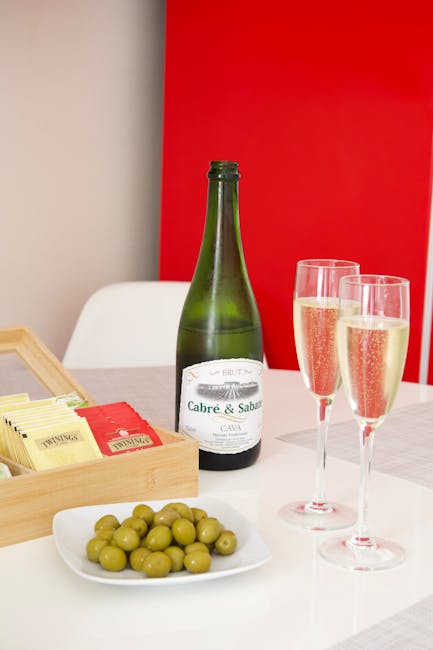
Cava is Catalonia’s sparkling wine, made a few miles inland in the Penedès, and it is dramatically better than its supermarket reputation. A good bottle costs €20–30 in a restaurant and stands up to anything from Champagne at twice the price. Ask for a Reserva or Gran Reserva.
Red wine means Priorat if you want the famous one — dense, mineral, expensive — or Montsant next door for eighty per cent of the character at half the price. White means Penedès xarel·lo, which is the grape that makes cava and is excellent still. Local beer is Estrella Damm, and Moritz is the Barcelona alternative. And sangria is for tourists; Catalans drink it approximately never, though nobody will mind if you do.
The Barcelona wine guide covers the regions in detail, and the Penedès day trip takes you to where the cava is made.
Eating well for very little
- The menú del dia. Monday to Friday, roughly 13:00–16:00, €13–20 for three courses with bread and a drink. Look for the chalkboard. It exists in restaurants that charge €60 at dinner.
- Markets. Not La Boqueria’s front row, which is a photograph rather than a meal, but the counters at the back of it, and the whole of Sant Antoni, Santa Caterina and the Mercat de l’Abaceria. See the markets guide.
- Bodegas. Old wine shops with a few tables, selling vermut on tap and tinned seafood. The cheapest genuinely good hour in Barcelona.
- Menú at lunch in a good restaurant. Several one-star kitchens run a weekday lunch menu at a third of the evening price. This is the single best value in Barcelona fine dining.
- El Raval’s immigrant restaurants. Excellent Pakistani, Bangladeshi and Filipino food at prices that have not moved in a decade.
The cheap eats guide goes deeper, and the budget Barcelona page puts food costs in the context of the rest of a trip.
Restaurants for particular occasions
Sometimes the question is not “where is the best food” but “where do I take my parents”, or “where can we sit outside”, or “we have ninety minutes before a show”. Here is the shortlist by situation.
A view worth paying for
Barcelona’s rooftop restaurants are mostly hotels, mostly mediocre, and mostly worth going to for a drink rather than a meal. The exception is the Montjuïc side, where a handful of terraces look down over the whole city, and the beachfront at Hotel Arts, where Enoteca Paco Pérez pairs two stars with the sea. For a view alone, go to a rooftop bar before dinner and eat somewhere serious afterwards.
A romantic dinner
El Born’s small dining rooms do this better than anywhere with candles in the window: low ceilings, twelve tables, no music. The Gothic Quarter’s medieval streets add the walk home. Avoid anywhere on a main avenue and anywhere that describes itself as romantic. See our romantic Barcelona guide.
A large group
Rice restaurants, because rice is cooked for a table rather than a person and everybody gets fed at once. 7 Portes handles groups well and always has. Failing that, a pintxo bar on Carrer de Blai, where everyone assembles their own dinner and nobody waits for a kitchen.
Before or after a concert
El Born around the Palau de la Música is dense with places that will serve you at seven if you ask, which is unusual here. For the Liceu on Las Ramblas, walk into the Gothic Quarter rather than staying on the boulevard. Our theatre and opera guide covers timings.
Sunday
The hardest day to eat well in Barcelona, because a great many of the best places close. Book ahead or default to a market district: Sant Antoni’s Sunday book market brings the surrounding bars to life, and the seafront in Barceloneta keeps working. The rainy day guide is useful for the same reason — it lists what is reliably open.
Dietary requirements
Barcelona is easier than its reputation suggests, but the reputation is not baseless — traditional Catalan cooking is built on pork, seafood and stock.
- Vegetarian and vegan. Genuinely well served now, with a strong scene in Gràcia and Sant Antoni in particular. Traditional bars are harder: pa amb tomàquet, escalivada, patatas bravas and pimientos de Padrón will always be available, but check the bravas sauce. See the vegan and vegetarian guide.
- Gluten-free. Widely understood — sense gluten in Catalan, sin gluten in Spanish — and most modern restaurants can adapt. Croquetas and fried food are the usual casualties.
- Nut and shellfish allergies. Take a written card in Catalan and Spanish. Romesco sauce contains nuts and appears in more dishes than you would expect; fish stock underlies most rice.
- Children. Spanish restaurants are relaxed about children in a way northern European ones are not, and eating at nine in the evening with a toddler is normal. See family restaurants.
When to eat, and how to book
The timetable
Lunch runs 13:30 to 16:00 and is the main meal. Dinner does not start until 20:30 at the earliest and 21:00 to 22:00 is normal. A restaurant with a full dining room at 19:30 is serving tourists, which is not automatically damning but is information. If you cannot face eating at ten, the workaround is the vermut hour — roughly 12:00 to 14:00 at weekends and 19:00 to 20:30 in the evening — where bars serve vermouth with olives, anchovies and crisps, and you can make a very satisfactory light meal of it.
Booking
Book the three-stars months out and the two-stars weeks out. Book any well-reviewed bistro a week ahead for a weekend. Most tapas bars do not take bookings at all, which is why the good ones have queues: turn up at opening or accept a wait. Sunday evening and Monday are the classic closing days, and a lot of the best places also shut for two or three weeks in August — check before you plan a specific meal around one.
The bill
Cover charge for bread and olives is normal and small. Tipping is modest: rounding up, or five per cent for genuinely good service in a proper restaurant. Cards are accepted almost everywhere, though a few of the oldest bars remain cash-only. Terrace prices are legitimately higher than counter prices. See the money guide.
Where not to eat
This is the part most restaurant guides leave out, and it is the most useful section on the page.
- Las Ramblas, the whole length of it. There is not a single restaurant on this street worth eating in. The rents are impossible and the customers never come back, which produces exactly the food you would expect.
- Any restaurant with photographs of the food outside. A kitchen confident in its cooking does not need to show you a picture of it.
- Anywhere with someone on the pavement inviting you in. Good restaurants in Barcelona are full. They are not recruiting.
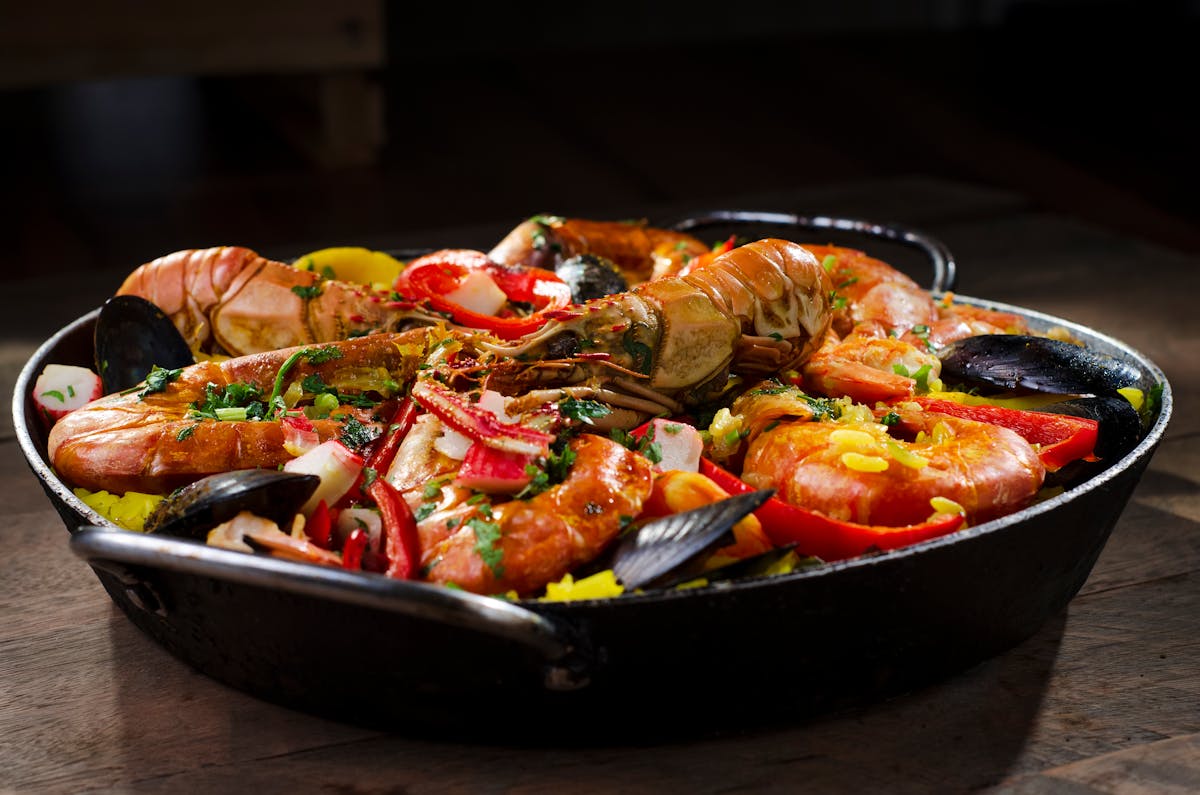
- “Authentic sangria and paella” for €12. Real paella takes twenty minutes to cook from raw and costs more than that in ingredients. Sangria, meanwhile, is something Spaniards drink roughly never — order vermut, or a glass of the local cava.
- The front stalls of La Boqueria. Fruit cups at tourist prices where a working market used to be. Walk to the back, where the fish counters and the two or three excellent bars still are.
- Paella at dinner. Rice is a lunch dish here. A restaurant serving it at ten at night is serving it to people who do not know that.
Frequently asked questions
What is the best restaurant in Barcelona?
By any objective measure, Disfrutar — three Michelin stars and a period at the top of the World’s 50 Best list. By the measure of what most visitors will actually enjoy most, a counter seat at Cal Pep or Bar Cañete for a fifth of the price.
How much does dinner cost in Barcelona?
Around €25–45 a head for a good tapas dinner with drinks, €40–65 in a proper restaurant, €120–220 at a one or two-star, and €250–350 before wine at a three-star. Weekday lunch in almost any of them costs dramatically less.
Do I need to book restaurants in Barcelona?
For anything with a reputation, yes — a week ahead for weekends, months ahead for the starred restaurants. Tapas bars generally do not take bookings; you queue or you go early.
What time do people eat dinner in Barcelona?
From 20:30 at the earliest, with 21:00 to 22:00 being normal. Restaurants full at 19:30 are serving visitors. The vermut hour before dinner is the civilised solution if you cannot wait.
Is Barcelona good for vegetarians?
Yes, increasingly so, particularly in Gràcia and Sant Antoni. Traditional bars are harder work, but pa amb tomàquet, escalivada, pimientos de Padrón and grilled vegetables are universal. Ask about stock and about the bravas sauce.
Where should I eat paella in Barcelona?
7 Portes for the classic dining-room version, Can Solé or Els Pescadors in Barceloneta, and nowhere at all that advertises it on a board outside. Order arròs negre or fideuà instead if you want the local versions — they are better here than paella, which is Valencian.
Are Michelin-starred restaurants in Barcelona worth it?
One, once, if the meal is part of why you came — and take the lunch menu where one exists. For a week of eating, the same money spread across bistros, tapas bars and market lunches will feed you better overall.
Which neighbourhood has the best food?
Gràcia for eating like a resident, El Born for density and quality together, Poble Sec for value, El Raval for range and surprise, and the Eixample for the serious kitchens. The old city’s worst streets and its best are often four minutes apart.
Related Barcelona Guides
- Barcelona Food Guide — the pillar, and where to start.
- Best Tapas in Barcelona — the bars, ranked.
- Catalan Cuisine Explained — what to order and why.
- Paella and Rice in Barcelona — including what to order instead.
- Cheap Eats in Barcelona — eating well for very little.
- Barcelona Seafood Guide — the waterfront, done properly.
- Barcelona Markets — where to eat inside them.
- Barcelona Wine Guide — cava, Priorat and what to drink with all this.
Photo Credits
Els Quatre Gats interior: 2016 – Els Quatre Gats 01 by Jordiferrer, CC BY-SA 4.0, via Wikimedia Commons.
Crema catalana at 7 Portes: Crema Catalana (7 Portes) by Tamorlan, CC BY 3.0, via Wikimedia Commons.
Remaining photographs from the barcelonatourism.org library.