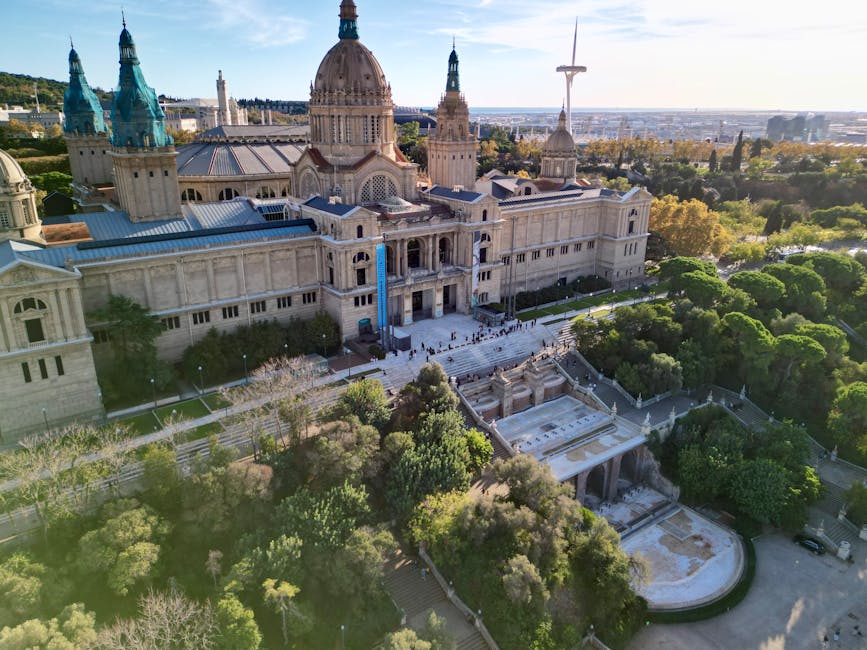
Why Montjuic Is Barcelona’s Multi-Layered Hilltop Treasure
The hill of Montjuic rises 173 metres south of the Old Port, dominating the city skyline. Once a Jewish cemetery (its name derives from “mountain of the Jews”), then a military fortress, then the venue for the 1929 World Expo and the 1992 Olympic Games, Montjuic today is one of Barcelona’s most layered destinations: panoramic terraces, the Magic Fountain, the National Art Museum (MNAC), the Joan Miro Foundation, the Castell de Montjuic fortress, the Olympic Stadium, the Greek Theatre, several beautiful gardens, and the Poble Espanyol open-air architectural museum. This complete guide to montjuic barcelona covers everything: a complete tour of the montjuic hill, what to see at the montjuic castle, the best montjuic things to do, and the beautiful montjuic gardens, plus practical transport and a sample full-day itinerary.

A Brief History of Montjuic
Montjuic’s documented history reaches back to Roman times when the hill was used as a quarry for the city walls. The Jewish cemetery that gave the hill its name occupied the western slope between the 11th and 14th centuries; the cemetery was destroyed in the 1391 pogrom and the Jewish gravestones were used to build the Cathedral. The 17th-century military fortress was rebuilt in its current form in 1751 as a citadel that overlooked and (politically) controlled Barcelona. The hill was the site of executions during the Spanish Civil War, including that of Catalan president Lluis Companys in 1940.
The hill’s modern transformation began with the 1929 International Exposition, which produced the MNAC palace, the Magic Fountain, the Poble Espanyol, the Mies van der Rohe pavilion, and the broad ceremonial avenue from Plaça Espanya. The 1992 Olympic Games made Montjuic the city’s main sports complex; the Olympic Stadium, the Picornell pools, and the Sant Jordi arena all date to that era. Today the hill’s history (military, Jewish, Olympic, expo, Civil War) layers densely on a single 200-hectare park.
Montjuic Geography
Montjuic occupies the southern edge of central Barcelona. Bounded by:
- North: Plaça Espanya and Avinguda Maria Cristina (the ceremonial entry).
- East: Poble Sec and the Old Port.
- South: The Mediterranean and Avinguda Miramar.
- West: The Montjuic Cemetery and Barcelona’s port industrial area.
The hill is roughly 200 hectares; you can walk most of it in a full day or take the funicular and cable car to bypass the climb. The summit (Castell de Montjuic) is at 173 metres; the Olympic Stadium and MNAC are at intermediate elevations.
How to Get to Montjuic
Funicular (Recommended)
From the Paral.lel metro station (L2 or L3), take the Montjuic Funicular up the hillside to Estacion Parc Montjuic. Included in your T-Casual or Hola Card. About 2 minutes ride. Operates 7:30 AM-10:00 PM. The funicular saves you a sweaty 30-minute climb and is the most efficient way up the hill.
Cable Car (Telefèric de Montjuic)
From the funicular’s upper station, the cable car takes you to the Castell de Montjuic. About 10 minutes; 8.40 EUR adult one way; 12.70 EUR round trip. Spectacular elevated views of the city and harbour. Operates 10:00 AM-7:00 PM (later in summer).
Harbour Cable Car (Telefèric del Port)
From Barceloneta to Montjuic via the cable car over the Old Port. Spectacular but expensive (16 EUR adults one way; 20 EUR round trip). Operates 10:30 AM-8:00 PM. The most photographed but least efficient way up.
Bus 150
From Plaça Espanya to the Castell de Montjuic. Cheaper alternative to the cable car. Included with metro card. Stops at all major attractions: MNAC, Joan Miro Foundation, Olympic Stadium, Castell.
Walking
From Plaça Espanya, walk up the wide ceremonial steps past the MNAC. About 20 minutes uphill to the top of the steps; another 15 minutes to the Castell. The free escalators behind the MNAC ease the climb significantly.
Hop-On Hop-Off Bus
Both the Barcelona Bus Turistic Red Route and Sky Tours stop at the major Montjuic sites. Convenient if you have a multi-day pass; expensive (30 EUR/day) for a single visit.
The Top 14 Things to Do on Montjuic
1. The Magic Fountain (Font Magica)
The free choreographed water-and-light show at the foot of the MNAC steps. Free; runs Thursday-Sunday in spring/autumn (typically 9:00-9:30 PM and 9:30-10:00 PM); most evenings in summer (typically 9:30-10:00 PM and 10:00-10:30 PM). The most iconic Montjuic experience. Get there 20 minutes early for prime viewing position.

2. MNAC (National Art Museum of Catalonia)
The Palau Nacional houses one of Europe’s most important Romanesque collections (rescued frescoes from rural Catalan churches), plus Catalan Gothic, Renaissance, Modern, and 20th-century art. The collection includes works by El Greco, Velazquez, Goya, Gaudi, Casas, and Rusinol. 12 EUR adults; free Saturday after 3:00 PM and first Sunday all day. Allow 2-3 hours minimum. The rooftop terrace (free with museum entry) has panoramic city views.
3. Joan Miro Foundation
Modernist white building (1975) by Josep Lluis Sert (Miro’s friend). Excellent collection of Miro paintings, sculptures, drawings, and tapestries; rotating exhibitions; sculpture garden. 14 EUR adults. Allow 2 hours. The terrace cafe has good views.
4. Castell de Montjuic
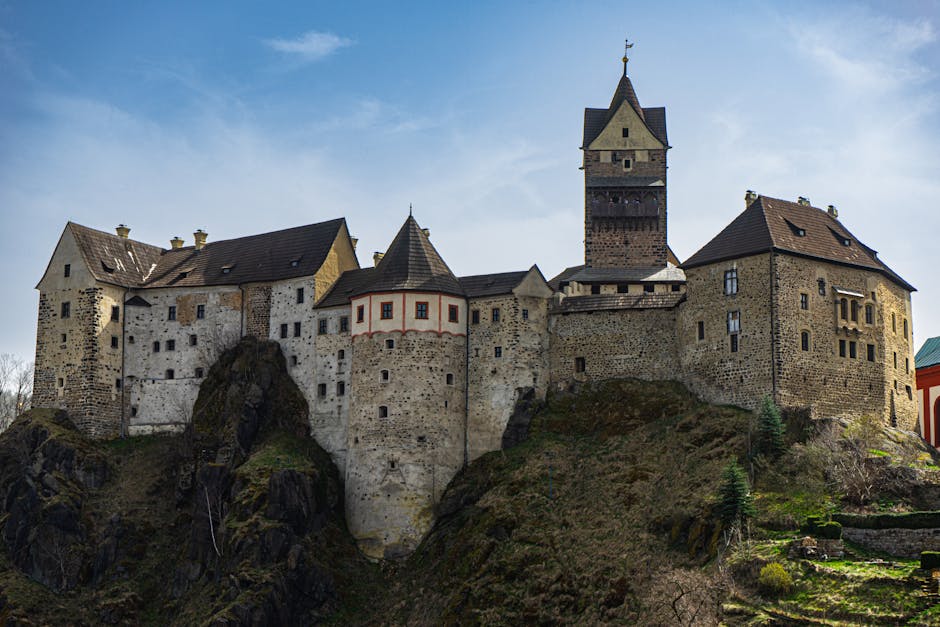
The 18th-century fortress at the southern tip. Panoramic terrace with the city’s best 360-degree view. Small history museum covering the fort’s military and Civil War history. 12 EUR adults; free Sunday after 3:00 PM. Allow 1-2 hours. The terrace alone is worth the visit.
5. Olympic Stadium and Olympic Ring
The 1992 Olympic Games venue (originally built for the 1929 Expo, renovated). Free to view from outside and walk into the stadium tunnel; the small Olympic museum charges admission. The surrounding Olympic Ring includes the Sant Jordi indoor arena, Picornell swimming pools, and Calatrava’s white communications tower. Contemplative space; not a must-see but worthwhile for sports fans.
6. Poble Espanyol
Open-air architectural museum recreating buildings from across Spain. 117 buildings in scaled reproduction; arts and crafts workshops; restaurants; nightclub La Terrazza in summer. 14 EUR adults; family workshops; longer summer hours. Particularly popular with families. Allow 2-3 hours.
7. CaixaForum Barcelona
Free cultural centre in a converted Modernist textile factory by Puig i Cadafalch (the Casaramona factory). Excellent rotating exhibitions covering art, photography, design, and culture. The building itself is worth the visit even if no exhibition appeals. Free; allow 1-2 hours.
8. Mies van der Rohe Pavilion
The reconstructed 1929 German Pavilion designed by Ludwig Mies van der Rohe. A landmark of modernist architecture: travertine, marble, glass, and the famous Barcelona Chair. Small (1,250 m²) but architecturally important. 8 EUR adults; allow 30-45 minutes.
9. Jardins de Mossèn Costa i Llobera
Free cactus garden with thousands of succulents and palms. One of the most extensive cactus collections in Europe. Excellent for walking and photography. Best in late afternoon when the light is gentle.
10. Jardins de Joan Maragall
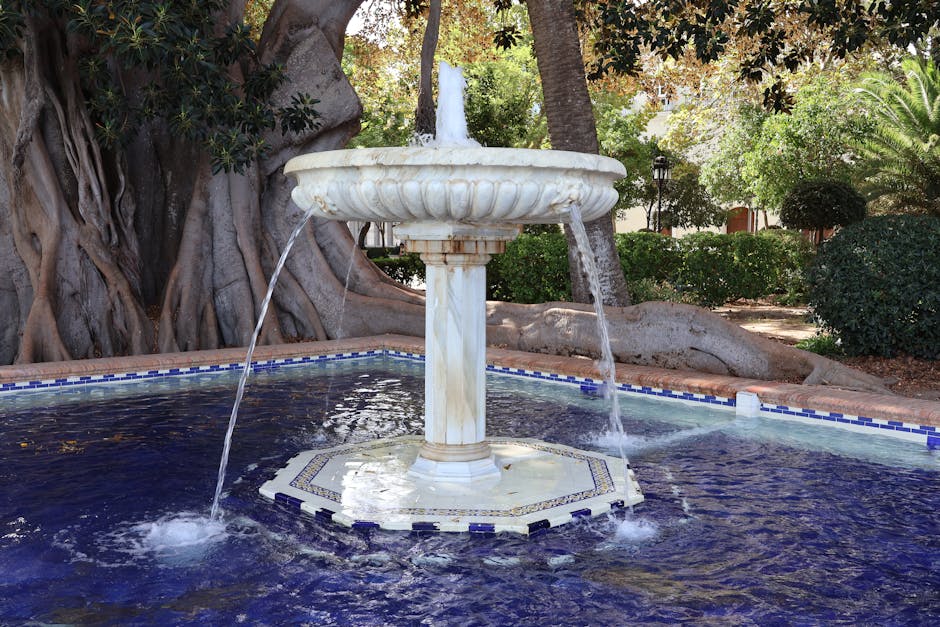
Formal Versailles-style gardens around the Pavellón Albéniz. Open weekends only (10:00 AM-3:00 PM); free. Quiet and refined; few tourists.
11. Mirador del Migdia
Free panoramic terrace at the southern end of the hill. La Caseta del Migdia (Spring/Summer/Autumn) bar serves drinks at sunset; one of the city’s most relaxed sundowner spots. Live DJs on summer Saturdays.
12. Greek Theatre (Teatre Grec)
1929 amphitheatre carved into the hillside in a former quarry. Hosts the Festival Grec performances of theatre, dance, and music (June-July). Tickets 15-50 EUR. Off-season the theatre is freely accessible as a viewpoint.
13. Olympic and Sports Museum (Joan Antoni Samaranch)
Adjacent to the Olympic Stadium. Family-friendly; interactive exhibits on Olympic history. 6 EUR adults; reduced for children. Allow 1-1.5 hours.
14. Jardins de Mossèn Cinto Verdaguer
Free aquatic-plant gardens with lily ponds and ornamental water features. Quiet walking; very few tourists.
Bonus: Hidden Spots on Montjuic
- Old Jewish Cemetery vestiges: Small archaeological remnants on the western slope.
- Civil War memorials: Plaques near the Castell mark execution sites.
- Botanical Garden (Jardi Botanic): Mediterranean species in a hillside layout. 5 EUR; quiet.
- Tomas Roger gardens: Tiny pocket garden between MNAC and Joan Miro.
- Funicular old station: Disused art-deco station near the modern one.
- The 1929 Expo’s hidden buildings: Several pavilions remain in the woods between major attractions.
Best Time to Visit
- Late afternoon-sunset: Magic Fountain begins; spectacular light on the city; best photography.
- Weekday mornings: Quietest for museums; cooler in summer.
- Saturday afternoon: MNAC free entry from 3:00 PM.
- First Sunday of month: MNAC and Joan Miro free; popular and busy.
- Avoid summer midday: Heat is intense on the exposed hill; little shade.
- Spring (April-June): Gardens at peak.
- Autumn (October-November): Mild temperatures, fewer tourists.
Sample Full-Day Montjuic Itinerary
- 9:30 AM: Coffee in Poble Sec at Bar Calders.
- 10:00 AM: Walk up Avinguda Maria Cristina; photograph MNAC steps.
- 10:30 AM: Caixa Forum (free).
- 12:00 PM: Mies van der Rohe Pavilion.
- 12:30 PM: Lunch on Carrer Blai pintxos.
- 2:00 PM: MNAC museum (Romanesque + Modern collections).
- 4:30 PM: Walk to Joan Miro Foundation (15 min).
- 4:45 PM: Joan Miro Foundation.
- 6:30 PM: Funicular up to Castell area.
- 6:45 PM: Castell de Montjuic and views.
- 8:00 PM: Sunset at Mirador del Migdia (drinks at La Caseta).
- 9:30 PM: Magic Fountain show at Plaça Espanya.
- 10:30 PM: Dinner in Poble Sec (Quimet & Quimet for late tapas).
Half-Day Itineraries
Morning: Museums Focus
- 10:00 AM Caixa Forum.
- 11:30 AM Mies pavilion.
- 12:00 PM Lunch on Carrer Blai.
- 2:00 PM MNAC (3 hours).
Afternoon: Outdoors and Views
- 2:00 PM Funicular up.
- 2:30 PM Joan Miro Foundation.
- 4:30 PM Cactus gardens.
- 6:00 PM Castell.
- 8:00 PM Mirador del Migdia sunset.
- 9:30 PM Magic Fountain.
Practical Tips
- Wear comfortable walking shoes; the hill involves significant slopes and stairs.
- Bring water in summer (limited shade on the upper hill).
- Use the funicular for the climb; saves energy and avoids the heat.
- Plan around free museum hours (Saturday afternoon, first Sunday).
- The cable car offers spectacular but expensive views; the bus 150 is much cheaper.
- Magic Fountain shows run only at specific times; check the official schedule.
- Allow a full day to see the major sites comfortably.
- Combine with Poble Sec for dinner — short walk down the hill.
- The hill is not stroller-friendly; bring a baby carrier instead.
- Mosquitos are active in summer evenings near the gardens; bring repellent.
- Most attractions close around 8:00 PM; the Magic Fountain runs after dark.
- Carry small bills for vending machines and small bars.
Where to Eat on Montjuic
- La Caseta del Migdia: Casual outdoor bar at the southern end; sunset drinks.
- Restaurant Pavelló Mies van der Rohe: Upmarket dining with Modernist views.
- Restaurant Oleum (MNAC): Refined museum restaurant with city views.
- Salts Cafeteria (Castell): Cafeteria-style; convenient.
- Joan Miro Foundation cafe: Modernist building’s cafe with terrace.
- Better: Walk down to Poble Sec (Carrer Blai) for genuine local food at half the price.
Frequently Asked Questions
Is Montjuic worth visiting?
Yes. One of Barcelona’s most diverse single locations, mixing art, architecture, history, gardens, and panoramic views.
How long should I plan?
Half day for the highlights; full day with museums; a multi-day visit if you want to see everything.
What’s the best free thing to do?
Magic Fountain show; Caixa Forum; Mirador del Migdia; MNAC steps panorama; gardens.
Is the Castell worth it?
Yes for the views; modest as a museum.
Should I take the cable car?
Yes for the experience; expensive at 16 EUR each way for the harbour version.
Are restaurants on Montjuic?
Yes — La Caseta del Migdia for casual; Oleum for upmarket. Better food in Poble Sec at the bottom.
What’s the Magic Fountain schedule?
Thursday-Sunday in spring/autumn; most evenings in summer. Check the Barcelona city tourism website for current schedule (varies by season and water restrictions).
Is Montjuic family-friendly?
Yes. Caixa Forum, Poble Espanyol, Olympic Stadium, gardens, Magic Fountain all work for families.
Where to eat in Poble Sec?
Carrer Blai pintxo crawl; Quimet & Quimet; Bar Calders; Tickets (Adria-family).
Are the cable cars accessible?
The Telefèric de Montjuic has wheelchair access; the harbour cable car has limitations.
Can I bring kids on the funicular?
Yes. Free for under 4s; covered by metro card for older children.
What’s the best photo spot?
The MNAC terrace; the Castell terrace; the Mirador del Migdia at sunset; the Olympic Stadium plaza.
Is the cemetery open?
The current Montjuic Cemetery is open daily; tours are available. Not the same as the medieval Jewish cemetery (destroyed centuries ago).
What about the 1929 Expo buildings?
MNAC, Caixa Forum, Mies pavilion, and Poble Espanyol are the most visible survivors. Several smaller pavilions remain in the woods.
Are there guided tours?
Yes — Olympic-themed tours; architectural tours; full-day Montjuic walks. Many free walking tours include the Magic Fountain.
Final Thoughts: A Hill That Rewards a Full Day
The right montjuic barcelona day combines art, architecture, history, gardens, and panoramic views. Plan a full day, mix free and paid attractions, and end with the Magic Fountain show. Montjuic’s density of attractions per hectare is rare in any European city; spending only a couple of hours here is the most common Barcelona regret.
For more, see our Barcelona neighbourhoods pillar, the best views guide, the parks guide, and the museums guide.